What is sealcoating?
Sealcoating is a protective surface treatment applied to asphalt pavement. It helps shield the surface from sunlight, water, oil, traffic wear, and oxidation. In simple terms, it is a maintenance layer designed to slow surface deterioration and improve the appearance of asphalt that is still in good enough condition to benefit from protection.
That last part matters.
Sealcoating is not a magic repair. It does not rebuild failed pavement. It does not fix potholes. It does not correct drainage problems. It does not make deep cracks disappear. It does not replace proper asphalt repair when the pavement is already breaking apart.
The best way to understand sealcoating is this: it protects asphalt before serious damage takes over.
For commercial property owners, landlords, HOAs, residential communities, retail centers, office parks, hospitality properties, and facility managers, sealcoating can be part of a practical maintenance plan. But it only makes sense when the pavement is cleaned, inspected, and prepared correctly first.
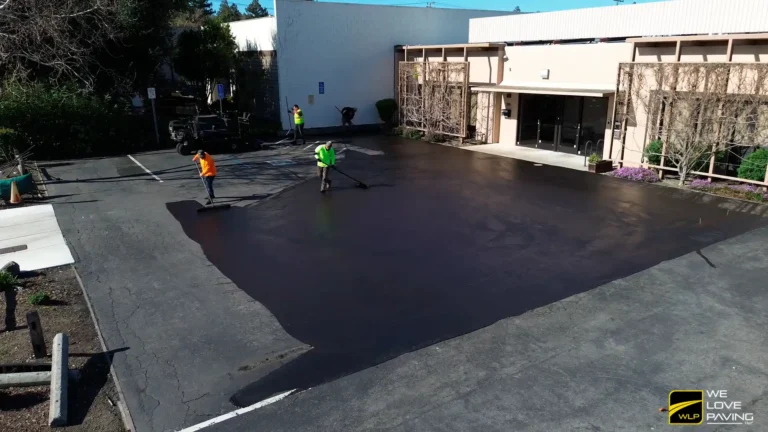
Sealcoating Protects the Asphalt Surface
Asphalt changes as it ages.
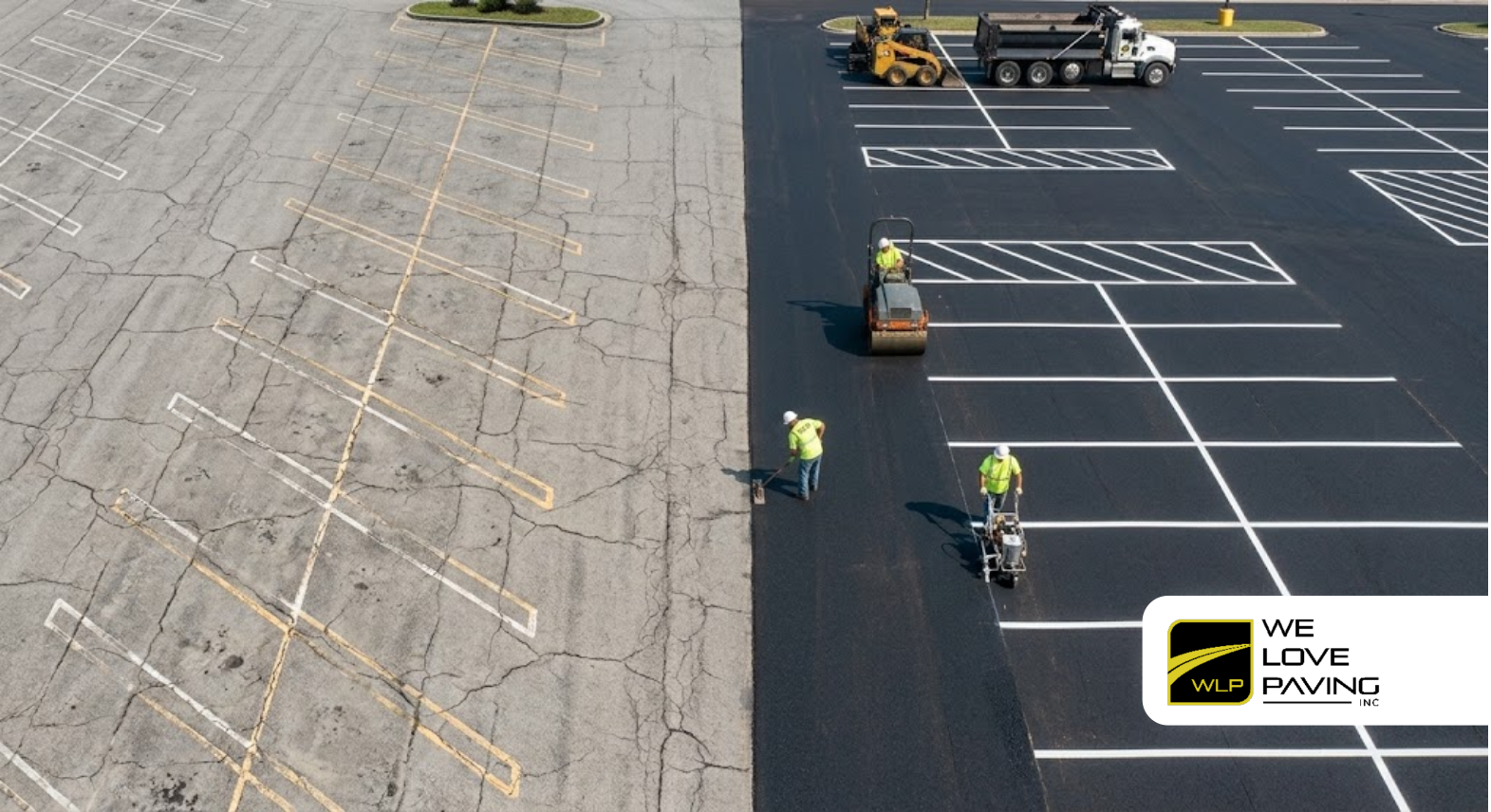
Fresh asphalt usually looks dark, smooth, and uniform. Over time, sunlight, water, traffic, oil, and weather exposure begin wearing down the surface. The pavement may fade from black to gray. It may feel dry or rough. Small cracks may appear. The top layer may start losing some of its surface protection.
Sealcoating helps slow that process by adding a protective coating over the asphalt surface.
The coating helps reduce direct exposure to UV rays, water, and everyday wear. It can also restore a darker, cleaner appearance, which is why many people associate sealcoating with curb appeal. But appearance is only part of the reason it matters.
The stronger purpose is preservation.
A parking lot or driveway that is sealed at the right time may be easier to maintain than one left exposed until cracks, raveling, and water intrusion become more advanced. That does not mean sealcoating prevents every problem. It means it can help protect pavement that is still structurally sound.
For larger parking areas and commercial sites, commercial sealcoating should be treated as a maintenance decision, not a cosmetic shortcut.
Sealcoating Is Not the Same as Repaving
One of the biggest misunderstandings about sealcoating is that people confuse it with repair or replacement.
Sealcoating covers and protects the surface. Repaving replaces or rebuilds pavement layers. Those are very different scopes of work.
If asphalt is faded but stable, sealcoating may be appropriate. If asphalt has deep potholes, soft areas, widespread alligator cracking, base failure, or severe drainage problems, sealcoating is not enough. Applying a fresh black coating over failed pavement may make the property look better temporarily, but the underlying damage will still exist.
That is where poor maintenance decisions waste money.
A property owner may choose sealcoating because it appears cheaper than repair. But if the pavement is not ready for sealing, the coating may fail to deliver meaningful protection. Worse, it can create false confidence while water, traffic stress, and base problems continue beneath the surface.
A practical rule is simple: inspect before coating.
The pavement should be evaluated for cracks, potholes, drainage issues, oil spots, loose aggregate, broken edges, and unstable areas. Any problem that affects the pavement’s ability to hold a protective coating should be addressed first.
Cracks Should Be Reviewed Before Sealcoating
Sealcoating works best on pavement that has been properly prepared.
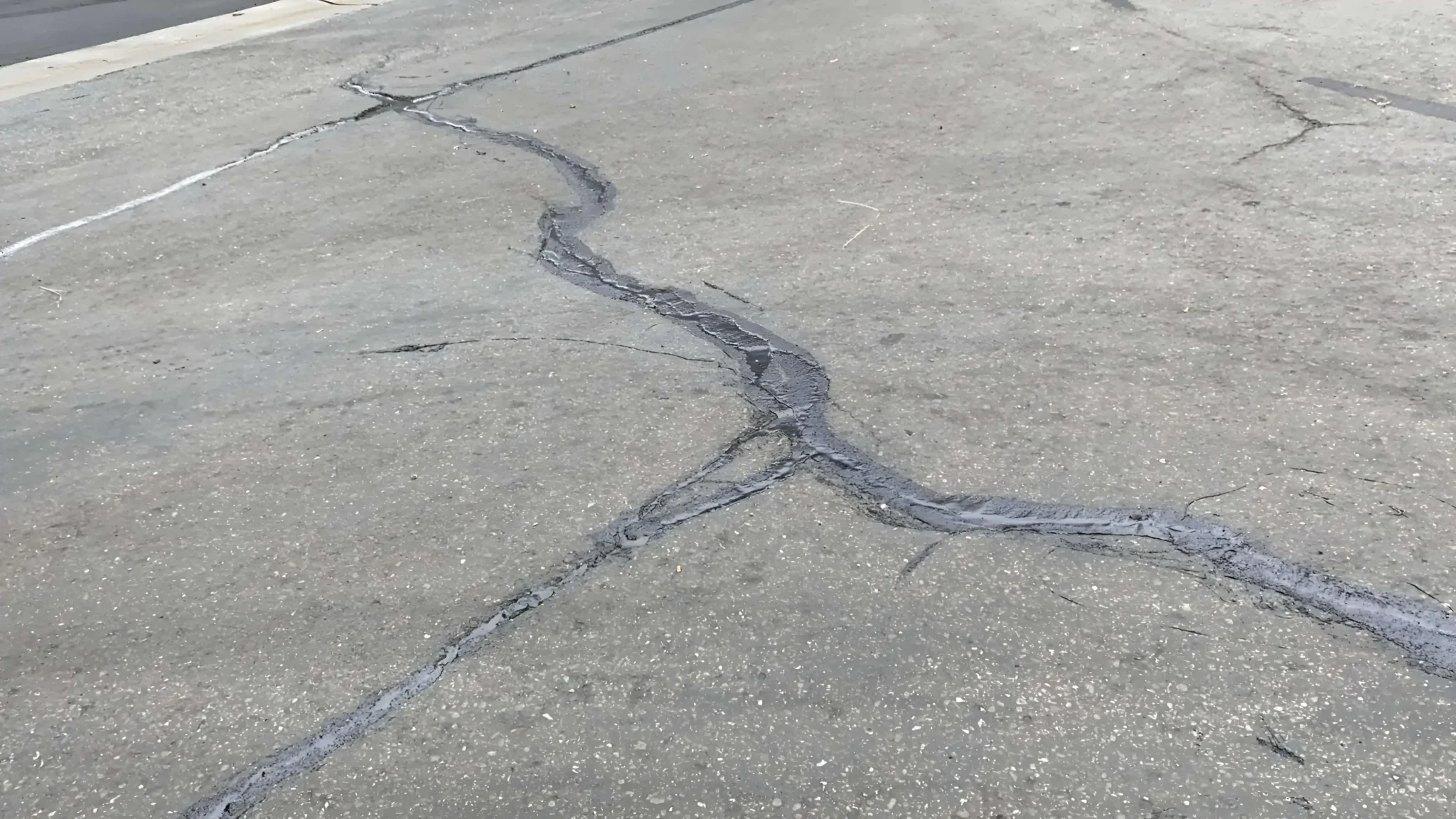
Open cracks are one of the most important preparation issues. A crack allows water to enter the asphalt system. If that crack is simply coated over without proper review, the coating may improve appearance while leaving a water-entry path active underneath.
Not all cracks require the same response. Some may be narrow and suitable for treatment. Others may signal deeper movement, base problems, drainage stress, or repeated failure.
The key is sequencing.
Cracks should be reviewed before sealcoating, not after. If they are appropriate for treatment, asphalt crack filling may be part of preparing the surface before a protective coating is applied.
This is especially important in areas where water collects, vehicles turn, or traffic follows the same path every day. Drive aisles, parking lot entrances, loading areas, trash enclosure routes, and low drainage areas often experience more stress than quiet parking stalls.
Sealcoating over unaddressed cracks is not maintenance discipline. It is cosmetic delay.
Sealcoating Works Best as Part of a Maintenance Plan
Sealcoating should not be treated as a one-time beauty treatment.
It belongs inside a larger pavement maintenance plan. That plan may include inspection, cleaning, crack treatment, localized repairs, drainage review, surface preparation, sealcoating, and striping. The order matters because each step affects the next one.
A weak process looks like this: the lot looks faded, so the owner orders sealcoating.
A stronger process looks like this:
- Inspect the pavement condition.
- Identify cracks, potholes, drainage issues, oil spots, and weak edges.
- Repair or treat problem areas first.
- Clean and prepare the surface.
- Apply sealcoating only where the pavement is ready.
- Repaint markings after the surface has cured.
This sequence protects the owner from paying for a coating that hides problems instead of preserving the pavement.
For owners managing parking lots, access roads, HOAs, commercial sites, or residential communities, paving maintenance provides the broader context. Sealcoating is one tool inside that system, not the entire system.
What Sealcoating Can Actually Help With
Sealcoating can help with several practical pavement concerns when used correctly.
It can improve the appearance of faded asphalt. It can help protect the surface from oxidation and weather exposure. It can make pavement look more uniform. It can support a cleaner presentation before restriping. It can help slow surface wear on pavement that is still stable.
That is useful, but it has limits.
Sealcoating cannot fix structural failure. It cannot level sunken pavement. It cannot solve recurring ponding. It cannot rebuild broken edges. It cannot make old potholes disappear. It cannot correct poor base support.
This is where property owners need to be honest about the surface.
A faded but firm parking lot may be a good candidate. A cracked, loose, pothole-filled lot may need repair before coating. A driveway with minor aging may benefit from sealing. A driveway with soft spots or heavy cracking may need a different approach.
The difference is condition.
Sealcoating is most effective when the pavement is still worth preserving.
Real Projects Show Why Preparation Matters
Sealcoating looks simple from the outside because the finished surface is visually obvious.
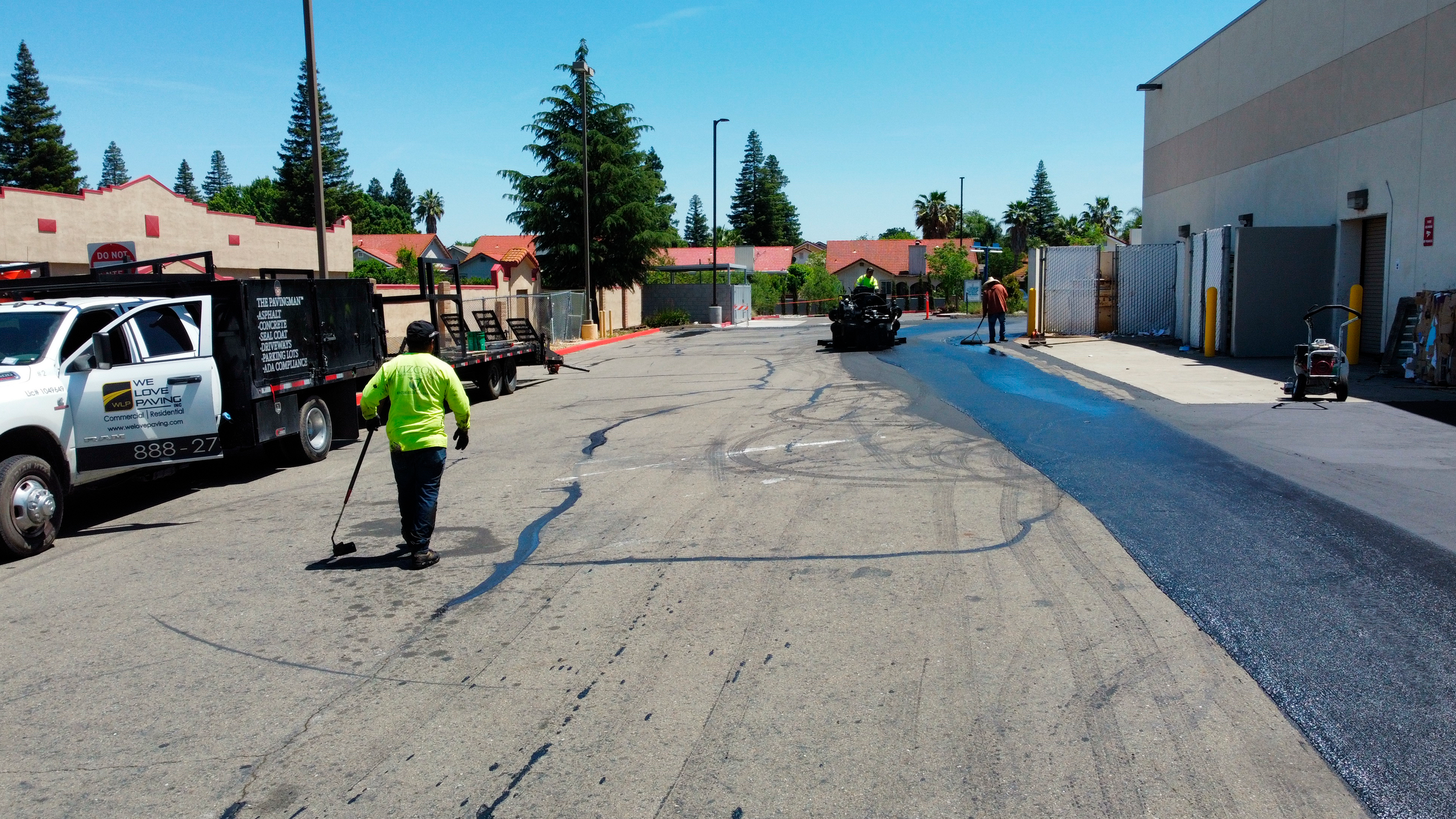
The preparation is less obvious, but it is where the quality of the decision lives. Cleaning, crack review, edge condition, weather timing, traffic control, curing, and follow-up striping all affect the result.
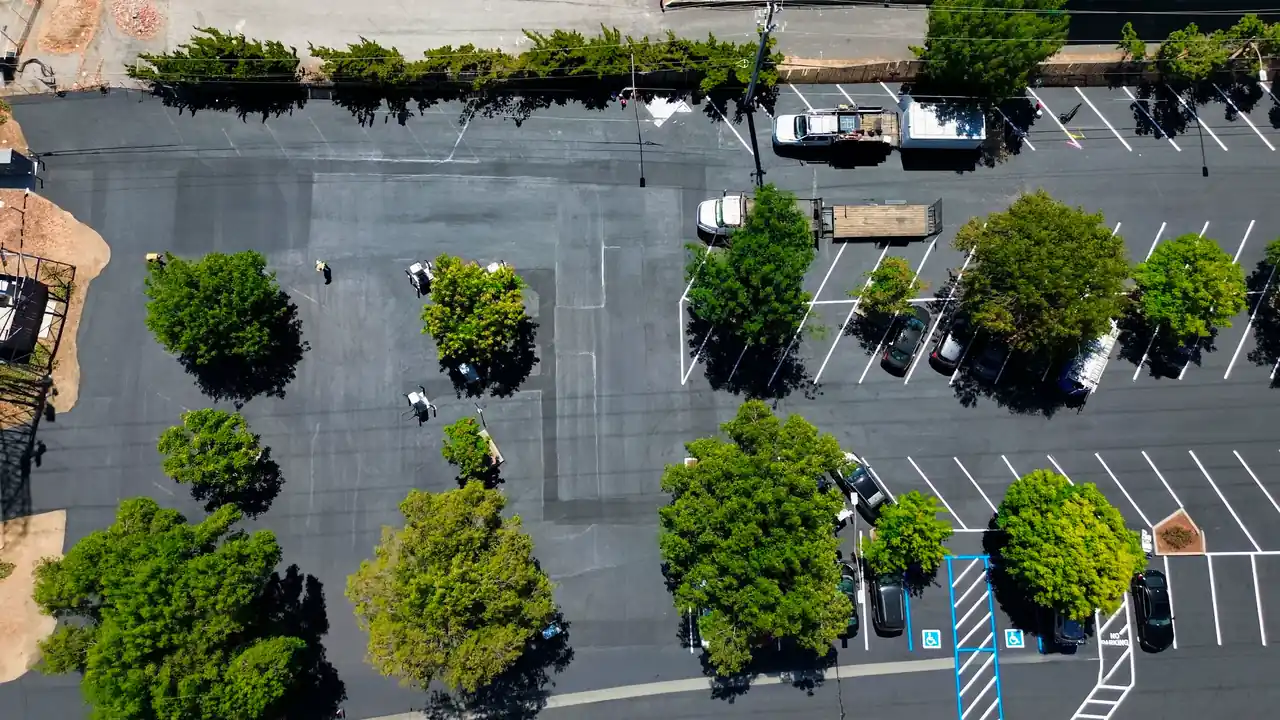
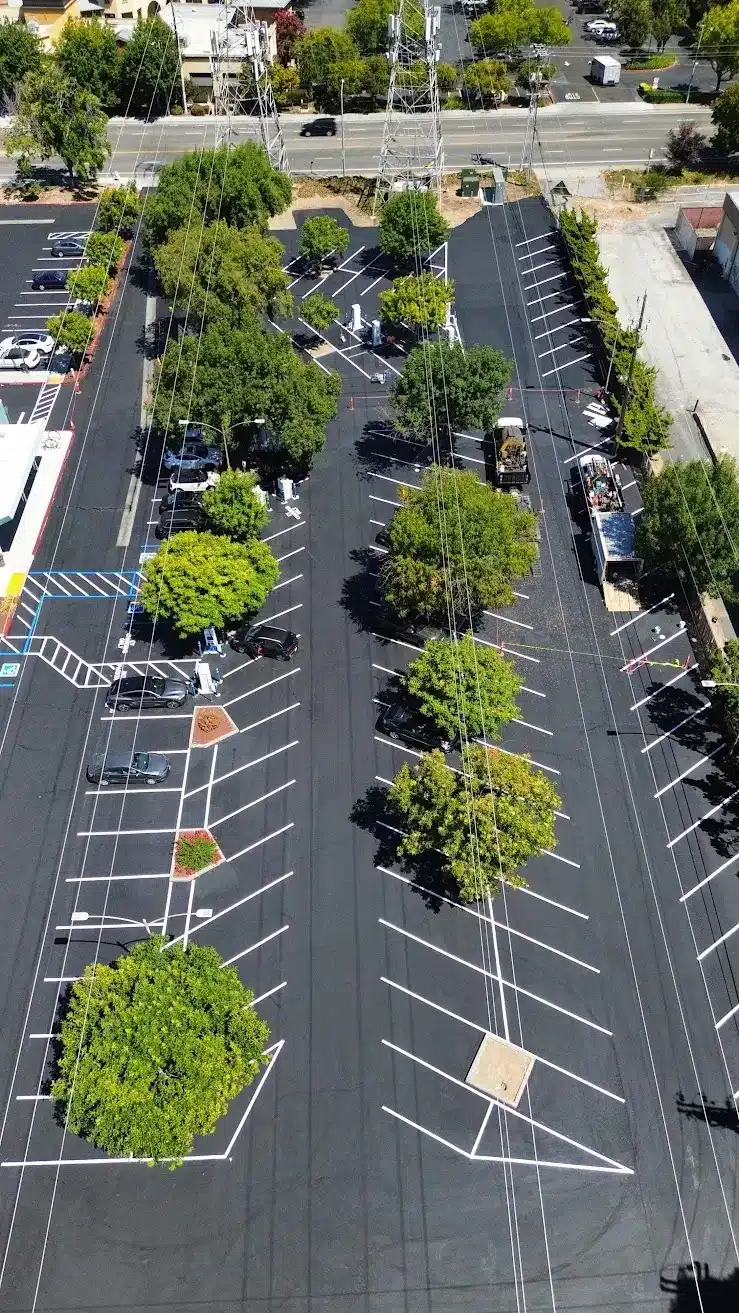
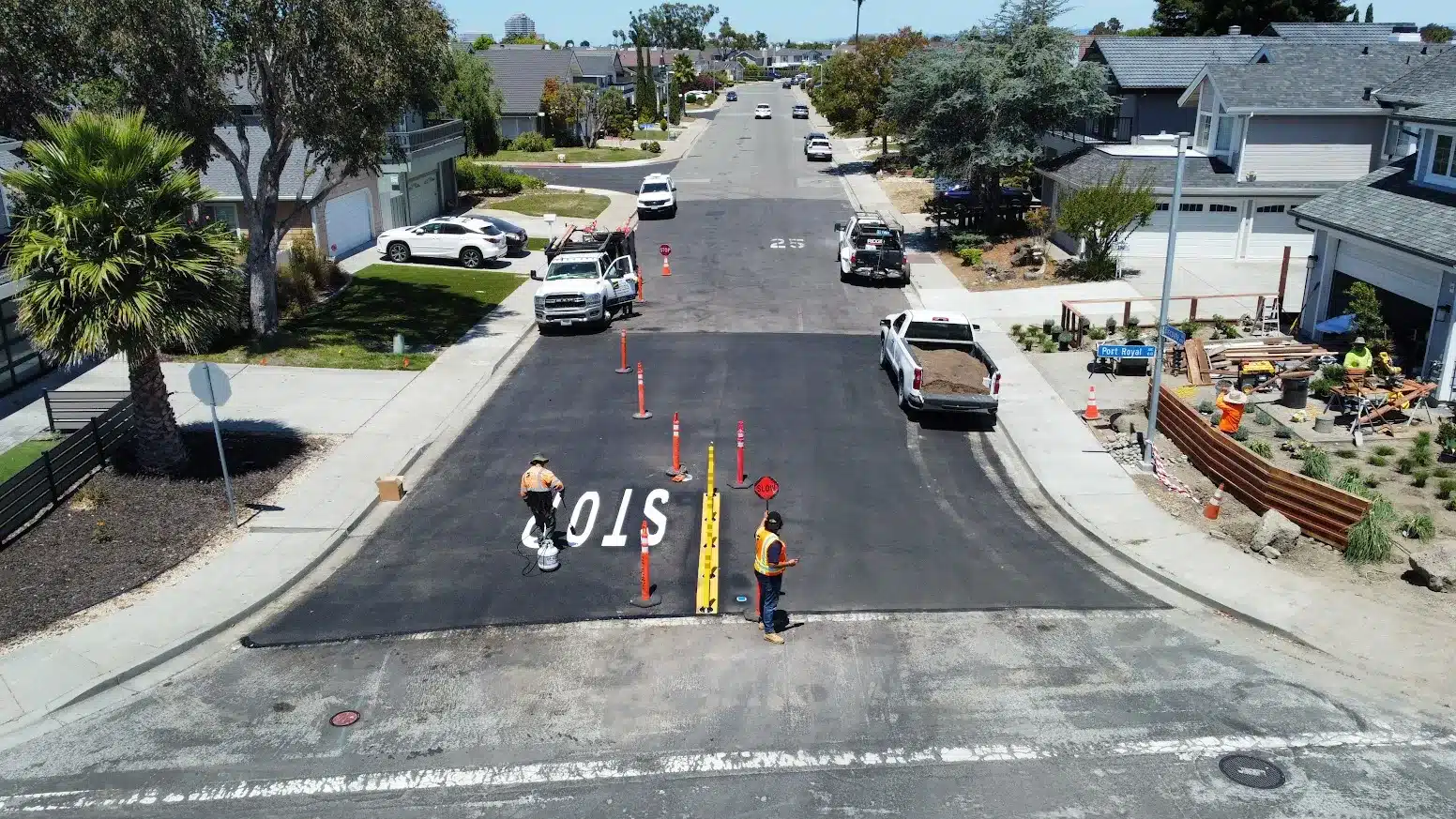
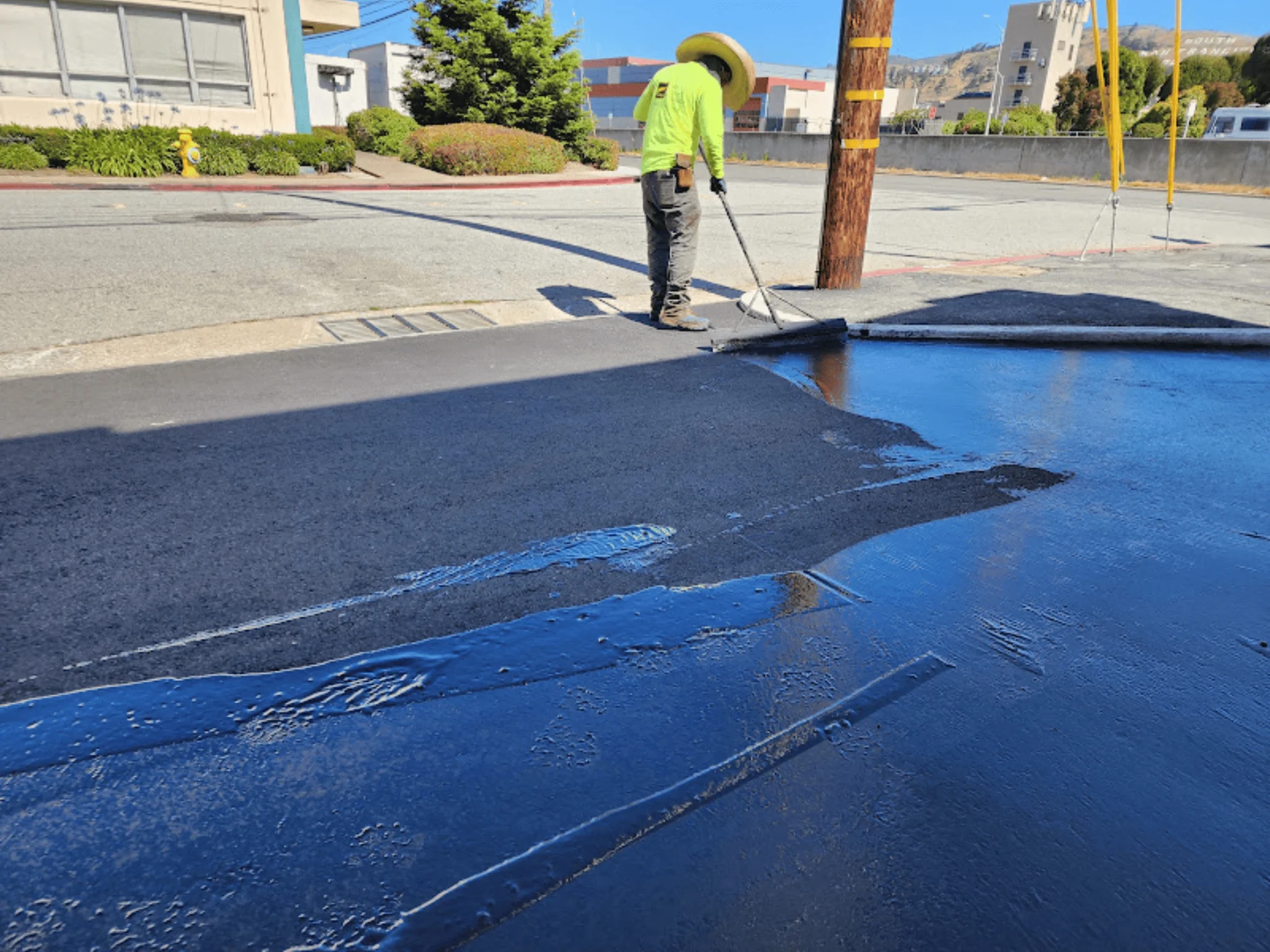
A project such as the Sealcoating Newark Project belongs in this conversation because sealcoating is not only about applying material. It is about preparing a working pavement surface so the coating supports the property’s maintenance goals.
The same principle applies to hospitality properties, where appearance and access both matter. The Napa Embassy Suites project is a useful example of sealcoating as part of maintaining a property’s exterior presentation, not just darkening asphalt.
For active commercial or community properties, timing also matters. Work may need to be phased around guests, tenants, residents, customers, or deliveries. That is one reason sealcoating should be scheduled, not rushed.
When Sealcoating Is Probably the Wrong Answer
A serious property owner should ask when sealcoating is not appropriate.
The wrong time to sealcoat is when the pavement needs repair first.
Warning signs include deep potholes, widespread cracking, soft areas, loose aggregate, severe raveling, drainage failures, repeated patch failure, or broken pavement edges. If those problems are present, sealcoating may only improve the look of the lot while leaving the real issue active.
That does not mean the property cannot be improved. It means the scope should be chosen honestly.
Sometimes the correct sequence is repair first, then sealcoat later. Sometimes it is crack filling and localized patching before coating. Sometimes it is resurfacing rather than sealing. Sometimes it is simply too early to seal again because the last coating is still performing.
The property owner’s job is not to pick the cheapest visible option. The job is to pick the treatment that matches the pavement condition.
A sealcoating project like the Sunnyvale Sealcoating Project fits best when the goal is surface protection and presentation on pavement that can still support that kind of maintenance treatment.
A Simple Way to Decide if Sealcoating Makes Sense
Sealcoating makes sense when three things are true.
First, the asphalt is still structurally stable. Second, the surface can be cleaned and prepared properly. Third, any cracks or minor defects are addressed before coating.
If those conditions are not present, the owner should slow down and reassess.
A practical pre-sealcoating review should ask:
- Is the asphalt faded but still firm?
- Are there cracks that need treatment first?
- Are potholes or soft spots present?
- Does water drain away properly?
- Are oil spots or surface contaminants present?
- Are edges still intact?
- Will the lot need striping after the coating cures?
- Can the work be scheduled without disrupting access unnecessarily?
These questions prevent sealcoating from becoming a superficial decision.
The best sealcoating projects do not start with “the lot looks gray.” They start with “the pavement is ready for surface protection.”
Sealcoating Is Simple, but It Should Not Be Casual
What is sealcoating?
It is a protective coating applied to asphalt pavement to help preserve the surface, improve appearance, and slow damage from weather, traffic, and oxidation. That is the simple definition.
The more important truth is this: sealcoating only works well when it is used at the right time and for the right pavement condition.
A parking lot or driveway that is still stable can benefit from surface protection. A pavement system that is already failing needs repair decisions first. Property owners save money and frustration by understanding the difference before the coating is applied.
At We Love Paving, we look at sealcoating through a practical maintenance lens: whether the pavement is ready, which cracks or weak spots need attention first, how the surface will be used after coating, and whether sealcoating supports the long-term condition of the property rather than simply making the asphalt look darker for a while.