Construction fencing is often treated as a temporary requirement that disappears once the work is complete. On active commercial properties, however, fencing usually affects far more than jobsite boundaries.
For property managers, facility operators, HOAs, retail centers, schools, and industrial sites, temporary fencing can influence vehicle circulation, pedestrian routing, maintenance access, deliveries, visibility, drainage patterns, and even how tenants experience the property during ongoing work.
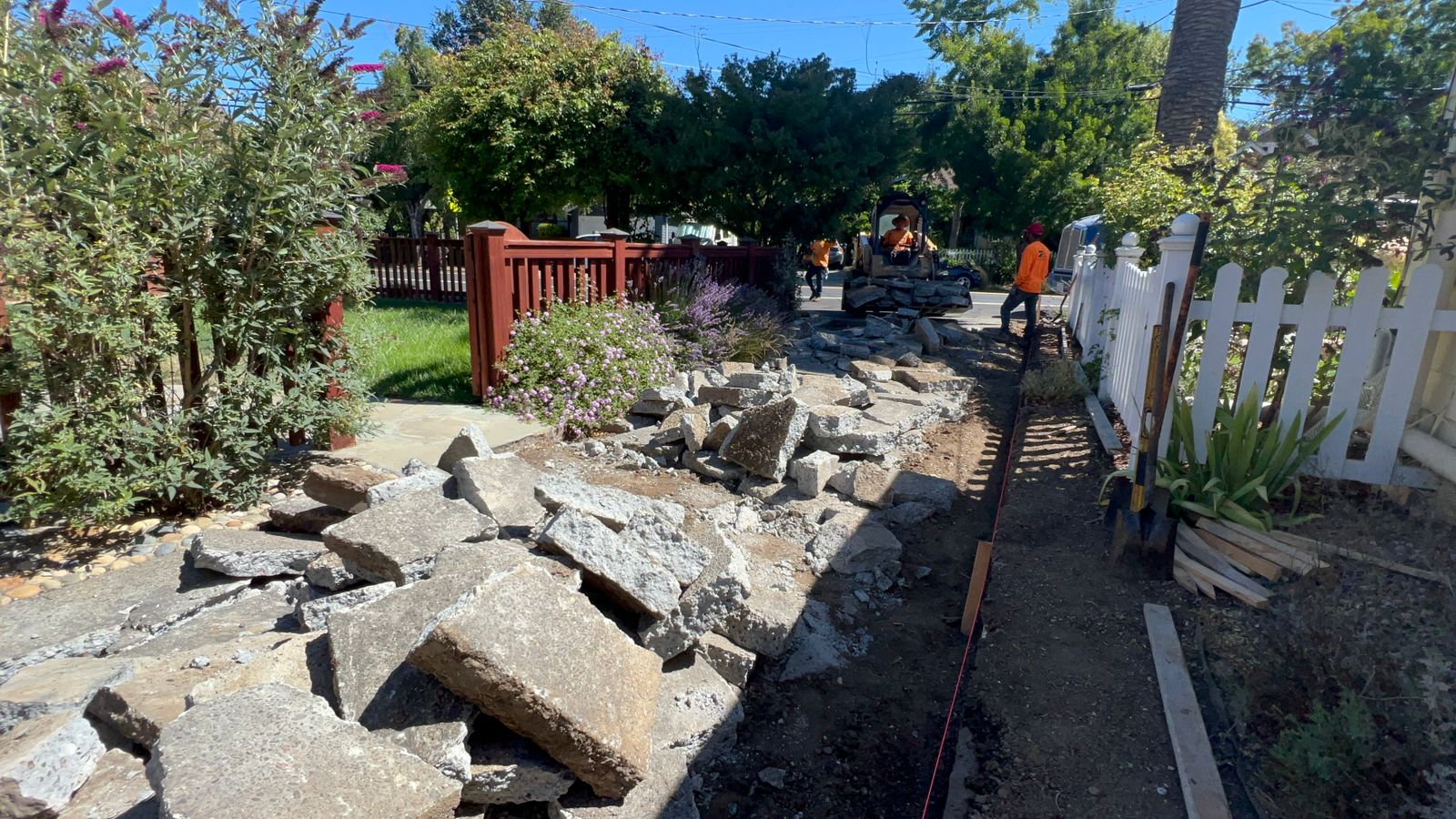
That becomes especially important on properties where paving, concrete work, striping, drainage corrections, or phased maintenance projects are happening while the site remains operational.
In many cases, fencing decisions made early in a project can either help operations run smoothly or create avoidable disruption later.
Temporary Fencing Often Changes How a Property Functions
Commercial properties rarely shut down completely during maintenance or construction work. Parking lots still operate. Tenants still receive deliveries. Customers still need safe access routes. Employees still move through the site throughout the day.
Because of that, fencing placement becomes part of operational planning rather than just site security.
On larger commercial paving projects, fencing can affect:
- delivery vehicle turning movement;
- emergency access routes;
- parking availability;
- pedestrian circulation;
- trash enclosure access;
- visibility near entrances;
- drainage flow during rain events;
- staging and material storage;
- traffic-control layouts.
Properties with multiple contractors working simultaneously often experience the biggest challenges. A poorly positioned fence may force pedestrians into vehicle lanes, narrow turning areas for service trucks, or reduce visibility near busy entrances.
On retail and mixed-use properties, even temporary circulation confusion can create frustration for tenants and visitors.
That is why many facility managers now review fencing layouts together with broader site-maintenance planning rather than treating fencing as a separate isolated item.
When phased paving work overlaps with traffic-control adjustments or access-route changes, broader property coordination sometimes becomes part of a larger operational review through services such as commercial paving planning.
Fencing Decisions Usually Depend on the Type of Property
Different commercial environments create different fencing priorities.
A distribution facility handling constant truck traffic has very different operational concerns than a retail plaza or HOA community.
The table below highlights how fencing priorities often change depending on property use.
| Property Type | Common Fencing Concern | Operational Priority |
|---|---|---|
| Retail Centers | Customer circulation confusion | Maintaining visible entrances |
| Industrial Facilities | Truck maneuverability | Protecting loading access |
| HOA Communities | Resident disruption | Preserving pedestrian access |
| Schools & Campuses | Student movement patterns | Separating work zones safely |
| Healthcare Properties | Emergency access continuity | Maintaining uninterrupted routes |
| Office Complexes | Parking redistribution | Minimizing daily disruption |
This is one reason why construction fencing cannot always follow a generic layout approach.
A site with aging pavement, drainage issues, or deteriorating striping may already have circulation limitations before construction begins. Once fencing narrows available movement areas, those existing conditions become more noticeable.
Where pavement deterioration and temporary route changes overlap, broader parking lot maintenance planning sometimes becomes part of preserving traffic flow during active work.
Pavement Conditions Can Affect Fence Stability and Placement
One issue property owners sometimes overlook is how existing pavement conditions influence temporary fence performance.
Older asphalt surfaces with cracking, edge deterioration, or settlement can make fencing less stable, particularly during extended projects or windy conditions.
Temporary fence panels placed over uneven pavement may shift more easily over time, especially where:
- asphalt edges are breaking apart;
- pothole patching has created uneven surfaces;
- drainage has softened base material;
- heavy equipment repeatedly crosses the same area;
- surface elevation changes create instability.
This becomes more noticeable on long-duration commercial projects where fencing remains installed for weeks or months.
In some cases, deteriorated pavement conditions also reduce usable staging space. Contractors may need to relocate fencing farther from failing asphalt sections or unstable edges to maintain safer movement through the site.
Where recurring pavement failures continue appearing near staging areas, discussions around asphalt repair may become part of broader long-term property planning rather than isolated patchwork.
Pedestrian Routing Becomes More Important During Active Construction
Many commercial properties focus heavily on vehicle movement during construction while underestimating pedestrian behavior.
People rarely follow ideal circulation patterns once normal walkways are blocked.
Visitors often look for the shortest visible route, even if fencing unintentionally redirects them through loading zones, drive aisles, or active work areas.
This is especially common at:
- retail properties;
- apartment communities;
- office campuses;
- schools;
- mixed-use developments.
Temporary fencing layouts that seem reasonable on paper sometimes create confusion once real pedestrian traffic begins interacting with the site.
For example, fencing that blocks a familiar walkway without providing clear directional flow may cause pedestrians to cut across landscaping, parking stalls, or service lanes instead.
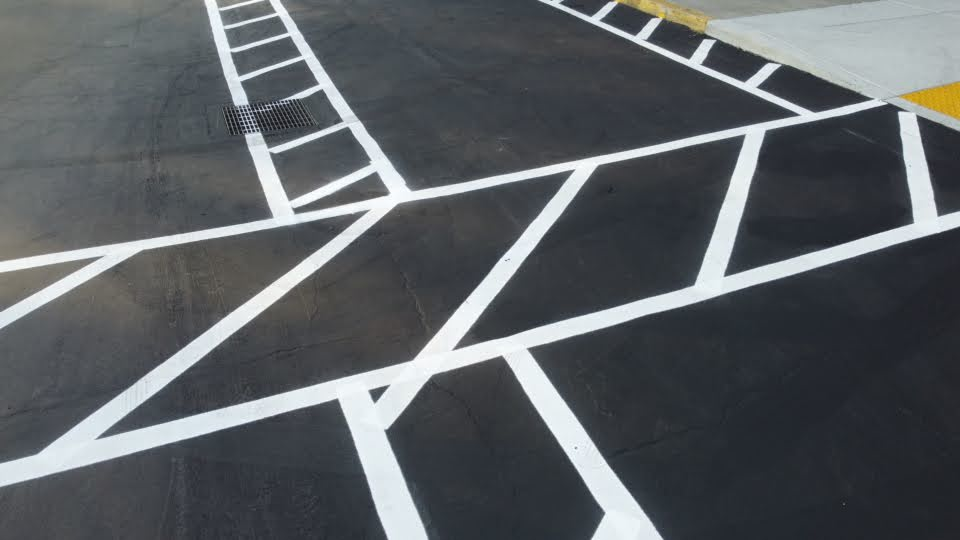
That issue becomes more noticeable when faded pavement markings, worn crosswalk visibility, or older traffic layouts already affect site clarity.
On properties where route visibility and pavement organization are already inconsistent, conversations around parking lot striping sometimes emerge alongside temporary access planning.
Construction Fencing Can Influence Drainage and Surface Wear
Temporary fencing may also affect how water moves across a property.
Although fencing itself does not usually create drainage problems directly, fencing layouts can change vehicle patterns and concentrate traffic in smaller areas.
That concentrated traffic often accelerates wear near:
- temporary entrances;
- loading detours;
- narrowed drive lanes;
- staging zones;
- material storage areas.
On commercial properties with existing low spots or weak pavement sections, repeated vehicle loading in temporary circulation areas may increase surface fatigue faster than expected.
Water pooling can also become more noticeable once fencing redirects traffic into portions of the site that normally receive less daily use.
For facility managers, this is one reason construction planning increasingly overlaps with broader pavement lifecycle discussions.
Instead of viewing fencing as only a temporary logistics item, many operators evaluate how construction traffic may accelerate maintenance timelines across the rest of the property.
On larger commercial sites where heavy use and aging asphalt overlap, long-term pavement management discussions often begin before visible structural failure becomes severe.
Why Phased Construction Usually Works Better on Active Commercial Sites
Many occupied commercial properties now rely on phased work schedules to reduce operational disruption.
Instead of closing an entire lot or access area at once, contractors divide projects into controlled sections that allow portions of the property to remain functional.
In those situations, fencing becomes part of a larger sequencing strategy.
Well-planned phasing can help properties:
- maintain tenant access;
- reduce parking loss;
- preserve delivery routes;
- improve pedestrian predictability;
- minimize business interruption;
- avoid overlapping contractor congestion.
Poor phasing, on the other hand, often creates secondary maintenance problems. Repeated vehicle rerouting may overload pavement sections not designed for heavy traffic, while narrow temporary circulation routes can increase edge wear near curbs and islands.
This is particularly important for properties already managing deferred maintenance.
Older commercial sites sometimes experience a chain reaction where temporary construction circulation accelerates existing deterioration that had previously remained manageable.
That does not necessarily mean fencing causes pavement failure. More often, fencing exposes operational weaknesses already present in the site layout.
Property Managers Usually Evaluate More Than Security
When commercial owners discuss fencing in construction, the conversation often begins with security but quickly expands into broader operational concerns.
Experienced property managers typically evaluate:
- visibility for customers and tenants;
- contractor coordination;
- circulation clarity;
- maintenance vehicle access;
- pedestrian predictability;
- nighttime visibility;
- loading and delivery patterns;
- protection of newly completed work.
The most successful projects usually involve coordination between paving schedules, striping plans, access routing, fencing placement, and daily site operations.
That coordination becomes especially important on properties that cannot fully shut down during active work.
At We Love Paving, we often see how temporary construction decisions affect long-term property conditions well beyond the active work zone itself. Fencing, circulation adjustments, staging areas, and traffic redistribution can all influence how commercial pavement systems wear over time, especially on busy properties balancing ongoing operations with maintenance planning.