Introduction
California is the #1 state in the country for ADA lawsuits, and the numbers keep rising every year.
Looking for a full breakdown of how to prevent ADA lawsuits in 2026?
Check out the 2026 ADA Compliance Checklist by StopADALawsuits, where you can review the latest California requirements and run a free risk assessment.
Why?
Because ADA compliance is strict, technical, and heavily enforced—and plaintiffs know that most properties have hidden violations.
In 2026, the easiest way to avoid lawsuits is simple:
Fix the violations before someone else finds them.
This guide explains the most common ADA issues we see in parking lots and what Property Managers must do to stay compliant and reduce risk.
1. Why ADA Lawsuits Are So Common in California
There are three main reasons:
1) California has stricter enforcement than other states
The state follows both ADA + CBC (California Building Code), making requirements more detailed.
2) Most violations are invisible to the untrained eye
The difference between compliant and non-compliant can be a few inches or a slope of 0.5%.
3) Serial plaintiffs are constantly scanning properties
Professional plaintiffs visit dozens of lots every week looking for easy wins.
A single incorrect slope or missing sign can trigger a $4,000–$15,000 lawsuit.
2. The 7 Most Common ADA Parking Lot Violations in 2026
If your property has any of these, you’re at risk:
1) Slopes over 2% in accessible stalls
The #1 cause of lawsuits.
PMs think it’s “flat,” but inspectors measure with digital levels.
2) Improper access aisles
Wrong width, wrong striping, wrong slope, missing cross-hatching.
3) Incorrect signage height or missing signs
Simple and extremely common.
4) Incorrect layout or dimensions
Stalls and aisles must follow strict measurements.
5) Missing or improper truncated domes
Placement, color, and spacing matter.
6) Incorrect path of travel
Obstructions, elevation changes, steep areas, or disruptions in the accessible route.
7) Faded or confusing striping
If it’s unclear → it’s a violation.
Most ADA violations have nothing to do with the building —
they’re in the parking lot.
3. Why ADA Violations Cost So Much (Even If They’re Small)
Because California law adds:
-
Statutory damages
-
Attorney fees
-
Cost of remediation
-
Penalties for non-compliance
This means:
A $300 fix can easily become a $10,000+ lawsuit.
Most PMs don’t realize:
You don’t need a customer complaint to be sued.
A plaintiff only needs to see the violation.
4. How to Avoid Being a Target in 2026: The Prevention Plan
Here’s how smart Property Managers protect themselves.
Step 1: Get a Professional ADA Site Assessment
A proper ADA assessment includes:
-
Slope measurements (digital)
-
Signage review
-
Layout verification
-
Truncated dome inspection
-
Path of travel analysis
-
Striping + marking inspection
-
CBC + ADA comparison
A walk-through is not enough —
you need measurements, photos, and a corrective plan.
Step 2: Fix High-Risk Violations First
The highest-risk violations are:
-
Slopes > 2%
-
Missing signage
-
Incorrect wheelchair symbol
-
Bad access aisles
-
Incorrect curb ramp design
-
No truncated domes
These are the “easy wins” for serial plaintiffs.
Step 3: Update Striping & Signage to 2026 Standards
Fresh striping + correct signage dramatically reduces risk.
It also shows inspectors your site is actively maintained.
Step 4: Repair or Replace Non-Compliant Ramps
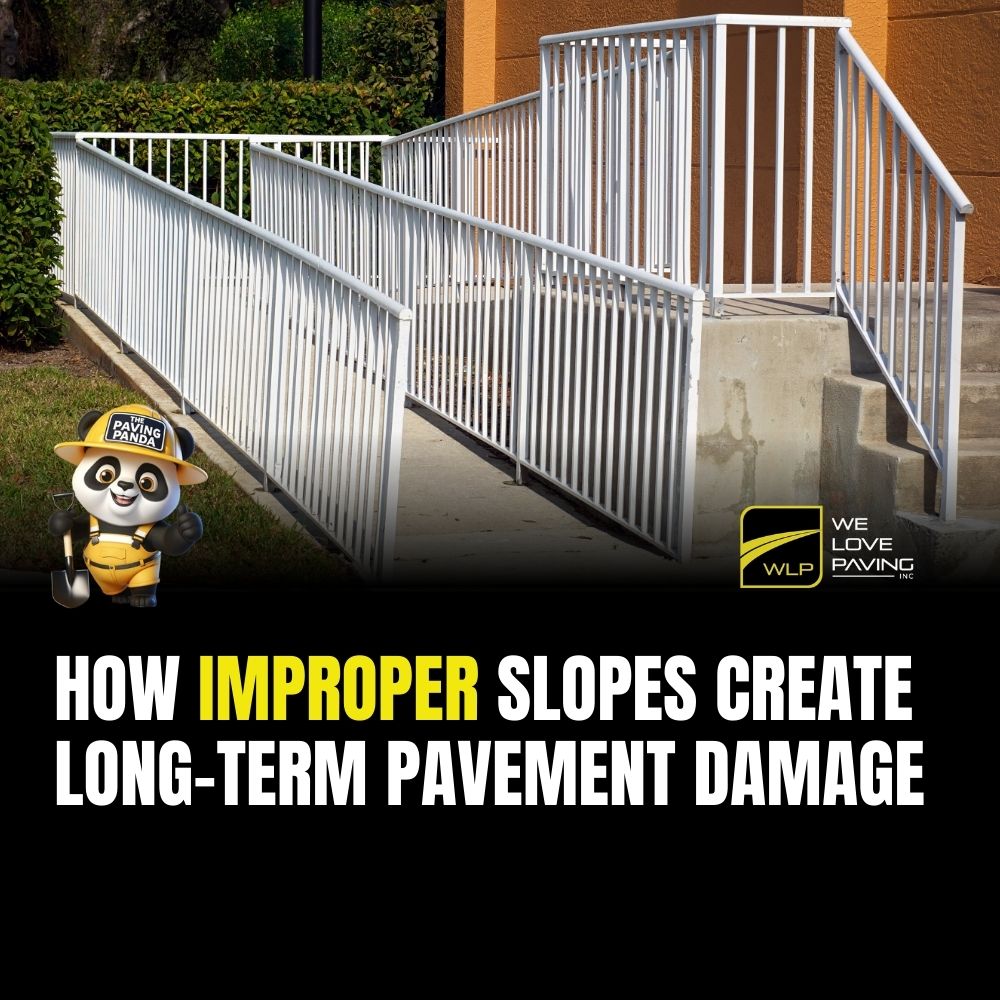
Many ramps built years ago no longer meet 2026 standards.
A quick evaluation determines whether:
-
Grinding
-
Regrading
-
Replacement
-
Or reconfiguring access aisles
is required.
Step 5: Maintain Documentation
If you ever get questioned, documentation is your protection.
Keep:
-
Photos “before” and “after”
-
Plan of action
-
Contractor scope
-
Dates of maintenance
-
Slopes and measurements
Paperwork can stop a claim before it becomes a lawsuit.
5. The Cost of Prevention vs. The Cost of a Lawsuit
This is why PMs trust WLP:
Cost of ADA corrections:
$1,500–$8,000 on average (depending on scope)
Cost of an ADA lawsuit:
$10,000–$40,000+
Per incident.
Prevention is always cheaper than litigation.
Conclusion: ADA Compliance Is Not Optional in 2026
ADA enforcement is rising, plaintiffs are more active, and California standards are stricter than ever.
But the good news is:
Most violations are easy to fix —
if you identify them early and work with a qualified contractor.