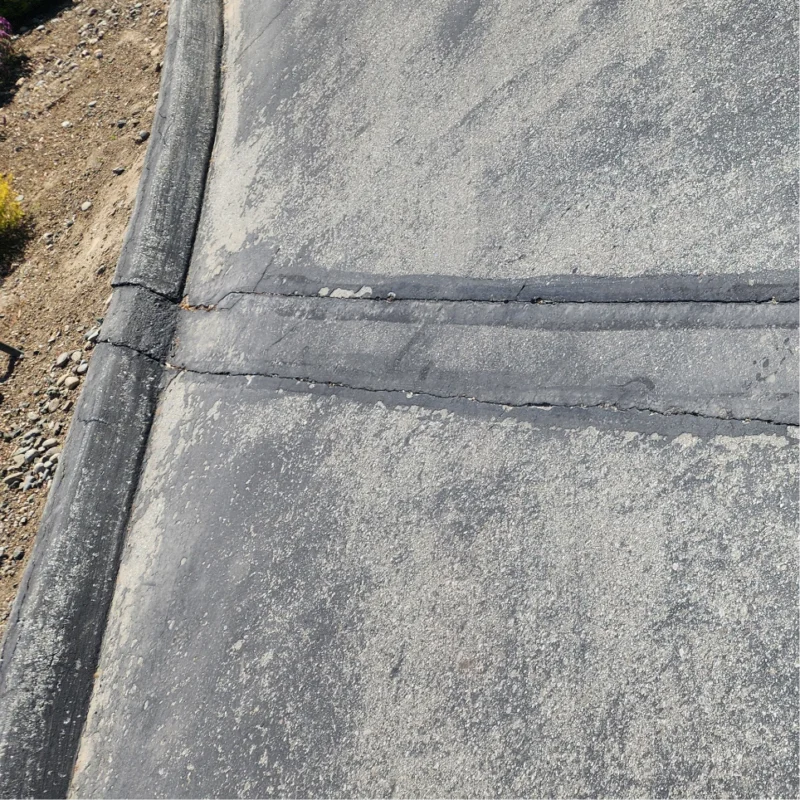
What causes asphalt to crack?
The simple answer is stress. The more useful answer is that asphalt cracks when water, traffic, aging, temperature movement, poor drainage, weak support, or delayed maintenance overwhelm the pavement’s ability to stay flexible and bonded together.
A crack is not always a sign that the entire pavement has failed. But it is a signal that something is changing. The surface may be drying out. Water may be entering. Heavy vehicles may be stressing the same area repeatedly. The base may be moving. Drainage may be pushing moisture into weak spots. Old repairs may be losing stability.
The mistake property owners make is treating every crack as the same problem.
A thin surface crack near a dry parking stall is not the same as connected cracking near a drain. A crack beside a loading zone is not the same as a crack in a low-use corner. A crack that returns after repair is not the same as a first-time hairline crack in otherwise stable asphalt.
For commercial properties, landlords, HOAs, residential communities, facility managers, and property managers, the goal is not to panic over every line in the pavement. The goal is to understand why cracks are forming early enough to stop the damage from spreading.
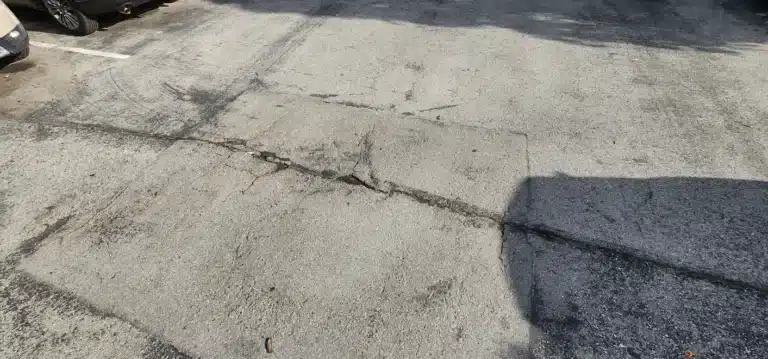
Asphalt Cracks When the Surface Loses Flexibility
Asphalt is not rigid like concrete. It is a flexible pavement system.
That flexibility matters because pavement moves. It expands and contracts with temperature changes. It carries vehicles. It responds to moisture, base conditions, and traffic loads. When asphalt is healthy, it can absorb a certain amount of movement without immediately breaking.
Over time, the surface changes.
Sunlight, oxygen, weather exposure, traffic, and age gradually make asphalt drier and more brittle. The dark black surface fades toward gray. The pavement may feel rougher. Small surface cracks may appear. That does not always mean immediate failure, but it does mean the asphalt is losing some of the flexibility that helps it resist cracking.
This is one reason old asphalt cracks even without a dramatic event.
The pavement may simply become less able to move without splitting. Once that happens, small cracks can appear across parking lots, drive aisles, residential driveways, access roads, or HOA pavement.
The early response should not be random repair. It should be condition review. If the surface is still stable, maintenance may help slow deterioration. If the cracking is widespread or connected, the pavement may need deeper evaluation.
Water Is One of the Main Reasons Cracks Get Worse
Water does not always create the first crack, but it often makes cracks worse.
Once a crack opens, water has a path into the pavement. That water can move below the surface, weaken support, collect in low areas, and work with traffic to expand the damage. If the pavement has poor drainage, the problem becomes more serious.
Standing water is especially important.
If water sits near the same crack after every rain, the crack is exposed again and again. The surrounding asphalt may soften, loosen, or break at the edges. Over time, a simple crack can become a wider opening, a pothole, or a repair area.
This is why property owners should inspect asphalt after rain, not only when the surface is dry. Dry pavement hides water behavior. Wet pavement shows where the lot is vulnerable.
The orphan page on parking lot warning signs fits this stage of review because cracks rarely appear alone. They often show up with standing water, faded markings, loose edges, broken patches, or surface wear.
The useful question is not only “Do we have cracks?” It is “What is feeding those cracks?”
Traffic Load Turns Small Weaknesses Into Visible Cracks
Traffic does not affect every pavement area equally.
Entrances, exits, drive aisles, loading zones, trash enclosure routes, delivery paths, tight turning areas, and parking rows with constant use take more stress than quiet corners. Heavy vehicles add even more pressure.
Asphalt cracks when repeated load exceeds what the surface and base can handle.
A passenger car crossing a stable parking stall may not cause visible damage. But delivery trucks turning over the same section every day can create stress that eventually appears as cracking, rutting, edge failure, or surface breakup. Trash trucks and loading vehicles are especially hard on pavement because they combine weight with slow movement, braking, and turning.
This is why cracks often form in patterns.
You may see them near dumpster areas, along drive lanes, around loading docks, by entrances, or beside older patches. These locations reveal how the property is actually being used.
A property manager who understands traffic patterns can prioritize better. The property manager perspective matters because cracking is not only a pavement issue; it is a scheduling, budgeting, tenant-use, and access-management issue.
Poor Base Support Can Cause Cracks From Below
Some cracks start below the surface.
Asphalt depends on the layers underneath it. If the base is weak, poorly compacted, saturated with water, washed out, or moving, the surface above it may crack even if the asphalt layer itself was not the original problem.
This is where simple surface fixes can fail.
If a crack is caused by weak support underneath, filling the visible opening may not solve the underlying movement. The crack may return. Nearby pavement may sink. A patch may fail. Potholes may form in the same area repeatedly.
Base-related cracking is more likely when you see:
- Repeated failure in the same area
- Cracks near standing water
- Depressions or sinking pavement
- Potholes forming beside cracks
- Alligator-style cracking patterns
- Patchwork areas that keep breaking down
- Cracks around utility cuts or old repairs
This does not mean every crack requires reconstruction. It means cracks should be read in context.
When cracking is isolated and the surrounding pavement remains stable, asphalt crack filling may help reduce water entry and slow deterioration. When the surrounding pavement is moving or failing, crack filling alone may be too limited.
Drainage Problems Make Cracking More Predictable
If water repeatedly moves through the same areas, cracking becomes easier to predict.
Look near curb lines. Look around catch basins. Look in low areas. Look where landscape runoff crosses asphalt. Look where irrigation overspray keeps edges wet. Look where shaded areas stay damp longer. These are the places where cracks often form or worsen because the pavement is exposed to repeated moisture.
Drainage-related cracks are not random.
They are clues that water is not leaving the surface cleanly or that moisture is entering the pavement system. If the same section keeps cracking, patching alone may not be enough. The water behavior has to be understood.
For commercial lots, drainage and traffic often overlap. A drive aisle that carries water and vehicle load will usually deteriorate faster than a dry, low-use parking row. That is why site context matters more than crack size alone.
When cracks appear near active drainage issues, paving maintenance should include inspection of water movement, not just surface treatment.
The weak approach is treating cracks one by one without asking why they keep appearing.
Temperature Movement Can Open Existing Weaknesses
Temperature changes also contribute to asphalt cracking.
Asphalt expands and contracts as conditions change. Hot weather can soften the pavement surface. Cooler weather can make asphalt less flexible. Seasonal shifts can open existing weaknesses, especially when the pavement is already aged, dry, or cracked.
This is why cracks often become more visible after seasonal changes.
A small weakness may expand as the pavement moves. Water may enter during wet periods. Traffic may then work the crack wider. The process is gradual, but the visible result can look sudden.
Temperature movement alone is rarely the full story. It usually works with other factors: age, water, traffic, base movement, drainage, or poor maintenance timing.
That matters because owners often ask, “Did the weather cause this?”
Sometimes weather contributed. But weather is usually one force in a larger system. The better question is whether the pavement was already vulnerable before the weather exposed the weakness.
Delayed Maintenance Turns Early Cracks Into Larger Repair Areas
Cracks are easier to manage before the edges break apart.
Once the edges start crumbling, the repair scope changes. Water enters more easily. Dirt fills the opening. Vegetation may grow. Traffic begins breaking the surrounding asphalt. The original crack becomes a wider damaged zone.
This is where delay becomes expensive.
The property owner may have missed the window for simple crack treatment. Now the area may require patching, cleaning, cutting, repair, drainage review, or a larger maintenance plan.
If cracking is already connected with potholes, edge breakup, or unstable pavement, parking lot repair may be the more honest category than preventive crack control.
The important distinction is timing. Early cracks can often be managed as maintenance. Advanced cracks may be part of repair planning.
A property owner who waits until cracks become obvious from across the lot has already lost some control.
When Cracking Means Replacement Should Be Discussed
Not every cracked pavement surface needs replacement.
That would be overselling.
But there is a point where repeated repairs stop making sense. If cracking is widespread, connected, returning after repair, accompanied by potholes, or linked to base failure, the owner may need to evaluate whether the pavement has moved beyond routine maintenance.
This is especially true for commercial properties where the lot carries heavy use every day. Repeated patching can become a poor financial strategy if the pavement system itself is no longer stable.
The orphan page on commercial pavement replacement belongs in this conversation only when cracking has become broad enough that preservation is no longer the main question.
The decision should not be based on fear. It should be based on evidence: crack patterns, drainage, base condition, patch history, traffic load, age, and how the pavement supports the property.
A cracked parking lot is not automatically a failed parking lot. But a lot that keeps cracking in the same places is telling you something.
How to Stop Asphalt Cracks Early
Stopping asphalt cracks early starts with observation, not guesswork.
Walk the property. Look after rain. Watch where vehicles turn. Identify cracks near drains, curbs, entrances, loading areas, and prior repairs. Compare current cracks with old photos. Track which ones are widening. Note whether they hold water or have loose edges.
Then choose the response based on condition.
Stable, isolated cracks may be suitable for crack treatment. Cracks near drainage problems may require water-flow review. Cracks connected to potholes may need repair. Repeated cracking may require deeper investigation. Widespread failure may call for resurfacing or replacement planning.
The wrong response is doing the same thing everywhere.
A practical early-crack plan should include:
- Inspecting cracks after rain and seasonal changes
- Prioritizing cracks in high-traffic and wet areas
- Cleaning debris from cracks before treatment
- Addressing drainage where water feeds deterioration
- Treating suitable cracks before edges crumble
- Repairing failed areas before surface treatments
- Keeping photos and notes for annual comparison
The goal is not to eliminate every crack forever. Asphalt is exposed to weather, traffic, and time. The goal is to prevent small cracks from becoming larger pavement failures faster than necessary.
Read Asphalt Cracks as Evidence
What causes asphalt to crack?
Usually, it is not one thing. It is the combined effect of aging, water, traffic, temperature movement, drainage problems, base support, and delayed maintenance. Each crack tells part of that story.
The strongest property owners do not ignore cracks, but they also do not overreact blindly. They read the pavement. They look at location, pattern, water, traffic, edge condition, and repair history. Then they decide whether the crack needs monitoring, filling, repair, drainage review, or a larger pavement plan.
At We Love Paving, we look at asphalt cracking through a practical property-maintenance lens: what caused the crack, where water and traffic are adding stress, whether the surface is still stable, and which early maintenance decisions can prevent a minor opening from turning into a larger repair area.