The Americans with Disabilities Act (ADA) ensures that individuals with disabilities have equal access to public accommodations, including parking facilities. California, known for its progressive stance on accessibility, has specific regulations that complement federal ADA standards to ensure that parking facilities are accessible to all individuals. Understanding these requirements is crucial for property owners, architects, and developers to ensure compliance and avoid potential legal issues.
Why Compliance Matters: More Than Just Federal Law In California, accessibility is governed not only by the federal Americans with Disabilities Act (ADA) but also by the Unruh Civil Rights Act. This state law establishes that any violation of the ADA is also a violation of California civil rights. For property owners, this means that non-compliant parking spaces don’t just risk federal fines; they open the door to state-level lawsuits and statutory damages, making strict adherence to CBC (California Building Code) standards a business necessity.
Federal ADA Requirements
Before delving into California-specific regulations, it is essential to understand the broader ADA requirements that apply nationwide. The ADA Standards for Accessible Design specify that parking facilities must include a certain number of accessible parking spaces, which must be appropriately marked, located, and sized. The requirements include:
- Number of Accessible Spaces: The number of accessible parking spaces required depends on the total number of parking spaces in the facility. For instance, a parking lot with 1 to 25 spaces must have at least one accessible space, while a lot with 501 to 1,000 spaces must have 2% of the total spaces accessible.
- Van-Accessible Spaces: At least one of every six accessible spaces, or a minimum of one, must be van-accessible. These spaces are wider to accommodate the additional space needed for a wheelchair lift.
- Dimensions: Accessible parking spaces must be at least 96 inches wide, with an adjacent access aisle of 60 inches. Van-accessible spaces require an access aisle of 96 inches wide.
- Signage: Each accessible space must be marked with a sign featuring the International Symbol of Accessibility. Van-accessible spaces must also include a “Van Accessible” designation.
- Location: Accessible spaces should be located on the shortest accessible route to the accessible entrance of the facility.
California-Specific Requirements
California’s regulations, outlined in the California Building Code (CBC), often go beyond federal ADA requirements to provide even greater accessibility. Key aspects of these regulations include:
- Number of Spaces: California requires more accessible spaces than the federal ADA standards. For instance, a parking lot with 1 to 25 spaces must have at least two accessible spaces, as opposed to one under federal standards.
- Van-Accessible Spaces: Similar to federal regulations, California requires that one of every six accessible spaces, or a minimum of one, be van-accessible.
- Dimensions: In California, accessible parking spaces must be at least 108 inches wide with a 60-inch access aisle, or 96 inches wide with a 96-inch access aisle for van-accessible spaces.
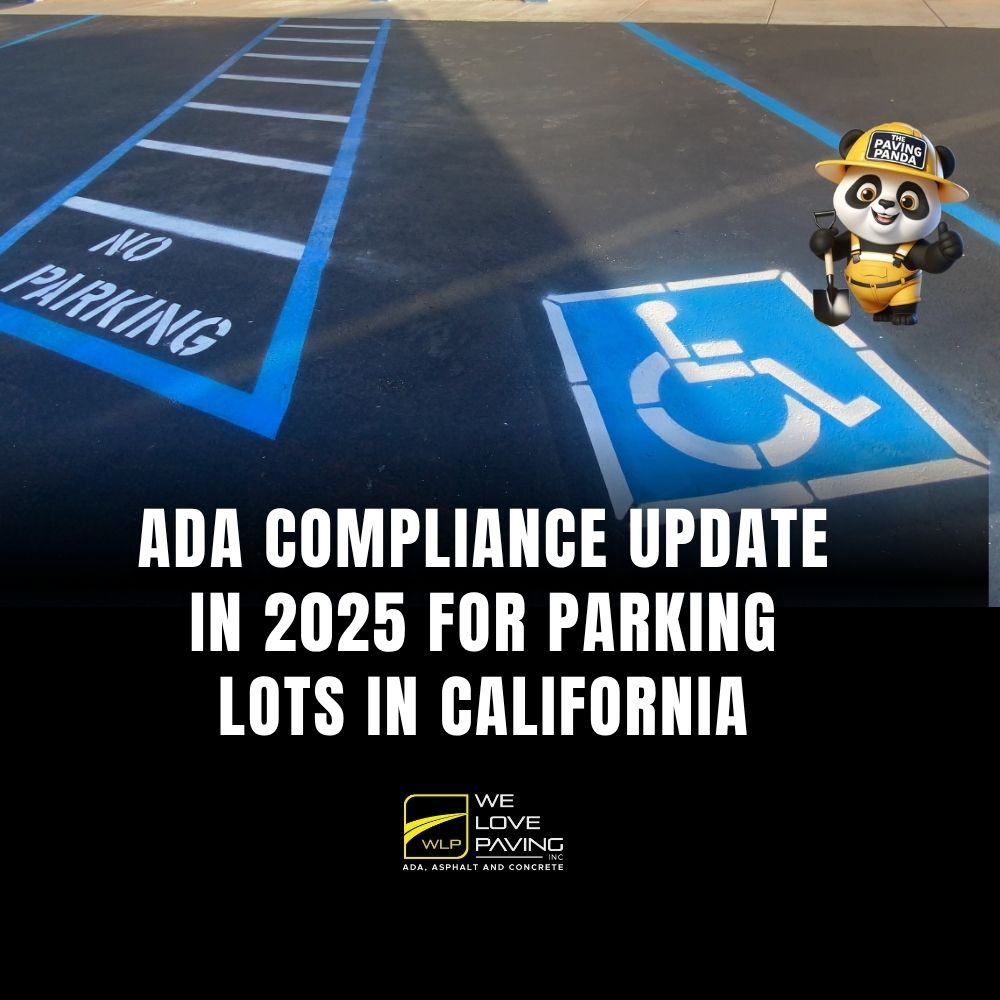
- Signage and Markings: California mandates additional signage. Accessible spaces must display a sign that reads “Minimum Fine $250” to deter illegal parking. The access aisles must be marked with the words “NO PARKING” in 12-inch-high letters.
- Surface Slope: The slope of accessible parking spaces and access aisles must not exceed 2% in any direction, ensuring a nearly level surface for easy mobility.
- Path of Travel: The accessible route from the parking space to the facility entrance must be free of obstructions and have a minimum clear width of 48 inches.
Recent Changes and Updates
To stay compliant, it is crucial to keep up with any changes or updates to accessibility regulations. Recently, there have been updates aimed at improving accessibility and addressing ambiguities in previous regulations:
- Electric Vehicle Charging Stations (EVCS): With the rise in electric vehicle use, California has introduced specific requirements for accessible EVCS. These regulations ensure that EVCS are accessible to individuals with disabilities, including appropriate signage, dimensions, and accessible routes.
- Increased Enforcement: There has been a push for stricter enforcement of accessibility regulations, with higher penalties for non-compliance. Property owners and developers must be vigilant in ensuring their facilities meet all accessibility standards to avoid costly fines and legal challenges.
- Technological Advancements: Advances in technology have led to the development of new accessibility solutions, such as automated parking systems and enhanced wayfinding tools. These innovations can provide additional benefits for individuals with disabilities, making parking facilities even more accessible.
Best Practices for Compliance
To ensure compliance with ADA and California accessibility requirements, property owners and developers should follow these best practices:
- Conduct Regular Audits: Regularly inspect parking facilities to ensure they meet current accessibility standards. Address any issues promptly to avoid non-compliance.
- Stay Informed: Keep up with changes to federal and state accessibility regulations. Subscribe to updates from relevant agencies and consult with accessibility experts.
- Involve Stakeholders: Engage individuals with disabilities in the planning and design process. Their input can provide valuable insights into potential accessibility challenges and solutions.
- Provide Training: Train staff on accessibility requirements and best practices. Ensure that employees understand the importance of maintaining accessible parking spaces and are equipped to address any issues that arise.
- Leverage Technology: Utilize technology to enhance accessibility. This can include installing automated systems, providing real-time availability of accessible spaces, and using digital wayfinding tools.
Ongoing Responsibility: The Principle of Barrier Removal Under Title III of the ADA, businesses have an ongoing obligation to remove architectural barriers in existing facilities when it is “readily achievable.” In the context of paving, this means that even if your lot was built years ago, you are required to update striping, signage, and slopes to meet current California ADA standards if the changes are easily accomplishable without much difficulty or expense.
Ensuring accessible parking is not just a legal obligation but a fundamental aspect of creating inclusive and welcoming environments for all individuals. By understanding and adhering to both federal and California-specific requirements, property owners and developers can contribute to a more accessible society. Regular audits, staying informed about regulatory changes, and involving stakeholders in the planning process are key steps to maintaining compliance and promoting accessibility.