Most paving companies focus only on installation. At We Love Paving, we take it further — engineering every surface with the entire asphalt lifecycle in mind. From soil compaction to preventative maintenance timelines, our work is designed not just to look good, but to last longer, perform better, and reduce total cost of ownership for property managers and municipalities alike.
Here’s how we build for decades — not just deliverables.
Phase 1: Subgrade Engineering & Soil Stabilization
The real strength of an asphalt surface starts where most never look: below the mat.
-
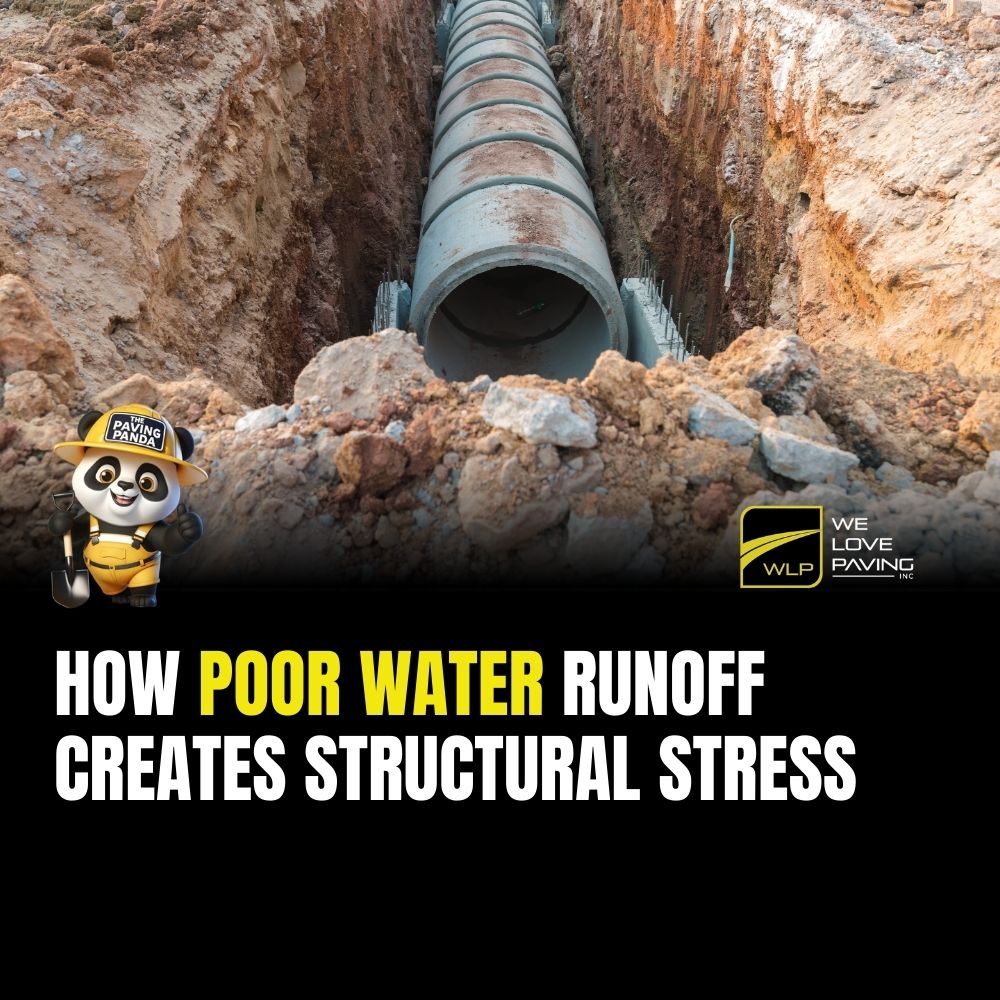
We conduct site-specific soil analysis to determine load-bearing capacity and drainage behavior.
-
Stabilization options include lime-treated subgrade or geo-grid reinforcement in areas with high clay or poor compaction values.
-
Laser grading ensures optimal slope and runoff performance, even before the first ton of asphalt is laid.
→ Result: A pavement system that resists failure from the ground up.
Phase 2: Material Selection Based on Application Type
Asphalt isn’t one-size-fits-all. WLP tailors every mix based on use case:
-
Type A dense-graded mixes for heavy-load areas like loading docks or fire lanes.
-
Type B/C for general use, optimized for thermal resistance and aging performance.
-
Rubberized or polymer-modified asphalt for areas with extreme temperature fluctuation or flexural needs.
-
All mixes are sourced from Caltrans-approved plants and tested for aggregate gradation, void ratio, and asphalt content.
→ Result: Every inch of asphalt is designed for its environment and purpose.
Phase 3: Strategic Compaction & Mat Density Control
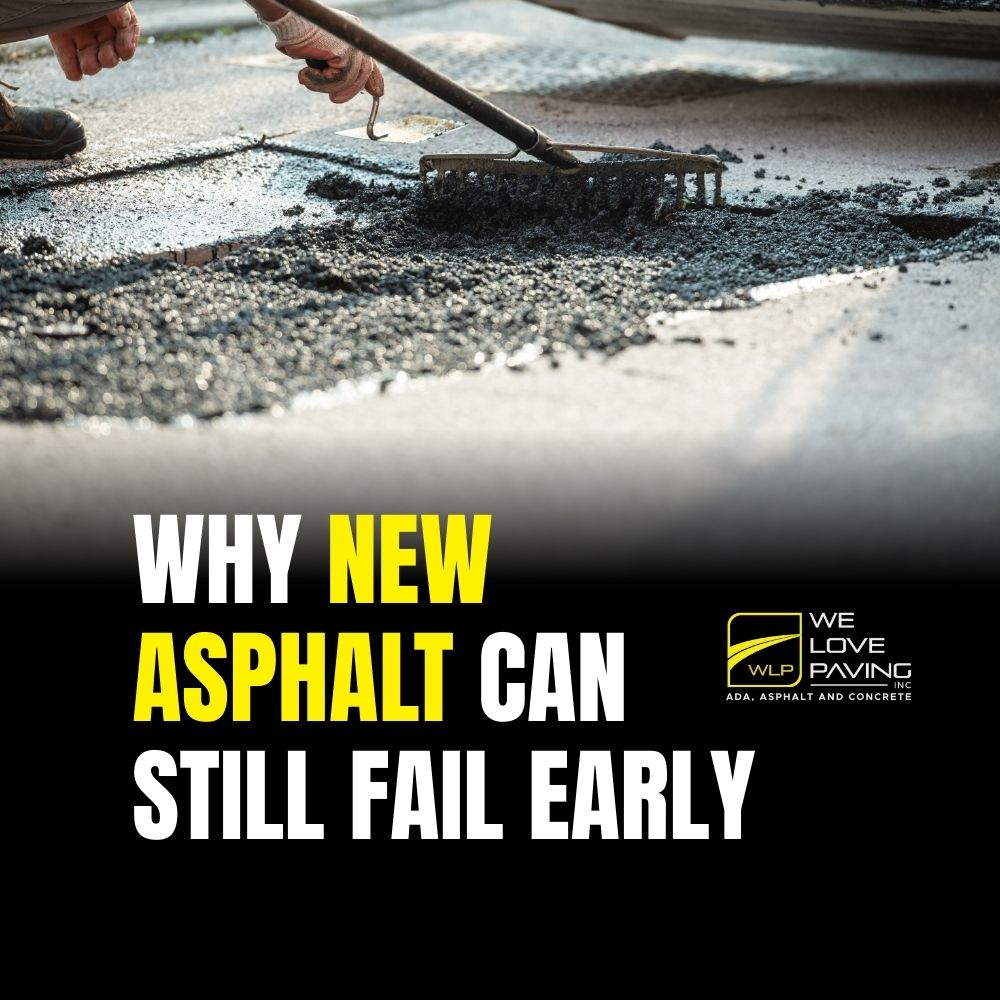
The #1 predictor of long-term pavement health? Compaction.
-
Our crews use GPS-calibrated steel drum and pneumatic rollers to meet 92–96% target density.
-
Seam overlaps are minimized with automated paver extensions and infrared reheating when needed.
-
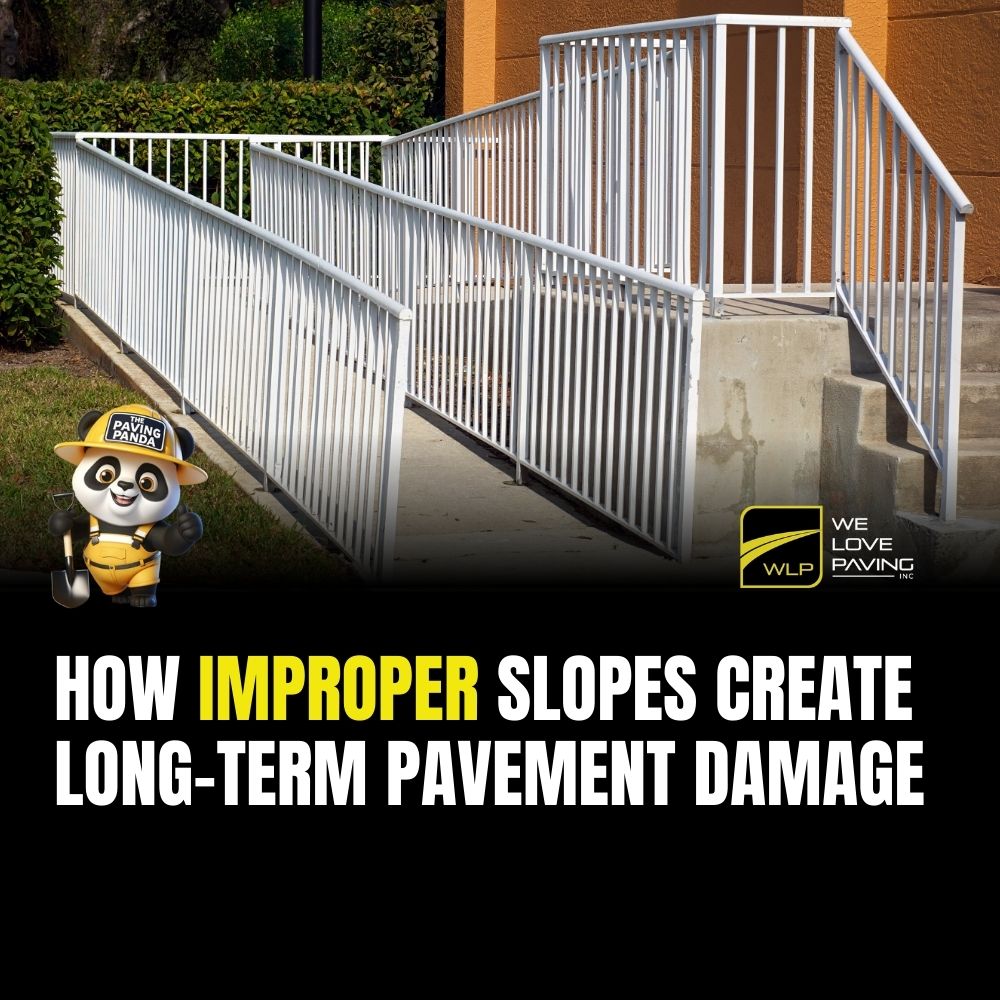
For critical areas (ADA ramps, transitions), we verify compliance with laser slope measurement tools.
→ Result: A surface that holds shape, resists moisture intrusion, and requires fewer repairs over time.
Phase 4: Proactive Maintenance Planning
We don’t just walk away when the pavement sets.
-
Clients receive a custom 5- to 10-year lifecycle plan, including recommended sealcoating, crack filling, and load inspections.
-
We track UV exposure, traffic loads, and oil intrusion levels to recommend predictive service windows.
-
Maintenance contracts include annual inspections to address issues before they become liabilities.
→ Result: Up to 35% increase in surface lifespan with reduced total cost of ownership.
Conclusion: Paving with the Future in Mind
At We Love Paving, we don’t just install asphalt — we engineer long-term performance. Every material, compaction pass, and slope calculation is part of a bigger strategy to ensure your pavement performs like infrastructure, not just a surface.
📞 Ready for a smarter approach to paving? Contact WLP for a technical site evaluation and discover the difference that lifecycle-based engineering makes.