Keeping your parking lot in good shape isn’t optional—it’s one of the smartest financial decisions a property owner or manager can make. Asphalt deteriorates quietly at first and then all at once. The difference between a well-maintained lot and a neglected one can be tens of thousands of dollars in avoidable repairs.
In 2026, with extreme weather, heavier traffic loads, and rising material prices, asphalt maintenance has never been more important.
This guide breaks down what asphalt maintenance is, how it works, and what you should realistically expect to spend this year.
What Is Asphalt Maintenance?
Asphalt maintenance refers to all the preventive and corrective actions used to protect a pavement surface, slow down deterioration, and extend its useful life.
In simple terms:
Maintenance keeps your parking lot from turning into expensive repairs.
Typical asphalt maintenance includes:
-
Sealcoating
-
Crack filling
-
Patching small problem areas
-
Pothole repair
-
Striping and pavement markings
-
Drainage improvements
-
Regular inspections & cleaning
These services protect the asphalt from water intrusion, UV oxidation, oil spills, and daily wear.
Why Asphalt Maintenance Matters for Property Managers
1. It Extends the Life of Your Parking Lot
A well-maintained asphalt surface can last 20–30 years.
A neglected lot? Sometimes less than 10.
2. It Lowers Long-Term Costs
Ignoring small problems leads to major damage:
-
Small crack → water intrusion → base failure → potholes → full-depth repair.
The difference: $0.30/ft vs. $8–$12/ft.
3. It Improves Curb Appeal & Tenant Satisfaction
Your parking lot is the first impression of your property. Clean, freshly striped lots increase perceived safety and cleanliness.
4. It Reduces Liability
Well-marked, defect-free pavement reduces:
-
Trip hazards
-
Tire damage claims
-
ADA liabilities
5. It Protects Your Investment
Your parking lot is often a six-figure asset. Preventive maintenance preserves that value.
How Asphalt Maintenance Works (Step-by-Step)
1. Inspection & Assessment
A contractor evaluates:
-
Pavement age
-
Cracking patterns
-
Drainage issues
-
Oxidation level
-
Base stability
-
Traffic flow
-
ADA compliance
This determines the right maintenance plan.
2. Cleaning & Surface Preparation
Before any service is applied, the pavement must be:
-
Cleaned
-
Blown out
-
Power washed (if needed)
-
Cleared of oil spots
-
Pre-treated for stains
The better the prep, the longer the maintenance lasts.
3. Crack Filling
Cracks are routed (optional), cleaned, and filled with hot rubberized material to prevent water from entering the base.
Cost: $0.30–$0.60 per linear foot
4. Patching or Pothole Repair
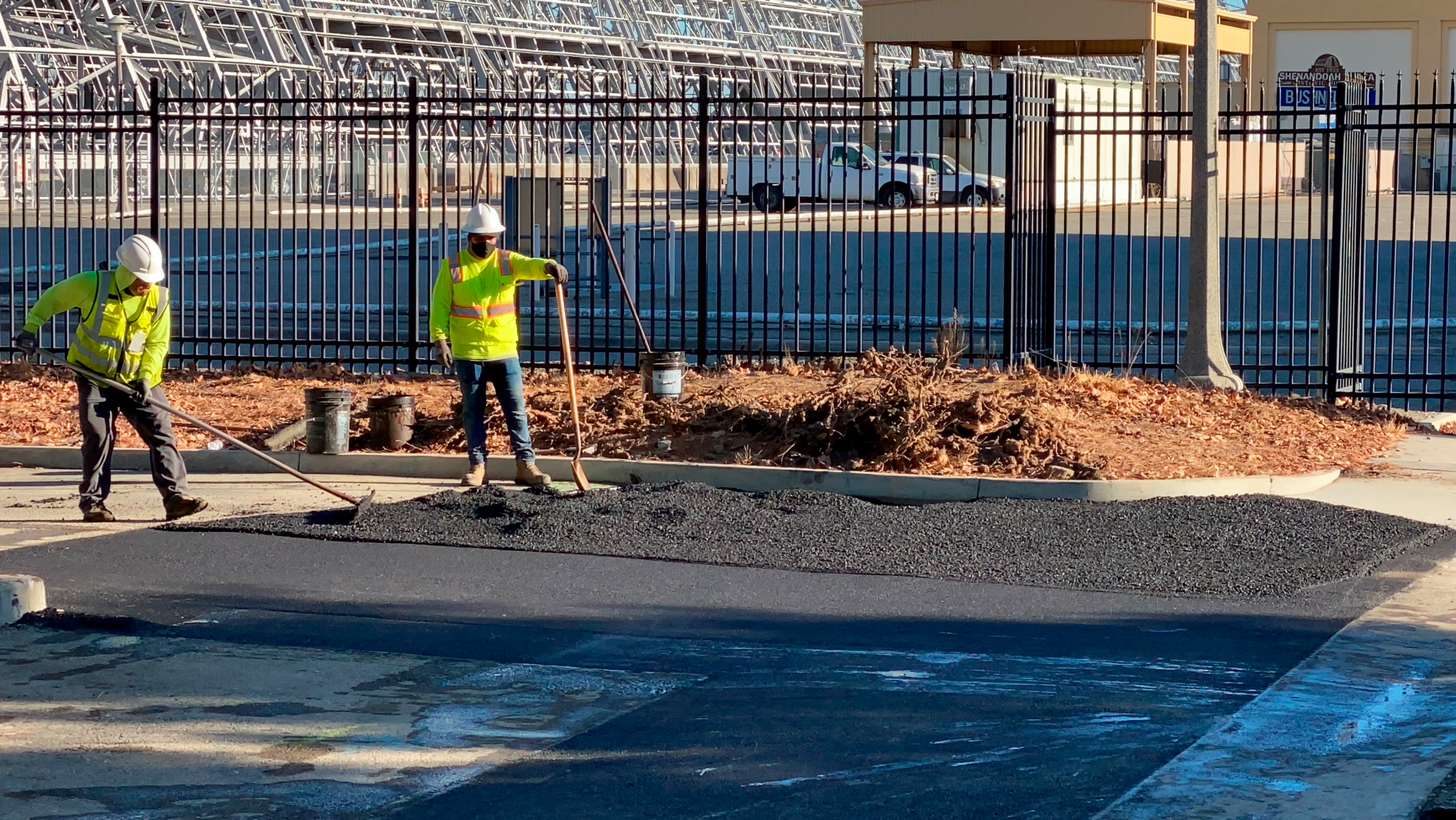
Small damaged areas are cut out and replaced with new hot mix asphalt.
Cost:
-
Skin patch: $3–$5 per sq ft
-
Cut & replace: $6–$12 per sq ft
5. Sealcoating
Sealcoat protects the asphalt from UV damage, weather, and oil penetration while restoring the black finish.
Cost: $0.18–$0.35 per sq ft
6. Striping & Markings
After sealing, pavement markings are re-applied:
-
Parking lines
-
Handicap stalls
-
Arrows
-
Fire lanes
-
No-parking zones
Cost: $0.12–$0.25 per linear foot (or per-stall pricing)
7. Ongoing Preventive Care
To maximize the life of the lot:
-
Seal every 2–3 years
-
Crack fill twice a year
-
Perform semiannual inspections
-
Repair small problems before they spread
What Asphalt Maintenance Really Costs in 2026
Exact pricing depends on location, layout, square footage, and pavement condition, but these are the typical ranges across the U.S.
🔹 Sealcoating:
$0.18–$0.35 per sq ft
🔹 Crack Filling:
$0.30–$0.60 per linear ft
🔹 Asphalt Patching:
-
Skin patch: $3–$5 per sq ft
-
Cut & replace: $6–$12 per sq ft
🔹 Pothole Repair:
$250–$650 per pothole depending on depth and size
🔹 Line Striping:
$0.12–$0.25 per linear ft
or $35–$50 per parking stall
🔹 ADA Markings & Signage:
$250–$900 per stall
Average Preventive Maintenance Budget (Annual):
$3,000–$25,000 depending on property size
Cost of Doing Nothing:
A neglected parking lot often needs:
-
Base repairs
-
Milling
-
Full-depth reclamation
-
Total resurfacing
Full replacement costs: $4–$8 per sq ft ($200,000+ for many lots).
Maintenance usually saves 60–80% vs. replacement.
How Often Should You Maintain Asphalt?
A good schedule:
| Service | Frequency |
|---|---|
| Crack Seal | Every 6–12 months |
| Sealcoat | Every 2–3 years |
| Striping | Every 1–2 years |
| Inspections | Twice per year |
| Patching | As needed |
This keeps asphalt at its peak performance.
Signs Your Parking Lot Needs Maintenance NOW
-
Multiple cracks forming a “spiderweb” pattern
-
Faded surface or gray color
-
Standing water after rain
-
Oil stains
-
Potholes or soft spots
-
Faded or missing striping
-
Uneven surfaces
-
Trip hazards
If you see 2+ of these, it’s overdue.
Final Thoughts
Asphalt maintenance is not just a cosmetic upgrade—it’s a financial strategy. The right maintenance plan protects your property, reduces liability, and dramatically lowers long-term costs.
When done consistently, asphalt maintenance is the difference between:
✔ A 20–30-year pavement lifespan
vs.
✘ A 7–10-year premature failure
Get a Free Parking Lot Assessment
If you want a cost breakdown, lifespan estimate, or maintenance plan for your property, request a free assessment:
👉 We’ll inspect your lot, identify risks, and provide a clear maintenance roadmap.