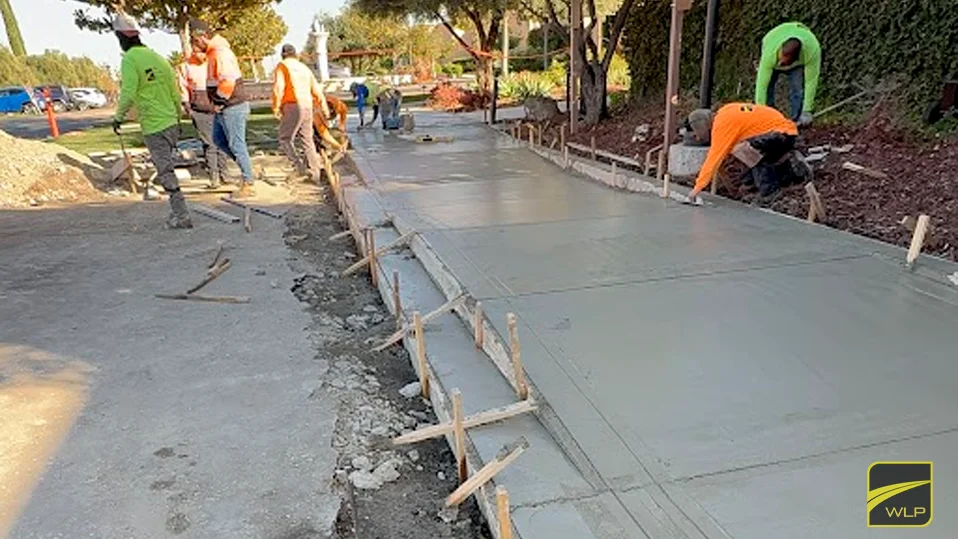
Property owners often assume a concrete walkway, driveway extension, patio edge, or curb installation can simply be poured up to the fence line without much planning. In reality, the area near a property boundary can create long-term issues if grading, drainage, access, or maintenance needs are overlooked.
The exact setback requirements for concrete work can vary depending on local regulations, HOA standards, easements, utility access, or municipal development rules. Because those conditions differ from one property to another, it is usually important to confirm local requirements before starting work.
From a practical paving and maintenance perspective, the bigger concern is often not the exact measurement itself. Problems tend to develop when concrete is installed too close to neighboring structures, drainage paths, retaining edges, fences, landscaping systems, or shared access areas without enough consideration for water movement and long-term surface behavior.
For commercial properties, retail centers, HOA communities, and multi-tenant sites, those edge conditions can become maintenance liabilities over time.
Why Concrete Placement Near Property Lines Creates Long-Term Problems
Concrete rarely fails because of the surface alone. Edge conditions usually determine how well the installation performs over time.
When concrete is poured too tightly against a property boundary, several issues may appear later:
- Drainage may redirect toward neighboring property
- Expansion pressure can affect fences or adjacent flatwork
- Maintenance access becomes difficult
- Soil movement near edges may increase cracking risk
- Landscaping irrigation can weaken unsupported edges
- Shared-use areas may become harder to repair cleanly
These problems often appear gradually rather than immediately after installation.
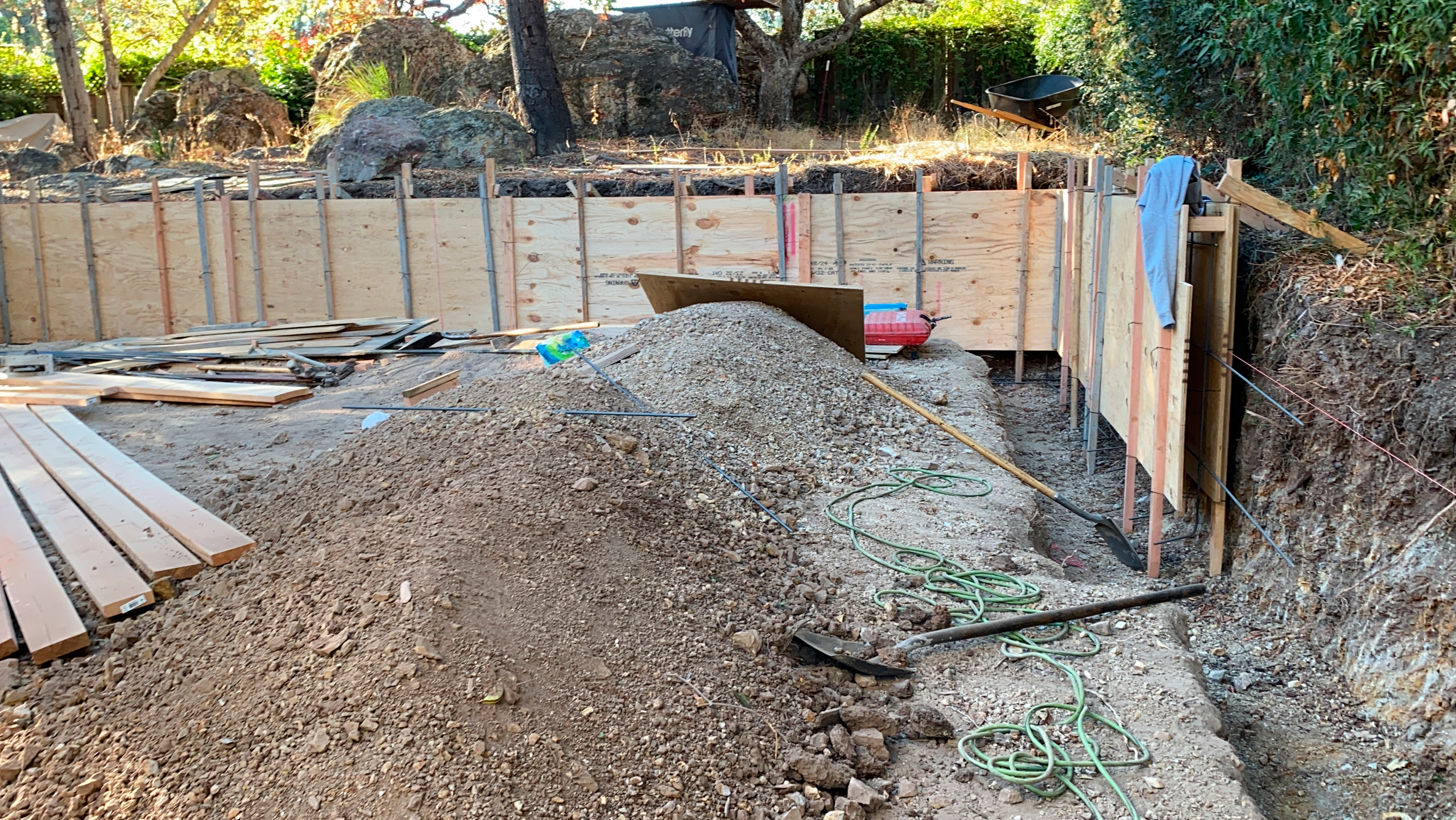
For example, a narrow concrete strip installed directly against a fence may initially look clean and efficient. After several seasonal cycles, however, trapped moisture, root pressure, or soil erosion can begin separating the edge from the surrounding grade.
That becomes especially noticeable around commercial parking lots, loading areas, dumpster enclosures, and pedestrian corridors where water runoff and repeated traffic create ongoing stress.
In many situations, surface performance depends as much on surrounding grading and support conditions as the concrete mix itself.
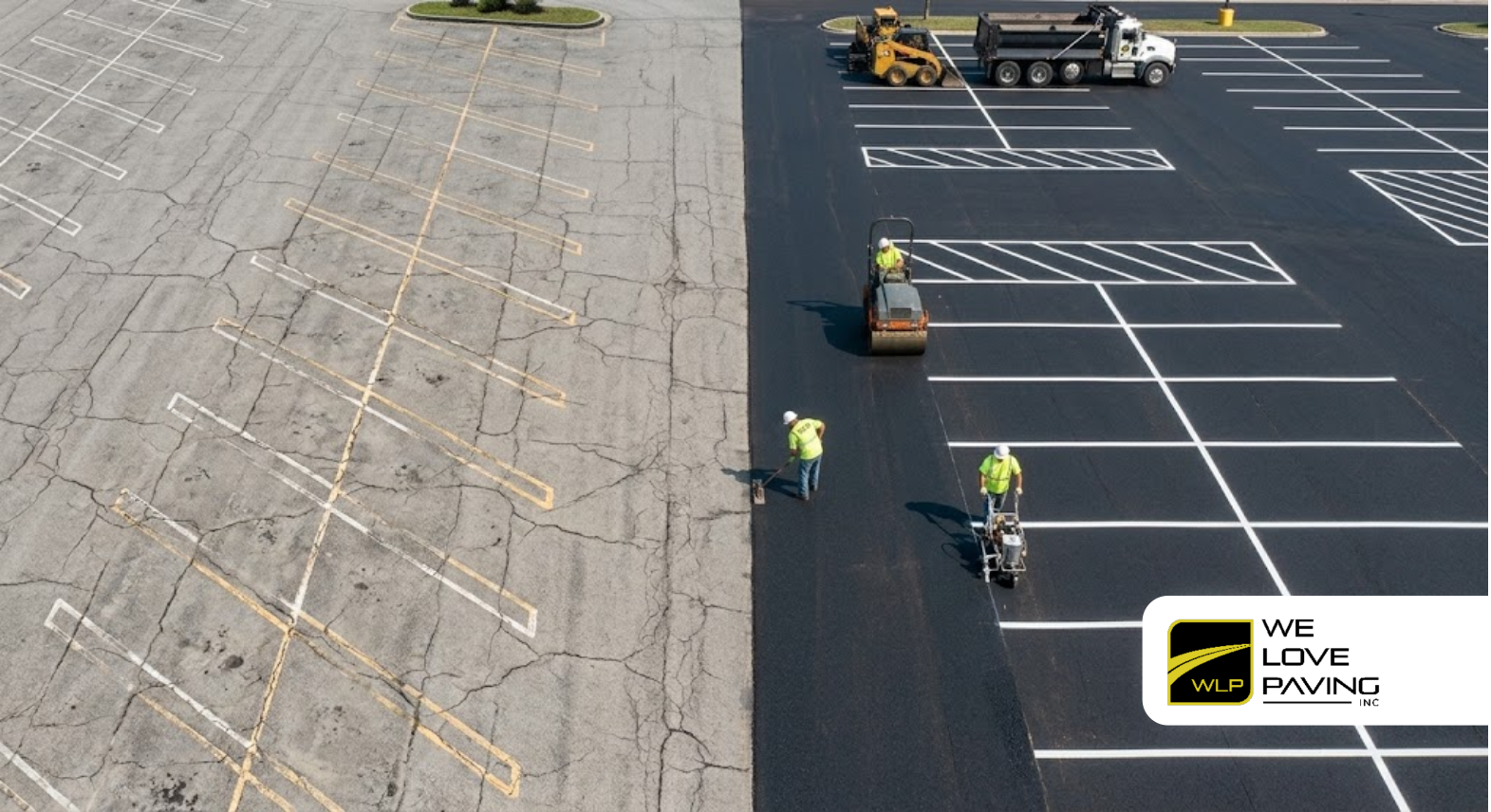
When pavement transitions connect directly into broader surface systems, nearby drainage behavior can also affect future maintenance planning for adjacent areas like asphalt paving, parking access routes, or pedestrian circulation.
For properties already managing aging pavement conditions, broader pavement maintenance planning sometimes becomes part of the conversation instead of treating the concrete edge as an isolated issue.
Drainage Matters More Than Most Property Owners Expect
Water management is one of the biggest reasons property-line concrete work deserves careful planning.
Even relatively small concrete additions can redirect runoff patterns.
A widened driveway, patio extension, sidewalk expansion, or curb addition may change how water flows across the site. If runoff begins collecting near fences, neighboring structures, planter beds, or low areas, the problem may not appear until months later.
This is particularly important for:
| Property Condition | Why It Matters |
|---|---|
| Sloped lots | Water may accelerate toward neighboring property |
| Tight side yards | Drainage has limited escape paths |
| Commercial properties | Pedestrian routes and parking circulation may be affected |
| HOA communities | Shared maintenance responsibilities can become unclear |
| Older pavement areas | Existing settlement may worsen runoff patterns |
On commercial properties, drainage concerns often overlap with broader surface wear issues. Cracking near curb lines, low spots near sidewalks, and deteriorating pavement edges sometimes indicate that runoff patterns have already been affecting the site for years.
Where drainage problems are already contributing to pavement deterioration, parking lot repair discussions may become relevant long before complete replacement is necessary.
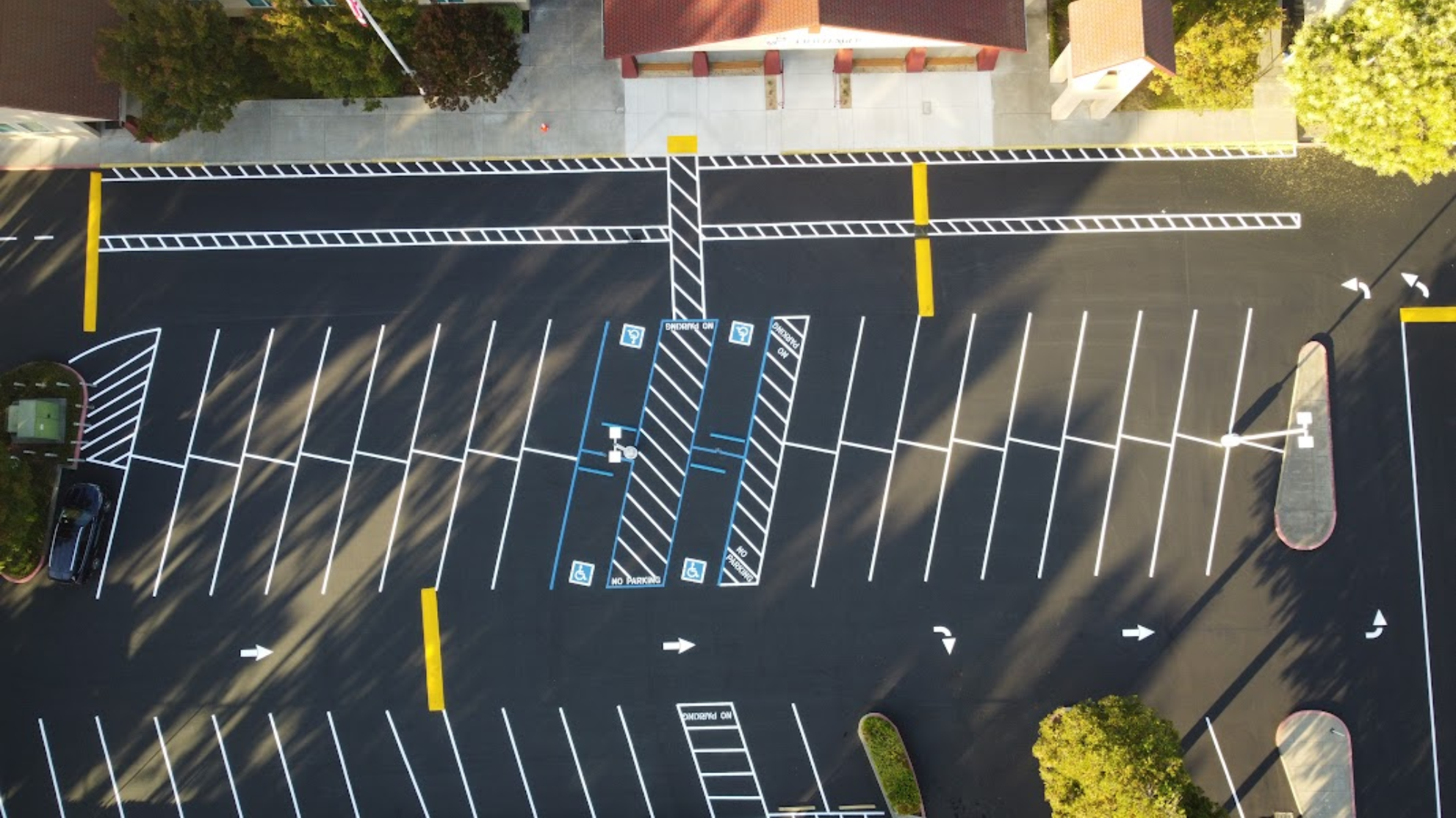
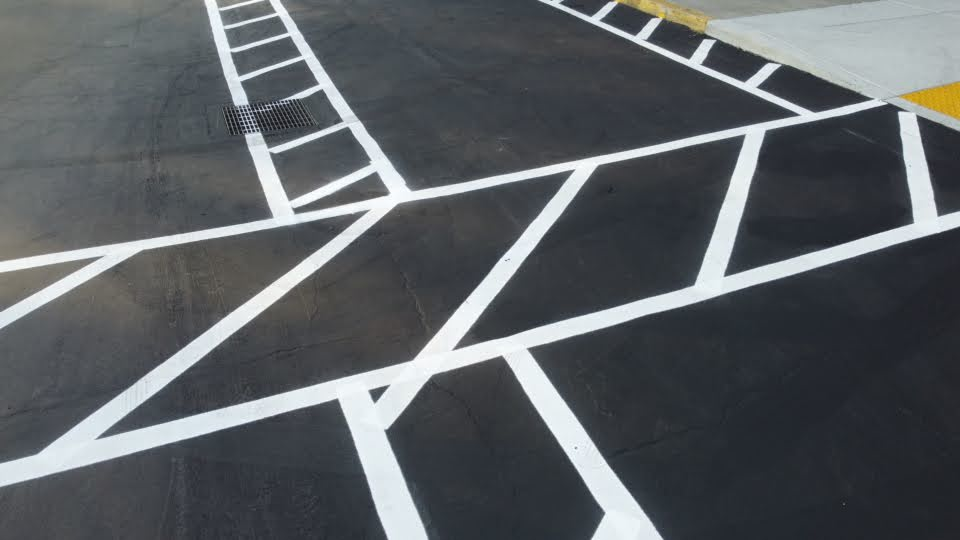
Similarly, when concrete additions alter vehicle circulation or pedestrian movement near parking areas, parking lot striping visibility and route organization may eventually require adjustment as part of maintaining a usable site layout.
Easements, Access Areas, and Utility Considerations
One of the most overlooked issues near property lines is future access.
Even if a property owner technically owns the area, underground utilities, drainage corridors, shared maintenance paths, or easements may still affect what can realistically be installed there.
That does not always mean concrete work is prohibited. It simply means the installation should be evaluated with long-term access in mind.
For example:
- Utility companies may require future excavation access
- Fence replacement may become difficult
- Drainage swales may lose effectiveness
- Adjacent retaining systems may experience pressure changes
- Maintenance crews may have limited working space
On commercial sites, these constraints become more important because pavement systems usually interact with multiple operational needs at once.
Loading access, ADA pathways, parking circulation, landscape maintenance, and drainage infrastructure often share the same edge zones.
In properties where pedestrian access routes intersect with surface transitions, ADA upgrades sometimes become part of larger site improvement planning rather than a standalone correction.
Likewise, concrete edge placement can influence how future resurfacing or asphalt overlay work connects with sidewalks, ramps, gutters, or access lanes.
Neighbor Concerns Often Start After the Concrete Is Finished
Many property-line disputes begin after installation rather than before it.
A concrete project may appear acceptable initially, but concerns often emerge later when:
- Water begins crossing property boundaries
- Fence posts shift slightly
- Surface runoff affects landscaping
- Concrete discoloration becomes visible near shared areas
- Drainage changes create muddy areas or pooling
- Access for future repairs becomes limited
This is why experienced contractors usually evaluate more than the immediate pour location.
They also look at:
- Existing grade changes
- Surface elevations
- Nearby structures
- Traffic patterns
- Expansion spacing
- Water flow direction
- Long-term maintenance access
That broader perspective is especially important for commercial properties and HOA-managed sites where multiple stakeholders may be involved in future maintenance decisions.
In larger properties, surface planning often connects concrete work with broader commercial paving considerations so the entire site functions cohesively over time.
Small Concrete Projects Can Still Affect Overall Site Performance
Property owners sometimes treat concrete additions near property lines as isolated cosmetic improvements.
In practice, even relatively small projects can influence how the rest of the property performs.
A sidewalk extension can redirect runoff. A widened driveway may alter vehicle turning behavior. A new curb line can change drainage collection patterns. A patio edge may affect nearby landscaping stability.
Those changes are not always severe, but they can contribute to larger maintenance patterns over time.
This becomes more noticeable in aging commercial properties where pavement systems have already experienced years of weather exposure, settlement, and traffic stress.
When concrete edge work connects into deteriorating asphalt areas, existing cracks or surface movement may continue transferring stress into the newer installation.
That is one reason many property managers evaluate concrete placement together with surrounding pavement conditions rather than looking at the new installation alone.
At We Love Paving, we often see property-line concrete questions become part of broader maintenance discussions involving drainage behavior, access planning, pavement transitions, and long-term site usability. In many commercial environments, the goal is not simply fitting concrete into a tight space. It is making sure the surface continues functioning well as the property ages and operational demands change.