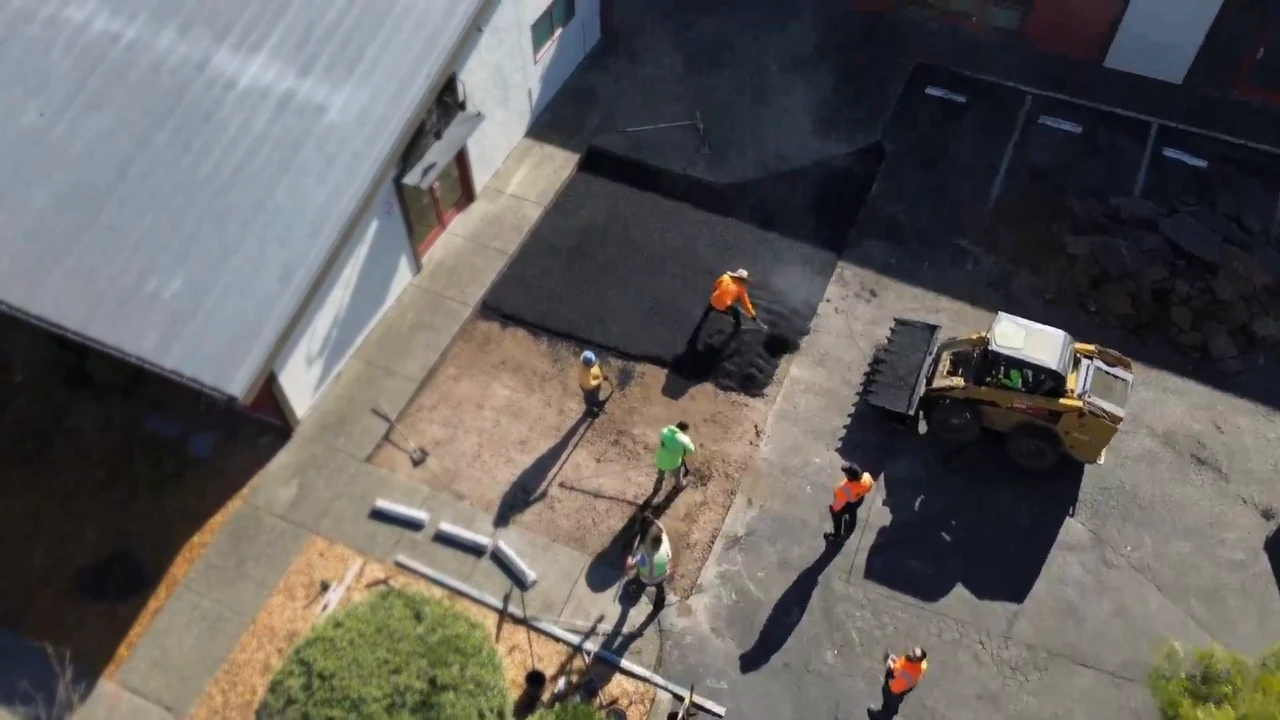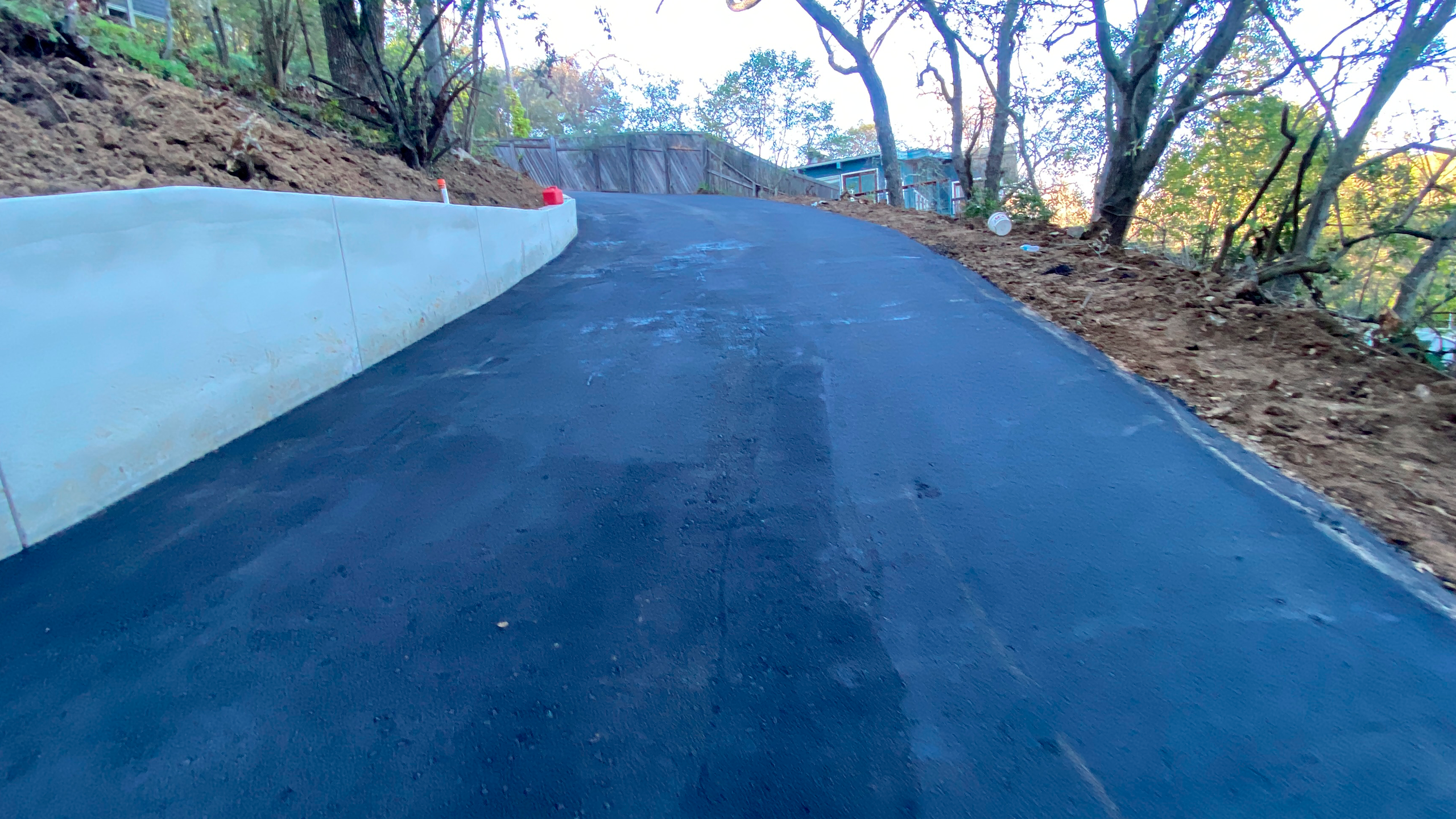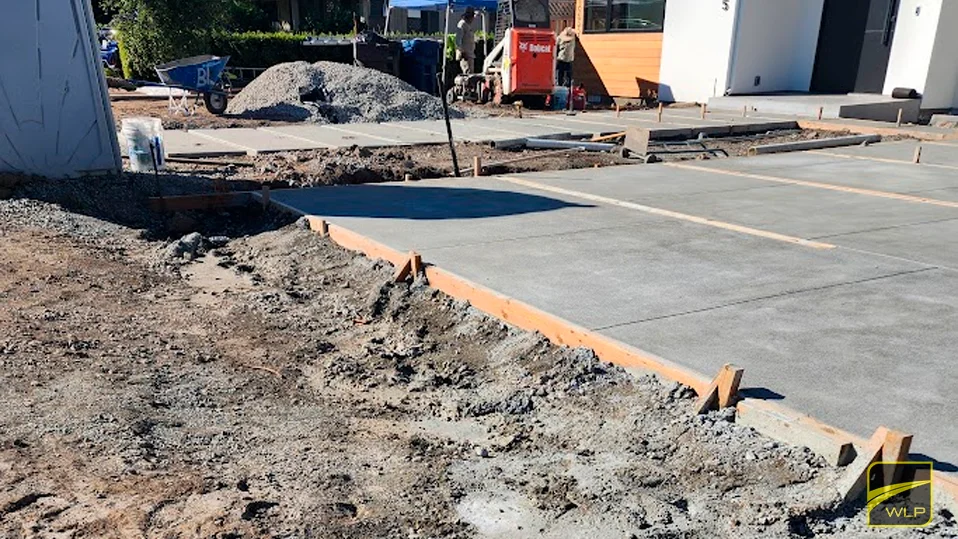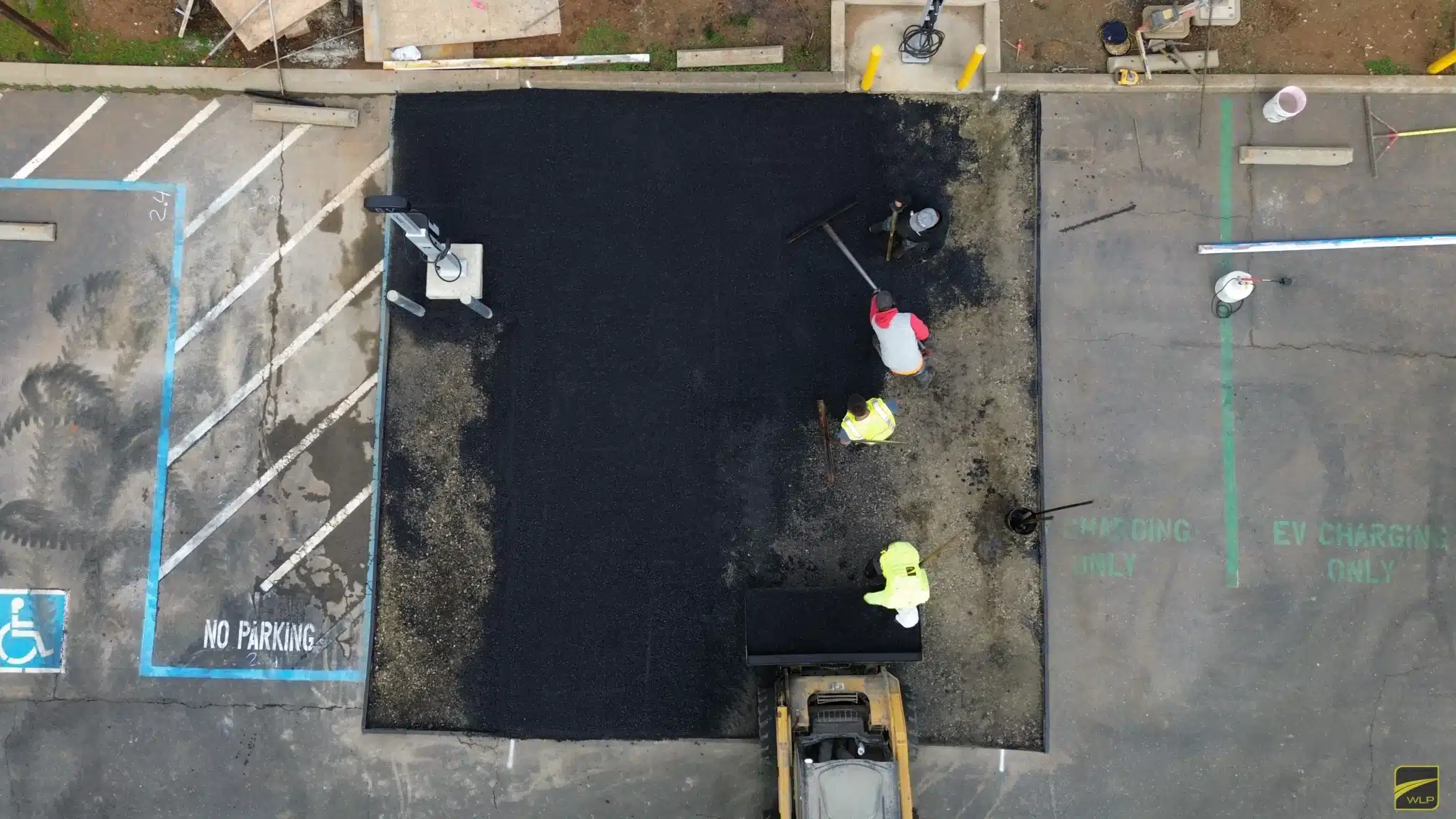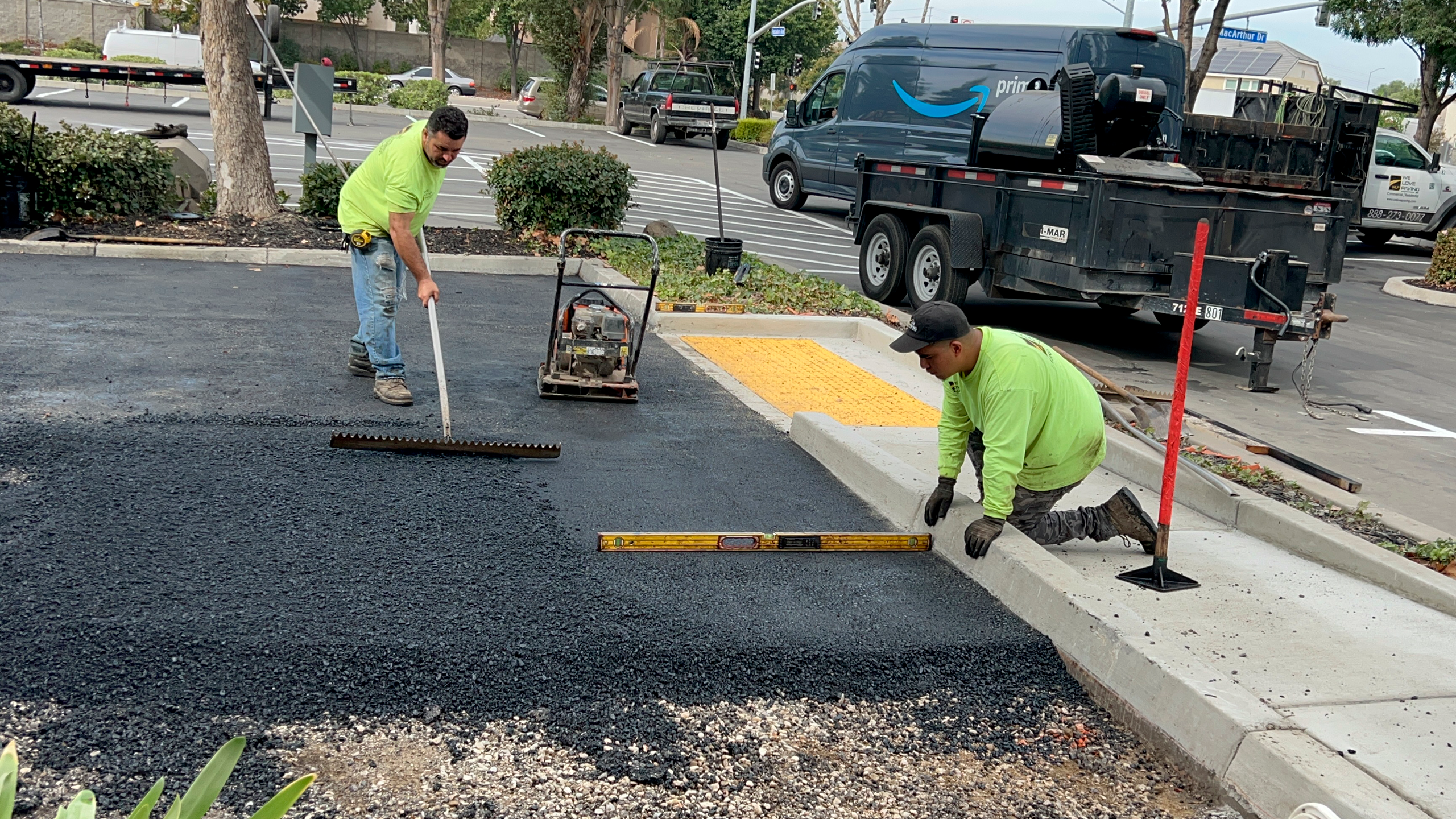
The answer depends less on a single number and more on how the project is planned, staged, and managed in real operating conditions. Crew size, site access, asphalt plant timing, traffic flow, weather, grading conditions, and even tenant activity can all affect daily paving output.
On some commercial properties, a crew may complete several thousand square feet in a day without major disruption. On larger industrial or retail sites, production can move much faster when logistics are carefully coordinated. But experienced paving contractors rarely judge productivity by speed alone. The real objective is balancing production efficiency with pavement quality, compaction timing, drainage performance, and operational access.
For property managers trying to plan maintenance windows or understand project timelines, it helps to know what actually controls paving pace in the field.
Daily Asphalt Output Depends on More Than Crew Size
People often assume paving speed comes down to how many workers are on site. In reality, commercial asphalt production depends heavily on coordination.
A paving crew may only move as fast as the asphalt supply schedule allows. Trucks arriving too early or too late can interrupt paving consistency. Compaction timing also matters because asphalt must be rolled while temperatures remain within workable ranges.
Properties with tight turning areas, loading docks, delivery traffic, or active customer circulation often require phased paving rather than uninterrupted full-lot production. That can reduce daily square footage even when the crew itself is fully capable of larger output.
Large commercial paving operations usually move more efficiently when the surface has already been prepared properly. Milling, grading, drainage corrections, and pavement repairs completed ahead of time can significantly improve paving continuity during installation. In many cases, broader commercial asphalt paving planning determines whether a project moves smoothly or loses time to avoidable site conditions.
Site Layout Often Controls Production Speed
Parking lots with wide open layouts are generally faster to pave than properties with constant interruptions.
Several site conditions commonly slow daily asphalt installation:
- tight parking aisles;
- multiple utility covers;
- pedestrian crossings;
- steep transitions;
- delivery zones;
- active tenant entrances;
- phased access requirements;
- drainage trouble spots.
For example, a shopping center that must remain partially operational during business hours may require multiple smaller paving phases instead of one continuous paving run. Even if the total square footage is moderate, staging complexity can extend the overall schedule.
Industrial facilities create different challenges. Heavy truck routes often require thicker asphalt sections and additional rolling passes. Distribution centers may also limit paving windows around logistics schedules.
Meanwhile, HOA communities and apartment complexes frequently prioritize resident access and parking continuity over raw paving speed.
Experienced contractors usually focus on keeping operations functional while maintaining paving quality rather than simply maximizing daily tonnage.
Weather and Temperature Have a Direct Impact
Asphalt installation is heavily affected by environmental conditions.
Cool temperatures, unexpected moisture, or high wind exposure can shorten workable compaction windows. Extremely hot conditions can create different problems, particularly when truck timing or rolling coordination falls behind.
Weather matters not only on paving day itself, but during preparation and curing periods as well. Properties with shaded sections, poor drainage, or older pavement bases may require additional preparation before paving can proceed efficiently.
Surface conditions also affect how well newly paved asphalt performs over time. Parking lots that already show oxidation, raveling, or widespread cracking often benefit from ongoing pavement maintenance planning rather than waiting for larger reconstruction cycles.
Asphalt Thickness Changes Production Rates
Not every paving project uses the same asphalt depth.
A light-duty parking lot overlay may move considerably faster than a truck-loading area requiring deeper structural sections. The thicker the asphalt lift, the more attention crews must give to compaction sequencing and rolling consistency.
Production rates can also slow when crews must work around drainage transitions or repair unstable base areas discovered during excavation.
This becomes especially noticeable on older commercial properties where years of patching, settlement, or utility work have created uneven pavement conditions beneath the surface.
In many cases, the paving itself is only one part of the overall project timeline. Layout adjustments, striping coordination, drainage correction, and traffic management frequently affect total project duration more than the asphalt placement itself. When circulation patterns and parking organization are already inconsistent, property managers often revisit parking lot markings as part of the resurfacing process.
Smaller Projects Can Sometimes Take Longer Than Expected
Property owners are sometimes surprised that a smaller parking lot may not necessarily finish faster than a large open site.
Mobilization, equipment setup, traffic control, and staging still require significant coordination regardless of project size. A compact site with difficult access may move slower than a large uninterrupted paving area.
This is especially true when maintaining customer access is part of the project requirement.
For example, medical offices, retail centers, and mixed-use developments often require phased work schedules to reduce operational disruption. Night paving or weekend scheduling may improve continuity, but those schedules also depend on local access conditions and asphalt plant availability.
Once paving is complete, striping and circulation markings also affect how quickly the lot can return to normal use. Faded layouts, unclear directional flow, and worn stall markings can continue creating confusion even after fresh asphalt has been installed. Many property managers address these issues during resurfacing by reviewing parking lot striping cycles before reopening the property fully.
Why Production Speed Should Not Be the Only Goal
Fast paving is valuable only if the pavement performs properly afterward.
Rushed compaction, poor truck coordination, or inadequate surface preparation can shorten pavement life significantly. Experienced paving teams typically focus more on consistency than headline production numbers.
Property managers should also remember that paving schedules affect more than asphalt itself. Drainage flow, pedestrian movement, loading access, parking layout visibility, and long-term maintenance planning all interact with paving decisions.
On commercial properties, striping visibility and traffic organization often become part of the larger conversation once resurfacing is complete. Fresh asphalt with poorly planned markings can still create circulation problems for drivers and pedestrians. In retail and mixed-use environments, properly coordinated parking lot striping frequently becomes part of restoring normal traffic flow after paving work is complete.
Similarly, pavement appearance often influences how visitors perceive overall property maintenance. Even relatively minor surface wear can make commercial sites appear neglected when markings, transitions, and circulation paths become difficult to follow. That is one reason some owners revisit broader discussions around striping visibility and curb appeal during larger resurfacing projects.
Planning Around Real Property Operations
The most successful paving projects usually begin with realistic operational planning rather than production estimates alone.
For commercial properties, questions often include:
| Operational Factor | Why It Matters |
|---|---|
| Tenant access | May require phased paving |
| Delivery schedules | Can limit paving windows |
| Weather exposure | Affects compaction timing |
| Parking demand | Influences staging strategy |
| Drainage conditions | May require prep work |
| Existing pavement damage | Can slow installation |
| Striping coordination | Impacts reopening timing |
When paving plans account for these conditions early, crews can often maintain better production flow while reducing disruption to the property itself.
At We Love Paving, projects are approached through a practical operations lens rather than simply focusing on how quickly asphalt can be installed. Commercial paving decisions usually involve access continuity, traffic flow, surface durability, drainage behavior, and long-term maintenance planning working together rather than as isolated tasks.