When it comes to paving in California, asphalt thickness isn’t just a construction detail — it’s a business decision that directly affects your property’s longevity, maintenance costs, and curb appeal.
Whether you manage a shopping center in the Bay Area or an industrial lot in Sacramento, the right pavement thickness ensures durability against heavy traffic, temperature swings, and water runoff.
In this guide, we’ll break down the recommended asphalt thickness standards for commercial properties in California — plus what every property manager, contractor, or business owner should know before paving or resurfacing.
⚙️ Understanding Asphalt Pavement Structure
A well-built asphalt pavement is made up of multiple layers that work together to handle different stresses:
-
Subgrade – The natural soil foundation.
-
Aggregate Base – Crushed stone that supports the asphalt and distributes loads evenly.
-
Asphalt Layers – The binder and surface courses that provide flexibility and a smooth, durable finish.
👉 Each layer’s thickness and compaction are critical to prevent premature cracking, rutting, or water damage.
📏 Recommended Asphalt Thickness by Use Case
Here’s a quick reference based on California commercial paving standards and our field experience at We Love Paving:
| Type of Area | Recommended Asphalt Thickness | Base Layer (Aggregate) | Typical Traffic Load |
|---|---|---|---|
| Light Commercial (Parking lots, small offices) | 3″ – 4″ | 4″ – 6″ | Cars, light delivery vehicles |
| Medium Duty (Shopping centers, restaurants) | 4″ – 5″ | 6″ – 8″ | Daily delivery trucks, moderate traffic |
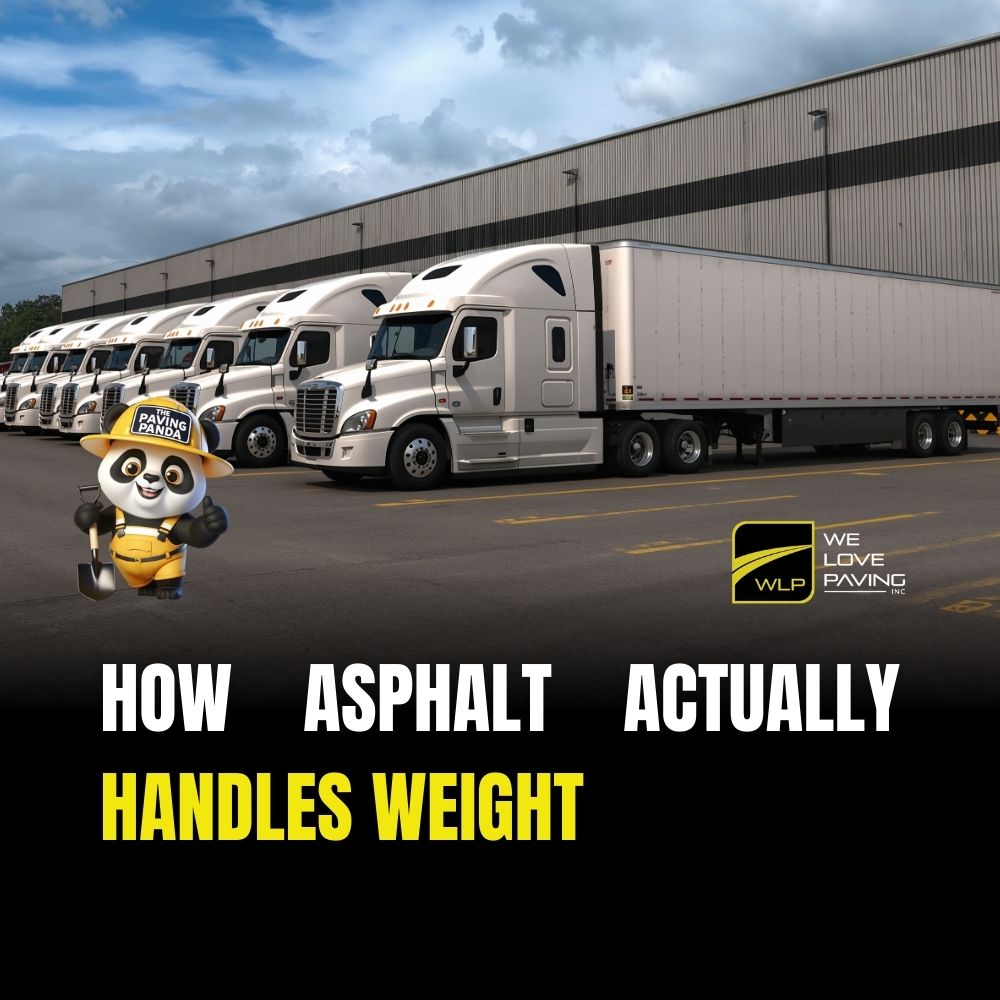
| Heavy Duty (Industrial yards, loading docks) | 6″ – 8″ | 8″ – 10″ | Semi-trucks, forklifts, heavy loads |
| Drive lanes or fire lanes | 5″ – 6″ | 6″ – 8″ | Frequent traffic + turning stress |
💡 Pro Tip: In colder or high-moisture areas (like the Sierra foothills or coastal zones), adding an extra inch of asphalt and proper drainage can dramatically increase pavement life.
🧪 Local Codes & Engineering Standards in California
California municipalities often follow Caltrans Section 39 (Asphalt Concrete) and ASTM D692 for asphalt mix and compaction standards.
Key local standards include:
-
Compaction: Minimum 95% relative compaction of base material.
-
Asphalt Mix: Type A or B hot-mix asphalt, depending on climate and expected load.
-
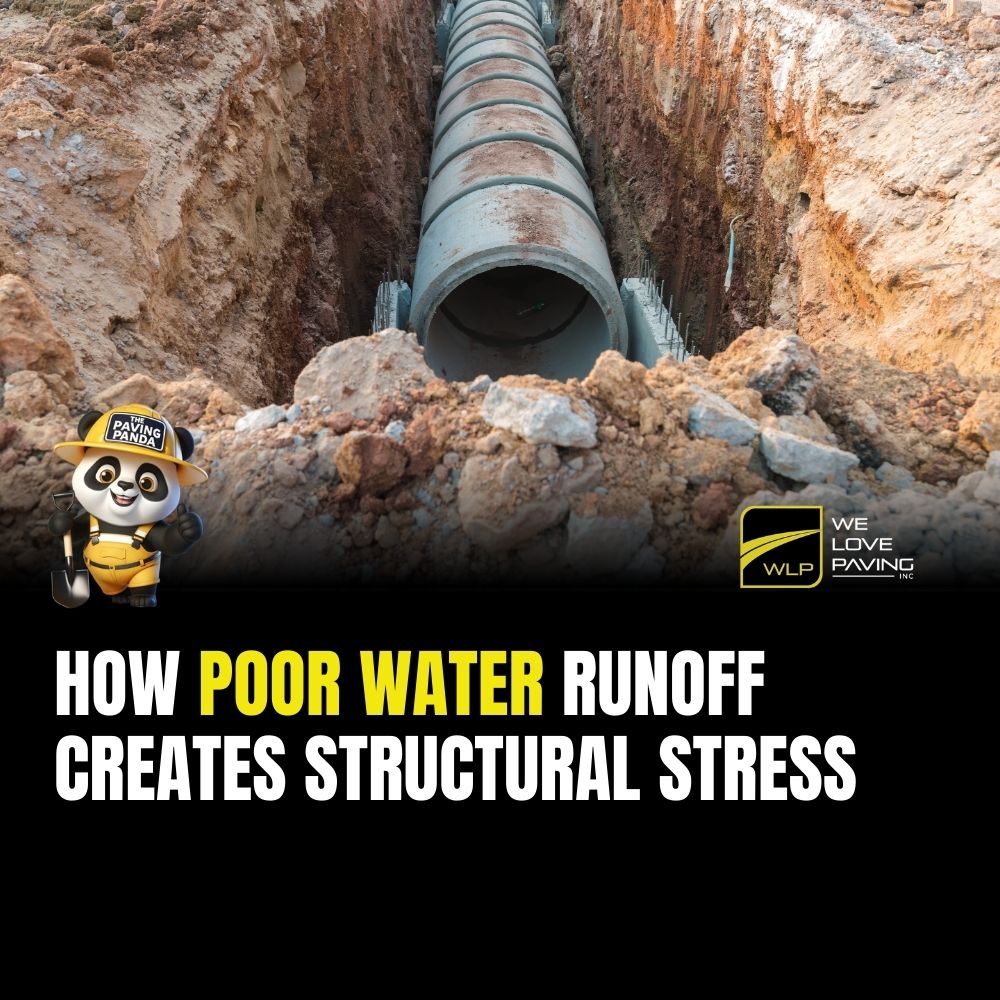
Drainage: Minimum 2% slope to ensure proper runoff.
-
Temperature range: 280°F–310°F lay-down temperature for optimal density.
Before starting a project, always verify city or county paving codes—for instance, San Jose and Oakland may require stricter ADA slope and drainage compliance.
🧱 Consequences of Using the Wrong Asphalt Thickness
Cutting corners on asphalt thickness is one of the most expensive mistakes property owners make.
Common results include:
-
Premature cracking due to insufficient load support
-
Potholes and rutting within 1–2 years
-
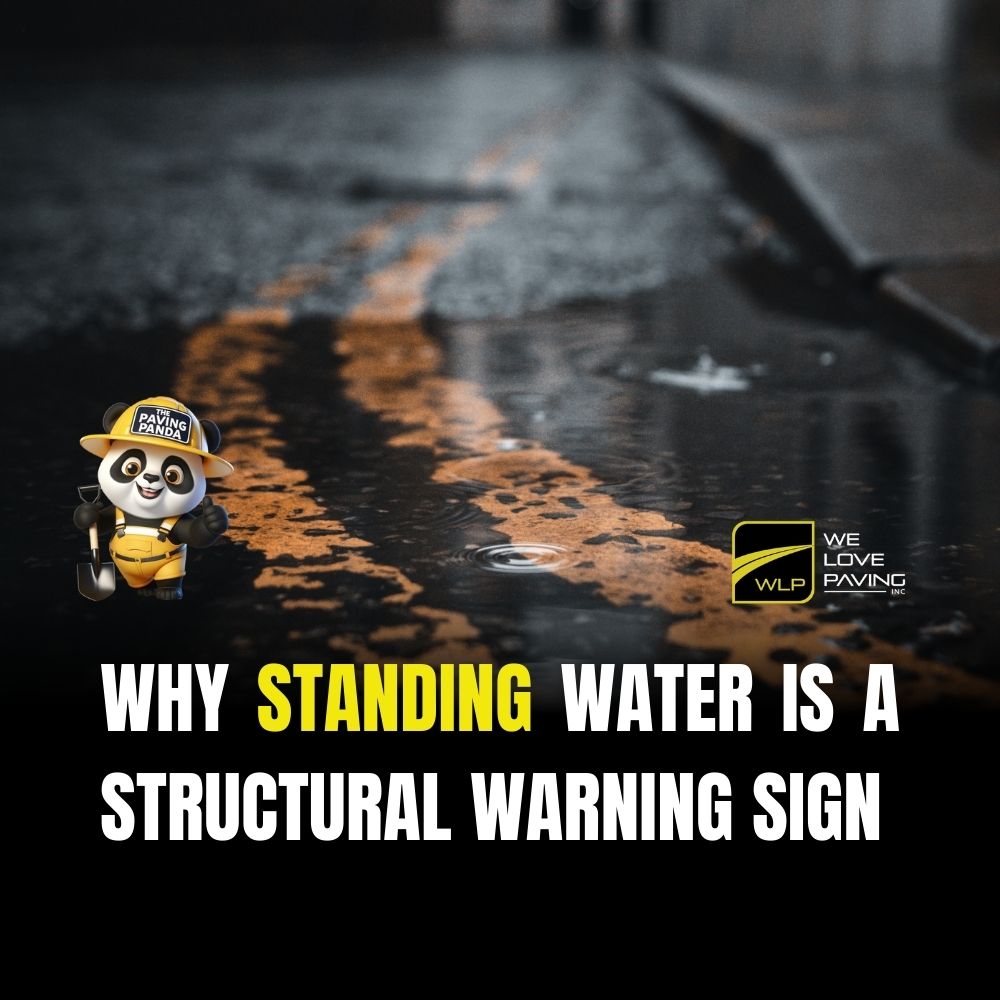
Drainage failures leading to base erosion
-
Costly resurfacing earlier than expected
In other words, saving a few thousand now can cost you tens of thousands later.
🔍 Case Example: Bay Area Retail Center
We recently completed a commercial repaving project in Fremont, CA, where the existing lot had only 2 inches of asphalt over a poor-quality base.
After evaluation, our engineers recommended a 5-inch hot-mix asphalt surface with an 8-inch Class II aggregate base.
Result:
-
Load-bearing capacity increased by 60%
-
Surface life expectancy extended from 5 years to 15+
-
ADA slope compliance achieved without drainage issues
🧠 Expert Insight from We Love Paving
At We Love Paving, we’ve learned that the difference between a 5-year surface and a 15-year surface often comes down to one inch of asphalt and proper compaction.
We handle every step—from soil testing and grading to asphalt mix design—to ensure your investment performs for decades, not just seasons.
📞 Get a Free Property Assessment
If you’re planning a commercial paving, repair, or resurfacing project in California, let our experts inspect your site and provide a custom plan that meets state and local standards.
✅ Free on-site assessment
✅ Detailed thickness & drainage recommendations
✅ ADA and safety compliance report
📩 Schedule your free property assessment today
or call us at (888) 273-0077