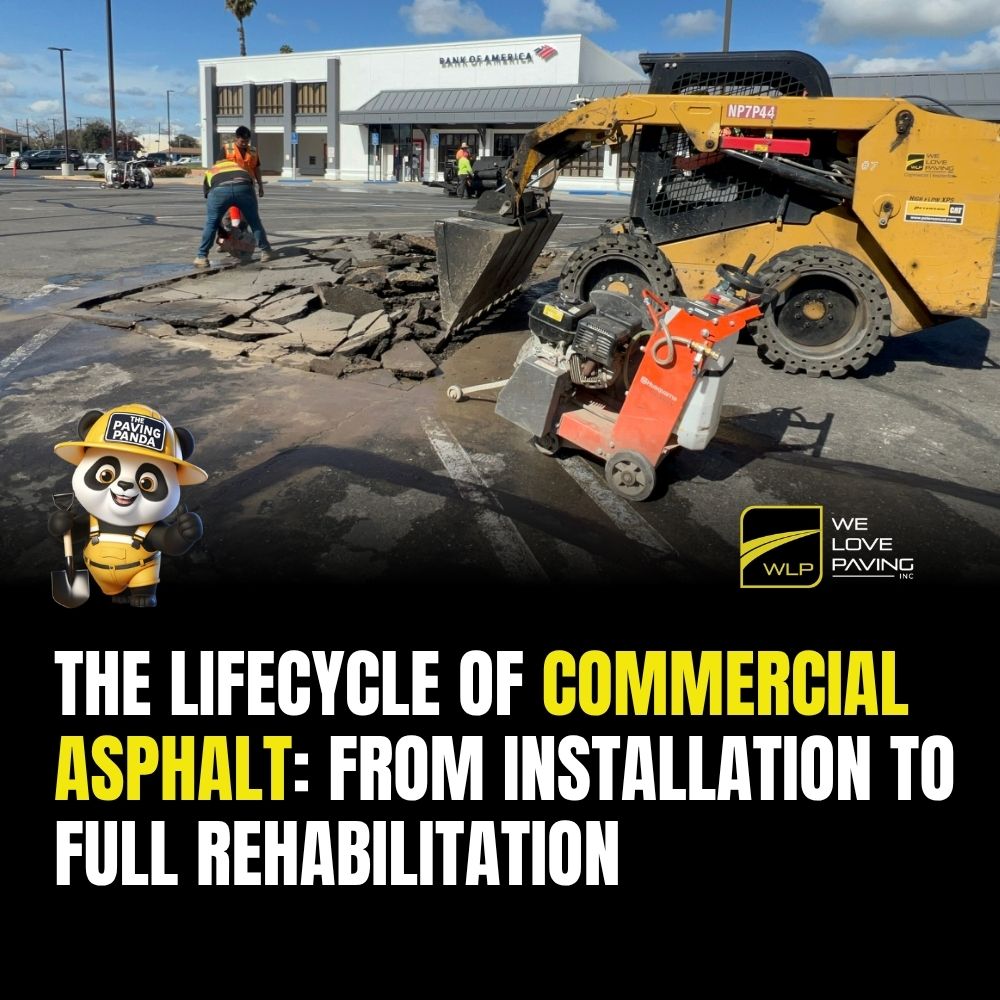
The Lifecycle of Commercial Asphalt: From Installation to Full Rehabilitation

We Love Paving services in Concord. Professional paving contractor serving Concord and Stanford areas.
Estimation Tools

Calculate costs in seconds

Fast, accurate estimates that help you close more jobs. Less guesswork, more profit.

Why Understanding Pavement Lifecycle Matters

Every parking lot and roadway has a lifespan — but how long it lasts depends on how it’s designed, installed, and maintained.
For property owners and facility managers, understanding the lifecycle of asphalt pavement is key to planning budgets, extending surface life, and avoiding costly full replacements.

At We Love Paving, we see every project as part of a long-term system — not just a surface to pour and forget.


Phase 1: Design & Subgrade Preparation

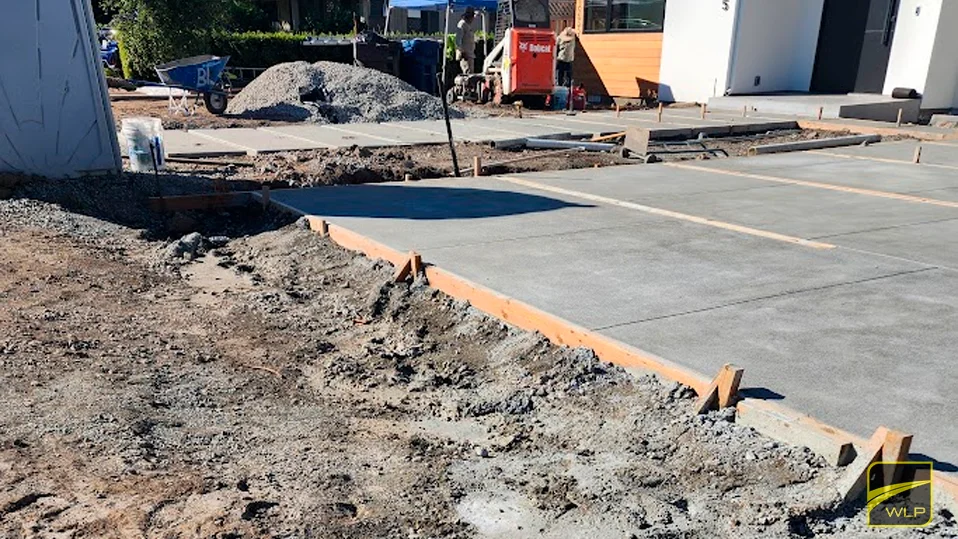
The foundation of durable pavement begins below the surface.
A proper subgrade — the compacted soil layer beneath the asphalt — ensures load-bearing strength and prevents settlement.

Technical steps include:

  • Soil testing and classification (AASHTO or ASTM standards)

  • Grading for uniform support and drainage (1–2% slope minimum)

  • Compaction to 95% or greater density using vibratory rollers

  • Installation of an aggregate base layer (Class II base rock, typically 4–8 inches)

💡 Pro Tip: Most asphalt failures come from poor base prep, not surface wear.


Phase 2: Asphalt Installation

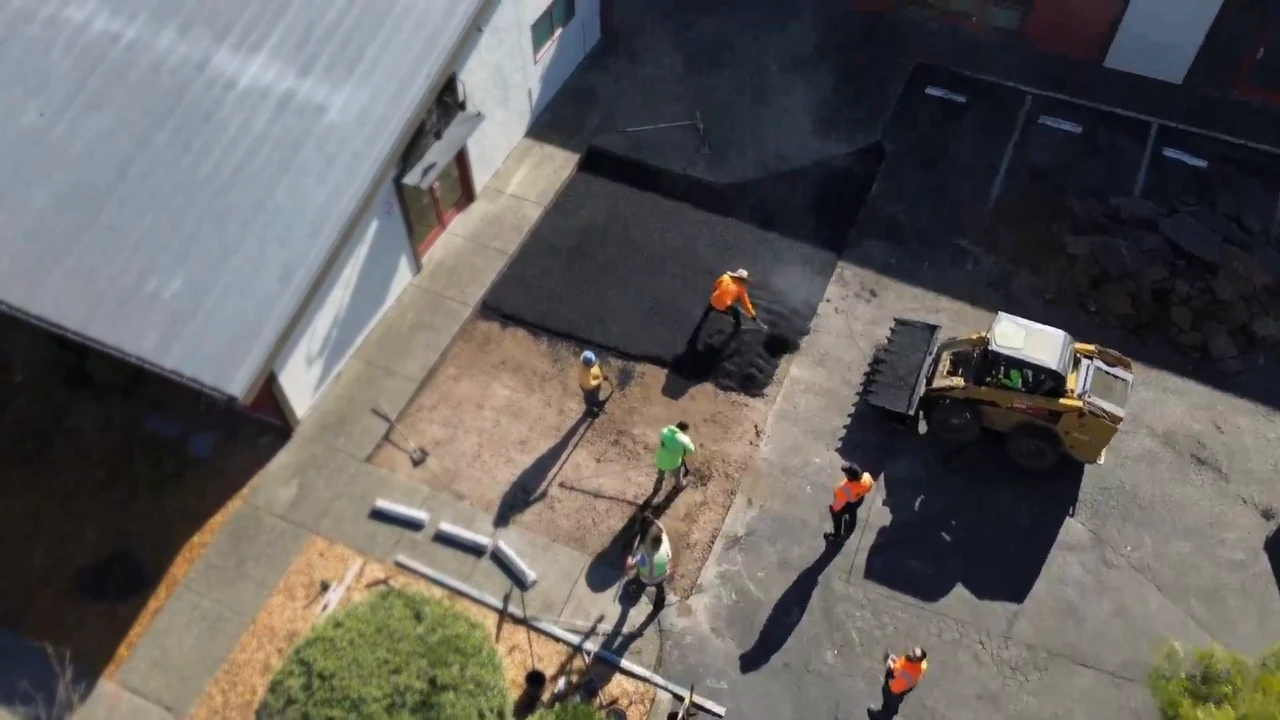
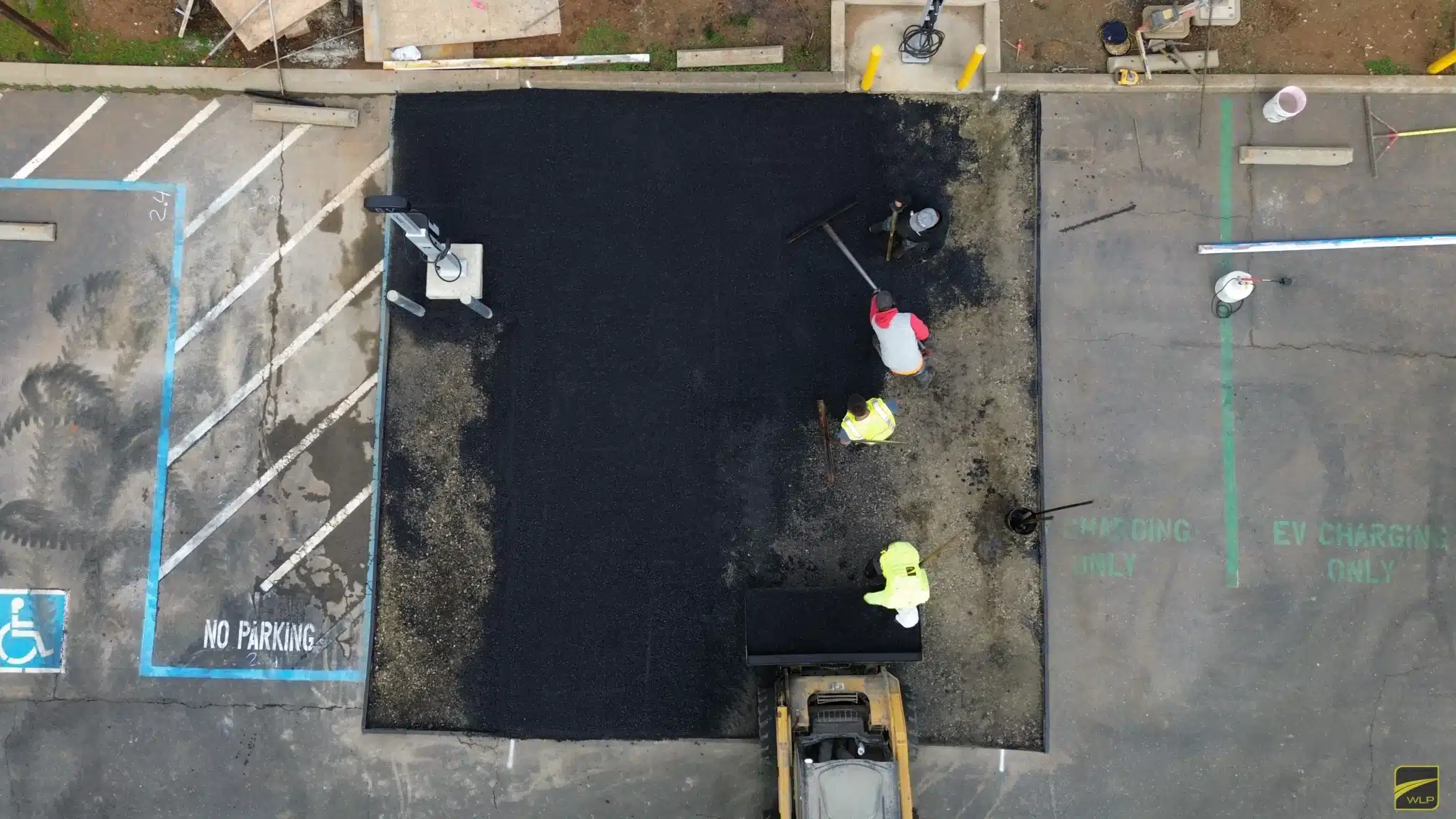
Once the base is stable, hot mix asphalt (HMA) is laid and compacted.
The key to longevity here is temperature control and compaction timing.

Our crews follow strict QC standards:

  • Mix delivered at 275–300°F to ensure workability

  • Paving thickness designed for expected traffic loads (2” light-duty up to 6” heavy-duty)

  • Compaction completed before temperature drops below 185°F

  • Joints sealed for smooth transitions between passes

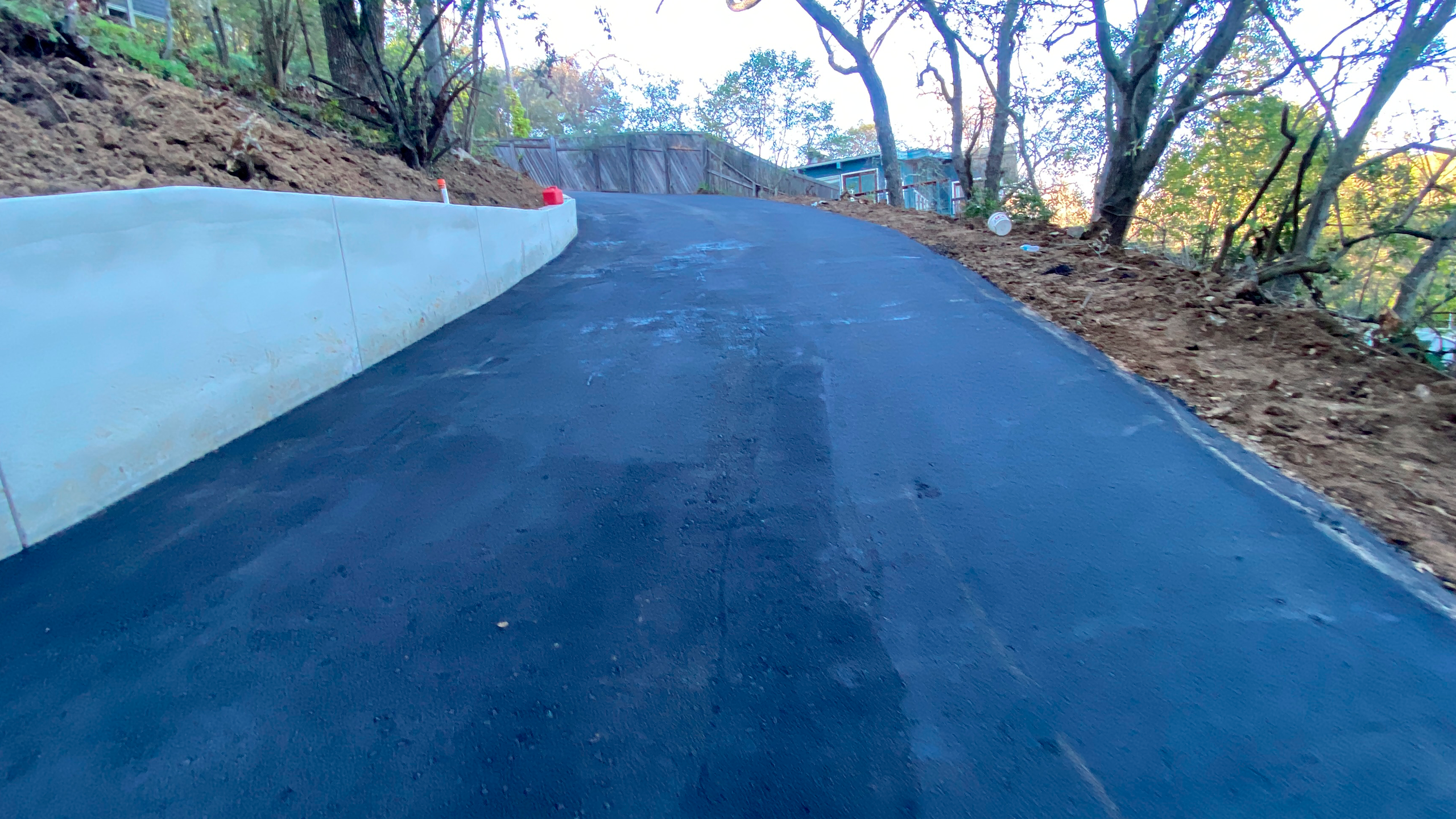
🧱 Result: A dense, watertight surface ready to handle years of use.


Phase 3: Preventive Maintenance (Years 1–5)

Even new asphalt begins oxidizing as soon as it’s exposed to sunlight and oxygen.
Preventive maintenance keeps the surface flexible and slows deterioration.

Recommended maintenance schedule:

  • Sealcoating every 2–3 years to block UV and moisture

  • Crackfilling annually to prevent water intrusion

  • Patching localized failures before they spread

  • Re-striping for safety and compliance

⏳ These steps can double the service life of commercial pavement compared to neglected surfaces.


Phase 4: Corrective Maintenance & Overlays (Years 6–12)

With time, heavier traffic and weather exposure lead to structural fatigue.
Rather than full replacement, many lots benefit from a mill and overlay process:

  • Milling 1–2 inches of worn asphalt

  • Cleaning and tack-coating the existing surface

  • Installing a new hot mix overlay for a smooth finish

This rejuvenates the pavement at a fraction of the cost of reconstruction and resets the clock on your pavement lifecycle.


Phase 5: Full Rehabilitation (Years 15–25+)

Eventually, all asphalt reaches a point where the subgrade or base fails.
At this stage, full-depth reclamation (FDR) or complete reconstruction is the most cost-effective solution.

Full rehabilitation includes:

  • Pulverizing and regrading existing layers

  • Adding fresh base material and compaction

  • Installing new HMA layers and fresh striping

  • Updating ADA ramps, signage, and drainage as required

This brings the pavement back to like-new condition and sets up another 20+ years of reliable service.


How We Love Paving Extends the Lifecycle Even Further

Our approach is simple: precision, quality, and proactive maintenance.
By combining laser grading, premium materials, and strict compaction standards, we help businesses across Northern California save thousands over the lifetime of their pavement.

Whether you manage a retail center, corporate facility, or industrial yard, we can tailor a multi-year maintenance planthat fits your traffic levels, budget, and compliance needs.


Ready to Plan Your Pavement’s Future?

Don’t wait until cracks turn into craters.
👉 Contact We Love Paving for a professional inspection and lifecycle assessment — and discover how proper maintenance can extend your pavement’s lifespan by over a decade.

Need Immediate Help?

Let's Talk About Your Project

Don't wait until minor damage turns into major expenses. Our team of experts is ready to provide you with guaranteed solutions. Contact us now for direct advice from a professional.

Frequently Asked Questions (FAQ)

Got Questions? Find Your Answers Here!!

What are the stages of the commercial asphalt lifecycle?

The asphalt lifecycle includes subgrade preparation, installation, preventive maintenance, minor repairs, and full rehabilitation. Each phase directly impacts durability, and a poorly built foundation can lead to structural failure even if the surface initially appears intact.

Why is subgrade preparation critical for pavement lifespan?

The subgrade is critical because it supports the entire pavement structure. If it is not compacted to at least 95% density or properly drained, the asphalt can fail early with settlement, cracking, and deformation regardless of surface quality.

How does pavement evolve from new to failed condition?

Pavement transitions from a near-perfect condition to preventive maintenance in early years, then minor repairs between years 5 and 15, and eventually structural failure. Without intervention, deterioration accelerates and can require full reconstruction before reaching 20 years.

What factors accelerate asphalt deterioration over time?

Key factors include heavy traffic loads, UV exposure, water infiltration, and lack of maintenance. Water is especially damaging because it weakens the base, while repeated traffic loads accelerate fatigue and surface breakdown.

When is full pavement rehabilitation required?

Full rehabilitation is required when structural damage reaches the base and surface repairs are no longer effective. This typically occurs after 20–30 years, or sooner if maintenance was neglected, turning small issues into full replacement projects.

Professional customer review project by We Love Paving in Northern California, California. Verified local construction quality.

Fred / Founder

Fred, Founder and Regional Operations Manager at We Love Paving, comes from a family that values hard work and discipline. Growing up watching his parents work long hours with integrity and dedication, Fred learned early on that quality paving isn’t just about asphalt, it’s about consistency, accountability, and doing the job right.

Share

Posts That Might Interest You

The Great Debate: Is 2 Inches of Gravel Enough for a Driveway?

The Great Debate: Is 2 Inches of Gravel Enough for a Driveway?

May 16, 2026

When it comes to building a driveway, one of the key decisions homeowners face is determining the appropriate thickness of the gravel base layer. While some may argue that 2 inches of gravel is sufficient to support the weight of vehicles and provide a stable foundation, others advocate for thicker layers to ensure long-term durability

Why Is Parking So Expensive for Property Owners?

May 15, 2026

Many commercial property owners underestimate how expensive parking areas become once maintenance, accessibility, and pavement deterioration start overlapping at the same time. At first, parking lot costs usually appear manageable. Small cracks, faded striping, drainage problems, or isolated surface wear may not seem urgent while the property continues operating normally. Over time, however, those smaller

ADA Compliant Checklist for Parking Lots

ADA Compliant Checklist for Parking Lots

May 15, 2026

Many commercial properties develop accessibility problems gradually without property owners realizing how much conditions have changed over time. Parking lots, sidewalks, ramps, and pedestrian access routes constantly experience wear from traffic movement, weather exposure, drainage shifts, and surface aging. Because these changes happen slowly, accessibility concerns are often overlooked until inspections, complaints, or liability risks

Biggest Mistakes Made by a Landlord With Parking Lots

Biggest Mistakes Made by a Landlord With Parking Lots

May 15, 2026

Many property owners focus heavily on tenant spaces, landscaping, and building appearance while overlooking one of the most heavily used parts of the property: the parking lot. The problem is that pavement deterioration rarely stays cosmetic for long. Small surface issues gradually begin affecting traffic flow, drainage behavior, pedestrian safety, tenant perception, and operational costs

Next

Estimation Tools

Calculate costs in seconds

Fast, accurate estimates that help you close more jobs. Less guesswork, more profit.