Pouring Concrete Near Property Lines: Legal Distances and Regulations

We Love Paving services in San Mateo County. Professional paving contractor serving San Mateo County and Silicon Valley areas.
Estimation Tools

Calculate costs in seconds

Fast, accurate estimates that help you close more jobs. Less guesswork, more profit.

Determining how close to your property line you can pour concrete is a decision that merges civil engineering with real estate law. Ignoring local regulations can lead to heavy fines or the legal obligation to demolish your project.

1. Municipal Setbacks and Zoning

The allowed distance varies drastically depending on local jurisdiction and the type of structure:

2. Utility Easements

Before pouring, it is vital to identify easements on your deed.

  • Demolition Risk: If you pour concrete over a utility easement (water, gas, electric), the utility company has the legal right to remove it for repairs.
  • Repair Costs: In most cases, the property owner is responsible for removal costs and has no right to compensation for the destroyed concrete.

Concrete is an impermeable surface. When installing it, you must not alter the natural water flow toward neighboring properties.

  • Critical Slope: Your slab must be graded to direct water toward your own drainage system or the street, never into a neighbor’s yard.
  • Civil Liability: If your concrete project causes flooding or erosion next door, you may be held legally liable for damages.

4. Project Success Checklist

Talk to Your Neighbor: Prior communication prevents 90% of legal disputes related to paving on property lines.

Request a Survey: Do not rely on existing fences; a certified surveyor is the only way to validate your true boundary.

Check Permits: Consult your local building department to see if a zoning permit is required.
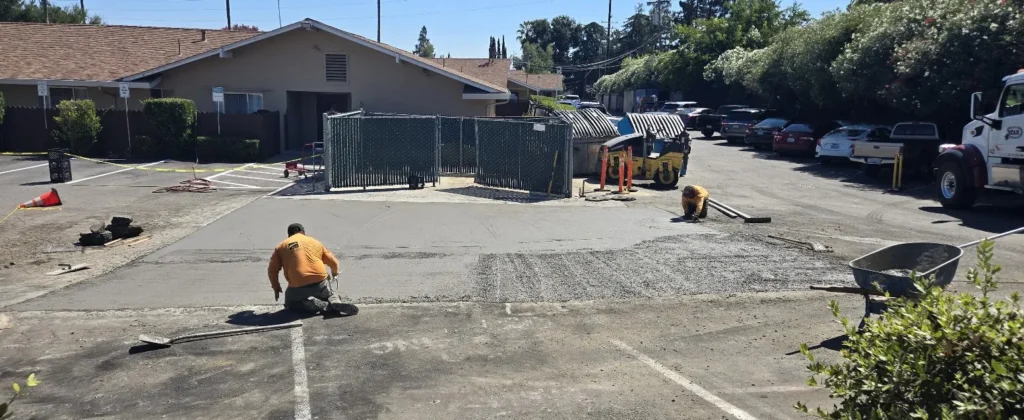
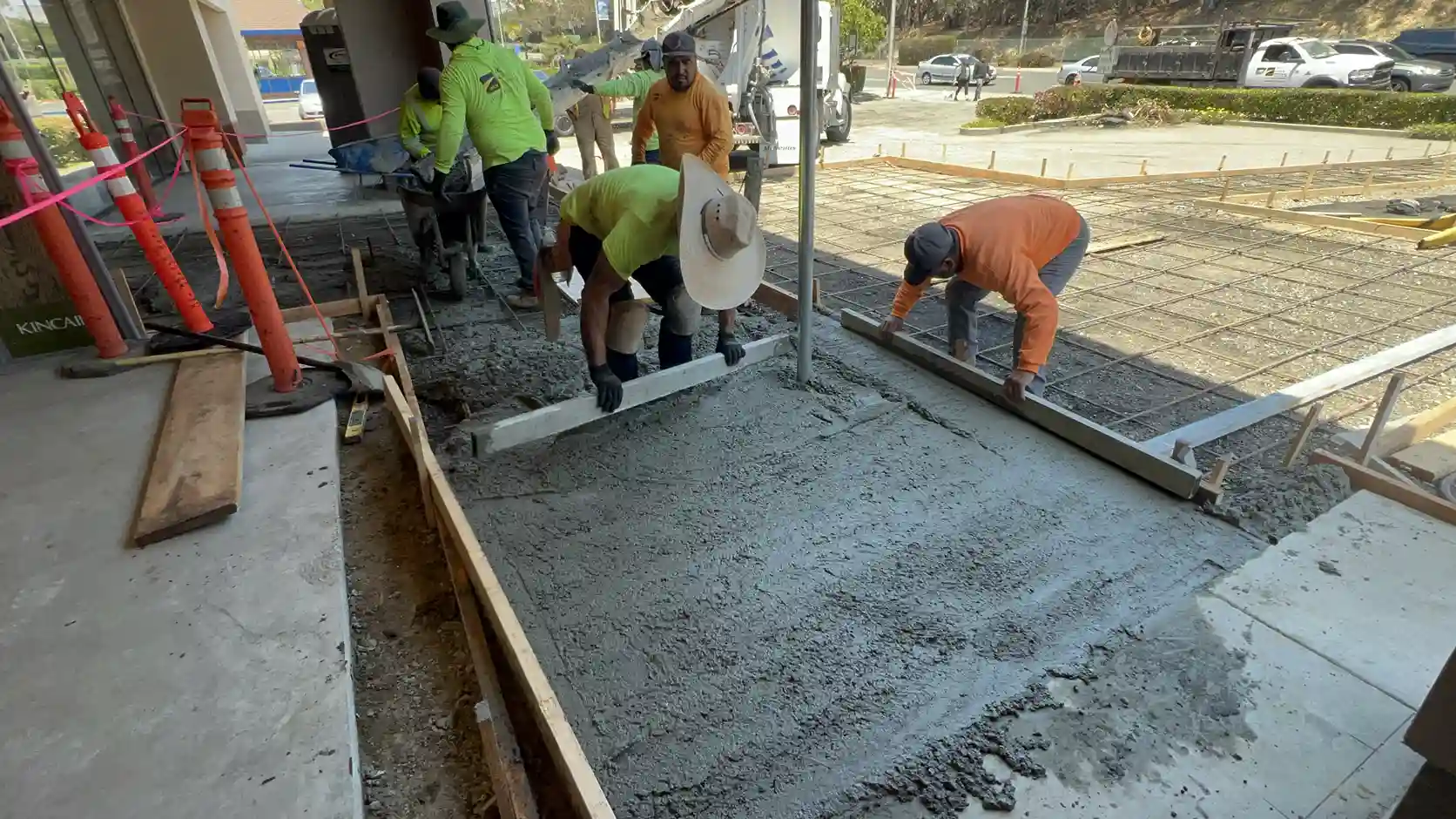
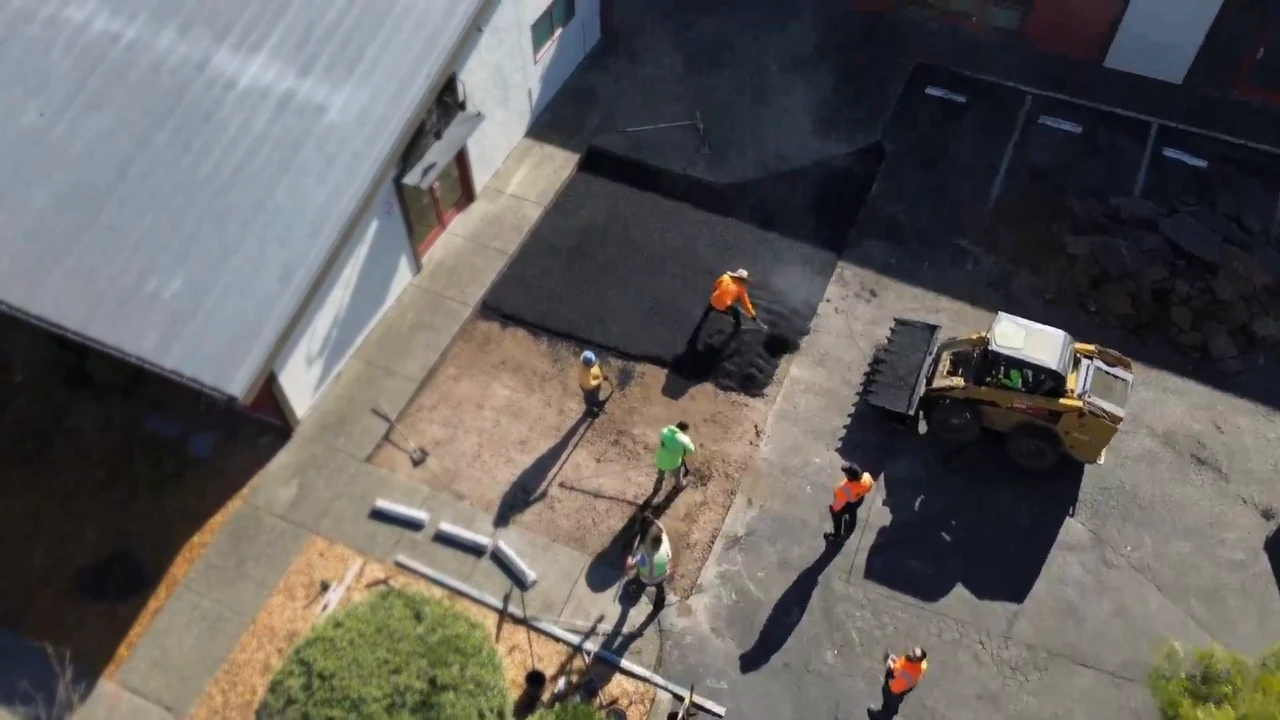
Workers smoothing fresh concrete during a parking lot repair project in Marin, California. Project by We Love Paving in Marin, CA.

Need Immediate Help?

Let's Talk About Your Project

Don't wait until minor damage turns into major expenses. Our team of experts is ready to provide you with guaranteed solutions. Contact us now for direct advice from a professional.

Frequently Asked Questions (FAQ)

Got Questions? Find Your Answers Here!!

What is the best quality asphalt for residential driveways?

The best quality asphalt for residential driveways is Hot Mix Asphalt (HMA) with a high-grade polymer-modified binder. This specific mixture resists Northern California's temperature fluctuations better than standard emulsions. Utilizing a three-eighths-inch aggregate size provides a smoother surface finish and increases the pavement’s lifespan by approximately twenty-five percent.

How does aggregate size influence the quality of driveway asphalt?

Aggregate size influences driveway asphalt quality by determining the pavement's surface density and structural strength. Using smaller aggregates like fine-screened crushed rock creates a tighter, more waterproof seal. This technical specification prevents ninety percent of the water penetration issues that typically lead to subgrade erosion and premature alligator cracking.

Why is Hot Mix Asphalt superior to Cold Mix for permanent driveways?

Hot Mix Asphalt is superior to Cold Mix because the heated binder creates a stronger molecular bond between aggregates. While Cold Mix is temporary for repairs, Hot Mix provides a structural surface with a lifespan exceeding twenty years. This material withstands eighty thousand pounds of axial load without deforming under peak summer heat.

What technical indicators define premium asphalt quality for a home?

Premium asphalt quality is defined by a precise five percent liquid binder content and ninety-five percent compaction density. These specific indicators ensure the pavement remains flexible enough to resist thermal cracking. We Love Paving verifies these levels to stop the eighty percent of surface stripping caused by substandard, binder-poor mixtures.

How do regional soil conditions affect the choice of asphalt quality?

Regional soil conditions affect asphalt choice because expansive clay requires a higher-quality, more flexible binder to prevent structural buckling. Implementing a six-inch compacted aggregate base under the asphalt ensures the surface moves with the ground. This engineering prevents ninety percent of the longitudinal cracks associated with California’s expansive subgrade soils.

Professional customer review project by We Love Paving in Northern California, California. Verified local construction quality.

Fred / Founder

Fred, Founder and Regional Operations Manager at We Love Paving, comes from a family that values hard work and discipline. Growing up watching his parents work long hours with integrity and dedication, Fred learned early on that quality paving isn’t just about asphalt, it’s about consistency, accountability, and doing the job right.

Share

Posts That Might Interest You

The Great Debate: Is 2 Inches of Gravel Enough for a Driveway?

The Great Debate: Is 2 Inches of Gravel Enough for a Driveway?

May 16, 2026

When it comes to building a driveway, one of the key decisions homeowners face is determining the appropriate thickness of the gravel base layer. While some may argue that 2 inches of gravel is sufficient to support the weight of vehicles and provide a stable foundation, others advocate for thicker layers to ensure long-term durability

Why Is Parking So Expensive for Property Owners?

May 15, 2026

Many commercial property owners underestimate how expensive parking areas become once maintenance, accessibility, and pavement deterioration start overlapping at the same time. At first, parking lot costs usually appear manageable. Small cracks, faded striping, drainage problems, or isolated surface wear may not seem urgent while the property continues operating normally. Over time, however, those smaller

ADA Compliant Checklist for Parking Lots

ADA Compliant Checklist for Parking Lots

May 15, 2026

Many commercial properties develop accessibility problems gradually without property owners realizing how much conditions have changed over time. Parking lots, sidewalks, ramps, and pedestrian access routes constantly experience wear from traffic movement, weather exposure, drainage shifts, and surface aging. Because these changes happen slowly, accessibility concerns are often overlooked until inspections, complaints, or liability risks

Biggest Mistakes Made by a Landlord With Parking Lots

Biggest Mistakes Made by a Landlord With Parking Lots

May 15, 2026

Many property owners focus heavily on tenant spaces, landscaping, and building appearance while overlooking one of the most heavily used parts of the property: the parking lot. The problem is that pavement deterioration rarely stays cosmetic for long. Small surface issues gradually begin affecting traffic flow, drainage behavior, pedestrian safety, tenant perception, and operational costs

Next

Estimation Tools

Calculate costs in seconds

Fast, accurate estimates that help you close more jobs. Less guesswork, more profit.