How Climate & Soil Conditions in Northern California Affect Your Parking Lot
Most property owners blame traffic or “bad contractors” when their parking lot starts cracking — but here in Northern California, the real culprit often sits beneath the surface: the ground itself and the wild mix of micro-climates we live with.
Let’s break this down the way we see it every week on the job — from Bay Area fog belts to Sacramento’s dry heat — and explain why your asphalt behaves the way it does, even if it was installed perfectly.
🌦️ 1. Northern California’s Climate: Asphalt’s Silent Enemy
If you manage property around the Bay Area, you already know how unpredictable the weather is. One week it’s fog and drizzle; the next, the sun’s cooking your blacktop like a skillet.
That constant temperature swing — expansion and contraction — is one of the fastest ways asphalt breaks down.
-
Coastal zones (Oakland, San Francisco, Daly City): Moisture seeps into tiny surface cracks, then expands overnight. Result? Spider-web cracking and early oxidation.
-
Inland areas (Sacramento, Concord, Stockton): High UV exposure and heat bake the oils out of the asphalt, turning it brittle and gray. Once it oxidizes, even a light vehicle load can cause raveling.
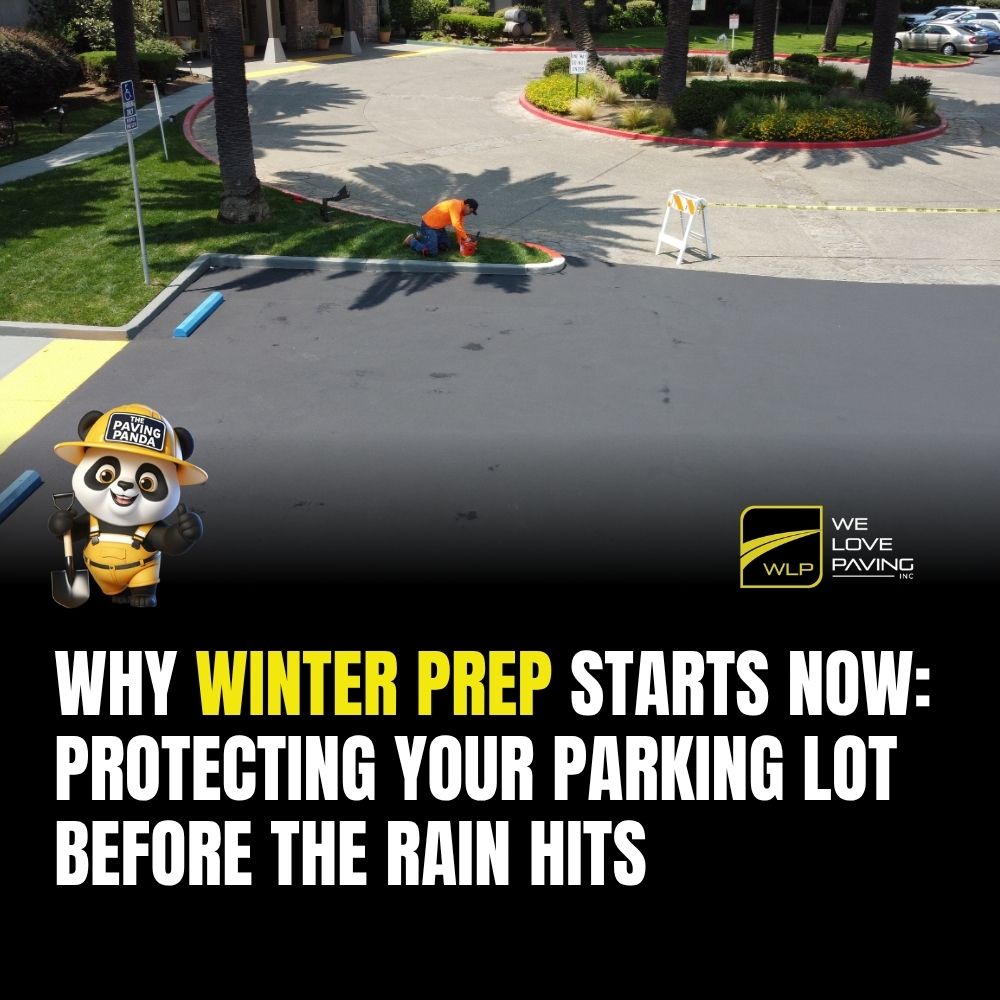
You can’t stop the weather — but you can build and maintain smarter. Sealcoating every 3–4 years helps protect against UV oxidation. And scheduling crack sealing before winter rain is the cheapest insurance policy you’ll ever buy.
🌎 2. Soil Conditions: What’s Hiding Under Your Lot
Northern California isn’t flat desert land — it’s a patchwork of clay, loam, and sandy soils, each reacting differently to moisture and load.
That’s why two parking lots built the same way, just 30 miles apart, can age completely differently.
Here’s what we see most often:
-
Clay-heavy soils (San Jose, Vallejo, Napa): They expand when wet and shrink when dry. That movement shifts your sub-base and creates “alligator” cracking on the surface.
-
Sandy or decomposed granite soils (Sacramento, Roseville): Great drainage, but poor load-bearing. Without proper compaction, you’ll see sinkholes and edge failures.
-
Urban fill (Oakland, Richmond): Decades of layered debris under asphalt create uneven settlement zones — the perfect setup for potholes.
At We Love Paving, we always start with a subgrade inspection, not just a topcoat quote. Because if the soil moves, everything above it will eventually fail — no matter how thick your asphalt layer is.
🧱 3. Drainage & Grading: The Overlooked Factor
Most property owners don’t realize 80% of asphalt failures start with poor drainage.
Northern California’s winter rains can dump several inches in days. If your lot wasn’t graded with proper slope (minimum 1.5% toward drains), water sits — and water wins every time.
Here’s what to check:
-
Standing water 24 hours after a storm? That’s base saturation.
-
Darker streaks or algae near curbs? You’ve got long-term drainage issues.
-
Potholes returning in the same area? The sub-base is pumping — trapped water under vibration.
Proper drainage design isn’t optional here; it’s the line between a 3-year headache and a 10-year warranty job.
💡 4. Building for NorCal Reality
If you’re resurfacing or building from scratch, tell your contractor you want a design for Northern California soils, not a one-size-fits-all paving spec from out of state.
What that means in real terms:
-
Add geotextile reinforcement over clay soils.
-
Use Class 2 aggregate base with proper compaction (95% minimum).
-
Confirm drainage slope before paving — 1.5–2% minimum for parking areas.
-
Schedule sealcoating in dry months (May–September).
-
Perform annual crack inspections before winter.
That’s how you stop reacting to problems and start controlling the life of your pavement.
🛠️ 5. Let’s Keep Your Property Looking Sharp
Your parking lot isn’t just asphalt — it’s your first impression. Whether you manage retail space in Walnut Creek or a commercial park in Sacramento, you want it safe, compliant, and looking sharp year-round.
At We Love Paving, we’ve spent years studying how Northern California climate and soil interact. That’s why we don’t just resurface — we diagnose. Every estimate starts with a real-world site assessment, so your investment lasts.
👉 Get a Free Property Health Scan — we’ll show you exactly what’s happening beneath your asphalt before the next rainy season hits.