Engineering and Compliance in Parking Lot Design: What Property Owners Need to Know

A well-paved parking lot does more than hold vehicles—it manages traffic flow, meets ADA requirements, improves drainage, and enhances property value. At We Love Paving, we specialize in designing and executing parking lot layouts that balance durability, efficiency, and compliance.

This blog outlines the technical elements every commercial or multifamily parking lot must consider to avoid long-term failure, legal risk, and costly rework.


📏 1. Parking Layout: Efficiency Meets Compliance

The design of a parking lot must follow strict geometry based on vehicle dimensions and turning radii. Typical layout angles include:

  • 90° stalls – maximize space, common in commercial lots

  • 60° or 45° stalls – easier maneuvering, ideal for high-turnover spaces

  • Parallel stalls – used in constrained or perimeter areas

Aisle width and stall size must follow local codes and usage needs (compact, standard, oversized, or delivery access).

Stall Type Minimum Width Minimum Length
Standard 9 ft 18–20 ft
Compact 8–8.5 ft 16–17 ft
ADA Accessible 8 ft + 5 ft access aisle 18 ft

♿ 2. ADA Accessibility: Built Into the Blueprint

ADA compliance is not an afterthought—it’s a structural component of the layout. Requirements include:

  • Designated accessible parking stalls with access aisles

  • Correct slopes (max 2% cross slope)

  • Signage and striping in high-contrast paint

  • Clear, compliant paths from stalls to building entries

Failure to integrate accessibility from the start often results in costly redesigns and potential lawsuits.


💧 3. Grading, Drainage, and Surface Flow

A poorly drained parking lot will deteriorate prematurely, regardless of material quality. WLP implements laser-guided grading and slope design to ensure:

  • A minimum 1–2% slope for surface drainage

  • Catch basins or trench drains for proper water removal

  • Avoidance of ponding in low-traffic or high-use zones

We analyze subgrade conditions and drainage direction before finalizing any asphalt or concrete pours.


🧱 4. Material Selection: Asphalt vs. Concrete by Application

  • Asphalt is ideal for large-scale lots due to its flexibility and cost-efficiency

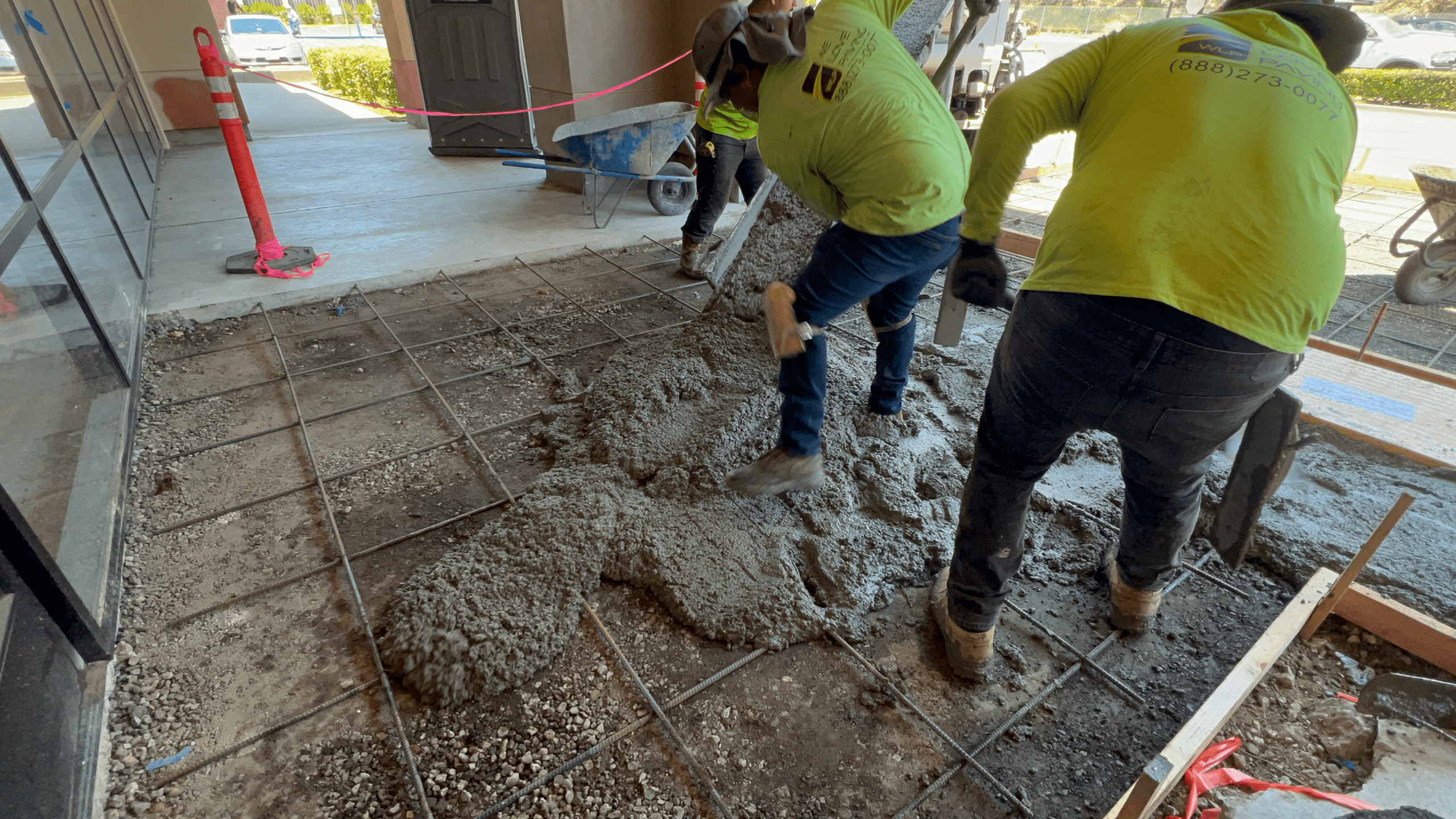
  • Concrete is preferred in high-load zones like dumpster pads, entrances, or delivery lanes

At WLP, we often design hybrid systems—asphalt with concrete reinforcements in critical areas.


🔁 5. Maintenance Integration: Planning for Longevity

The best parking lots are designed with future maintenance in mind:

  • Expansion joints in concrete zones

  • Pre-striped sealcoat cycles every 2–3 years

  • Proper base depth based on projected traffic load

  • ADA striping and signage ready for periodic refresh

Preventive planning increases lifespan, reduces liability, and preserves curb appeal.


🏗️ Built to Perform. Designed to Last.

At We Love Paving, we don’t just install parking lots—we engineer them. Every line we paint and every square foot we pave is backed by code, precision, and performance metrics.


📞 Need an Expert Assessment?

Whether you’re building from scratch or upgrading an existing lot, our team will walk your site, evaluate compliance, and provide a detailed scope for execution.

👉 Contact We Love Paving today for a full parking lot consultation across California.


Share

WHO IS FRED?

Fred, Regional Operations Manager, comes from a family of immigrant roots and a story built on sacrifice, discipline, and hard work. Growing up, Fred watched his parents work long hours and weekends to create a better future teaching him the values of perseverance, determination, and doing things the right way every single time.
We Love Paving began with Fred’s father, who started doing what he knew best: paving. Over the years, he built experience alongside respected professionals in the industry, refining his methods and developing a reputation for quality work that speaks for itself. As his clientele grew, so did the vision one built not only on skill, but on integrity and pride in every job.

Posts that might interest you

What is the Best Quality Asphalt for Driveways?

What is the Best Quality Asphalt for Driveways?

June 28, 2024

Choosing the best quality asphalt for your driveway is essential to ensure durability, aesthetic appeal, and cost-effectiveness. This guide explores the types of asphalt, their benefits, and how to select the best option for your driveway needs. Understanding Asphalt Factors to Consider When Choosing Asphalt Types of Asphalt for Driveways Comparing Asphalt to Other Materials

How Thick Should Asphalt Paving Be?

How Thick Should Asphalt Paving Be?

June 28, 2024

Choosing the right thickness for asphalt paving is crucial for the longevity and durability of the surface, whether it’s a driveway, parking lot, or roadway. The thickness of asphalt paving affects its ability to withstand traffic loads, weather conditions, and overall wear and tear. This article will explore the factors influencing asphalt thickness and provide

How Close to My Property Line Can I Pour Concrete?

How Close to My Property Line Can I Pour Concrete?

June 28, 2024

Pouring concrete close to your property line is a common issue for homeowners looking to enhance their outdoor spaces. Whether it’s for a driveway, patio, or walkway, understanding the legal and practical considerations is crucial to avoid disputes with neighbors and comply with local regulations. This guide explores the key factors influencing how close you

How to Fix a Crumbling Concrete Driveway: The Ultimate Repair Guide

How to Fix a Crumbling Concrete Driveway: The Ultimate Repair Guide

June 27, 2024

When a concrete driveway starts to crumble, it’s more than a cosmetic issue—it’s a warning sign that the surface is losing its structural integrity. Left untreated, it can lead to major damage, higher repair costs, and safety hazards. Whether you’re a homeowner or manage a commercial property, this guide will show you how to restore

Do You Need a Permit to Replace a Driveway? A Comprehensive Guide

Do You Need a Permit to Replace a Driveway? A Comprehensive Guide

June 25, 2024

Replacing a driveway is a significant home improvement project that can enhance curb appeal, increase property value, and improve functionality. However, before you start tearing up your old driveway and pouring new concrete or laying pavers, it’s crucial to understand the legal and regulatory requirements involved. One of the most common questions homeowners have is

Steps Involved in Asphalt Paving

Steps Involved in Asphalt Paving

June 25, 2024

Asphalt paving is a necessary part of the construction industry. It’s a versatile material used to build roads, parking lots, and driveways. Understanding the steps involved in asphalt paving will help you choose the right pavement for your needs. Asphalt is an extremely durable material that withstands traffic and the elements. It is also environmentally

The Cost of Asphalt Cutting Per Linear Foot: What to Expect

The Cost of Asphalt Cutting Per Linear Foot: What to Expect

June 24, 2024

When it comes to construction and repair projects, asphalt cutting is often a necessary task, whether for roadworks, driveways, or other paved surfaces. Understanding the cost involved in asphalt cutting per linear foot can help you budget more accurately for your project. This article will break down the factors affecting these costs and provide a

The Best Base for an Asphalt Driveway: A Comprehensive Guide

The Best Base for an Asphalt Driveway: A Comprehensive Guide

June 24, 2024

What Do You Lay Under Asphalt?

What Do You Lay Under Asphalt?

June 24, 2024

The Process of Asphalt Paving

The Process of Asphalt Paving

June 19, 2024

Asphalt Paving is a complex process that involves numerous stages. A good paving contractor will be willing to walk you through their work processes and answer any questions. Inquire about an asphalt paving contractor’s license, worker’s compensation, and liability insurance. Ask them to provide references and project examples. Also, ask about their education and training.

Previous Next