Many property owners assume that ADA ramp compliance only depends on slope measurements. In reality, accessibility standards involve far more than a simple incline ratio. Surface conditions, landing areas, cross slope, handrails, drainage, and transition points all play a role in determining whether a ramp meets accessibility requirements.
Even small construction issues can create safety risks for wheelchair users and pedestrians with limited mobility. In many commercial properties, non compliant ramps become a major source of liability because problems are often overlooked during routine maintenance or resurfacing projects.
Understanding what makes a ramp compliant helps property owners improve accessibility while reducing the risk of costly repairs, complaints, and compliance violations.
What Makes a Ramp ADA Compliant
An ADA compliant ramp must provide safe and consistent access for all users. While slope is one of the most important measurements, it is only one part of a much larger accessibility system.
Several factors work together to determine compliance, including:
- Running slope
- Cross slope
- Landing dimensions
- Surface stability
- Handrail placement
- Transition smoothness
- Detectable warning surfaces
- Drainage control
In many cases, ramps fail inspection because of multiple small issues rather than one major construction defect.
For larger commercial properties, a professional ADA pavement assessment can help identify slope inconsistencies and accessibility concerns before they become serious compliance problems.
Why Ramp Slope Is Only One Part of Compliance
The maximum running slope for most ADA ramps is 1 to 12. While this measurement is widely known, many property owners overlook the importance of cross slope and surface transitions.
A ramp may technically meet slope requirements while still creating mobility challenges because of uneven pavement, poor drainage, or abrupt elevation changes.
Common issues include:
- Water pooling near ramp entrances
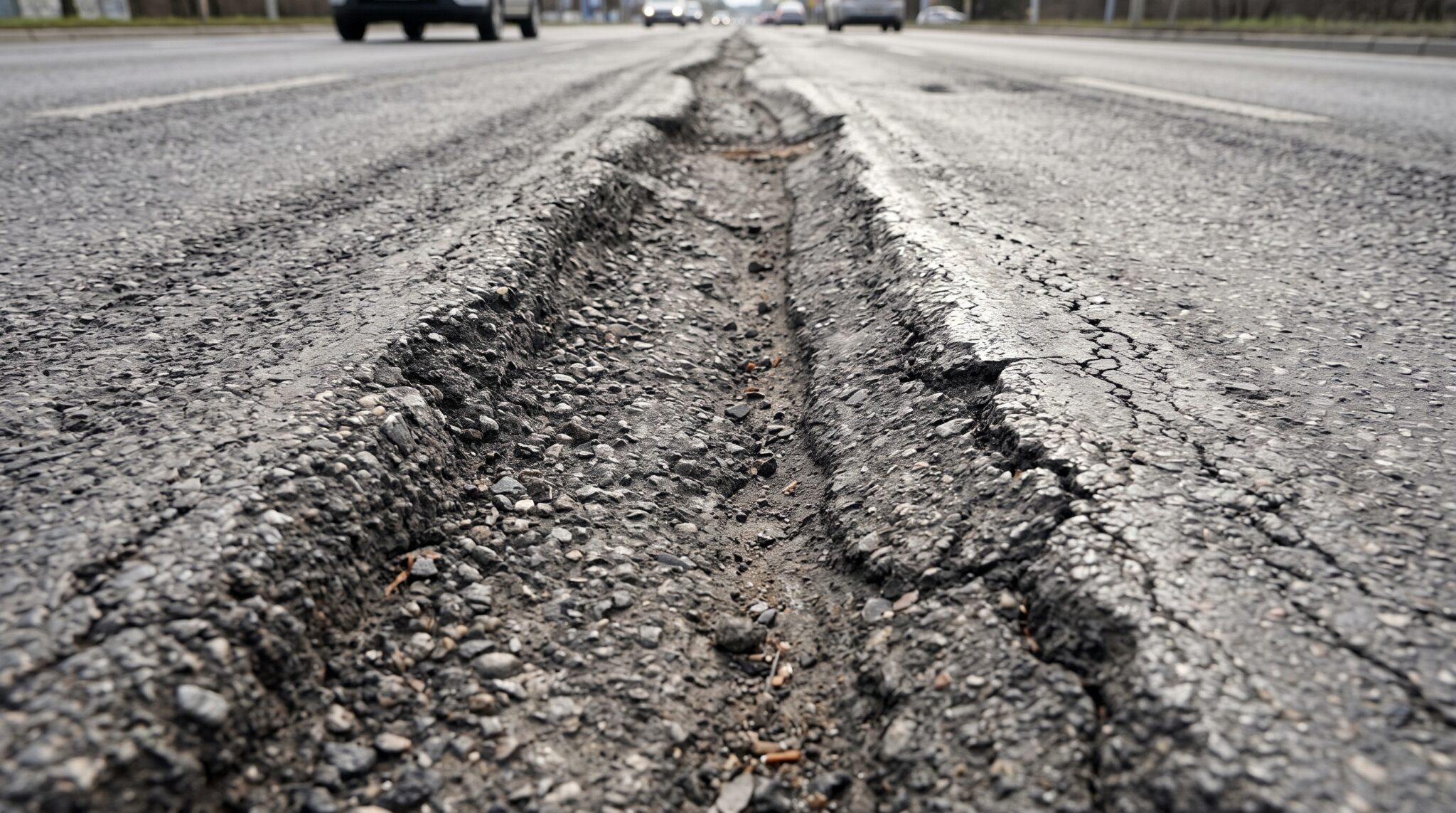
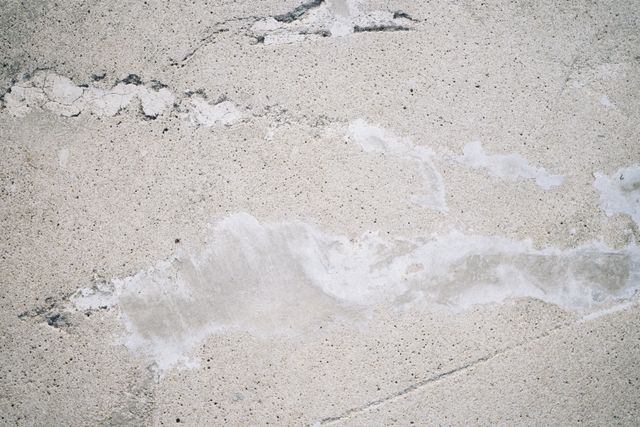
- Cracked concrete surfaces
- Uneven asphalt transitions
- Excessively steep side slopes
- Improper landing spacing
These conditions can create unsafe access routes even when the primary ramp angle appears compliant.
The Importance of Cross Slope and Surface Drainage
Cross slope affects how easily wheelchair users can maintain directional control while traveling across a ramp surface. Excessive cross slope can force mobility devices sideways and increase fall risks during wet conditions.
Drainage problems often contribute to cross slope failures because pavement settlement changes the surface angle over time.
Commercial parking lots frequently develop accessibility problems after resurfacing projects, patchwork repairs, or deferred maintenance.
Property owners dealing with aging pavement conditions should also review broader commercial ADA compliance concerns throughout pedestrian access areas.
Common ADA Ramp Violations
Many accessibility violations are caused by construction details that appear minor during installation but become significant over time.
Some of the most common ramp compliance issues include:
- Uneven pavement transitions
- Missing detectable warning surfaces
- Inadequate landing space
- Cracked walking surfaces
- Improper handrail height
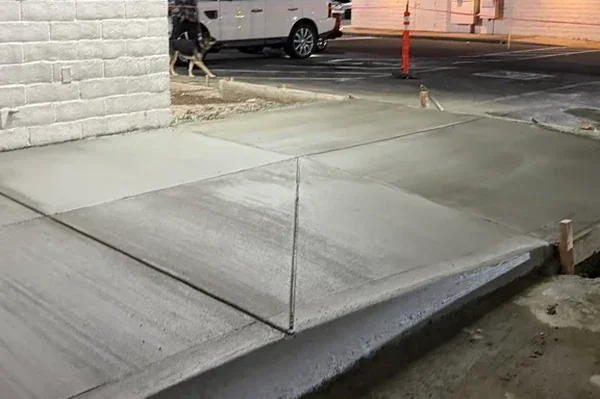
- Surface separation between concrete sections
- Steep cross slopes near parking stalls
- Ponding water near ramp entrances
These problems not only affect accessibility but can also increase long term repair costs when left unresolved.
Why Curb Ramps Matter for Accessibility
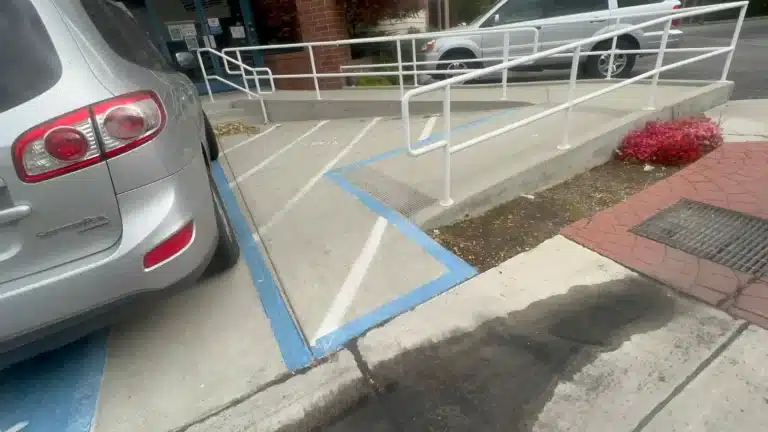
Curb ramps create safe transitions between sidewalks, parking lots, and pedestrian pathways. When these areas are improperly installed, wheelchair users may encounter sudden elevation changes that limit safe access.
Detectable warning surfaces also play an important role by helping visually impaired pedestrians identify transition zones.
Businesses planning accessibility upgrades should understand how curb ramp requirements affect both safety and overall site compliance.
How Construction Quality Affects Long Term Compliance
ADA compliance is not only about passing an initial inspection. Surface durability and long term pavement performance also affect accessibility over time.
Improper grading, poor drainage planning, and low quality repairs can gradually create non compliant conditions even after a project is completed.
For this reason, accessibility planning should always be integrated into broader paving and construction decisions.
Projects involving resurfacing, concrete replacement, or pedestrian route modifications should follow established ADA construction practices to reduce future compliance risks.
When Property Owners Should Schedule an ADA Inspection
Many accessibility issues are not immediately visible during daily property operations. Problems often become noticeable only after complaints, incidents, or municipal inspections occur.
Property owners should consider scheduling an inspection when:
- Resurfacing projects are completed
- Drainage patterns change
- Concrete settlement becomes visible
- Parking lots develop cracking
- Sidewalks shift or separate
- Accessibility complaints are reported
Routine evaluations help identify potential issues before they require extensive corrective work.
Improve Accessibility Before Small Problems Become Major Repairs
ADA compliance requires more than basic slope measurements. Safe accessibility depends on proper construction, surface consistency, drainage control, and long term pavement performance.
Addressing accessibility issues early helps commercial properties improve safety, reduce liability exposure, and maintain reliable pedestrian access throughout the site.
For many businesses, proactive evaluations and pavement assessments provide a more cost effective solution than reacting to compliance violations after problems escalate.