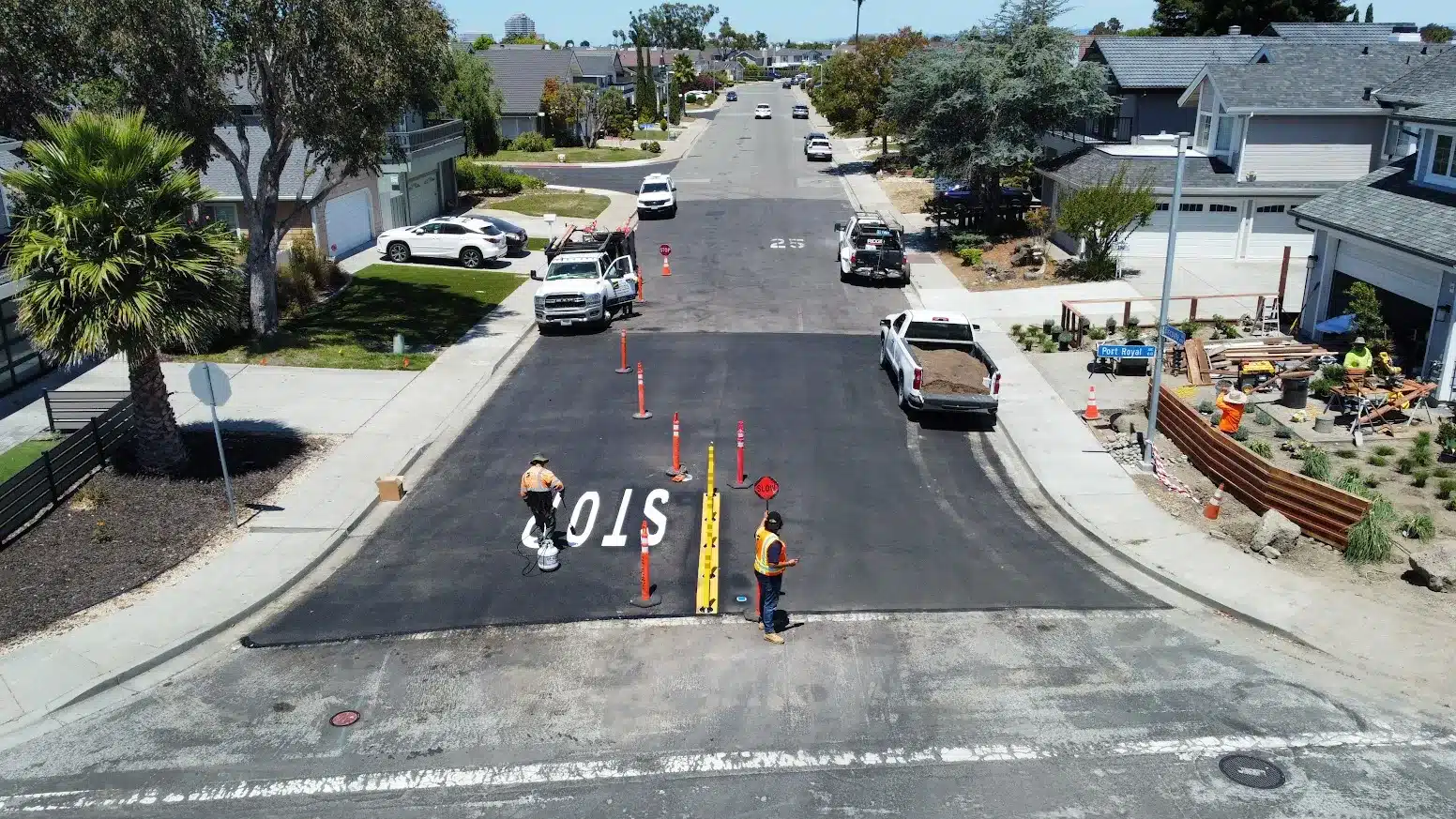
Commercial pavement changes continuously over time, even when deterioration appears gradual at first.
A newly paved parking lot typically looks uniform, smooth, and structurally stable during its early years. Eventually, however, traffic movement, environmental exposure, surface aging, and operational wear begin affecting how the pavement performs day to day.
The challenge for many property owners is that pavement deterioration rarely happens all at once. Parking lots usually move through different lifecycle stages gradually, which makes long-term wear easy to underestimate until larger operational problems begin appearing across the property.
Understanding the pavement lifecycle helps commercial properties make better decisions about maintenance timing, surface planning, and long-term pavement performance before widespread failure develops.
A guide to pavement maintenance should not start with products or services.
It should start with the property.
Different paved areas fail in different ways. A commercial parking lot does not age like a residential driveway. A retail entrance does not carry the same stress as a back parking row. A loading zone does not behave like a pedestrian walkway. A shaded low spot with poor drainage will usually deteriorate differently from a dry, lightly used section of asphalt.
That is why pavement maintenance is not one action. It is a system of decisions.
Property owners, landlords, HOAs, facility managers, and property managers need to know what to inspect, what to monitor, what to repair early, and what should not be covered up with surface treatments. The goal is not to make pavement look new forever. That is unrealistic. The goal is to keep pavement functional, organized, and easier to maintain before small issues become expensive repairs.
Regular pavement maintenance helps owners preserve access, reduce avoidable disruption, protect curb appeal, manage budgets, and avoid letting water, traffic, and neglect decide the repair schedule.
Start by Reading the Pavement, Not Guessing the Service
The first step in pavement maintenance is inspection.
Too many owners begin with the wrong question: “Do we need sealcoating?” or “Should we patch this?” or “Can we restripe now?” Those questions may matter later, but they come too early.
The better first question is: what is the pavement telling us?
A serious inspection looks at surface condition, drainage, traffic stress, markings, edges, old repairs, and how people actually use the property. It should include the obvious areas near entrances and the less visible areas where problems often start: trash enclosure routes, loading zones, shaded corners, low spots, curb lines, and previous patch locations.
Look for:
- Cracks that are widening or connecting
- Potholes or depressions in active traffic areas
- Standing water after rain
- Loose asphalt or raveling surface texture
- Faded striping or unclear traffic flow
- Broken edges near curbs or landscaping
- Repeated failure around old patches
- Oil-stained or softened pavement
- Pedestrian routes that feel rough or interrupted
This inspection should happen before choosing a treatment. Maintenance is expensive when the wrong work is done in the wrong order.
When a property needs a structured approach rather than isolated fixes, paving maintenance should be viewed as a planning process, not just a reaction to visible damage.
Cracks Are Usually the First Maintenance Signal
Cracks are one of the earliest signs that pavement needs attention.
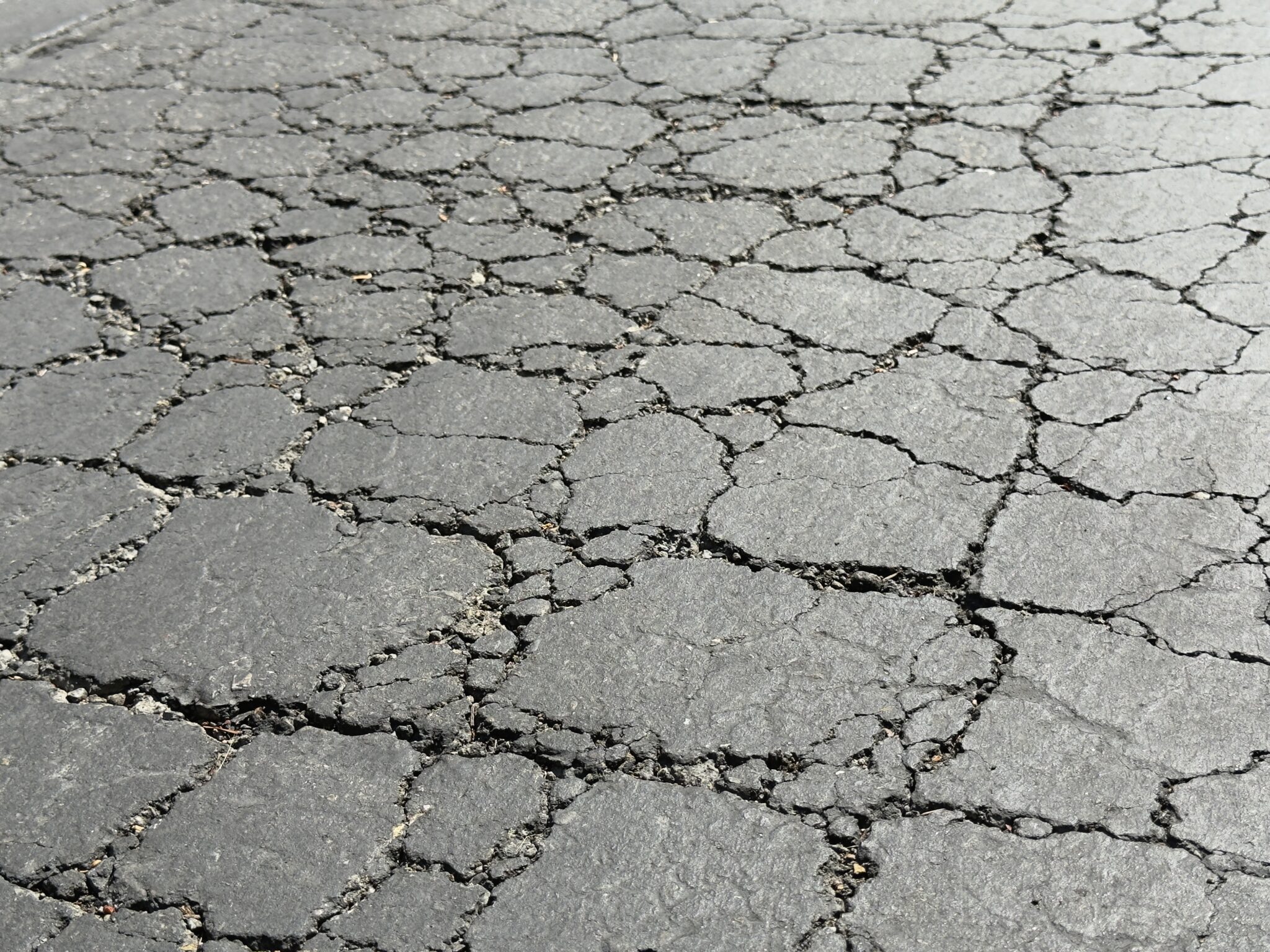
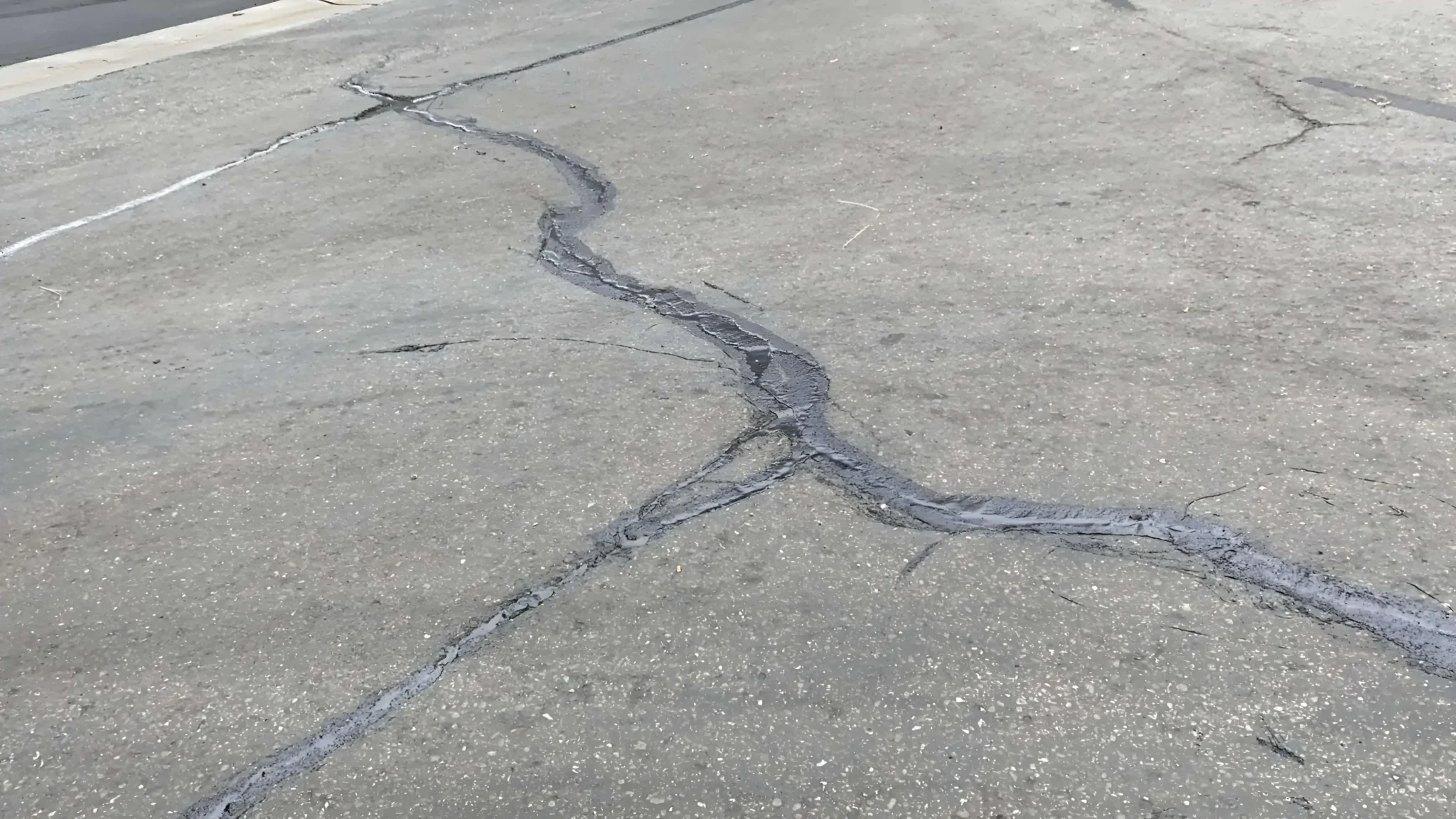
They may appear small, but they create openings where water, dirt, weeds, and debris can enter the pavement system. Once water moves below the surface, traffic can begin pressing on weakened areas. That is how a narrow crack can become a wider opening, a broken edge, or eventually a pothole.
The mistake is treating all cracks the same.
A hairline crack in a dry, low-use area may be monitored. A crack near standing water, a drive aisle, a loading zone, a curb line, or an old patch deserves closer attention. A crack that widens after storms or develops loose edges is not just cosmetic wear. It is active deterioration.
Crack maintenance should happen before the surrounding pavement breaks apart. Once the edges crumble, the repair may no longer be limited to crack treatment.
Where cracks are still suitable for early attention, asphalt crack filling can help reduce water entry and slow deterioration. But crack filling is not a universal cure. If the pavement is sinking, moving, or failing around the crack, deeper repair may be needed.
The article on small asphalt cracks explains the larger risk: a crack matters because of what it allows water and traffic to do next.
Drainage Determines How Long Maintenance Holds
Water is one of the most important forces in pavement deterioration.
A lot can be patched, sealed, or restriped and still keep failing if water keeps collecting in the same places. That is why drainage has to be part of any serious guide to pavement maintenance.
Inspect the property after rain. Dry pavement hides the truth. Wet pavement shows where water sits, where it flows, and where it may be entering cracks or softening edges.
Pay attention to:
- Puddles that return in the same low areas
- Water near entrances or pedestrian routes
- Cracks around drains, gutters, or curb lines
- Sediment trails across drive aisles
- Landscape runoff crossing asphalt
- Clogged catch basins or blocked drainage paths
- Repeated potholes in wet sections
The weak approach is fixing the visible surface and ignoring the water behavior.
If a pothole keeps forming near the same low spot, patching alone may not solve the issue. If cracks keep appearing along a drainage path, the water pattern needs review. If sealcoating is applied over pavement that holds water, the surface may look better while the underlying condition remains active.
Maintenance that ignores drainage is often temporary by design, whether the owner admits it or not.
Repairs Should Come Before Cosmetic Improvements
One of the most common pavement maintenance mistakes is improving the surface appearance before correcting damage.
Restriping over broken asphalt does not fix the lot. Sealcoating over potholes does not restore the pavement. Filling cracks around a failed base does not stabilize the underlying structure. A fresh black surface can make neglected pavement look better briefly, but it cannot reverse deeper failure.
Repair comes before appearance.
If the property has potholes, failed patches, loose edges, unstable sections, or recurring surface breakup, those areas should be addressed before surface protection or striping. Otherwise, the owner may pay for work that needs to be redone after repairs.
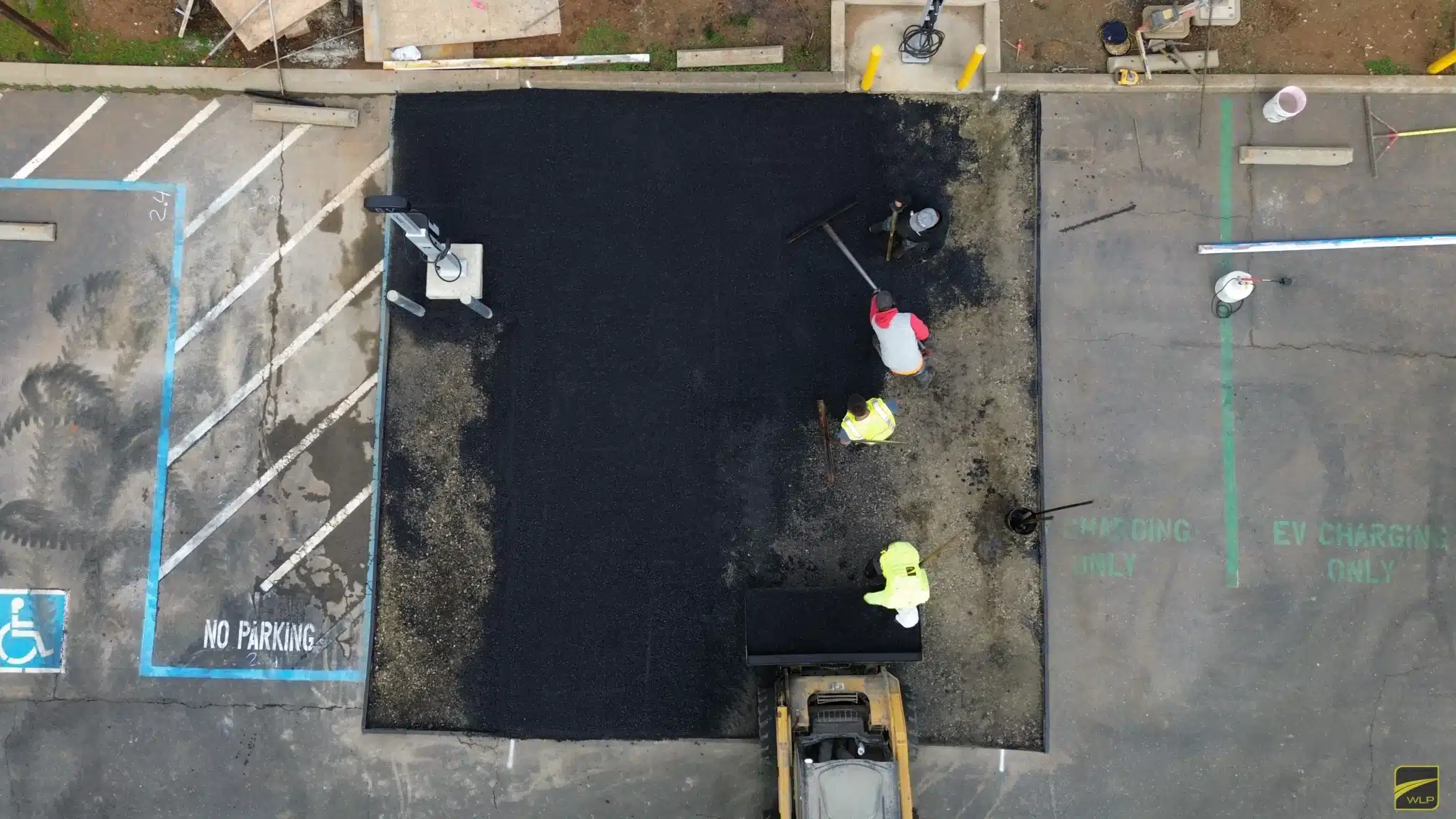
When defects have moved beyond early wear, parking lot repair becomes more appropriate than routine maintenance alone. The goal is to correct the damaged areas before applying treatments meant for preservation.
This is where sequencing matters:
- Inspect the pavement.
- Identify active damage.
- Review drainage.
- Repair unstable areas.
- Treat cracks where appropriate.
- Apply surface protection only where the pavement is ready.
- Stripe after the surface work is complete.
Skipping steps may save time upfront, but it often creates rework later.
Sealcoating Is Useful Only When the Pavement Is Ready
Sealcoating is often misunderstood.
It can help protect asphalt from sunlight, oxidation, water exposure, and surface wear. It can improve appearance and provide a cleaner surface for fresh striping. But sealcoating is not a repair method for failed pavement.
A faded but stable parking lot may be a good candidate. A lot with potholes, soft areas, widespread cracking, drainage problems, or loose asphalt may need repair before sealing.
This distinction protects owners from wasting money.
The broader article on asphalt maintenance explains how surface protection fits into long-term upkeep. For this guide, the key point is simpler: sealcoating should be used to preserve pavement, not hide damage.
A property owner should ask:
- Is the surface stable?
- Are cracks treated or reviewed?
- Are potholes repaired?
- Does water drain properly?
- Are oil spots or contaminants cleaned?
- Is the pavement too deteriorated for coating to help?
If the answer is unclear, the pavement needs review before coating.
Striping Maintains Order, Not Just Appearance
Parking lot striping is often treated as a finishing touch.
That is too shallow.
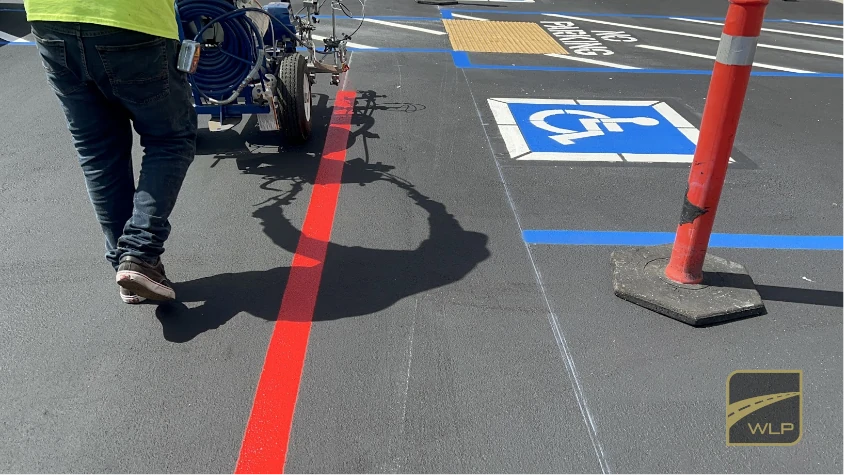
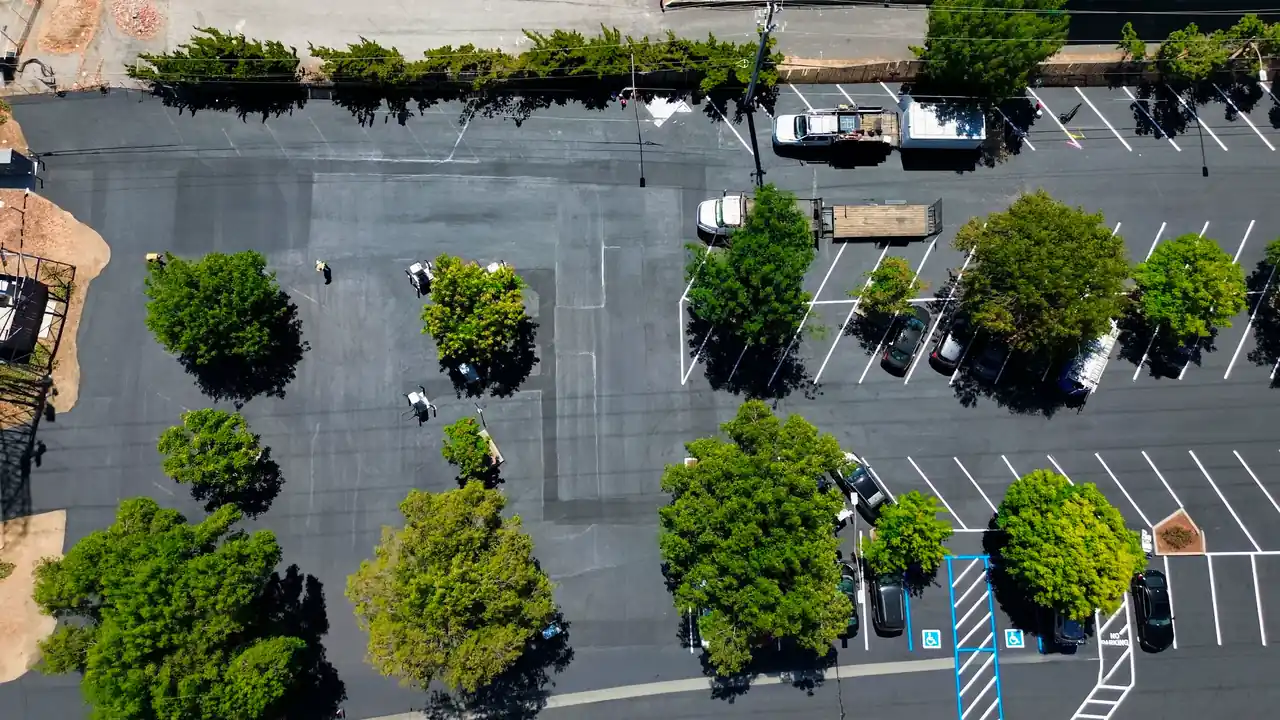
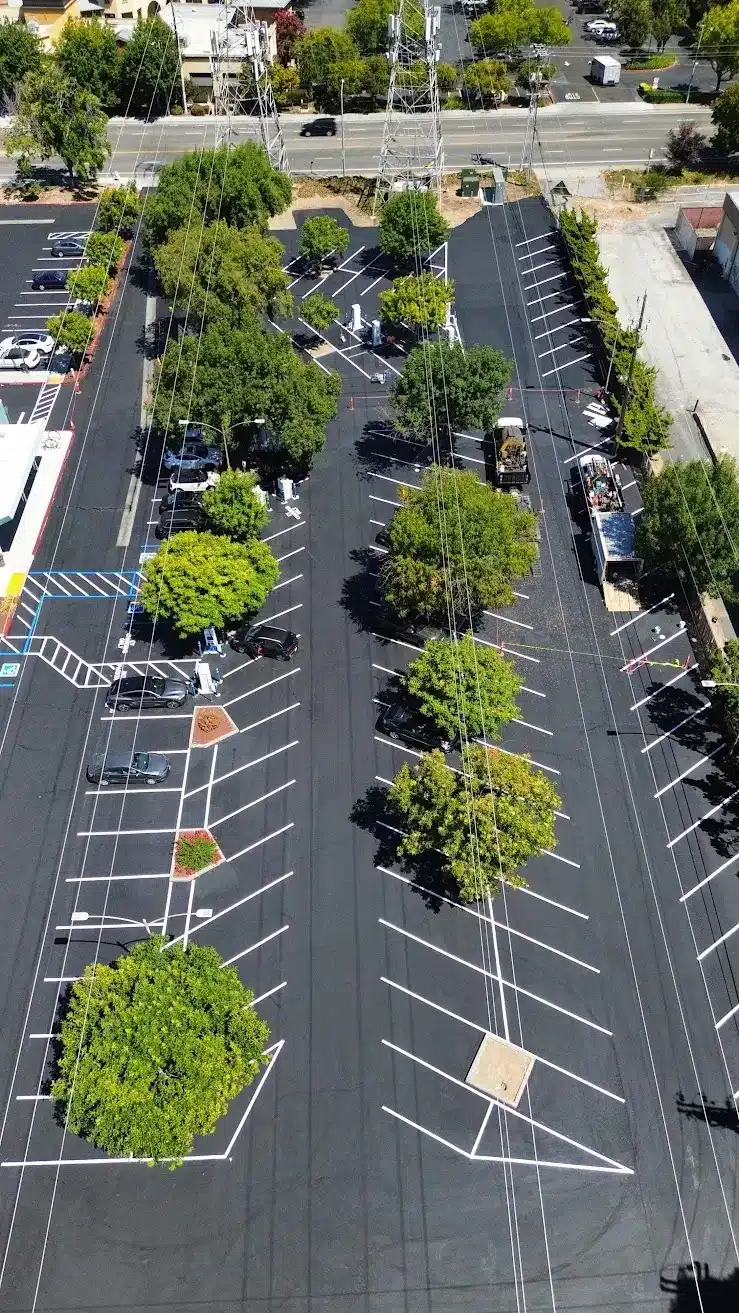
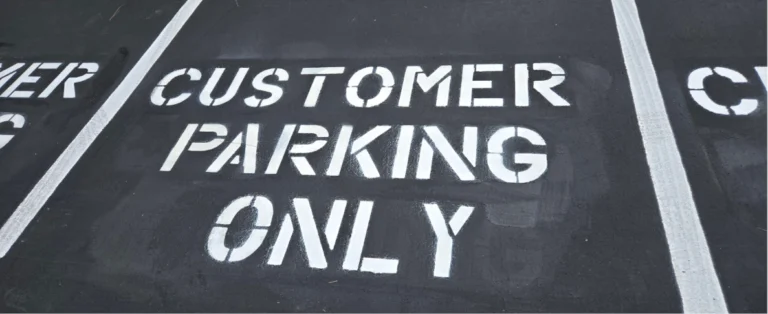
Striping tells people how to use the property. It defines stalls, drive aisles, directional flow, pedestrian areas, accessible parking, fire lanes, loading zones, and no-parking areas. When markings fade, drivers begin to improvise. Parking becomes less efficient. Pedestrian paths become less visible. The property can feel neglected even if the asphalt surface is still functional.
Striping should usually happen after pavement repairs and surface treatments, not before. If a lot is going to be patched, sealed, or resurfaced, striping too early can waste money.
Good pavement maintenance considers striping as part of the system.
A clean, stable, well-marked lot supports access, tenant experience, curb appeal, and property control. A cracked, faded, poorly marked lot signals deferred maintenance.
That perception matters for commercial properties, HOAs, apartment communities, retail centers, office properties, and healthcare facilities. The parking lot is often the first maintained surface people experience.
Maintenance Timing Saves More Than Repair Cost
The real value of pavement maintenance is not just lower repair cost.
It is timing control.
When owners inspect and maintain pavement regularly, they can choose when work happens. Repairs can be scheduled during lower-traffic periods. Tenants or residents can be notified. Work can be phased. Budgets can be planned. Multiple small items can be grouped into one maintenance window.
When owners wait too long, timing control disappears.
A pothole forms near an entrance. A tenant complains. Water damages the same section again. A buyer notices deferred maintenance. A repair becomes urgent because the property can no longer ignore it.
The article on delaying parking lot maintenance addresses this directly: delay often makes the eventual work more disruptive, not just more expensive.
Good maintenance is not only about what gets fixed. It is about avoiding bad timing.
A Maintenance Plan Should Match the Property
There is no universal pavement maintenance schedule that fits every property.
A small residential community, a medical office, a retail center, a warehouse, a school, a hotel, and an office park all use pavement differently. The plan should reflect traffic, drainage, pavement age, tenant expectations, climate, budget, and ownership goals.
High-stress areas usually need closer attention:
- Main entrances
- Drive aisles
- Loading zones
- Trash enclosure routes
- Accessible parking areas
- Pedestrian crossings
- Drainage paths
- Previous repair areas
- Edges near curbs and landscaping
A property with heavy truck traffic may need more frequent repair review. A retail center may prioritize striping and customer-facing areas. An HOA may prioritize resident access and phased scheduling. A landlord may need documentation before budgeting or lease renewals.
The worst maintenance plan is the one copied from a different property without considering actual use.
Documentation Turns Maintenance Into Asset Management
A guide to pavement maintenance should include recordkeeping.
Without records, owners rely on memory, complaints, and visible failure. That is weak management.
Simple documentation can include photos, dates, notes, repair history, drainage observations, and areas to monitor. Over time, those records reveal patterns. A crack that widened for two years should move up the priority list. A patch that keeps failing may point to base or drainage issues. A low spot that holds water after every storm deserves more than another temporary repair.
Documentation helps owners decide what is urgent, what can wait, and what needs budgeting for the next cycle.
It also prevents overreaction.
Not every faded area needs immediate work. Not every crack means replacement. Not every pothole requires full resurfacing. Records help separate isolated wear from active deterioration.
That is the difference between maintenance as a reaction and maintenance as asset management.
The Best Pavement Maintenance Is Boring on Purpose
The best pavement maintenance plan usually does not look dramatic.
It looks consistent.
Inspect regularly. Watch water. Treat cracks early. Repair failures before they spread. Use sealcoating only when the pavement is ready. Stripe after surface work. Keep records. Budget before emergencies. Revisit high-stress areas every season.
That kind of maintenance rarely feels urgent because it is designed to prevent urgency.
At We Love Paving, we look at pavement maintenance through a practical property-management lens: how the surface is used, where deterioration is starting, what water and traffic are doing, which repairs should come first, and how to keep the property from drifting into avoidable neglect.