Introduction
Parking spaces may seem like a mundane aspect of urban planning, but their dimensions play a critical role in safety, convenience, and regulatory compliance. At WeLovePaving, we understand that well-designed parking lots enhance traffic flow, maximize space efficiency, and ensure accessibility for all drivers. This guide explores the standard car parking space dimensions in the USA, including key considerations for residential, commercial, and ADA-compliant designs.
Why Parking Space Dimensions Matter
Properly sized parking spaces reduce the risk of accidents, improve driver comfort, and ensure compliance with local building codes. Oversized spaces waste valuable land, while undersized ones lead to vehicle damage and accessibility challenges. Whether designing a commercial lot or a residential driveway, adhering to proven standards is essential for functionality and safety.
Standard Parking Space Dimensions
In the U.S., the minimum standard for a perpendicular (90-degree) parking space is 9 feet wide by 18 feet long. These dimensions accommodate most vehicles, including sedans and mid-size SUVs. However, variations exist based on location and purpose:
-
Compact Spaces: Often 8 ft x 16 ft, though many municipalities avoid these due to today’s larger average vehicle size.
-
Angled Parking: Spaces angled at 45°–60° may be narrower (8.5–9 ft wide) but require shorter lengths (15–18 ft). Angled layouts improve traffic flow in high-turnover areas like shopping centers.
-
Trucks and SUVs: In regions with larger vehicles, lengths of 20–22 ft are recommended.
Local codes supersede national guidelines, so always consult regional authorities during planning.
ADA-Compliant Parking Spaces
The Americans with Disabilities Act (ADA) mandates accessible parking to ensure inclusivity. Key requirements include:
-
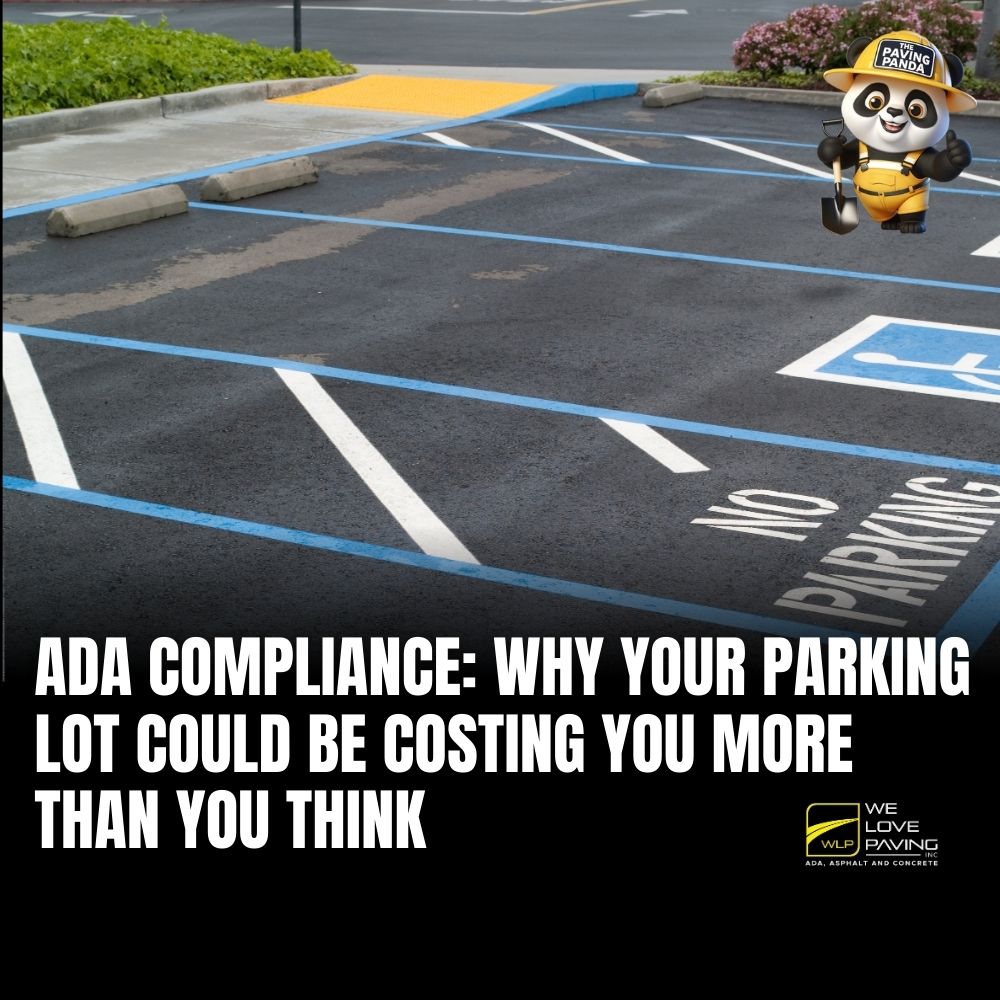
Standard Accessible Spaces: 8 ft wide with a 5 ft-wide access aisle adjacent.
-
Van-Accessible Spaces: 8 ft wide with an 8 ft aisle; these also require 98 inches of vertical clearance for lifts.
-
Location: Accessible spaces must be closest to building entrances and account for at least 2% of total parking capacity (1 van space per 6 accessible spaces).
Signage and pavement markings (e.g., blue striping) are mandatory for compliance.
Angled vs. Perpendicular Parking
The choice between angled and perpendicular layouts impacts space efficiency and driver experience:
-
Perpendicular (90°): Maximizes space density but requires wider aisles (24 ft for two-way traffic). Ideal for large lots like grocery stores.
-
Angled (45°–60°): Allows narrower aisles (18–20 ft) and easier maneuverability, perfect for tight urban areas. However, angled layouts may reduce total spaces compared to perpendicular designs.
Residential vs. Commercial Parking
Residential Parking:
-
Driveways: Single-car driveways should be 10–12 ft wide; two-car driveways need 18–20 ft.
-
Garages: A standard two-car garage is 20 ft x 20 ft, though 24 ft x 24 ft better accommodates trucks or SUVs.
Commercial Parking:
-
Retail lots prioritize convenience, often using 9 ft x 20 ft spaces with 24 ft aisles.
-
Offices and hospitals may opt for 10 ft x 20 ft spaces to cater to longer visitor stays.
Key Considerations for Parking Lot Design
-
Traffic Flow: Ensure one-way aisles are 12–15 ft wide; two-way aisles need 24 ft.
-
Drainage and Materials: Use durable asphalt or concrete with proper slope (1–2%) to prevent pooling.
-
Lighting and Security: Adequate lighting improves safety and visibility after dark.
-
Future-Proofing: Plan for EV charging stations or expanded accessibility needs.
Conclusion
Understanding parking space dimensions is vital for creating functional, safe, and inclusive environments. At WeLovePaving, we combine expertise in local regulations, ADA standards, and innovative design to deliver parking solutions that stand the test of time. Whether you’re revamping a commercial lot or installing a residential driveway, trust us to pave the way for success.
Contact WeLovePaving today to design a parking space that balances efficiency, compliance, and durability!