Parking lots might look simple — just stripes and asphalt — but behind every safe, compliant layout there’s a set of precise size standards and design rules that keep traffic flowing and people safe.
If you’re planning to build, expand, or re-stripe a lot, knowing these dimensions helps you avoid code violations, improve traffic flow, and maximize usable space.
Let’s break it down.
📏 1. Standard Parking Space Dimensions
In the U.S., parking space sizes vary slightly by city, but the general rule of thumb for commercial lots is:
| Type of Stall | Width | Length | Aisle Width (Two-Way) |
|---|---|---|---|
| Standard Car | 9 ft | 18 ft | 24 ft |
| Compact Car | 8 ft | 16 ft | 22 ft |
| Accessible (ADA) | 8 ft stall + 8 ft access aisle | 18 ft | 24 ft |
| Van Accessible (ADA) | 12 ft stall + 8 ft access aisle | 18 ft | 24 ft |
💡 Pro Tip: Always check your city’s local zoning or planning code, as requirements can vary slightly — for example, some municipalities allow 8.5 ft stalls in high-density urban areas.
🚙 2. Angled vs. Straight Parking — Efficiency vs. Flow
Choosing between 90°, 60°, or 45° parking angles affects how easy your lot is to navigate and how many cars fit.
| Angle | Space Efficiency | Traffic Flow | Notes |
|---|---|---|---|
| 90° | Maximum capacity | Requires wider aisles | Ideal for high-traffic commercial lots |
| 60° | Easier to maneuver | One-way traffic | Great for tight sites |
| 45° | Fast in/out | Lower capacity | Common for retail and smaller lots |
If your property experiences high turnover (like retail or medical), angled parking often improves flow and reduces accidents.
For long-term or employee lots, 90° stalls maximize capacity.
♿ 3. ADA & Accessibility Requirements
Federal ADA Standards (and California’s Title 24) set strict rules for accessible parking:
-
At least one accessible space per 25 total spaces.
-
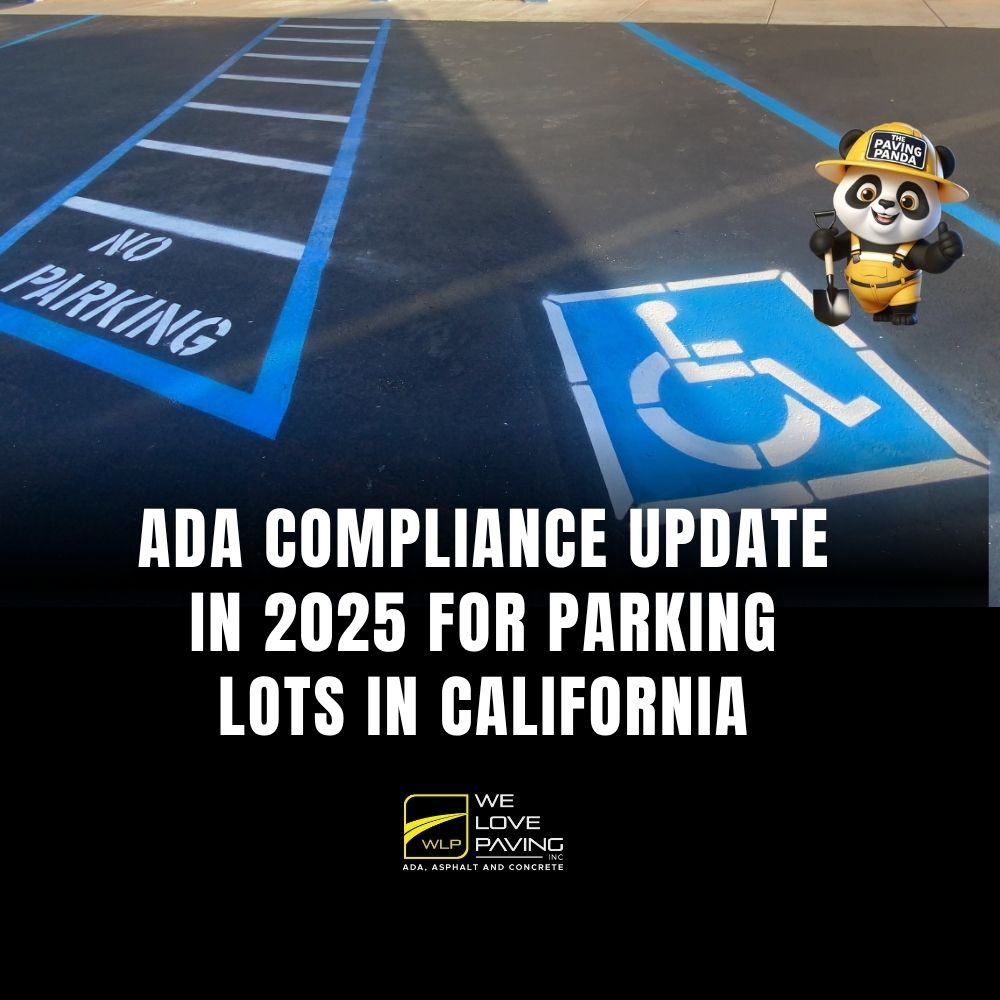
Access aisles: must be marked with blue hash lines and connect to a safe route.
-
Surface slope: no more than 2% in any direction.
-
Signage: blue reflective background, at least 80 in tall, including the phrase “Minimum Fine $250.”
-
Location: closest possible to accessible building entrance.
Skipping these details can trigger immediate compliance violations — even if the rest of your lot looks perfect.
🛞 4. Drive Aisles and Circulation
Drive aisles control how vehicles move safely through your property.
-
Two-way traffic: 24 ft minimum width
-
One-way (angled stalls): 12–18 ft
-
Entrance radius: 15–25 ft recommended for smooth turns
-
Pedestrian routes: must be clearly marked and separate from vehicle lanes when possible.
Good design reduces conflict points between drivers and pedestrians — which also means fewer liability claims.
🌿 5. Layout Design Tips to Maximize Efficiency
A functional parking lot does three things well:
-
Moves cars safely
-
Protects pedestrians
-
Minimizes maintenance headaches
Design tips from the field:
-
Keep row lengths under 300 ft to reduce confusion.
-
Use landscaping islands every 10–15 stalls to manage runoff and guide drivers visually.
-
Ensure proper drainage slopes (1.5–2%) — puddles destroy asphalt faster than traffic.
-
Add wheel stops only where absolutely needed (they often cause trip hazards if overused).
🧠 6. The Role of Maintenance in Design
Even the best design fails if it’s not maintained.
Cracks, faded striping, and blocked drains turn compliant lots into liabilities.
-
Re-stripe every 2–3 years or after each sealcoat.
-
Re-check ADA slopes during resurfacing.
-
Inspect signage visibility annually.
Compliance isn’t a one-time project — it’s an ongoing process.
🤝 7. Work With Experts Who Know the Code
Whether you’re designing from scratch or just refreshing striping, working with a contractor who understands code, compliance, and engineering saves you time and money.
At We Love Paving, we design, build, and maintain parking lots that meet or exceed:
-
ADA & Title 24 regulations
-
Local zoning and slope codes
-
Drainage and runoff standards
-
Aesthetic and safety expectations
👉 Book your Free Parking Lot Layout Consultation today.
We’ll review your current design, check compliance, and show you how to make your layout safer, more efficient, and fully up to code.