The parking ratio of a commercial real estate property is the number of parking spaces available per square foot of leasable space. Having an adequate parking ratio is essential for attracting and retaining tenants, as it can impact their ability to conduct business and serve customers. If you own or manage a commercial property and are looking to increase its parking ratio, there are several strategies you can consider.
Reconfigure Existing Parking Spaces
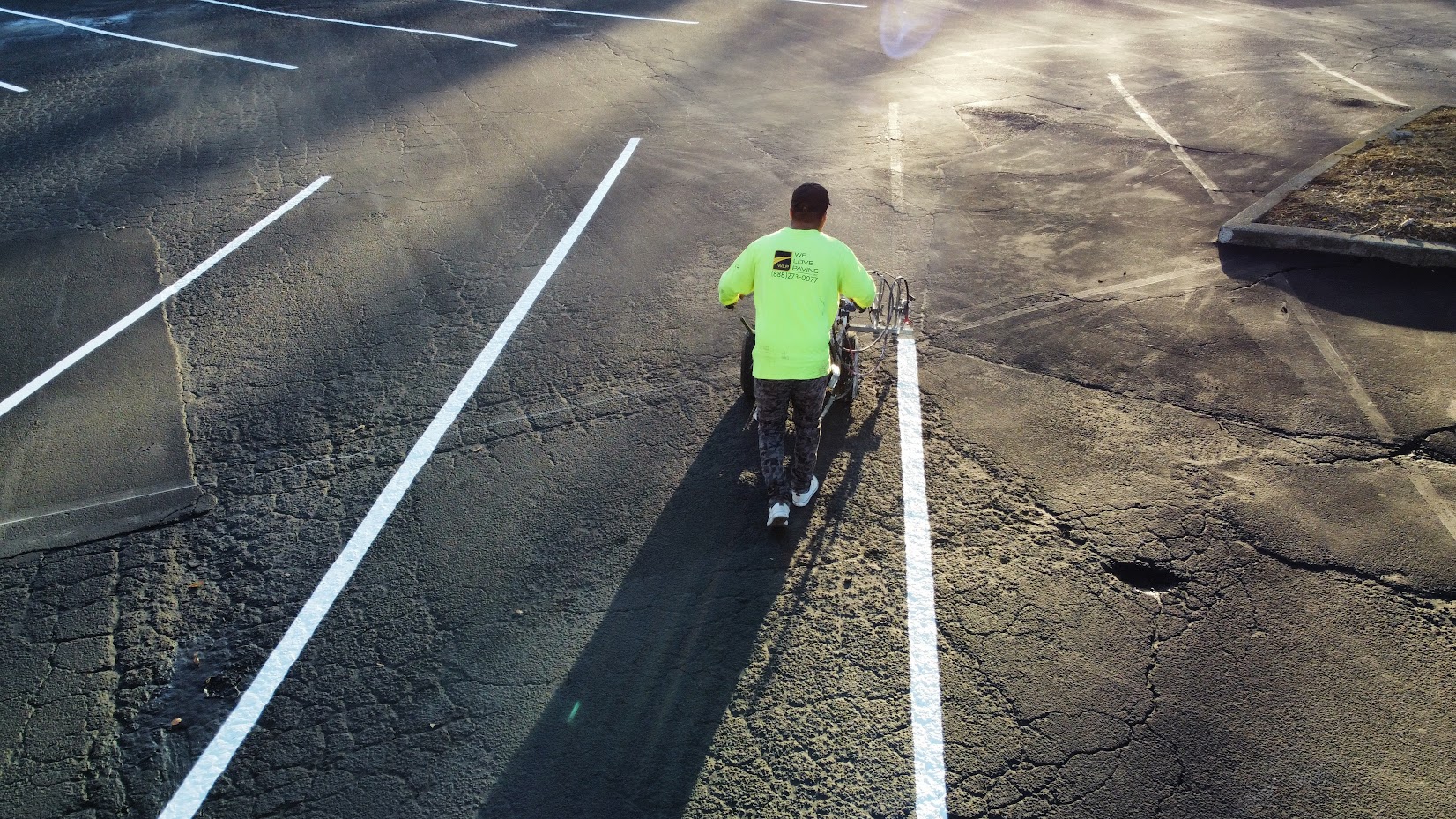
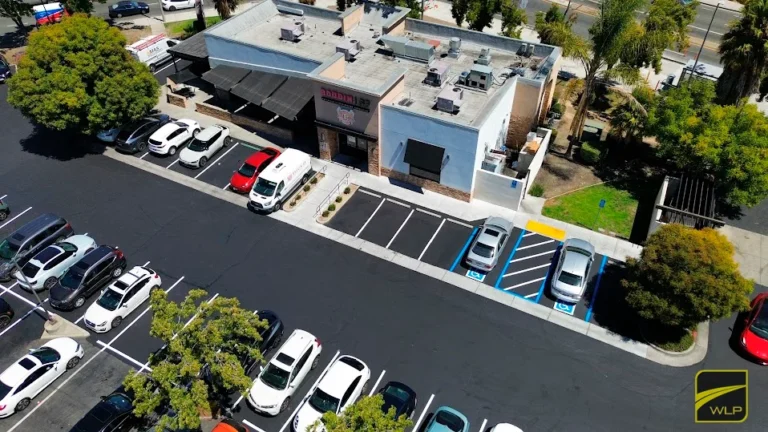
One way to increase the parking ratio of a commercial property is to reconfigure existing parking spaces. This may involve restriping the parking lot to create more spaces or adjusting the size of existing spaces to maximize the use of available space. If the parking lot is large enough, it may be possible to add diagonal or angled parking to fit more cars in the same amount of space.
Utilize Shared Parking
Another strategy for increasing the parking ratio of a commercial property is to utilize shared parking. This involves partnering with neighboring businesses to share parking spaces, allowing for more efficient use of available space. For example, if a restaurant is closed during the day, its parking spaces could be used by neighboring businesses with different hours of operation. This strategy can be particularly effective in mixed-use developments where different businesses have different peak hours of operation.
Consider Parking Structures
If there is not enough available space on the property to increase the parking ratio through reconfiguration or shared parking, a parking structure may be a viable option. Parking structures can provide significantly more parking spaces in a smaller footprint, allowing for a higher parking ratio. However, building a parking structure can be expensive, so property owners should carefully weigh the costs and benefits before pursuing this option.
Convert Underutilized Space
If there are areas of the property that are underutilized, such as a loading dock or unused warehouse space, these areas could be converted into additional parking. Depending on the layout of the property, this may require reconfiguration or restructuring of the existing space to create additional parking spaces.
Cost per Added Stall: ROI and Risk Framework
Adding a single parking stall involves a financial spectrum that dictates your project’s feasibility. Simple restriping might cost between $300 and $700 per space, whereas structured parking levels frequently demand investments ranging from $15,000 to $35,000 per stall.
To calculate a precise ROI, compare this capital expenditure against the potential lift in lease rates or occupancy stability. A poor parking ratio is often the primary driver of vacancy risk; if customers cannot park, tenants will eventually churn.
Evaluate your break-even point by dividing the total construction cost by the incremental annual revenue protected or generated by the new spaces. In high-density commercial markets, improving this ratio functions as a structural defense mechanism for asset valuation. High-quality paving and smart layouts don’t just hold cars, they secure your long-term cash flow.
Implement Parking Management Strategies
Finally, property owners can increase the parking ratio of a commercial property by implementing parking management strategies. This can include instituting a reservation system for parking spaces, using technology to monitor parking usage and availability, and offering incentives for carpooling or alternative transportation methods.
Office Parking Ratio Feasibility Calculator (Manual)
Determining if your land supports a ratio increase requires a technical feasibility calculation before hiring machinery. Critical variables include total site area (Site SF), target ratio (spaces per 1,000 SF of office), standard stall size (approx. 180 SF), and the aisles factor, which typically adds 40-50% for circulation.
Worked Example: Imagine a 20,000 SF office building aiming for a 4.0 ratio. You need 80 spaces. If each stall requires 180 SF and we apply a 1.5 aisles factor (to include drive aisles and access), each space actually consumes 270 SF of land.
Multiplying 80 spaces by 270 SF, the required paving area is 21,600 SF. If your available surface is smaller, the project is unfeasible without resorting to multi-level structures or shared parking agreements
Parking Optimization: More Capacity, More Value for Your Commercial Property
Increasing the parking ratio of a commercial property is not just about adding more spaces , it’s about strategic optimization that enhances land use efficiency, traffic flow, and overall asset performance. Through smart layout reconfiguration, activation of underutilized areas, shared parking strategies, and proper site planning, property owners can expand capacity without sacrificing functionality or accessibility.
Frequently Asked Questions (FAQ)
General Questions About Our Professional Services and Project Execution
We can increase the parking ratio by optimizing existing space before expanding the site.
Reconfiguring layouts through restriping, resizing stalls, and introducing angled parking allows more vehicles within the same footprint. Converting underutilized areas or implementing shared parking agreements also improves efficiency.
In many commercial lots, a redesigned layout alone can boost capacity by 10% to 25%, directly supporting tenant retention and reducing vacancy risk without major construction.
The most effective strategies combine physical redesign and smart management.
Common approaches include:
- Layout reconfiguration and circulation improvements
- Shared parking between businesses
- Parking usage monitoring systems
- Converting underused site areas
Mixed-use properties benefit significantly from shared parking because different tenants have different peak hours, allowing the same spaces to serve multiple users efficiently.
The cost varies depending on the expansion method and infrastructure required.
Simple restriping typically ranges from $300 to $700 per added stall, while structured parking can cost between $15,000 and $35,000 per space due to engineering, materials, and compliance requirements.
Evaluating cost per stall against increased lease stability or higher occupancy helps determine whether the investment strengthens long-term asset performance.
We can estimate feasibility using site area, stall size, and circulation factors.
Key variables include:
- Total site area (square feet)
- Standard stall size (~180 SF)
- Aisle and circulation factor (1.4–1.5)
- Target parking ratio (spaces per 1,000 SF)
For example, 80 spaces with a 1.5 circulation factor require about 21,600 SF of paved area, quickly indicating whether surface expansion is viable.
Yes, the parking ratio directly impacts tenant retention and asset value.
Insufficient parking creates operational friction for customers and employees, which can lead to tenant dissatisfaction and higher turnover. In competitive commercial markets, adequate parking availability is often a decisive leasing factor.
Properties with optimized parking ratios tend to maintain stronger occupancy rates and more stable long-term revenue performance.