When commercial property owners search for asphalt paving cost, they often expect a simple price-per-square-foot answer. In reality, asphalt pricing is usually tied less to the surface itself and more to the condition underneath it, the operational needs of the property, and how long the pavement is expected to perform under traffic stress.
Two parking lots with the same square footage can end up with very different budgets. One may only need surface rehabilitation, while another may require drainage correction, base stabilization, traffic phasing, or extensive patching before paving even begins.
For facility managers, HOAs, retail centers, and industrial sites, understanding what drives paving cost helps avoid short-term decisions that create larger maintenance expenses later.
Surface Condition Often Determines the Real Budget
One of the biggest pricing variables is the existing pavement condition. A parking lot with isolated cracking and moderate oxidation is very different from one with deep alligator cracking, edge failure, standing water, or repeated pothole repairs.
In many commercial properties, the visible surface only tells part of the story. Water intrusion below the asphalt can weaken the aggregate base over time, especially around loading areas, dumpster pads, entrances, and traffic turning zones.
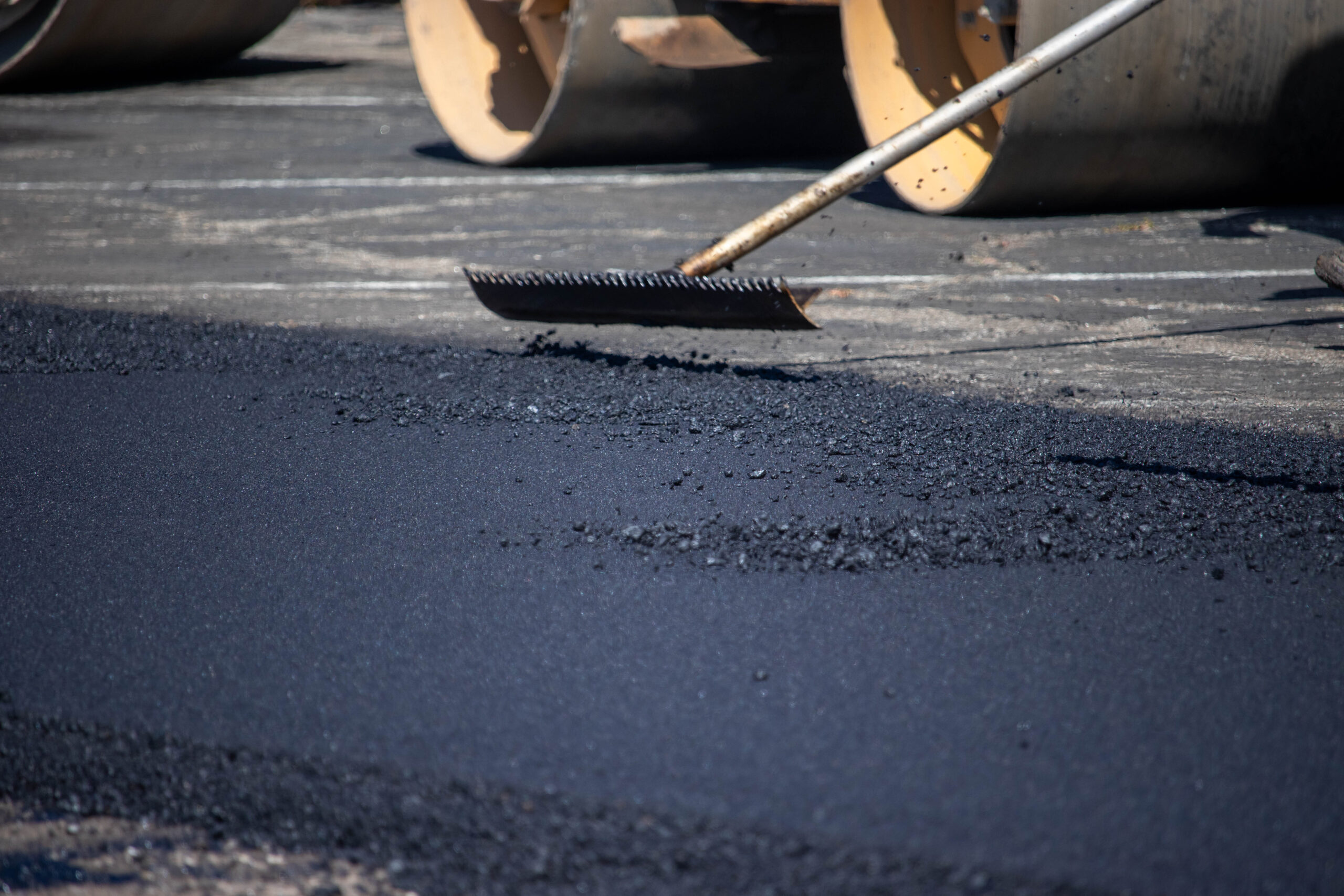
When structural deterioration becomes widespread, resurfacing alone may not hold up for long. In those situations, broader asphalt paving work may become more practical than repeated patching cycles.
Property managers also tend to see higher costs when maintenance has been deferred for several years. Once moisture reaches the lower pavement layers, repairs often become more extensive and disruptive.
Some common conditions that can increase paving costs include:
- widespread cracking;
- drainage ponding;
- unstable pavement edges;
- heavy truck traffic;
- repeated utility cuts;
- deteriorated striping layouts;
- failed patches from previous repairs.
That does not necessarily mean full replacement is always required. Many commercial lots benefit from phased repair strategies instead of complete reconstruction.
Drainage Problems Can Change the Scope Quickly
Drainage issues are one of the most underestimated cost drivers in commercial paving projects.
A parking lot that continually traps water may deteriorate much faster than surrounding pavement, even when the asphalt itself was originally installed correctly. Water tends to accelerate cracking, soften the base, and weaken pavement transitions near curbs and ramps.
This becomes especially noticeable near low spots, catch basins, entrances, and pedestrian crossings.
In some cases, the paving work itself is relatively straightforward, but correcting water movement across the site changes the project scope significantly. Milling, grading adjustments, drainage reconstruction, or concrete transition work may all become part of the planning process.
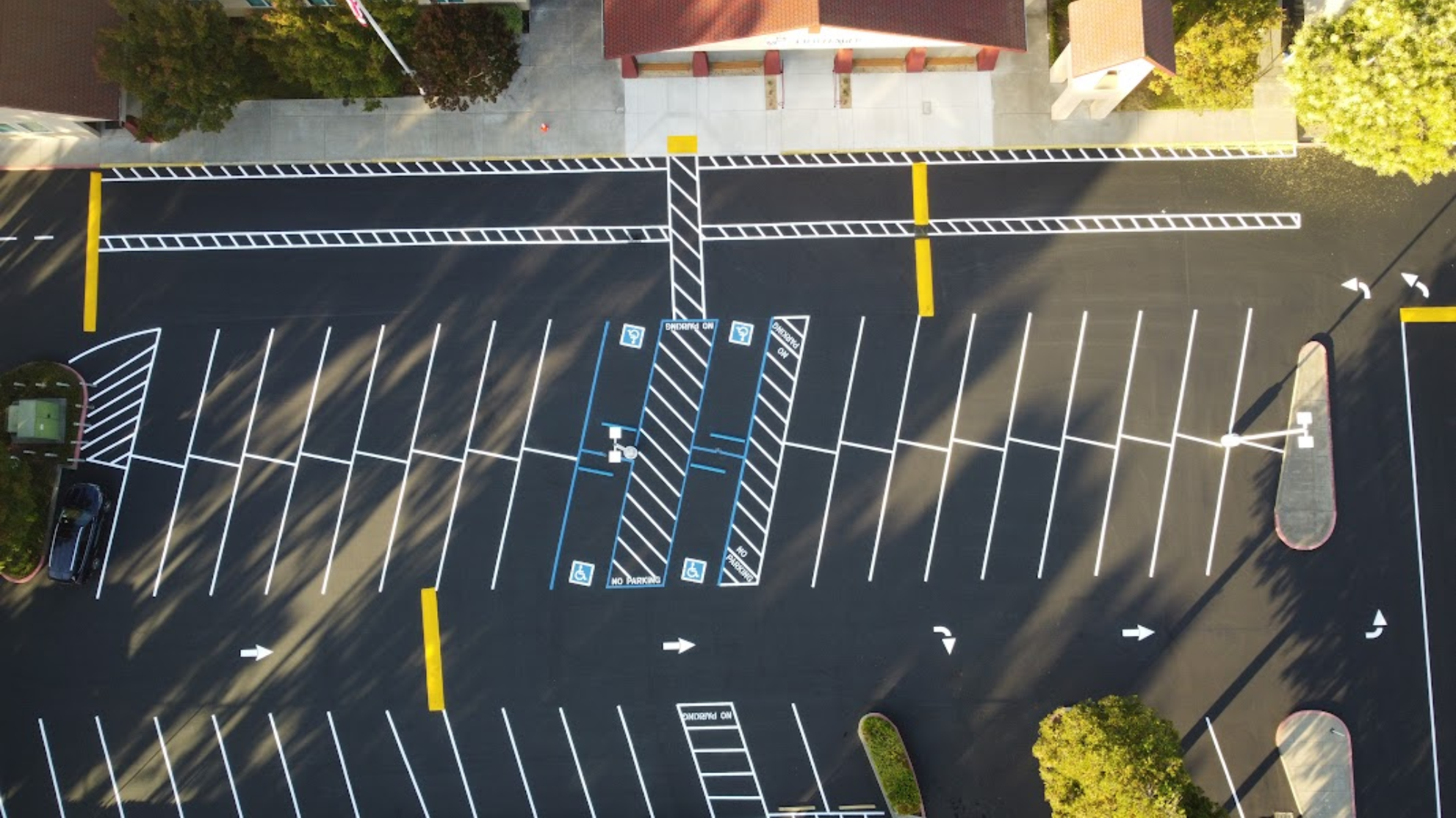
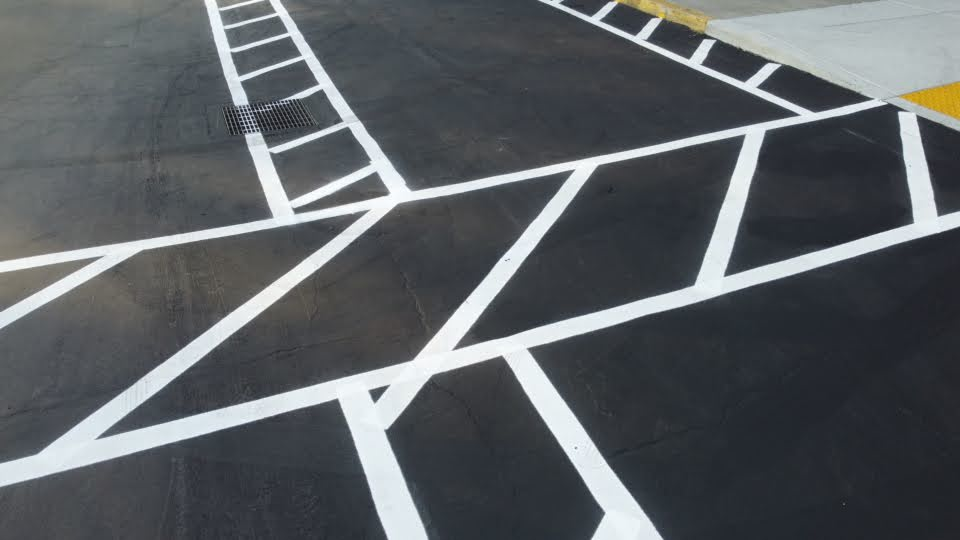
Where pavement wear overlaps with faded directional markings and circulation confusion, parking lot striping often becomes part of restoring overall parking lot usability rather than simply repainting lines.
Commercial properties that postpone drainage corrections sometimes end up paying repeatedly for the same pavement failures in identical locations.
Traffic Exposure Has a Major Impact on Pavement Design
Not all asphalt surfaces carry the same operational demands.
A small office complex with limited daytime traffic experiences very different pavement stress than a retail center with constant turnover, delivery vehicles, and heavy braking zones.
Industrial properties tend to see accelerated deterioration near loading docks and turning areas because concentrated wheel pressure repeatedly impacts the same sections of pavement.
That is one reason asphalt paving cost estimates can vary widely between property types.
Higher-traffic properties may require:
| Property Condition | Possible Cost Impact |
|---|---|
| Frequent truck traffic | Thicker asphalt sections |
| Poor turning radii | Faster surface wear |
| Drainage ponding | Additional corrective work |
| Aging striping layout | Reconfiguration costs |
| Deferred maintenance | Larger repair areas |
| Operational access restrictions | Phased scheduling expenses |
Scheduling can also influence pricing. Some retail centers and medical properties require night work, phased closures, or restricted access windows to avoid interrupting customer traffic and tenant operations.
That operational complexity affects labor planning even before paving begins.
When circulation patterns become difficult to follow due to fading stall lines or unclear directional flow, ongoing parking lot markings may influence both safety visibility and daily traffic efficiency across the site.
Maintenance History Changes Long-Term Cost Outcomes
Commercial asphalt rarely fails all at once. More often, deterioration accelerates gradually after years of oxidation, moisture exposure, UV damage, and deferred maintenance.
Property owners who maintain pavement proactively often avoid the steepest reconstruction costs.
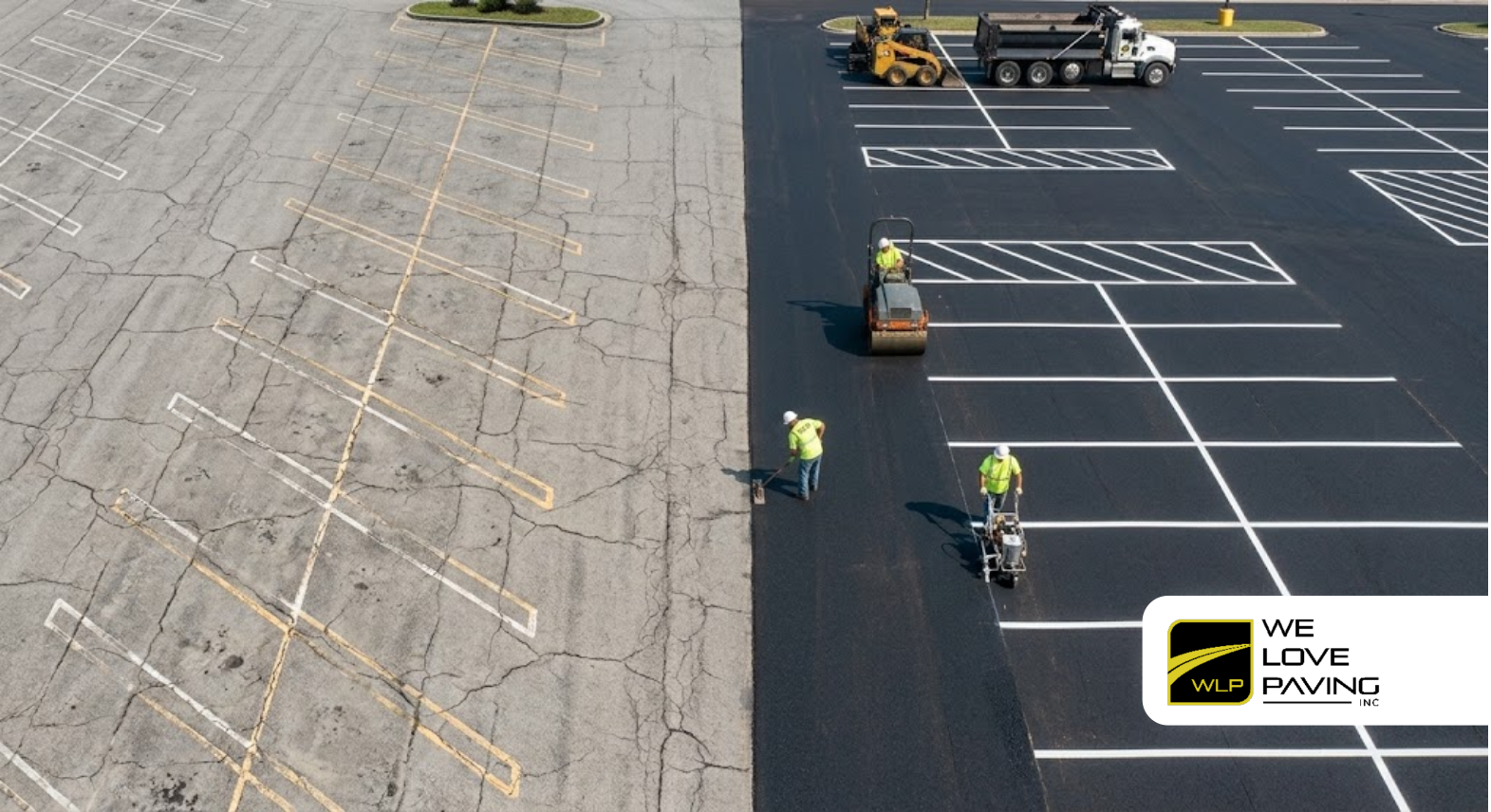
Sealcoating, crack sealing, and localized repairs generally help slow deterioration when applied before structural damage becomes widespread. Once the pavement becomes brittle and heavily fractured, however, preservation options narrow considerably.
That is why long-term asphalt paving cost should be evaluated as a lifecycle issue, not just a one-time construction expense.
For example, properties that maintain consistent sealcoating services often preserve surface flexibility longer than properties that wait until widespread cracking appears.
Similarly, parking lots with visible but manageable striping deterioration may still function well operationally, while lots with neglected circulation markings can create confusion that affects traffic flow and parking efficiency.
During maintenance planning cycles, many property managers also review re-striping schedules alongside pavement repairs so markings, access areas, and traffic organization remain aligned with current site conditions.
Asphalt Cost Is Also About Timing
Timing plays a larger role in paving budgets than many owners expect.
A property that addresses moderate cracking early may avoid extensive base repairs later. On the other hand, postponing repairs through multiple wet seasons can allow moisture intrusion to spread beneath larger pavement sections.
Commercial paving decisions are often easier when viewed in terms of operational risk rather than appearance alone.
For example:
- Is the pavement beginning to affect tenant perception?
- Are repairs becoming repetitive in the same areas?
- Is standing water increasing after storms?
- Are access lanes becoming difficult to identify?
- Are trip hazards or rough transitions becoming more noticeable?
Those practical questions usually provide more useful maintenance guidance than focusing only on surface color or isolated cracks.
In many cases, phased paving plans help commercial properties spread costs over multiple budget cycles while still protecting the most vulnerable sections of pavement first.
Why Accurate Asphalt Pricing Requires Site Context
Online asphalt calculators can provide rough benchmarks, but commercial paving projects are rarely standardized enough for universal pricing formulas.
Slope conditions, drainage design, pavement thickness, access restrictions, base failure, striping layouts, and staging logistics all influence the actual scope.
Even parking lots that appear visually similar may require completely different repair approaches once site conditions are evaluated.
At We Love Paving, we approach asphalt conditions from a long-term property maintenance perspective rather than treating every surface issue as a full reconstruction project. In many commercial environments, the goal is not simply replacing asphalt — it is improving usability, preserving pavement life, reducing operational disruption, and helping owners make more informed maintenance decisions over time.