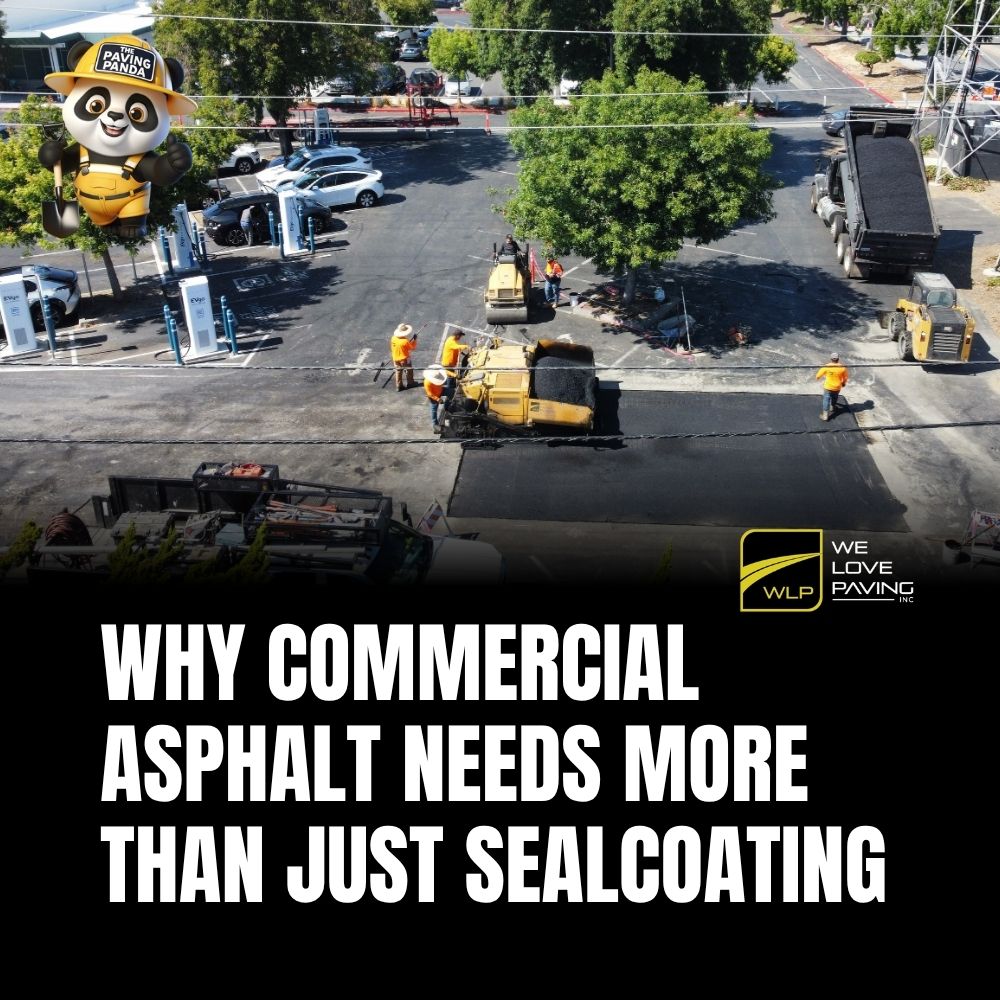
Why Commercial Asphalt Needs More Than Just Sealcoating

Many property owners think that a fresh coat of sealant is all it takes to keep asphalt looking new.
But here’s the truth: sealcoating alone won’t save a failing parking lot.

In Northern California’s tough climate — where UV exposure, heavy traffic, and rainfall take a toll — commercial asphalt needs more than a shiny surface treatment. It needs a full maintenance strategy built on inspection, repair, and protection.

At We Love Paving, we’ve seen too many businesses lose thousands of dollars because they treated sealcoating as a fix, not as part of a system.


1. Sealcoating Is Protection — Not Repair

Sealcoating creates a thin, protective layer that blocks UV rays, water, and chemicals. It’s excellent for preventing damage, but it can’t fix cracks, holes, or structural issues.

If your asphalt has potholes, rutting, or drainage problems, sealcoating just covers them up — like putting wax on a rusted car.
The underlying damage keeps growing, only now you can’t see it.

Before applying sealcoat, our team inspects the surface, fills cracks, repairs potholes, and restores the base integrity. That’s how you actually extend the pavement’s life.


2. The Enemies of Asphalt: Water, Oil, and Sun

Asphalt’s worst enemies are the elements — especially in Northern California’s mix of hot summers and wet winters.

  • Water seeps into cracks and erodes the subbase.

  • Oil and fuel leaks soften the surface, leading to ruts.

  • UV rays oxidize the asphalt, turning it gray and brittle.

Sealcoating slows this damage, but without regular inspections, crackfilling, and patching, those forces will still win.


3. Crackfilling and Patching: The Unsung Heroes

Cracks start small — hairline, almost invisible. But once they open, water gets in and the damage accelerates.
That’s why routine crackfilling is one of the smartest, most cost-effective steps you can take.

For areas already showing wear, hot asphalt patching restores strength and prevents further spread. Combined with sealcoating, it keeps your lot performing like new for years instead of months.


4. Drainage: The Overlooked Factor

Even perfect sealcoating can’t stop water from pooling.
Standing water weakens asphalt over time and creates potholes.

That’s why every We Love Paving project starts with a drainage check — ensuring your lot is sloped, graded, and sealed the right way to let water flow where it should.


5. The Long-Term Plan That Saves You Money

For commercial properties, asphalt maintenance should be scheduled like HVAC or landscaping — not handled reactively.
We recommend:

  • Annual inspections for cracks and base shifts.

  • Crackfilling every 12–18 months.

  • Sealcoating every 2–3 years.

  • Overlay or mill & pave every 8–10 years, depending on traffic.

This proactive plan reduces long-term costs by up to 50%, compared to waiting for major failure.


6. The We Love Paving Difference

At We Love Paving, we don’t sell quick fixes — we build long-term pavement strategies.
Our crews combine precision repair, drainage correction, sealcoating, and professional striping into one seamless service.

From Sacramento to the Bay Area, commercial clients trust us to keep their lots strong, safe, and looking brand new.

Because sealcoating alone is just maintenance —
but full-service paving is protection that pays for itself.


📞 Ready to Protect Your Investment?

Get a free inspection and see how our comprehensive asphalt maintenance plans can save you thousands in future repairs.
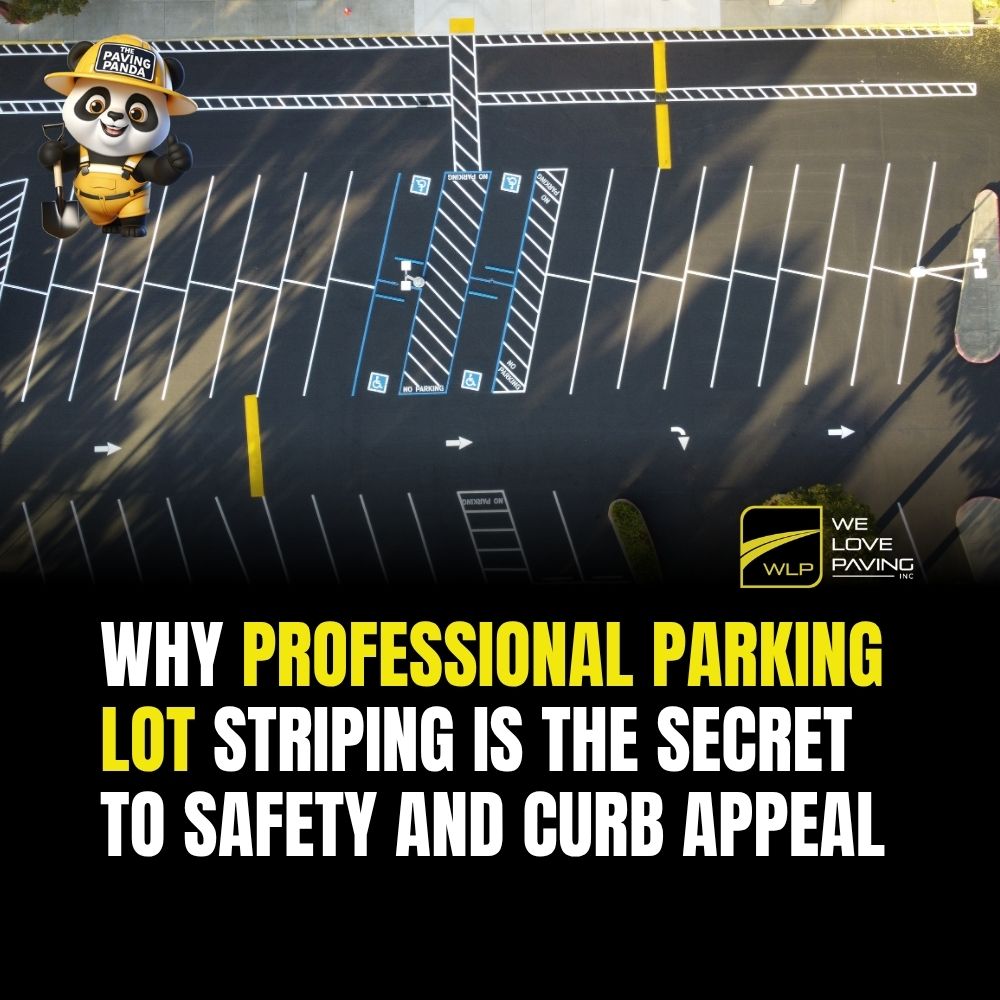
Why Professional Parking Lot Striping in Northern California Is the Secret to Safety and Curb Appeal

When it comes to making a great first impression, most property owners focus on landscaping or signage — but your parking lot says just as much about your business as your front door.

Faded lines, uneven layouts, and missing markings don’t just look unprofessional — they create confusion, reduce safety, and can even lead to legal issues.
That’s where We Love Paving comes in.

We specialize in professional parking lot striping across Northern California, delivering precision, visibility, and compliance that last.


1. First Impressions Start with the Lines

A clean, well-marked parking lot sets the tone for everything else.
It tells your visitors that you care about safety, organization, and detail.

In the Bay Area, Sacramento, and Modesto, property managers know that bright, sharp striping helps guide vehicles efficiently while instantly improving curb appeal.


2. Safety and Compliance Go Hand in Hand

Every line and symbol in a parking lot has a purpose — and when they fade, accidents happen.
Crosswalks, fire lanes, ADA-accessible spaces, and directional arrows aren’t just helpful — they’re required.

Our team ensures that every layout meets ADA and California Building Code standards, protecting your business from fines and keeping your visitors safe.


3. Built for California Conditions

Northern California’s mix of sun, rain, and heavy traffic can destroy low-quality paint fast.
That’s why We Love Paving uses only premium traffic paints and thermoplastic materials designed for long-term visibility and durability.

We offer:

  • Water-based paints – fast-drying and environmentally friendly.

  • Oil-based paints – long-lasting with a deep finish.

  • Thermoplastic striping – ultra-durable for high-traffic or commercial areas.

Our materials are engineered to handle the heat, the rain, and the daily wear of busy parking lots.


4. Smart Design Maximizes Every Space

Before any paint hits the ground, our experts design an optimized layout that balances safety, flow, and space efficiency.

We plan for:
✅ Clear traffic movement
✅ ADA-compliant access routes
✅ Fire lanes and directional flow
✅ Maximum parking capacity

The result: a lot that not only looks better but functions better too.


5. When to Re-Stripe Your Parking Lot

Even the best striping fades over time.
Most parking lots should be restriped every 18–24 months, depending on usage and weather.

If your lines are faded, or drivers are parking “creatively,” it’s time to give your lot a refresh before it becomes a safety hazard.


6. The WLP Standard: Precision, Safety, and Pride

At We Love Paving, striping isn’t just the final step of a paving job — it’s a statement.
Every line we paint represents our commitment to craftsmanship and compliance.

From Sacramento to the Bay Area, our crews deliver consistent quality, crisp lines, and a flawless finish — because when it comes to pavement, details matter.


Let’s Give Your Lot the Lines It Deserves

A well-striped lot doesn’t just look better — it works better.
Give your property the upgrade it deserves with We Love Paving’s professional striping services.

📞 Request your free quote today at www.welovepaving.com


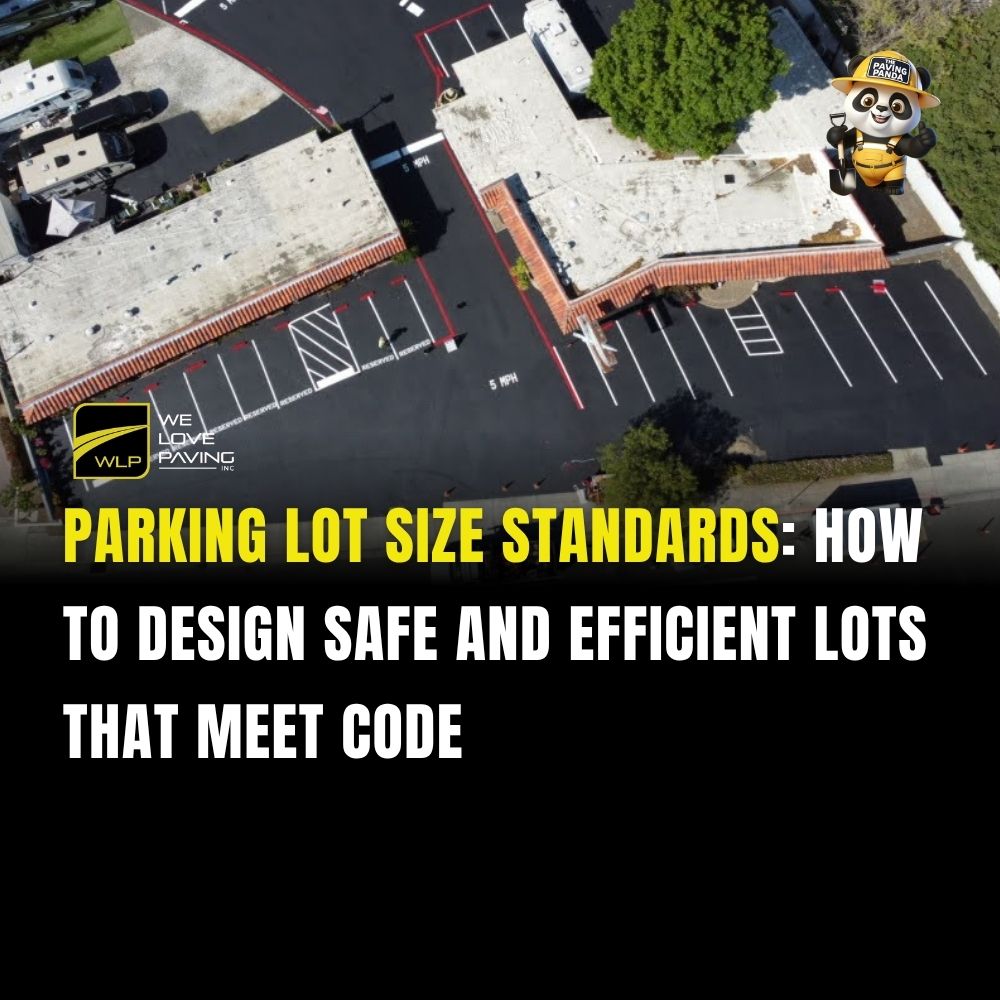
Parking Lot Size Standards: How to Design Safe and Efficient Lots That Meet Code

Parking lots might look simple — just stripes and asphalt — but behind every safe, compliant layout there’s a set of precise size standards and design rules that keep traffic flowing and people safe.

If you’re planning to build, expand, or re-stripe a lot, knowing these dimensions helps you avoid code violations, improve traffic flow, and maximize usable space.

Let’s break it down.


📏 1. Standard Parking Space Dimensions

In the U.S., parking space sizes vary slightly by city, but the general rule of thumb for commercial lots is:

Type of Stall Width Length Aisle Width (Two-Way)
Standard Car 9 ft 18 ft 24 ft
Compact Car 8 ft 16 ft 22 ft
Accessible (ADA) 8 ft stall + 8 ft access aisle 18 ft 24 ft
Van Accessible (ADA) 12 ft stall + 8 ft access aisle 18 ft 24 ft

💡 Pro Tip: Always check your city’s local zoning or planning code, as requirements can vary slightly — for example, some municipalities allow 8.5 ft stalls in high-density urban areas.


🚙 2. Angled vs. Straight Parking — Efficiency vs. Flow

Choosing between 90°, 60°, or 45° parking angles affects how easy your lot is to navigate and how many cars fit.

Angle Space Efficiency Traffic Flow Notes
90° Maximum capacity Requires wider aisles Ideal for high-traffic commercial lots
60° Easier to maneuver One-way traffic Great for tight sites
45° Fast in/out Lower capacity Common for retail and smaller lots

If your property experiences high turnover (like retail or medical), angled parking often improves flow and reduces accidents.
For long-term or employee lots, 90° stalls maximize capacity.


3. ADA & Accessibility Requirements

Federal ADA Standards (and California’s Title 24) set strict rules for accessible parking:

  • At least one accessible space per 25 total spaces.

  • Access aisles: must be marked with blue hash lines and connect to a safe route.

  • Surface slope: no more than 2% in any direction.

  • Signage: blue reflective background, at least 80 in tall, including the phrase “Minimum Fine $250.”

  • Location: closest possible to accessible building entrance.

Skipping these details can trigger immediate compliance violations — even if the rest of your lot looks perfect.


🛞 4. Drive Aisles and Circulation

Drive aisles control how vehicles move safely through your property.

  • Two-way traffic: 24 ft minimum width

  • One-way (angled stalls): 12–18 ft

  • Entrance radius: 15–25 ft recommended for smooth turns

  • Pedestrian routes: must be clearly marked and separate from vehicle lanes when possible.

Good design reduces conflict points between drivers and pedestrians — which also means fewer liability claims.


🌿 5. Layout Design Tips to Maximize Efficiency

A functional parking lot does three things well:

  1. Moves cars safely

  2. Protects pedestrians

  3. Minimizes maintenance headaches

Design tips from the field:

  • Keep row lengths under 300 ft to reduce confusion.

  • Use landscaping islands every 10–15 stalls to manage runoff and guide drivers visually.

  • Ensure proper drainage slopes (1.5–2%) — puddles destroy asphalt faster than traffic.

  • Add wheel stops only where absolutely needed (they often cause trip hazards if overused).


🧠 6. The Role of Maintenance in Design

Even the best design fails if it’s not maintained.
Cracks, faded striping, and blocked drains turn compliant lots into liabilities.

  • Re-stripe every 2–3 years or after each sealcoat.

  • Re-check ADA slopes during resurfacing.

  • Inspect signage visibility annually.

Compliance isn’t a one-time project — it’s an ongoing process.


🤝 7. Work With Experts Who Know the Code

Whether you’re designing from scratch or just refreshing striping, working with a contractor who understands code, compliance, and engineering saves you time and money.

At We Love Paving, we design, build, and maintain parking lots that meet or exceed:

  • ADA & Title 24 regulations

  • Local zoning and slope codes

  • Drainage and runoff standards

  • Aesthetic and safety expectations

👉 Book your Free Parking Lot Layout Consultation today.
We’ll review your current design, check compliance, and show you how to make your layout safer, more efficient, and fully up to code.

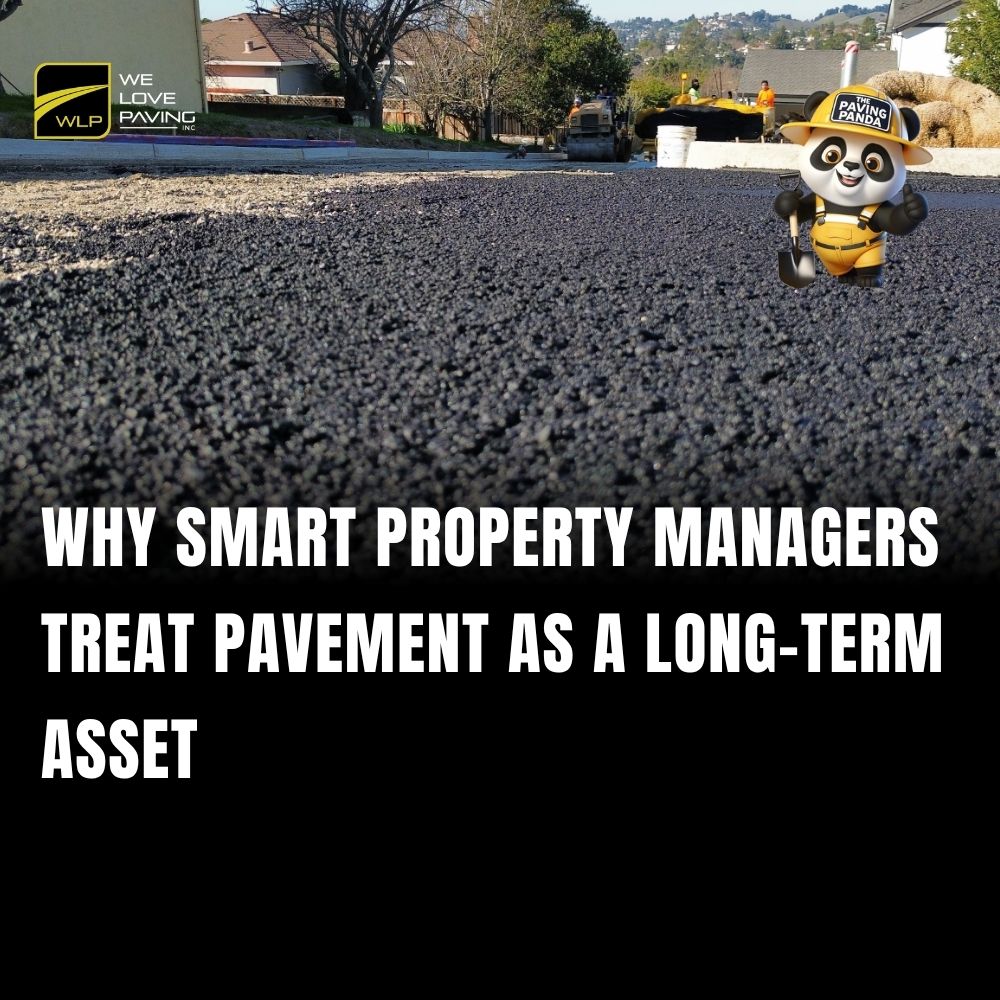
Why Smart Property Managers Treat Pavement as a Long-Term Asset | We Love Paving

If you manage commercial property in Northern California, you already know how quickly the to-do list fills up.
Leaks, landscaping, tenants, budgets — the parking lot usually ends up last on the list.

But here’s the thing:
Your pavement isn’t just a line item on the maintenance sheet.
It’s a long-term asset that protects your property value, tenant satisfaction, and even your reputation.


💼 1. Your Parking Lot Reflects Your Management Standards

Before anyone walks into your building, they drive through your management.
Faded lines, potholes, or ADA violations? That’s not “wear and tear” — that’s neglect you can see from the curb.

In competitive areas like Sacramento, San Jose, and Walnut Creek, tenants compare visuals as much as lease terms.
A clean, sealed, and well-striped lot signals:

“We care. We maintain. You can trust us.”

That impression alone can be the difference between a renewed lease and a move-out notice.


🧾 2. Preventive Maintenance = Profit

Here’s how the best property managers think:
Maintenance isn’t an expense — it’s a warranty extension.

Every time you:

  • Crack-seal before the rains

  • Sealcoat every 3–4 years

  • Maintain drainage

You’re buying extra years of life for your pavement.
A disciplined maintenance plan can stretch a 10-year surface into 15–20 years.
And that’s not theory — it’s field data from hundreds of NorCal jobs we’ve tracked.


⚖️ 3. Compliance Risk = Financial Risk

ADA compliance isn’t “optional nice-to-have.”
It’s law. And fines in California can easily run $4,000 to $10,000 per violation — not counting lawsuits.

When your slope isn’t corrected or striping fades below spec, you’re exposed.
Smart property managers do annual ADA checks — it’s cheaper to repaint a stall than to defend a claim.

That’s not fear talk. That’s experience.


🧱 4. The Property Manager’s Pavement Calendar

Want to keep it simple?
Use this 4-season rhythm we recommend for our Northern California clients:

Season Focus Why It Matters
Spring (Mar–May) Crack sealing & patch repair Stop water damage before summer heat
Summer (Jun–Sep) Sealcoat & restripe Best cure temps = best finish
Fall (Oct–Nov) Drainage & ADA inspection Prepare for rain & compliance
Winter (Dec–Feb) Budget & scheduling Lock early rates before busy season

This is how pros stay ahead — no emergencies, no chaos, no surprise costs.


💡 5. How to Sell It Up the Chain

Owners care about one thing: ROI.
Here’s the quick math you can show them:

  • Preventive maintenance ≈ $0.25 per sq ft / year

  • Full replacement ≈ $4–$5 per sq ft

That’s a 1:20 savings ratio — numbers that make budget approvals easy.
Frame it like asset protection, not expense trimming. It changes the conversation completely.


🤝 6. Partner With Vendors Who Think Like You

A real paving partner doesn’t just resurface — they strategize with you.

What you want in your vendor:

  • Clear scopes & transparent bids

  • ADA documentation ready for audits

  • Multi-year maintenance plans

  • Minimal tenant disruption

At We Love Paving, we think like property managers — not contractors.
We plan ahead, document everything, and help you keep your property portfolio sharp, compliant, and low-stress.


🐼 Final Word

If you manage property in Northern California, your asphalt is part of your brand.
It’s what every tenant, visitor, and inspector sees first.
Treat it like the long-term asset it is — not a bill you cut when budgets get tight.

👉 Book your Free Property Maintenance Assessment today.
We’ll show you exactly how to protect your pavement, reduce long-term costs, and keep every property looking sharp.

The Hidden Costs of Hiring the Cheapest Paving Contractor in Northern California | We Love Paving

You’ve probably been there.
Three bids on your desk — one high, one mid, and one that looks too good to be true.
Spoiler: it usually is.

In the paving world, the cheapest quote almost always ends up being the most expensive mistake. Especially here in Northern California, where soil conditions, regulations, and weather demand real expertise — not shortcuts.


💰 1. The “Low Bid Trap” — What They Don’t Tell You

When a contractor underbids by thousands, it’s not magic. It’s subtraction.
They’re cutting something: materials, prep, crew time, or warranty coverage.

Common tricks we see in the field:

  • Thinner asphalt layers: 1” instead of 2” — looks good for six months, fails within two years.

  • Skipping base repairs: They “overlay” instead of rebuilding the foundation.

  • No crack sealing before sealcoat: Moisture stays trapped underneath.

  • Zero liability insurance: You’re responsible if something goes wrong on-site.

On paper it’s “cheaper.” In reality, it’s a deferred expense bomb waiting to go off.


🧱 2. Real Materials, Real Numbers

Let’s be honest — asphalt work isn’t cheap because good materials aren’t cheap.
A quality hot-mix asphalt job in NorCal (proper base, compaction, sealcoat) runs between $2.50 – $5.00 per sq ft, depending on access and thickness.

When you see someone quoting you $1.25 per sq ft? That’s recycled grindings, watered-down sealer, and no prep.

You don’t need to be an engineer to spot red flags — you just need to ask:

“How thick is your lift?”
“Are you using Class 2 base?”
“Do you guarantee drainage slope and compaction?”

If they hesitate or dodge — walk away.


⚖️ 3. The True Cost of Doing It Twice

Let’s run quick math:
You hire a cheap crew, pay $12 k for an overlay on your retail center.
It fails in 18 months. Now you’re forced to remove and repave — $28 k minimum.

Total: $40 k.
If you’d gone with a professional contractor from the start, the same job — done right — might’ve been $20 k and lasted ten years.

That’s the real cost difference between “cheap” and “built to last.”


🦺 4. Compliance, Permits & ADA — Where Low Bids Get You Fined

Northern California has some of the strictest ADA and drainage codes in the country.
Contractors who skip slope correction or proper striping layouts can leave you liable for:

  • Non-compliance fines

  • Trip-and-fall lawsuits

  • Costly re-inspections and restriping

We’ve seen HOAs and commercial owners fined $4 – 10 k just for non-compliant stalls painted by “budget” crews.
Saving $500 on striping isn’t a win if you lose $5 000 in penalties.


🕳️ 5. How to Vet a Contractor the Smart Way

Before signing any proposal, check these five things:

  1. License & Insurance: Verify on CSLB’s website.

  2. Scope Clarity: It should spell out base prep, compaction, thickness, and materials.

  3. Warranty: A good contractor stands behind their work — not just a handshake.

  4. References & Photos: Real projects in your area, not stock images.

  5. Payment Terms: Beware of anyone asking for full payment upfront.

Good contractors welcome questions — bad ones get defensive.


🧠 6. Quality Work = Long-Term Savings

Asphalt is an investment, not an expense.
When you build it right, maintain it right, and schedule inspections, your pavement can last decades.
That means lower lifetime cost, fewer emergency repairs, and better curb appeal — which directly translates to higher property value.

At We Love Paving, we’ve rebuilt enough failed “budget jobs” to know: doing it cheap is easy, doing it right is smarter.


🐼 Final Takeaway

The next time a contractor gives you a number that seems too good to be true, it probably is.
Because the only thing more expensive than quality is fixing cheap work.

👉 Schedule your Free Property Assessment today — we’ll help you compare bids and show you exactly what each line item really means.

How Climate & Soil Conditions in Northern California Affect Your Parking Lot

How Climate & Soil Conditions in Northern California Affect Your Parking Lot

Most property owners blame traffic or “bad contractors” when their parking lot starts cracking — but here in Northern California, the real culprit often sits beneath the surface: the ground itself and the wild mix of micro-climates we live with.

Let’s break this down the way we see it every week on the job — from Bay Area fog belts to Sacramento’s dry heat — and explain why your asphalt behaves the way it does, even if it was installed perfectly.


🌦️ 1. Northern California’s Climate: Asphalt’s Silent Enemy

If you manage property around the Bay Area, you already know how unpredictable the weather is. One week it’s fog and drizzle; the next, the sun’s cooking your blacktop like a skillet.
That constant temperature swing — expansion and contraction — is one of the fastest ways asphalt breaks down.

  • Coastal zones (Oakland, San Francisco, Daly City): Moisture seeps into tiny surface cracks, then expands overnight. Result? Spider-web cracking and early oxidation.

  • Inland areas (Sacramento, Concord, Stockton): High UV exposure and heat bake the oils out of the asphalt, turning it brittle and gray. Once it oxidizes, even a light vehicle load can cause raveling.

You can’t stop the weather — but you can build and maintain smarter. Sealcoating every 3–4 years helps protect against UV oxidation. And scheduling crack sealing before winter rain is the cheapest insurance policy you’ll ever buy.


🌎 2. Soil Conditions: What’s Hiding Under Your Lot

Northern California isn’t flat desert land — it’s a patchwork of clay, loam, and sandy soils, each reacting differently to moisture and load.
That’s why two parking lots built the same way, just 30 miles apart, can age completely differently.

Here’s what we see most often:

  • Clay-heavy soils (San Jose, Vallejo, Napa): They expand when wet and shrink when dry. That movement shifts your sub-base and creates “alligator” cracking on the surface.

  • Sandy or decomposed granite soils (Sacramento, Roseville): Great drainage, but poor load-bearing. Without proper compaction, you’ll see sinkholes and edge failures.

  • Urban fill (Oakland, Richmond): Decades of layered debris under asphalt create uneven settlement zones — the perfect setup for potholes.

At We Love Paving, we always start with a subgrade inspection, not just a topcoat quote. Because if the soil moves, everything above it will eventually fail — no matter how thick your asphalt layer is.


🧱 3. Drainage & Grading: The Overlooked Factor

Most property owners don’t realize 80% of asphalt failures start with poor drainage.
Northern California’s winter rains can dump several inches in days. If your lot wasn’t graded with proper slope (minimum 1.5% toward drains), water sits — and water wins every time.

Here’s what to check:

  • Standing water 24 hours after a storm? That’s base saturation.

  • Darker streaks or algae near curbs? You’ve got long-term drainage issues.

  • Potholes returning in the same area? The sub-base is pumping — trapped water under vibration.

Proper drainage design isn’t optional here; it’s the line between a 3-year headache and a 10-year warranty job.


💡 4. Building for NorCal Reality

If you’re resurfacing or building from scratch, tell your contractor you want a design for Northern California soils, not a one-size-fits-all paving spec from out of state.

What that means in real terms:

  • Add geotextile reinforcement over clay soils.

  • Use Class 2 aggregate base with proper compaction (95% minimum).

  • Confirm drainage slope before paving — 1.5–2% minimum for parking areas.

  • Schedule sealcoating in dry months (May–September).

  • Perform annual crack inspections before winter.

That’s how you stop reacting to problems and start controlling the life of your pavement.


🛠️ 5. Let’s Keep Your Property Looking Sharp

Your parking lot isn’t just asphalt — it’s your first impression. Whether you manage retail space in Walnut Creek or a commercial park in Sacramento, you want it safe, compliant, and looking sharp year-round.

At We Love Paving, we’ve spent years studying how Northern California climate and soil interact. That’s why we don’t just resurface — we diagnose. Every estimate starts with a real-world site assessment, so your investment lasts.

👉 Get a Free Property Health Scan — we’ll show you exactly what’s happening beneath your asphalt before the next rainy season hits.

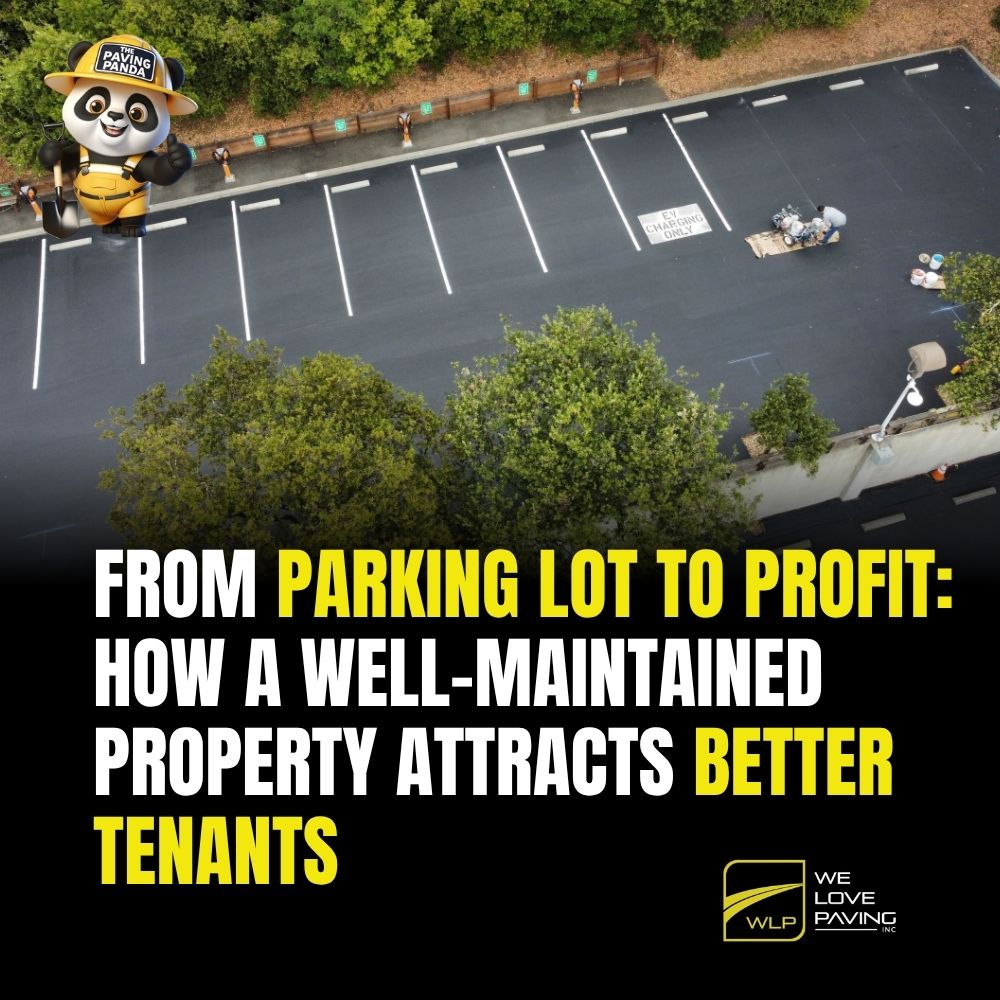
From Parking Lot to Profit: How a Well-Maintained Property Attracts Better Tenants

When a potential tenant or customer visits your property, the first thing they notice isn’t your landscaping or signage — it’s your parking lot.
Faded lines, cracks, and potholes send a silent but powerful message: “This place isn’t well cared for.”

In commercial real estate, perception is reality. A neglected parking surface can lower tenant satisfaction, decrease property value, and even deter high-quality tenants from signing or renewing leases.

At We Love Paving, we’ve seen the transformation firsthand — how a clean, freshly striped, and well-maintained parking area can completely change the way people see a property.


💰 The Connection Between Pavement and Profit

1. Better Curb Appeal = Higher Value

A properly maintained lot signals professionalism, safety, and pride of ownership. It gives potential tenants confidence that the property — and by extension, their business — will be well supported. Properties with curb appeal often:

  • Lease faster

  • Retain tenants longer

  • Justify higher rent or sale prices

2. Reduced Liability = Lower Risk

Cracks, potholes, and uneven pavement aren’t just ugly — they’re lawsuits waiting to happen. Trip hazards, standing water, and ADA violations can lead to costly claims and insurance hikes. Preventive maintenance protects both your reputation and your wallet.

3. Tenant Experience = Business Growth

For retail centers, apartment complexes, and office parks, the parking lot is part of the customer experience. A smooth, clean, clearly striped surface makes every visit easier and safer. Tenants notice — and so do their clients.


⚙️ How Maintenance Protects Your Investment

Asphalt and concrete degrade naturally over time due to weather, traffic, and oxidation. But with routine maintenance, you can extend their lifespan dramatically.

Essential steps include:

  • Sealcoating every 2–3 years to protect against UV damage and water penetration.

  • Crackfilling before moisture expands and weakens the base.

  • Re-striping for clear traffic flow and compliance.

  • ADA-compliant markings to ensure accessibility and safety.

Each step not only keeps your property compliant but also maintains the “premium” look that attracts top-tier tenants.


📊 The ROI of Professional Maintenance

Many property managers think of pavement care as an expense. In reality, it’s an investment with measurable returns.

Action Cost Result ROI
Routine sealcoating Low Extends lifespan 2–3× ⭐⭐⭐⭐
Crackfilling Minimal Prevents structural damage ⭐⭐⭐⭐
Professional striping Low Improves appearance & safety ⭐⭐⭐
Full resurfacing (after years of neglect) High Restores value, but reactive

Preventive maintenance costs a fraction of what full reconstruction does — and keeps your property’s image strong year-round.


🧱 Why Property Managers Choose We Love Paving

At We Love Paving, we go beyond asphalt. We help property owners and managers create environments that attract better tenants, retain clients, and boost property value.

Our services include:
✅ Sealcoating & crackfilling
✅ ADA-compliant striping & signage
✅ Concrete repair & maintenance
✅ Free property assessments with documented condition reports

Every job is backed by our Paving Panda Pledge™ — your guarantee of quality, compliance, and peace of mind.


🚀 Turn Your Parking Lot Into a Profit Driver

Don’t let neglect hold your property back. A polished, safe, and compliant lot speaks louder than any marketing brochure.

Invest in maintenance today — profit from perception tomorrow.

📞 Request your Free Property Assessment at WeLovePaving.com

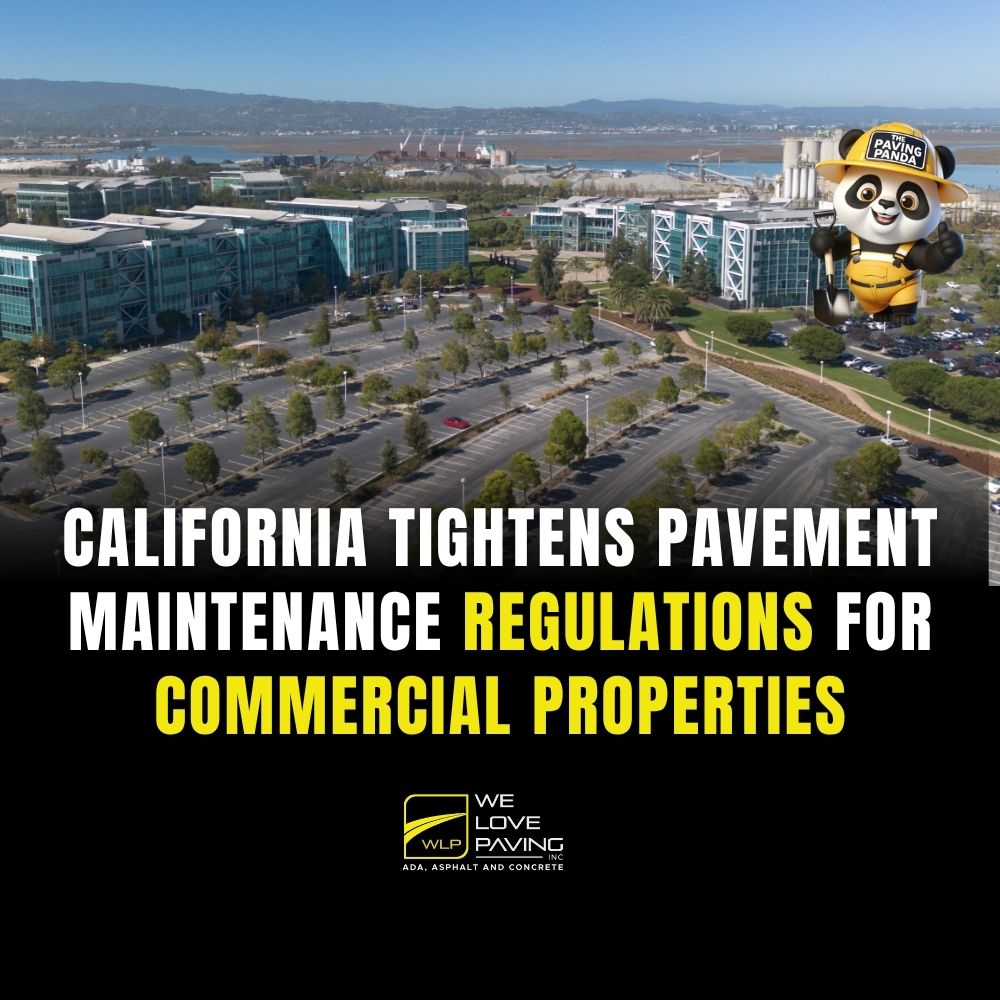
California Tightens Pavement Maintenance Regulations for Commercial Properties

What’s Changing?

California is stepping up its oversight of pavement conditions on commercial properties. While much of the existing focus has been on roads and public right-of-ways, private commercial surfaces (parking lots, drive aisles, loading zones) are increasingly on the regulatory radar. The new push emphasizes:

  • Preventive maintenance rather than reactive fixes

  • Documentation of pavement condition and repairs

  • Accessibility, safety and long-term service life of paved surfaces

Though full statewide regulatory text may still be rolling out, municipal codes and industry guidance already point toward tighter expectations. For example, local property-maintenance codes include mandates that parking surfaces must be kept free of cracks, potholes and unsafe conditions. City of Diamond Bar+1


Why It Matters for Commercial Property Owners

For owners and managers of commercial real estate, this regulatory shift brings both risk and opportunity:

  • Risk: Poorly maintained pavement can lead to citations, liability claims, increased insurance premiums, and reputation damage. If regulations now require documentation of maintenance schedules and conditions, properties that skip upkeep may face penalties.

  • Opportunity: By proactively addressing pavement condition, you position your property as safe, well-managed and compliant. That can drive tenant satisfaction, reduce repair costs and protect your asset value.


Key Areas to Monitor

Here are some of the pavement maintenance areas that commercial properties should be especially aware of under the tightened regulatory environment:

1. Surface Condition & Repair

Cracks, potholes and surface failures are not only unsightly—they allow water intrusion, base degradation and rapid deterioration. Many regulatory-style manuals treat these as imminent hazards once they reach a threshold. Caltrans+1

2. Drainage & Ponding Prevention

Standing water or poor drainage accelerates asphalt failure. Regulations may require proper slope, clean drainage, and elimination of water accumulation.

3. Striping, Markings & Accessibility

Markings fade over time, but many jurisdictions treat faded striping—especially on accessible parking stalls or loading zones—as a maintenance deficiency. Clear, visible markings and signage matter for both compliance and safety.

4. Documentation & Maintenance Records

The new emphasis is less on “fix when it breaks” and more on “documented maintenance plan + proof of upkeep.” Property owners should keep service records, inspection logs and photos of repairs.


How We Love Paving Can Help

At We Love Paving, we understand the new regulatory environment and what commercial property owners must do to stay ahead. Here’s how we help:

  • Condition assessments: We audit your paved surfaces, identify risk zones and provide a prioritized action plan.

  • Maintenance programs: Scheduled services like crack sealing, sealcoating, striping and patching to preserve pavement life and keep you compliant.

  • Documentation support: We provide records of maintenance work, dates, scope and condition before/after to help you meet documentation expectations.

  • Quality execution & warranty: Work done right the first time using premium materials and professional crews.


What You Should Do Next

  1. Schedule a pavement condition audit this quarter to assess your property’s current state.

  2. Verify your maintenance history and records – make sure you have documentation of recent work (last 12-24 months).

  3. Plan for preventive maintenance rather than waiting for major failures. Preventive work is generally less disruptive, less expensive, and aligns with regulatory expectations.

  4. Budget accordingly. With the regulatory environment shifting, neglecting pavement may lead to higher costs down the line.


Final Thoughts

With California tightening its focus on pavement maintenance for commercial properties, taking a proactive stance is more important than ever. By addressing issues early, documenting your upkeep, and working with a trusted partner like We Love Paving, you’ll protect your property, your tenants and your bottom line.

Stay ahead. Stay compliant. Build with confidence.

📞 Contact us today to request your property’s pavement condition audit and develop a plan tailored for your risk profile.

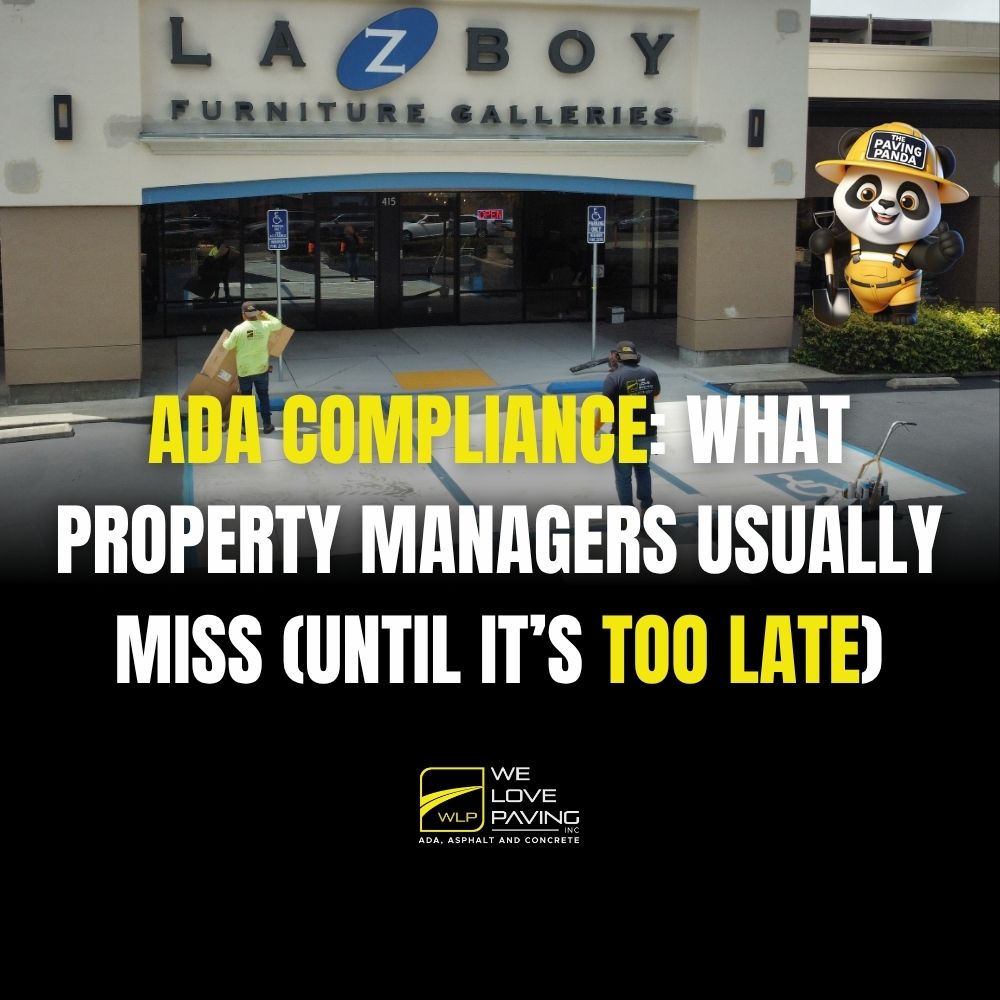
ADA Compliance: What Property Managers Usually Miss (Until It’s Too Late)

For property managers in California, ADA compliance isn’t just a regulation — it’s a responsibility. The Americans with Disabilities Act (ADA) requires that every property, parking lot, and walkway is accessible to people with disabilities. Unfortunately, many properties fail to meet these standards, not because owners don’t care, but because small details are often overlooked.

To review the full California ADA compliance requirements, you can check this detailed resource.

A single uneven ramp or missing tactile pad can result in a violation notice or, worse, a lawsuit. Each year, hundreds of property owners face fines between $5,000 and $25,000 per infraction, all for issues that could have been prevented with simple, regular inspections.

At We Love Paving, we believe ADA compliance isn’t just about avoiding penalties — it’s about ensuring that every visitor, tenant, and customer can move safely and confidently across your property.


⚠️ The Most Common ADA Mistakes We See on Properties

1. Incorrect Ramp Slopes
Many existing ramps were built before updated ADA standards. Even a small deviation in slope or height transition can make them non-compliant and unsafe for wheelchair users.

2. Improper Striping and Signage
We often see parking lots with freshly painted lines that still fail ADA audits. Dimensions, color contrast, or missing signage can all cause a violation, even if the paint is new.

3. Uneven or Damaged Pavement
Cracks, potholes, or lifted concrete slabs create mobility hazards. These areas not only fail ADA standards but can also lead to accidents and liability claims.

4. Faded Accessibility Markings
UV exposure and traffic wear can fade blue and white paint quickly. Once the color contrast drops below ADA’s visibility threshold, the property is no longer compliant.

5. Missing Truncated Domes or Detectable Warnings
These tactile pads are essential for visually impaired pedestrians. Missing or misplaced domes are among the most frequent — and most expensive — ADA violations.


💰 The True Cost of Ignoring ADA Maintenance

Many property managers think they’ll “fix it later,” but that mindset often leads to emergency repairs, downtime, or legal disputes. The truth is, preventive maintenance costs a fraction of what you’d spend after receiving a violation notice.

When ADA issues are neglected, you risk:

  • Expensive lawsuits and settlement fees.

  • Tenant or customer dissatisfaction.

  • Damaged reputation within the community.

Proactive compliance isn’t just good practice — it’s good business.


🧱 How We Love Paving Keeps You Compliant

At We Love Paving, we integrate ADA standards into every service we provide. Whether it’s asphalt paving, concrete work, striping, or sealcoating, we make sure your property meets all federal and state accessibility requirements.

Our ADA services include:
✅ Full site evaluations and slope analysis.
✅ Correct installation of truncated domes and warning pads.
✅ ADA-approved re-striping with proper stall sizing and signage.
✅ Documentation for compliance and inspection reports.

Every project is backed by our Paving Panda Pledge™ — your assurance of durability, safety, and peace of mind.


🧠 Stay Ahead with a Free ADA Condition Report

Don’t wait for a letter from an inspector or a complaint from a tenant. Get ahead of compliance issues by booking a Free ADA Condition Report with our team.

We’ll walk your property, identify problem areas, and give you a clear action plan to bring everything up to standard — before it costs you.

Stay compliant. Stay safe. Stay ahead.

📞 Request your Free ADA Condition Report today at WeLovePaving.com

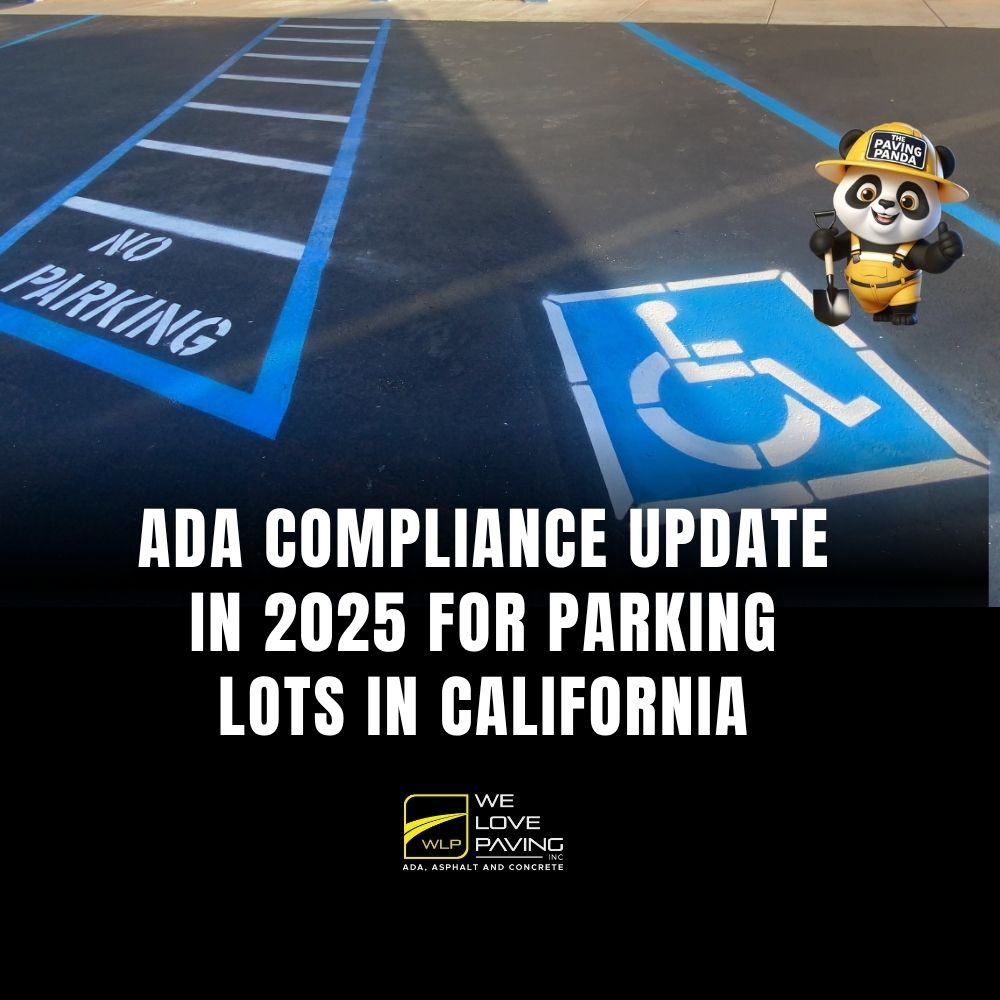
Understanding ADA Compliance for Parking Lots (2025 Update)

Keeping your parking lot ADA-compliant isn’t just good practice — it’s the law.
And as we move into 2025, updated regulations and stricter enforcement mean that even small accessibility oversights can lead to fines, lawsuits, or lost tenants.

To understand how properties can avoid ADA lawsuits in California, you can review an updated resource that breaks down the most common issues and how to stay compliant

Here’s everything property owners and managers need to know to stay compliant — and how We Love Paving can help you get there.


What Is ADA Compliance?

The Americans with Disabilities Act (ADA) ensures that public spaces are accessible to everyone, including individuals with disabilities.
For parking lots, this means providing properly designed spaces, slopes, signage, and accessible routes that meet federal and state standards.

Compliance is not optional — it’s required for all commercial, public, and multi-family properties.


Why ADA Compliance Matters in 2025

  1. Stricter local enforcement: Many cities in California are now performing regular inspections or responding to complaints faster.

  2. Higher legal exposure: Non-compliance can result in lawsuits costing $10,000–$100,000+, even for minor infractions.

  3. Tenant and customer experience: Accessible, clearly marked parking areas create a safer and more welcoming environment.

  4. Long-term property value: ADA-compliant facilities are easier to lease, insure, and maintain.

Simply put — it pays to be proactive.


Key ADA Requirements for Parking Lots

Here’s a quick breakdown of what inspectors look for in 2025:

1. Correct Number of Accessible Spaces

  • At least 1 accessible stall for every 25 total spaces

  • Van-accessible spaces (1 in every 6 accessible spaces) with an 8-foot access aisle

2. Proper Dimensions

  • Accessible stalls: 8 ft wide minimum

  • Access aisles: 5 ft wide (car) or 8 ft wide (van)

3. Correct Slopes

  • No more than 2% slope (1:50) in any direction within the parking space or access aisle

4. Proper Signage

  • Each space must display a blue ADA sign with the international symbol of accessibility

  • Van spaces must also include “Van Accessible” signage

  • Signs must be mounted 60 inches minimum above ground

5. Smooth, Non-Cracked Surface

  • Pavement must be even, smooth, and free of potholes or trip hazards

  • Paint must be clearly visible, typically blue and white

6. Clear Accessible Route

  • Direct, unobstructed access to the building entrance

  • No curbs, steep slopes, or obstructions in the path


Common ADA Violations We See Every Week

At We Love Paving, we inspect hundreds of parking lots every year — and these are the top violations we find:

  • Faded or missing ADA striping

  • Incorrect slope near stalls

  • Missing “Van Accessible” signage

  • Cracked or uneven surfaces in accessible paths

  • Misplaced access aisles or ramps

Even one of these issues can trigger a violation or lawsuit — which is why preventive maintenance and professional layout matter.


How We Love Paving Ensures ADA Compliance

We handle the process from inspection to execution:

  1. On-site ADA Audit: Our team measures slopes, stall widths, and layout accuracy.

  2. Compliance Plan: You’ll get a clear report with recommended fixes and pricing.

  3. Precision Work: We handle regrading, resurfacing, striping, and signage installation.

  4. Verification: We recheck all markings and slopes to guarantee compliance.

Bonus: Every WLP project includes documentation and photos for your records — ideal for HOAs, property managers, and insurance purposes.


Protect Your Property — and Your Peace of Mind

ADA compliance is more than a checkbox — it’s about safety, inclusivity, and professionalism.
Don’t wait for a lawsuit or inspection notice to take action.

📞 Schedule your free ADA compliance evaluation today with We Love Paving.