How Asphalt Actually Handles Weight

sphalt doesn’t fail because vehicles are heavy.

It fails when weight is applied in ways the pavement system can no longer manage.

Understanding how asphalt handles weight — and why it eventually struggles — explains most premature pavement failures far better than surface appearance ever will.


Asphalt Is Designed to Flex, Not Resist

Asphalt pavement is not rigid.

Unlike concrete, it is engineered to flex slightly under load and then recover. This flexibility allows asphalt to distribute vehicle weight across a wider area instead of concentrating stress at a single point.

That design works — but only when every layer beneath the surface is doing its job.


Weight Is Distributed Through the Pavement Structure

When a vehicle passes over asphalt, the load does not stop at the surface.

It moves downward and outward through:

  • The asphalt layer

  • The base layer

  • The subgrade

Each layer spreads the load further, reducing stress as it travels downward. The base layer plays a critical role by absorbing and redistributing pressure before it reaches the subgrade.

If any layer weakens, the entire system becomes less effective at handling weight.


Why the Base Matters More Than Thickness

Thicker asphalt does not automatically mean stronger pavement.

A thin surface over a stable base often outperforms a thick surface over a weak one. When the base loses compaction or becomes saturated with moisture, it can no longer distribute loads evenly.

As a result, weight begins to concentrate in localized areas, leading to deformation, cracking, and settlement — even under normal traffic.


Repeated Loads Cause Fatigue, Not Instant Failure

Asphalt rarely fails from a single heavy vehicle.

It fails from repetition.

Each pass of traffic applies stress. Over time, those stress cycles create fatigue within the pavement system. When fatigue exceeds the pavement’s ability to recover, cracks begin to form and the surface loses shape.

This is why areas with turning vehicles, braking, or slow-moving traffic deteriorate faster than straight travel lanes.


Weight + Water Is the Real Problem

Weight alone is manageable.

Weight applied to a weakened, moisture-affected base is not.

Water reduces friction within the base, allowing movement under load. Each vehicle pass pushes the weakened materials further out of alignment, accelerating damage from below.

This is why drainage and load management are inseparable when evaluating pavement performance.


Why Surface Appearance Is Misleading

A parking lot can look smooth while struggling structurally.

The surface may still rebound after traffic, even as the base gradually loses strength. Once surface cracking and deformation appear, the pavement has already lost much of its load-handling capacity.

At that point, repairs become more complex and less predictable.


The We Love Paving Perspective

We Love Paving evaluates asphalt based on how it distributes and recovers from load — not just how it looks.

By understanding traffic patterns, base condition, and drainage performance, pavement systems can be maintained before load-related damage becomes irreversible.


Final Thought

Asphalt doesn’t fail because vehicles exist.

It fails when the system beneath the surface can no longer spread and recover from the weight applied to it.

Understanding how asphalt actually handles weight is key to preventing premature failure and extending pavement life.

Why Appearance Doesn’t Equal Performance

A parking lot can look fine and still be failing.

Smooth asphalt, clean edges, and orderly striping often create a sense of confidence. If it looks good, it must be performing well — that assumption is common, and it’s also one of the most costly mistakes property owners make.

Performance and appearance are not the same thing.


Pavement Performance Is Structural, Not Visual

Asphalt performance depends on how the pavement system behaves under load.

That includes:

  • Base stability

  • Drainage efficiency

  • Surface tolerances

  • Material integrity over time

None of these factors are reliably visible from the surface. A parking lot can meet aesthetic expectations while slowly losing its ability to handle traffic, water, and environmental stress.


Many Failures Begin Below the Surface

Most structural issues develop out of sight.

Water infiltration, base softening, and subgrade movement occur beneath the asphalt layer. As long as the surface hasn’t cracked or settled noticeably, these problems often go undetected.

By the time visual signs appear, the underlying performance loss has already progressed.


“It Looks Fine” Masks Gradual Change

Pavement deterioration is incremental.

Slopes change slowly.
Low spots deepen gradually.
Markings fade over time.

Because these changes don’t happen all at once, they’re easy to normalize. The parking lot doesn’t look broken — it just looks slightly worse than before. This gradual decline is exactly why visual checks fail to identify performance risk early.


Surface Appearance Doesn’t Reflect Load Capacity

A clean surface doesn’t mean the pavement can still support traffic as designed.

When the base weakens due to moisture or compaction loss, load distribution becomes uneven. The surface absorbs stress it was never meant to handle, even if it still looks intact.

That mismatch leads to premature cracking, settlement, and repair failure.


Aesthetic Improvements Can Hide Structural Problems

Sealcoating, patching, and fresh striping improve appearance — but they don’t correct structural deficiencies.

In some cases, visual improvements delay proper evaluation because the pavement looks “taken care of.” Meanwhile, underlying issues continue to develop beneath the surface.

Good appearance can buy time visually, but it doesn’t restore performance.


The We Love Paving Perspective

We Love Paving evaluates pavement based on how it performs, not just how it looks.

That means looking at drainage behavior, surface tolerances, base condition, and how the pavement responds to real-world use — not just its visual condition on a given day.

Performance-based evaluation prevents surprises and supports long-term pavement health.


Final Thought

Appearance can be misleading.

A parking lot doesn’t fail when it looks bad.
It fails when it stops performing as designed.

Understanding the difference between aesthetics and performance is key to avoiding premature deterioration and costly repairs.

Why Standing Water Is a Structural Warning Sign

How Poor Drainage Undermines Asphalt From Below

Most asphalt failures don’t begin where you can see them.

They begin underneath the surface — slowly, quietly, and often unnoticed.

Poor drainage is one of the most damaging forces acting on parking lots, not because it looks dramatic, but because it weakens the pavement system from the ground up.


Asphalt Depends on a Stable, Dry Foundation

Asphalt pavement is designed to flex under traffic loads.
That flexibility only works when the base beneath it remains compacted and dry.

When water enters the pavement structure, the base layer begins to lose strength. Loads that were once distributed evenly are no longer supported properly, causing stress to concentrate in small areas.

The surface may still look intact, but its support system is already compromised.


Water Infiltration Is Inevitable

Asphalt is not fully waterproof.

Water enters through:

  • Hairline cracks

  • Construction joints

  • Porous surface areas

  • Low spots where water lingers

Once moisture reaches the base or subgrade, it drains slowly — if at all. Each passing vehicle applies pressure to a weakened foundation, accelerating internal movement.


Saturated Bases Lose Load-Bearing Capacity

A properly compacted base can handle repeated traffic.

A saturated base cannot.

Moisture reduces internal friction between base materials, allowing them to shift under load. Over time, this leads to:

  • Depressions forming in traffic paths

  • Cracks reflecting upward through the surface

  • Uneven settlement across the parking lot

These failures often appear gradual, but the structural damage progresses continuously.


Poor Drainage Accelerates All Other Pavement Damage

Drainage problems rarely act alone.

When the base is weakened:

  • Cracks spread faster

  • Surface raveling increases

  • Repairs fail sooner than expected

  • Striping fades unevenly due to surface movement

What begins as a drainage issue quickly becomes a structural maintenance problem.


Why Drainage Problems Are Often Overlooked

Drainage failures are easy to ignore because they aren’t always obvious.

Water may disappear hours after rainfall.
The surface may still appear serviceable.
Traffic may continue without complaint.

Because the damage occurs below grade, visual inspections alone rarely identify the real issue until surface failures become unavoidable — and expensive.


The We Love Paving Approach

We Love Paving evaluates drainage as a core structural factor, not an afterthought.

By understanding how water moves across and through a parking lot, early corrections can be made to protect the base, extend pavement life, and reduce long-term repair costs.


Final Thought

Asphalt doesn’t fail prematurely because it’s weak.

It fails when water undermines what supports it.

Addressing drainage early is one of the most effective ways to preserve pavement performance and avoid costly structural repairs later on.


how Poor Water Runoff Creates Structural Stress

Water runoff is often thought of as a surface-level concern.

As long as water eventually leaves the parking lot, it may seem like runoff is working as intended. In reality, how water moves across and away from pavement plays a critical role in long-term structural performance.

Poor water runoff does not just cause surface issues — it introduces structural stress that weakens the pavement system from the inside out.


Runoff Controls Where Stress Accumulates

Parking lots are designed to distribute loads evenly across the pavement structure.

When runoff is poor, water concentrates in specific areas instead of dispersing evenly. This concentration causes:

  • Localized base saturation

  • Uneven support beneath the pavement

  • Differential settlement

As traffic moves over these weakened zones, stress becomes uneven, accelerating deterioration.


Saturated Base Layers Lose Load-Bearing Capacity

The most damaging effect of poor runoff occurs below the surface.

When water repeatedly infiltrates the pavement system:

  • The base layer absorbs moisture

  • Load-bearing strength is reduced

  • Pavement begins to flex under traffic

This flexing introduces internal stress that asphalt is not designed to withstand long-term.

Over time, cracks form as the pavement attempts to accommodate movement below.


Uneven Support Leads to Structural Movement

Pavement relies on consistent support from below.

Poor runoff creates conditions where:

  • Some areas remain dry and stable

  • Other areas stay saturated and weak

This imbalance causes the pavement to move unevenly under load. The result is:

  • Cracking along stress lines

  • Depressions and low spots

  • Progressive surface deformation

Structural stress builds gradually, often without immediate visual warning.


Repeated Traffic Amplifies Water-Related Stress

Every vehicle passing over saturated areas increases stress.

Traffic loading:

  • Forces water deeper into the pavement system

  • Enlarges weakened zones

  • Accelerates base erosion

High-traffic areas such as drive lanes, loading zones, and fire lanes are especially vulnerable when runoff is poor.


Poor Runoff Creates a Self-Reinforcing Cycle

Once poor runoff introduces structural stress, the damage compounds.

Cracks allow more water in.
More water weakens the base further.
Weakened support increases pavement movement.

This cycle continues until visible failure appears — often requiring far more extensive repairs than originally anticipated.


Structural Stress Often Appears Before Surface Failure

One of the challenges with runoff-related damage is timing.

Structural stress builds long before:

  • Potholes form

  • Large cracks appear

  • Surface failure becomes obvious

By the time surface damage is visible, the pavement system has usually been under stress for years.


Early Runoff Correction Reduces Long-Term Damage

Correcting runoff issues early can significantly reduce structural stress.

Early intervention may involve:

  • Improving surface slopes

  • Addressing localized low spots

  • Enhancing drainage pathways

  • Preventing repeated water exposure

These corrections help preserve base integrity and extend pavement life.


The We Love Paving Perspective

At We Love Paving, water runoff is evaluated as a structural issue — not just a drainage detail.

Understanding how runoff affects pavement support allows property owners to:

  • Reduce internal pavement stress

  • Prevent premature deterioration

  • Protect long-term performance

  • Avoid reactive, costly repairs

Parking lots rarely fail because of traffic alone.
They fail when traffic is combined with unmanaged water.

How Improper Slopes Create Long-Term Pavement Damage

Surface slopes in parking lots are often treated as a design detail.

As long as water appears to drain and the pavement looks level, slopes rarely receive much attention. In reality, improper slopes are one of the most common contributors to long-term pavement damage — and one of the hardest issues to identify visually.

Even small deviations from proper slope design can quietly shorten the lifespan of a parking lot.


Slopes Control How Water Behaves

Parking lots rely on precise slopes to move water away from the pavement surface.

When slopes are properly designed, water drains efficiently and minimizes exposure to the pavement structure. When slopes are incorrect, water begins to:

  • Pool in low areas

  • Move slowly across the surface

  • Re-enter the pavement at joints and edges

Water that does not drain as intended almost always finds a way into the pavement system.


Small Slope Deviations Have Large Consequences

Improper slopes are rarely dramatic.

In many cases, the difference between proper drainage and recurring problems is a change of less than a few percentage points. These small deviations:

  • Are difficult to detect visually

  • Often develop gradually due to settlement

  • Can exist even in relatively new pavement

Despite their subtlety, they have a significant impact on pavement performance.


Settlement Often Changes Slopes Over Time

Even when a parking lot is built correctly, slopes are not permanent.

Over time, pavement can:

  • Settle unevenly

  • Compress under repeated traffic loads

  • Shift due to moisture changes in the subgrade

These movements alter surface slopes, creating low spots that were not present when the lot was first constructed.


Improper Slopes Accelerate Water Infiltration

When water remains on the surface or drains slowly, infiltration increases.

This leads to:

  • Base saturation

  • Loss of structural support

  • Increased pavement flexing under traffic

As the pavement moves, cracks begin to form, allowing even more water to enter. This cycle accelerates deterioration.


High-Traffic Areas Are Affected First

Slope-related damage often appears earliest in:

  • Drive lanes

  • Fire lanes

  • Loading and delivery zones

  • Accessible parking areas

These locations experience repeated stress, which magnifies the effects of improper drainage and slope deviation.


Slope Issues Create Safety and Compliance Risk

Improper slopes do not only affect pavement durability.

In accessible areas, slope deviations can:

  • Disrupt accessible routes

  • Interfere with proper drainage

  • Create compliance and liability concerns

In jurisdictions like California, slope limits in accessible areas are strictly regulated and enforceable.


Visual Inspections Rarely Catch Slope Problems

One of the reasons slope-related damage persists is that visual inspections are unreliable.

A surface can appear level while still draining incorrectly. Without measurement:

  • Minor deviations go unnoticed

  • Early warning signs are missed

  • Damage progresses silently

By the time visible distress appears, structural issues are often well established.


Correcting Slopes Early Extends Pavement Life

When slope issues are identified early, corrective actions are typically less invasive.

Early intervention can:

  • Restore proper drainage

  • Prevent base saturation

  • Reduce the need for extensive repairs

Addressing slope problems early protects both pavement performance and long-term maintenance budgets.


The We Love Paving Perspective

At We Love Paving, slopes are viewed as a critical part of pavement performance — not just a design specification.

Understanding how slopes affect drainage, structure, and compliance allows property owners to:

  • Reduce premature pavement failure

  • Minimize water-related damage

  • Maintain safer, more durable parking lots

Parking lots rarely fail because slopes are dramatically wrong.
They fail because small slope issues are allowed to persist.

Why Standing Water Shortens Parking Lot Lifespan

Standing water is often treated as a minor inconvenience.

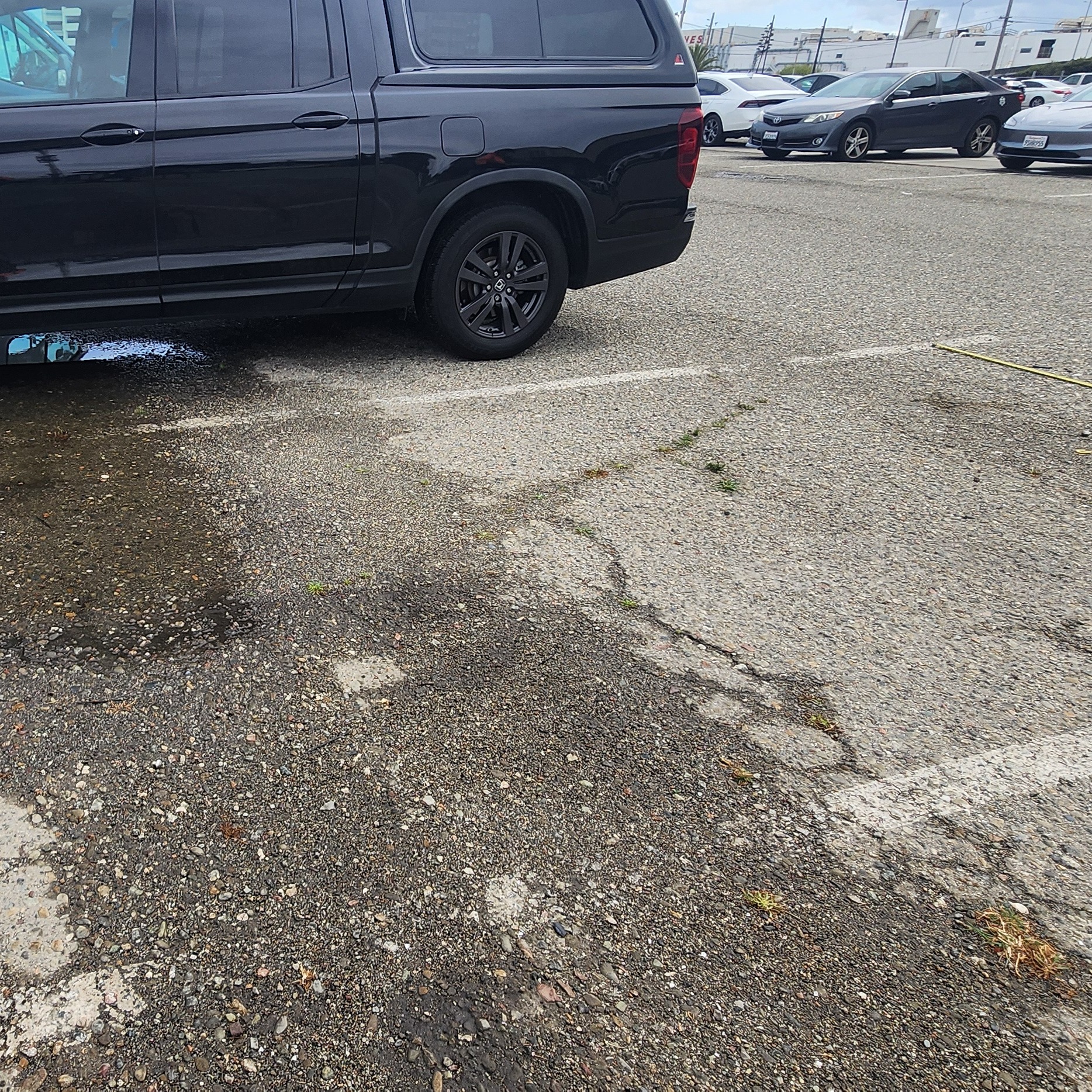
If the pooling is shallow or disappears after a few hours, it is easy to assume it is harmless. In reality, standing water is one of the most reliable indicators that a parking lot is already under stress.

Water does not need to look severe to cause damage. Even small, recurring pooling can significantly shorten pavement lifespan.


Water Is the Primary Enemy of Asphalt

Asphalt is designed to shed water, not hold it.

When water remains on the surface, it eventually finds a way into the pavement structure through:

  • Microcracks

  • Joints and edges

  • Surface imperfections

Once water penetrates the pavement, it begins weakening the layers below. This process starts quietly and accelerates over time.


Standing Water Signals Drainage or Slope Problems

Pooling water usually points to underlying issues, such as:

  • Improper surface slopes

  • Low spots caused by settlement

  • Inadequate drainage design

  • Degraded base materials

Even when the asphalt surface looks intact, standing water often means the pavement is no longer draining as designed.


Water Weakens the Base Layer First

The most critical damage caused by standing water occurs below the surface.

When the base layer becomes saturated:

  • It loses load-bearing strength

  • Pavement begins to flex under traffic

  • Settlement becomes more likely

This movement creates stress in the asphalt above, leading to cracking and deformation.

By the time surface damage becomes visible, base failure is often already underway.


Repeated Traffic Accelerates Damage in Wet Areas

Areas with standing water are subjected to repeated stress.

Each vehicle passing through a pooled area applies pressure that forces water deeper into the pavement structure. Over time, this repeated loading:

  • Enlarges existing weaknesses

  • Expands low spots

  • Increases surface deformation

High-traffic areas with standing water deteriorate significantly faster than dry sections of the same lot.


Standing Water Creates Safety and Compliance Risk

Beyond structural damage, standing water increases risk.

In accessible areas, pooling water can:

  • Obstruct accessible routes

  • Create slip hazards

  • Contribute to ADA compliance issues

Even shallow pooling can become enforceable when it interferes with access or proper drainage.


Drainage Issues Rarely Resolve on Their Own

Standing water is not a cosmetic issue that improves with time.

Without intervention, pooling areas tend to:

  • Grow larger

  • Appear more frequently

  • Lead to deeper settlement

What starts as a minor drainage issue often evolves into a structural repair if ignored.


Early Identification Prevents Accelerated Failure

Addressing standing water early allows for:

  • Localized drainage corrections

  • Minor surface adjustments

  • Prevention of base saturation

Early action is far less disruptive and far less costly than waiting for visible pavement failure.


The We Love Paving Perspective

At We Love Paving, standing water is treated as a diagnostic signal — not a surface flaw.

Identifying why water remains on a parking lot allows property owners to:

  • Protect pavement structure

  • Extend service life

  • Reduce long-term repair costs

  • Maintain safer, compliant surfaces

Parking lots rarely fail because of age alone.
They fail because water is allowed to stay where it shouldn’t.

Why New Asphalt Can Still Fail Early

common assumption among property owners is that new asphalt automatically means long-term performance.

The surface looks smooth. Striping is crisp. There are no cracks, no potholes, no visible issues. Yet in many cases, signs of failure begin appearing far sooner than expected.

Early asphalt failure is rarely caused by a single mistake. More often, it is the result of underlying conditions that are invisible at the surface.


New Asphalt Does Not Eliminate Structural Variables

Fresh asphalt is only the top layer of a pavement system.

Below the surface are:

  • The base layer

  • The sub-base

  • The soil conditions beneath

If these layers are compromised, even brand-new asphalt will reflect those weaknesses over time.

New pavement does not correct poor drainage, unstable subgrades, or long-standing settlement patterns. It simply covers them.


Base and Sub-Base Conditions Matter More Than Surface Age

One of the most common causes of early failure is inadequate base preparation.

If the base layer:

  • Is not properly compacted

  • Contains moisture

  • Was built over unstable soils

The asphalt above it will move, settle, and crack regardless of how new it is.

Surface appearance may remain acceptable for months or even years, but structural movement continues underneath.


Water Exposure Begins Immediately

Water is the single most damaging factor for asphalt performance.

Even new asphalt is vulnerable to:

  • Poor drainage design

  • Low spots that allow water to pool

  • Inadequate slope control

  • Water intrusion at edges and joints

Once water penetrates the pavement system, it weakens the base and accelerates deterioration. This process often starts long before visible damage appears.


Traffic Stress Is Often Underestimated

Many parking lots are designed based on average traffic assumptions.

In reality, stress is concentrated in specific areas:

  • Drive lanes with turning movements

  • Fire lanes

  • Trash enclosures

  • Delivery and loading zones

These areas experience higher shear forces and repeated stress, causing early wear even when the asphalt itself is new.

Without reinforcement or targeted design considerations, early distress is likely.


New Asphalt Can Mask Existing Problems

Overlay projects are especially prone to early failure.

When new asphalt is placed over an existing surface without addressing underlying issues, it can temporarily improve appearance while hiding:

  • Drainage deficiencies

  • Slope deviations

  • Settlement zones

The result is a lot that looks new but continues to behave like an old pavement system.


Early Visual Condition Can Be Misleading

New asphalt often gives a false sense of security.

Because the surface looks intact, owners may delay inspections or maintenance. Meanwhile, small issues develop unnoticed:

  • Subtle settlement

  • Minor cracking

  • Early water intrusion

By the time damage becomes visible, corrective options are more limited and more costly.


Early Maintenance Still Matters on New Asphalt

One of the most overlooked factors in early failure is delayed maintenance.

New asphalt still requires:

  • Timely sealing

  • Monitoring of high-stress areas

  • Drainage observation

  • Early crack repair

Waiting too long allows small issues to grow into structural problems.


Why Early Failure Often Comes as a Surprise

From a property owner’s perspective, early failure feels sudden.

In reality, the conditions that caused it were present from the beginning — just not visible.

This disconnect between appearance and performance is why new asphalt can still fail far earlier than expected.


The We Love Paving Perspective

At We Love Paving, asphalt performance is evaluated as a system — not a surface.

Understanding what lies beneath the pavement allows property owners to:

  • Set realistic lifespan expectations

  • Protect new investments

  • Reduce premature repairs

  • Plan maintenance strategically

New asphalt is an improvement, not a guarantee.

Long-term performance depends on what supports it.

Why Parking Lots Fail Faster Than Property Owners Expect

Many property owners are surprised when a parking lot begins to deteriorate sooner than expected.

From the surface, the pavement may still look acceptable. Striping may be visible. There may be no major cracks or potholes. Yet underneath, deterioration is already in progress.

Parking lots often fail earlier than owners anticipate not because they were poorly built — but because pavement is commonly misunderstood.


Parking Lots Are Structural Assets, Not Cosmetic Features

A parking lot is not just a finished surface.

It is a layered system designed to handle:

  • Constant vehicle loads

  • Repeated turning stress

  • Water exposure

  • Temperature changes

  • Public accessibility requirements

Even when the surface looks intact, stress is being transferred through the pavement structure every day.

Unlike interior assets, parking lots are exposed continuously — and deterioration begins long before visual damage appears.


Traffic Load Accelerates Wear More Than Age

Many owners assume pavement lifespan is tied mainly to time.

In reality, traffic patterns matter more than age.

High-stress areas degrade first:

  • Drive lanes with constant turning

  • Trash enclosures

  • Fire lanes

  • Delivery and loading zones

  • Accessible parking areas

Turning movements and heavy loads create shear stress that weakens pavement faster than straight-line traffic. These areas often fail years before the rest of the lot.


Water Is the Primary Driver of Pavement Failure

Water is the most common and most underestimated cause of early pavement failure.

Once water penetrates the surface, it:

  • Weakens the base layer

  • Creates uneven settlement

  • Accelerates cracking

  • Alters surface slopes

Drainage issues do not always look severe. Shallow pooling or recurring damp spots are often early indicators of deeper structural problems.

Over time, water-related issues compound quietly — until repairs become unavoidable.


Deferred Maintenance Speeds Up Deterioration

Small issues are often postponed because they do not seem urgent.

Examples include:

  • Hairline cracking

  • Minor settlement

  • Fading striping

  • Subtle drainage problems

When maintenance is delayed, these minor issues allow water intrusion and structural movement to continue unchecked.

What could have been addressed through preventive maintenance often escalates into full-depth repairs or premature replacement.


Appearance Is a Poor Indicator of Pavement Health

One of the most common misconceptions is that a parking lot is performing well because it looks fine.

Visual condition alone does not reveal:

  • Subsurface movement

  • Slope deviations

  • Drainage failures

  • Base layer degradation

By the time damage becomes obvious, deterioration has usually been occurring for years.


Why Early Failure Often Feels “Unexpected”

From an owner’s perspective, early pavement failure can feel sudden.

In reality, failure is usually gradual and predictable — it simply goes unnoticed until visible signs appear.

This gap between actual pavement condition and perceived condition is why many parking lots fail sooner than expected.


A Maintenance-First Approach Extends Pavement Life

Parking lots last longer when they are managed as long-term assets, not reactive repairs.

This includes:

  • Routine inspections

  • Monitoring high-stress areas

  • Addressing drainage early

  • Sealing and repairing at the right time

  • Planning maintenance instead of reacting to damage

Preventive maintenance does not eliminate deterioration — but it slows it significantly and preserves value.


The We Love Paving Perspective

At We Love Paving, parking lots are approached as infrastructure systems, not cosmetic surfaces.

Understanding how and why pavement deteriorates allows property owners to:

  • Avoid premature failure

  • Reduce long-term costs

  • Minimize operational disruption

  • Protect property value

Pavement rarely fails suddenly.
It fails quietly — until it can no longer be ignored.

The Hidden Costs of Hiring the Wrong Paving Contractor

Most paving problems don’t start on the surface.
They start the moment the wrong contractor shows up with the wrong plan.

Poor prep, weak mix designs, sloppy drainage and rushed execution create future liabilities for every property:
• Early cracking
• Standing water
• ADA exposure
• Constant patching
• Rising maintenance budgets

Quality paving protects assets, reduces lifetime costs and keeps properties compliant and safe.
Cheap work does the opposite.

At We Love Paving, we focus on long-term durability, not quick fixes.
From soil evaluation to final striping, every step follows proven methods that extend the life of your pavement.

If you manage properties and want predictable results, reliable communication and work that lasts…
We Love Paving is ready to help you build stronger parking lots.

📩 Send a message for a free site assessment.
#paving #asphalt #parkinglotmaintenance #propertymanagement #ADAcompliance

Why Cracks in Your Community Driveways Shouldn’t Be Ignored

Cracks in community driveways are easy to overlook.

Cars still pass.
People still walk through.
Nothing feels urgent — at least not yet.

But cracks are rarely just a surface issue. In shared driveways and common access areas, they’re often the first visible sign of a bigger problem underneath.


Cracks Are How Bigger Damage Begins

Driveways don’t suddenly fail overnight.

Most major pavement problems start with:

  • Small cracks

  • Hairline separations

  • Minor surface openings

Once a crack appears, water enters the pavement structure. From there, damage accelerates below the surface where it’s harder to see.

What looks like a minor issue today can quietly turn into:

  • Potholes

  • Uneven surfaces

  • Large sections of failure


Water Is the Real Problem

Cracks allow water to seep into the pavement base.

Over time, water:

  • Weakens the structure underneath

  • Causes shifting and settling

  • Expands damage during temperature changes

  • Speeds up deterioration after every rain

This is why cracks tend to spread, connect, and worsen — even if nothing seems to change on the surface.


Cracks Affect Safety for Everyone

In community driveways, cracks don’t just affect appearance.

They can:

  • Create trip hazards for pedestrians

  • Increase slip risk when wet

  • Make surfaces harder to navigate for children, seniors, and pets

  • Damage vehicle tires and suspensions

Because these areas are used daily, small defects get repeated exposure, increasing wear and risk over time.


Ignoring Cracks Makes Repairs More Expensive

One of the most common misconceptions is that waiting saves money.

In reality:

  • Early crack sealing is inexpensive

  • Delayed repairs require larger patching

  • Structural damage leads to resurfacing or repaving

  • Emergency fixes cost significantly more

Cracks are the stage where maintenance is most cost-effective.

Once they’re ignored, options become fewer — and more expensive.


Cracks Spread Faster Than Most People Expect

Driveways experience:

  • Constant vehicle traffic

  • Turning and braking

  • Delivery and trash trucks

  • Weather exposure year-round

This stress causes cracks to widen and multiply quickly, especially in high-use areas like entrances, intersections, and curves.

What starts as one crack often becomes many.


Appearance Can Be Misleading

A driveway may still “look fine” overall.

But cracks often indicate:

  • Early base movement

  • Loss of pavement flexibility

  • Aging materials

  • Drainage problems

Addressing cracks early helps preserve the structure before visible failure appears.


Why Early Attention Matters for Communities

In shared driveways, pavement issues affect everyone.

Proactive maintenance:

  • Keeps surfaces safer

  • Prevents sudden repair projects

  • Helps control HOA expenses

  • Protects long-term property value

  • Reduces the need for emergency assessments

It’s easier — and cheaper — to maintain pavement than to rebuild it.


The Bottom Line

Cracks are not just cosmetic.

They are warning signs.

Ignoring them doesn’t stop deterioration — it allows it to grow quietly beneath the surface.

Early attention keeps driveways safer, smoother, and more affordable to maintain for the entire community.


When to Take Action

If cracks are:

  • Spreading

  • Connecting

  • Appearing in multiple areas

  • Holding water

It’s time for a professional evaluation.

📩 Contact We Love Paving to assess your community driveways and help your HOA address issues early — before small cracks turn into major repairs.