Introduction: The Most Overlooked ADA Risk Is Not the Parking Stall — It’s the Path of Travel
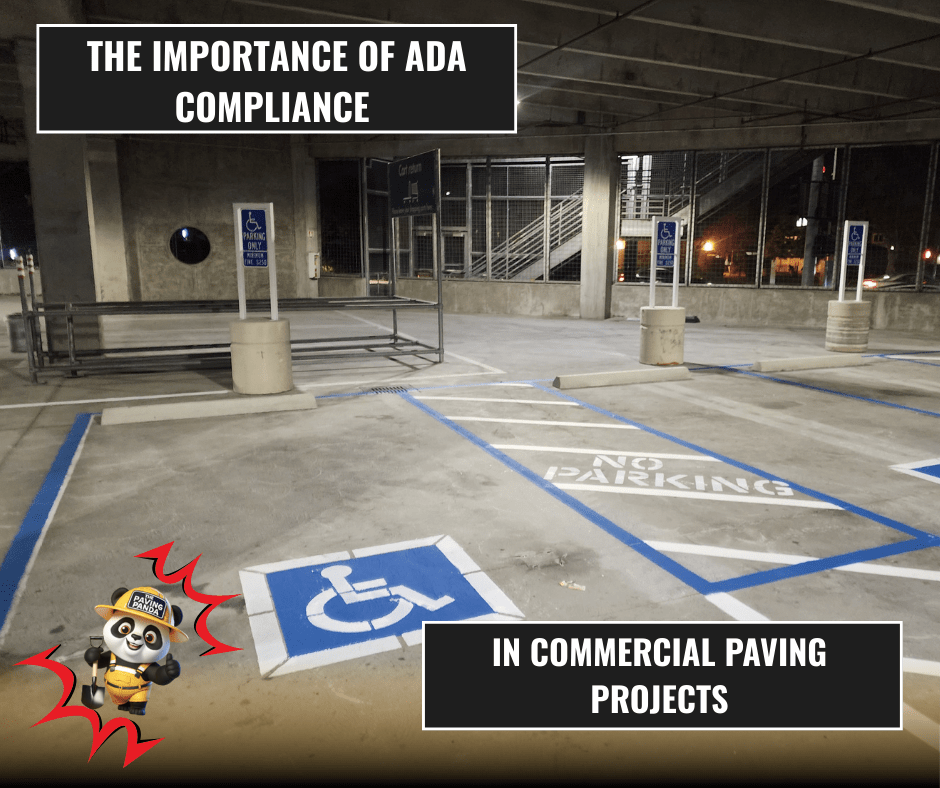
Most property managers spend time checking their ADA parking stalls:
-
Is the blue paint visible?
-
Is the sign at the right height?
-
Is the access aisle properly marked?
But here’s the truth:
Most ADA lawsuits don’t start at the parking stall — they start on the Path of Travel.
The Path of Travel (POT) is the pedestrian route from your ADA stall to your building entrance.
If this route has any discontinuity — even ¼ inch — the property is liable.
And the scary part?
90% of the violations on a Path of Travel cannot be seen from a car.
Tenants notice them. Lawyers notice them. Inspectors notice them.
But the PM often doesn’t… until a complaint arrives.
This blog exposes the hidden ADA violations that quietly cost properties thousands every year.
1. What Exactly Is the Path of Travel?
According to ADA + CBC guidelines, your Path of Travel must be:
-
Continuous (no gaps or disruptions)
-
Stable (no loose edges, cracks, broken areas)
-
Slip-resistant
-
Free of obstacles
-
Properly sloped (≤ 2% cross slope, ≤ 5% running slope)
-
Clearly marked where required
-
Fully connected from:
ADA Stall → Access Aisle → Walkway → Ramp → Entrance
If any part of that chain fails, your whole property fails.
2. The 7 Hidden ADA Violations Inside Your Path of Travel
These are the issues we uncover on almost every property…
none of which the PM usually knew about.
1. Micro-Trip Hazards (¼ Inch Uplift)
The ADA threshold is tiny:
Any vertical change over ¼ inch is non-compliant.
Most PMs think:
“It’s just a small bump — not a big deal.”
But to ADA, that’s a trip hazard.
And trip hazards = lawsuits.
Common causes:
-
tree roots
-
concrete slabs shifting
-
water erosion
-
old patches
-
broken expansion joints
2. Incorrect Cross Slope on Walkways
Most PMs don’t measure walkways.
Inspectors do.
Walkways must maintain:
-
≤ 2% cross slope
When the walkway tilts — even slightly — it becomes non-compliant.
This happens often because:
-
asphalt settles differently over time
-
concrete shifts unevenly
-
patchwork jobs create slope variations
3. Ramps That Used to Be Compliant… But Aren’t Anymore
Ramps deteriorate:
-
cracks
-
sinking edges
-
missing texture
-
washed-out transitions
-
slope increases from pavement movement
If the ramp is older than 15 years:
80% chance it is no longer compliant.
4. Missing or Non-Compliant Landings
Every ramp needs a flat landing area at the top and bottom.
Violations include:
-
landing too small
-
landing out of level
-
landing blocked by landscaping
-
landing sloping more than 2%
Landings are one of the top causes of failed inspections.
5. Damaged Detectable Warnings (Truncated Domes)
These must be:
-
secured
-
bright
-
fully intact
-
correctly sized
-
placed at the right location
Broken, faded, or missing domes = violation.
6. Obstructions Along the Walkway
The Path of Travel must be free of barriers.
Common hidden obstructions:
-
bollards too close
-
leaning signs
-
trash bins
-
overgrown landscaping
-
delivery packages
-
temporary construction debris
-
sprinkler heads sitting too high
Any obstruction reduces the minimum clear width → violation.
7. Water Drainage Issues That Create Hazards
Water pooling = one of the fastest ways to fail ADA.
Inspectors check:
-
does water collect on the walkway?
-
do slopes channel water toward the route?
-
does pooling create slippery surfaces?
Even seasonal pooling is non-compliant.
3. Why These Violations Are So Dangerous for PMs in 2026
These violations are dangerous because:
1. They are easy to document
A tenant only needs a smartphone picture.
2. They are inexpensive for lawyers to target
A single trip hazard can justify statutory penalties.
3. Inspectors now check full routes, not only stalls
Cities and CASp inspectors follow stricter guidelines.
4. Small issues turn into big repairs if ignored
A ¼ inch uplift becomes a 2-inch hazard in a year.
5. Insurance companies increasingly require ADA reports
Properties with repeated violations get flagged.
4. How Property Managers Can Fix These Issues Before 2026
This is the simple framework we use at WLP for ADA Path of Travel repair.
Step 1 — Full ADA Route Audit
We walk:
-
from the ADA stall
-
through the access aisle
-
across the walkway
-
through the ramp
-
into the entrance
We photograph and document every risk.
Step 2 — Prioritize Violations by Risk Level
High-risk:
-
trip hazards
-
broken ramps
-
standing water
-
missing detectable warnings
Medium-risk:
-
fading markings
-
minor cracks
-
minor slope issues
Low-risk:
-
cosmetic details
-
old paint
-
minor alignment issues
Step 3 — Perform Targeted Repairs
Repairs might include:
-
grinding concrete
-
asphalt patching
-
re-pouring transitions
-
rebuilding ramps
-
correcting slopes
-
installing new warnings
-
restriping accessible walkways
Every repair must meet ADA + CBC specs.
Step 4 — Document Everything With Before/After Photos
Documentation protects PMs from:
-
tenant complaints
-
legal claims
-
compliance audits
-
insurance issues
Step 5 — Schedule Annual Maintenance
Because:
-
concrete shifts
-
asphalt settles
-
paint fades
-
weather damages signage
-
roots uplift slabs
ADA is not one-time. It’s ongoing maintenance.
5. The WLP Path of Travel Compliance Program
We created a specific program to protect properties in California:
✔ Full Path of Travel Audit
✔ Slope & Level Measurements
✔ Trip Hazard Removal
✔ Ramp & Landing Corrections
✔ Truncated Domes Installation
✔ Walkway Repairs
✔ ADA Walkway Striping
✔ Documentation for Legal Protection
✔ Annual Maintenance Schedule
Our crews are trained specifically for ADA + CBC compliance.
6. Get a Free Path of Travel Inspection (California Properties)
We offer a free, quick Path of Travel assessment for:
-
retail centers
-
industrial parks
-
HOAs
-
multifamily
-
medical offices
-
commercial buildings
Includes:
-
10-minute walkthrough
-
photos
-
list of violations
-
risk-level breakdown
-
recommended fixes
👉 Message us or visit welovepaving.com to schedule your free ADA route assessment.