Pavement Density Testing: Why Compaction Is the #1 Factor in Asphalt Longevity

It’s Not the Mix — It’s the Density

When it comes to asphalt pavement, most property owners focus on the mix. But the truth is, the quality of your asphalt mix matters far less than how well it’s compacted.
Even the best hot mix asphalt will fail prematurely if it’s not properly densified. That’s why pavement density testing is one of the most critical — and often overlooked — steps in the paving process.

At We Love Paving, we measure success not just by how smooth your parking lot looks on day one, but by how well it holds up ten years later.


Why Compaction Matters

Asphalt starts out as a mix of aggregates, sand, and bitumen binder. Right after paving, the material is hot, flexible, and full of air voids.
If too many of those voids remain after compaction, water and oxygen can penetrate the surface — leading to:

  • Raveling (loose aggregate separating from the surface)

  • Oxidation and brittleness

  • Cracking and potholes within a few seasons

Proper compaction compresses the mix to the ideal 92–96% of its maximum theoretical density, which locks particles together and limits voids to the optimal 4–8% range.

💡 Think of it like concrete without air pockets — the denser it is, the stronger and longer it lasts.


How Density Is Tested on a Jobsite

Professional paving isn’t guesswork. It’s measurement and verification.
Here are the main methods used to test density in the field:

1. Core Sampling (ASTM D2726)

Small cylindrical samples (typically 4–6 inches in diameter) are drilled and sent to a lab.
Technicians weigh the samples in air and water to calculate density and compare it to the maximum theoretical value.
Pros: Highly accurate
⚠️ Cons: Destructive (leaves small holes to patch)

2. Nuclear Density Gauge (ASTM D2950)

This device emits low-level gamma radiation to measure the density and moisture content without damaging the surface.
It gives instant readings, allowing crews to adjust roller patterns on the fly.
Pros: Fast, non-destructive
⚠️ Cons: Requires certification and calibration

3. Intelligent Compaction (IC)

The latest paving machines use GPS and onboard sensors to monitor compaction in real time.
IC maps out roller passes and identifies areas needing additional coverage — improving consistency and eliminating human error.
Pros: High precision, data-driven
⚠️ Cons: Higher cost and limited availability


The Relationship Between Density and Pavement Life

Every 1% drop in asphalt density can reduce pavement life by up to 10%.
Inadequate compaction leads to micro-voids that absorb water and accelerate oxidation, turning flexible asphalt into brittle material far sooner than expected.
Over the years, that difference adds up to thousands of dollars in repairs or full replacement costs that could’ve been avoided with proper testing.


We Love Paving’s Quality Control Standards

At We Love Paving, we treat every commercial job as if it were a DOT project.
Our process includes:

  • Monitoring mat temperature and rolling patterns throughout paving

  • Conducting nuclear density readings on every project over 10,000 sq ft

  • Documenting average density results for transparency and quality assurance

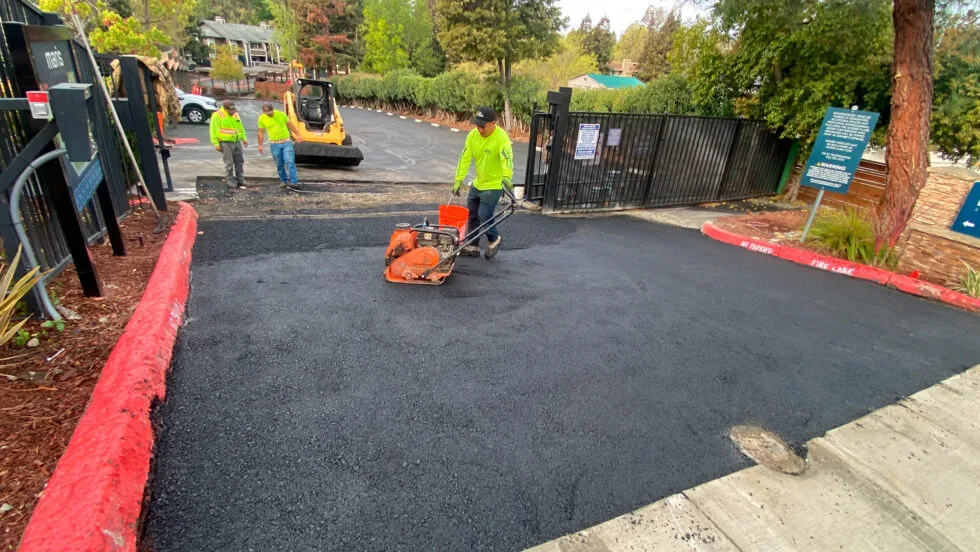
  • Using vibratory steel and pneumatic rollers to achieve uniform compaction

The result: surfaces that remain smooth, watertight, and structurally sound for decades.


How Business Owners Benefit

For property managers and business owners, proper compaction means:

  • Fewer repairs and lower long-term maintenance costs

  • Improved curb appeal — surfaces stay smooth and dark longer

  • Reduced liability from trip hazards and surface degradation

  • Higher ROI from a pavement that truly lasts


Final Thoughts

Perfect paving isn’t just about appearance — it’s about density.
A parking lot that looks flawless today but lacks proper compaction will begin to fail within a few years.
That’s why We Love Paving invests in density testing, temperature monitoring, and advanced rolling techniques to deliver pavement that’s built to last.


Ready to Test the Strength of Your Pavement?

Get a free on-site evaluation and see if your asphalt meets industry compaction standards.
👉 Contact We Love Paving today for a professional density test and maintenance plan.

Share

WHO IS FRED?

Fred, Regional Operations Manager, comes from a family of immigrant roots and a story built on sacrifice, discipline, and hard work. Growing up, Fred watched his parents work long hours and weekends to create a better future teaching him the values of perseverance, determination, and doing things the right way every single time.
We Love Paving began with Fred’s father, who started doing what he knew best: paving. Over the years, he built experience alongside respected professionals in the industry, refining his methods and developing a reputation for quality work that speaks for itself. As his clientele grew, so did the vision one built not only on skill, but on integrity and pride in every job.

Posts that might interest you

How Close to My Property Line Can I Pour Concrete?

How Close to My Property Line Can I Pour Concrete?

June 28, 2024

Pouring concrete close to your property line is a common issue for homeowners looking to enhance their outdoor spaces. Whether it’s for a driveway, patio, or walkway, understanding the legal and practical considerations is crucial to avoid disputes with neighbors and comply with local regulations. This guide explores the key factors influencing how close you

How to Fix a Crumbling Concrete Driveway: The Ultimate Repair Guide

How to Fix a Crumbling Concrete Driveway: The Ultimate Repair Guide

June 27, 2024

When a concrete driveway starts to crumble, it’s more than a cosmetic issue—it’s a warning sign that the surface is losing its structural integrity. Left untreated, it can lead to major damage, higher repair costs, and safety hazards. Whether you’re a homeowner or manage a commercial property, this guide will show you how to restore

Do You Need a Permit to Replace a Driveway? A Comprehensive Guide

Do You Need a Permit to Replace a Driveway? A Comprehensive Guide

June 25, 2024

Replacing a driveway is a significant home improvement project that can enhance curb appeal, increase property value, and improve functionality. However, before you start tearing up your old driveway and pouring new concrete or laying pavers, it’s crucial to understand the legal and regulatory requirements involved. One of the most common questions homeowners have is

Steps Involved in Asphalt Paving

Steps Involved in Asphalt Paving

June 25, 2024

Asphalt paving is a necessary part of the construction industry. It’s a versatile material used to build roads, parking lots, and driveways. Understanding the steps involved in asphalt paving will help you choose the right pavement for your needs. Asphalt is an extremely durable material that withstands traffic and the elements. It is also environmentally

The Cost of Asphalt Cutting Per Linear Foot: What to Expect

The Cost of Asphalt Cutting Per Linear Foot: What to Expect

June 24, 2024

When it comes to construction and repair projects, asphalt cutting is often a necessary task, whether for roadworks, driveways, or other paved surfaces. Understanding the cost involved in asphalt cutting per linear foot can help you budget more accurately for your project. This article will break down the factors affecting these costs and provide a

The Best Base for an Asphalt Driveway: A Comprehensive Guide

The Best Base for an Asphalt Driveway: A Comprehensive Guide

June 24, 2024

What Do You Lay Under Asphalt?

What Do You Lay Under Asphalt?

June 24, 2024

The Process of Asphalt Paving

The Process of Asphalt Paving

June 19, 2024

Asphalt Paving is a complex process that involves numerous stages. A good paving contractor will be willing to walk you through their work processes and answer any questions. Inquire about an asphalt paving contractor’s license, worker’s compensation, and liability insurance. Ask them to provide references and project examples. Also, ask about their education and training.

Understanding the Concrete Business: A Comprehensive Overview

Understanding the Concrete Business: A Comprehensive Overview

June 18, 2024

The term “concrete business” encompasses a wide range of activities within the construction industry. From the production and delivery of ready-mixed concrete to the construction of roads, buildings, and other infrastructure projects, businesses involved in concrete play a crucial role in shaping the built environment. This article delves into the definition of a concrete business,

How Much Does it Cost to Pave One Mile of Road in California?

How Much Does it Cost to Pave One Mile of Road in California?

June 17, 2024

Paving a mile of road in California is a complex process influenced by various factors, including materials, labor, equipment, environmental regulations, and the geographical characteristics of the area. Understanding the costs involved requires breaking down these factors and examining them in detail. This blog delves into the intricacies of road paving in California, providing a

Previous Next