It’s Not the Mix — It’s the Density
When it comes to asphalt pavement, most property owners focus on the mix. But the truth is, the quality of your asphalt mix matters far less than how well it’s compacted.
Even the best hot mix asphalt will fail prematurely if it’s not properly densified. That’s why pavement density testing is one of the most critical — and often overlooked — steps in the paving process.
At We Love Paving, we measure success not just by how smooth your parking lot looks on day one, but by how well it holds up ten years later.
Why Compaction Matters
Asphalt starts out as a mix of aggregates, sand, and bitumen binder. Right after paving, the material is hot, flexible, and full of air voids.
If too many of those voids remain after compaction, water and oxygen can penetrate the surface — leading to:
-
Raveling (loose aggregate separating from the surface)
-
Oxidation and brittleness
-
Cracking and potholes within a few seasons
Proper compaction compresses the mix to the ideal 92–96% of its maximum theoretical density, which locks particles together and limits voids to the optimal 4–8% range.
💡 Think of it like concrete without air pockets — the denser it is, the stronger and longer it lasts.
How Density Is Tested on a Jobsite
Professional paving isn’t guesswork. It’s measurement and verification.
Here are the main methods used to test density in the field:
1. Core Sampling (ASTM D2726)
Small cylindrical samples (typically 4–6 inches in diameter) are drilled and sent to a lab.
Technicians weigh the samples in air and water to calculate density and compare it to the maximum theoretical value.
✅ Pros: Highly accurate
⚠️ Cons: Destructive (leaves small holes to patch)
2. Nuclear Density Gauge (ASTM D2950)
This device emits low-level gamma radiation to measure the density and moisture content without damaging the surface.
It gives instant readings, allowing crews to adjust roller patterns on the fly.
✅ Pros: Fast, non-destructive
⚠️ Cons: Requires certification and calibration
3. Intelligent Compaction (IC)
The latest paving machines use GPS and onboard sensors to monitor compaction in real time.
IC maps out roller passes and identifies areas needing additional coverage — improving consistency and eliminating human error.
✅ Pros: High precision, data-driven
⚠️ Cons: Higher cost and limited availability
The Relationship Between Density and Pavement Life
Every 1% drop in asphalt density can reduce pavement life by up to 10%.
Inadequate compaction leads to micro-voids that absorb water and accelerate oxidation, turning flexible asphalt into brittle material far sooner than expected.
Over the years, that difference adds up to thousands of dollars in repairs or full replacement costs that could’ve been avoided with proper testing.
We Love Paving’s Quality Control Standards
At We Love Paving, we treat every commercial job as if it were a DOT project.
Our process includes:
-
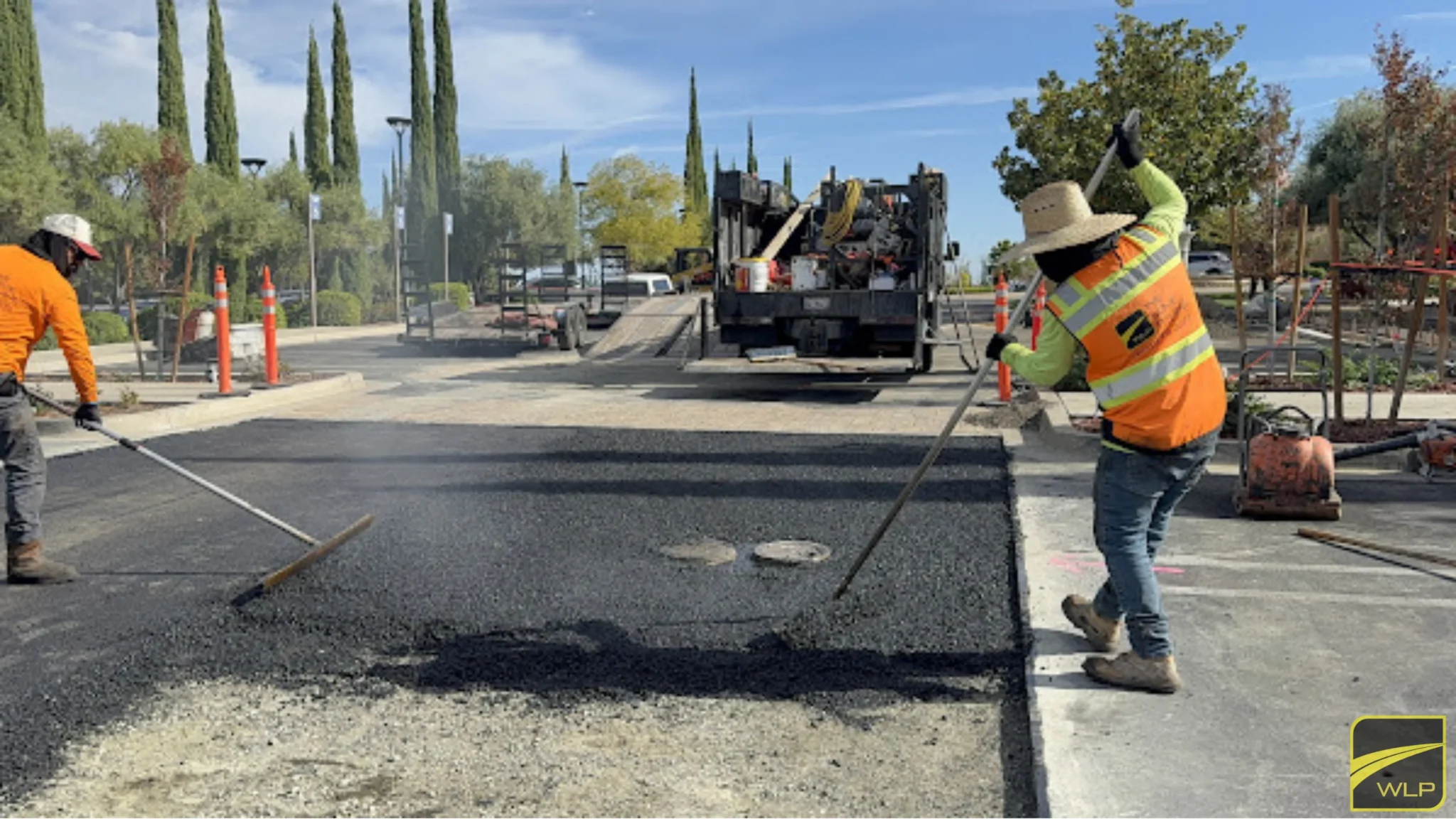
Monitoring mat temperature and rolling patterns throughout paving
-
Conducting nuclear density readings on every project over 10,000 sq ft
-
Documenting average density results for transparency and quality assurance
-
Using vibratory steel and pneumatic rollers to achieve uniform compaction
The result: surfaces that remain smooth, watertight, and structurally sound for decades.
How Business Owners Benefit
For property managers and business owners, proper compaction means:
-
Fewer repairs and lower long-term maintenance costs
-
Improved curb appeal — surfaces stay smooth and dark longer
-
Reduced liability from trip hazards and surface degradation
-
Higher ROI from a pavement that truly lasts
Final Thoughts
Perfect paving isn’t just about appearance — it’s about density.
A parking lot that looks flawless today but lacks proper compaction will begin to fail within a few years.
That’s why We Love Paving invests in density testing, temperature monitoring, and advanced rolling techniques to deliver pavement that’s built to last.
Ready to Test the Strength of Your Pavement?
Get a free on-site evaluation and see if your asphalt meets industry compaction standards.
👉 Contact We Love Paving today for a professional density test and maintenance plan.