The Secret Life of Concrete: ADA Compliance and Its Perfectionist Persona

Concrete: the unsung hero of modern civilization. It’s there under your feet, holding your parking lots together, and bearing the brunt of coffee spills and rogue shopping carts. But when it comes to ADA (Americans with Disabilities Act) compliance, concrete puts on its perfectionist hat, ready to meet the highest standards. Let’s explore this serious business with a light-hearted twist, because even the most rigid of construction materials deserves a little humor.

ADA Compliance: Concrete’s Time to Shine

ADA compliance isn’t just about following rules; it’s about making sure everyone can navigate the world with ease. And who better to shoulder this responsibility than concrete, the rock-solid champion of accessibility? To meet ADA standards, concrete must be more meticulous than your grandma setting the dinner table for Thanksgiving.

Here’s what ADA compliance demands from concrete:

  1. Flawless Slopes: The ramps must have a slope between 1:12 and 1:20. Imagine a concrete ramp being told, “Your angle is off by a fraction of a degree.” It would blush—if it could.
  2. Smooth Surfaces: No cracks, bumps, or uneven spots. ADA-compliant concrete is like that one friend with flawless skin. It’s the envy of sidewalks everywhere.
  3. Precise Dimensions: Handrails, curb ramps, and detectable warning surfaces must align with laser-sharp accuracy. Concrete detailing in ADA projects is like baking a soufflé; even a tiny mistake can ruin everything.

Tools of the Trade: Concrete’s Makeup Kit

To achieve ADA compliance, concrete contractors wield an arsenal of tools that would make any DIY enthusiast swoon:

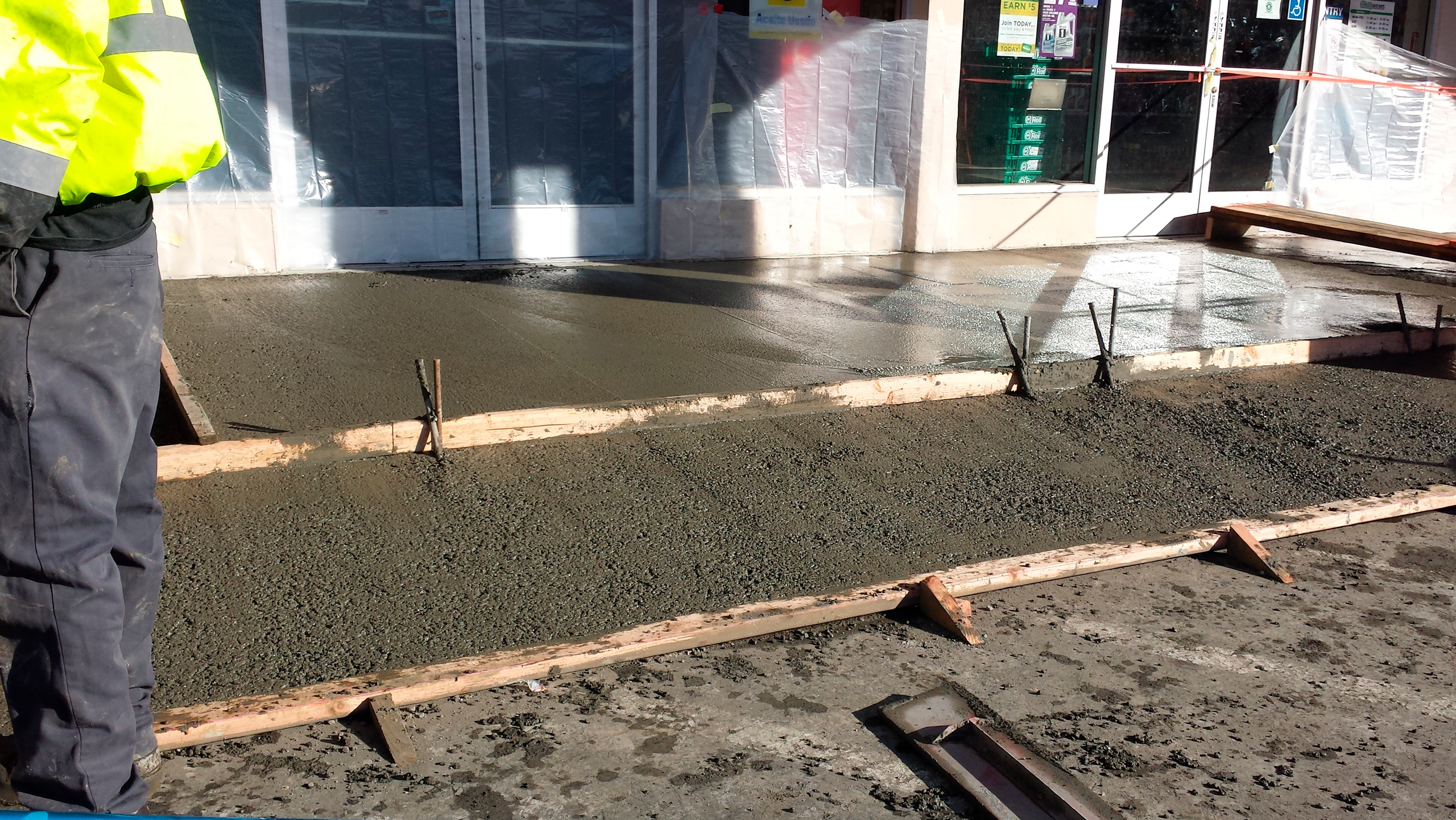
  • Formwork: This is the mold that shapes the concrete—think of it as concrete’s favorite pair of skinny jeans. It must fit just right.
  • Trowels: For that smooth, polished finish. Trowels are the spa treatment every slab dreams of.
  • Levels and Measuring Tape: Because ADA compliance doesn’t tolerate eyeballing. It’s all about precision, baby!
  • Detectable Warning Mats: Those bumpy, textured surfaces at curb ramps are concrete’s way of saying, “Hey, I care about safety.”

Concrete’s Biggest Fears

While concrete might seem tough, it has its own anxieties, especially when it’s tasked with ADA compliance:

  1. The Weather: Pouring concrete on a rainy day is like trying to paint with watercolors in a monsoon. Not ideal.
  2. Time Pressure: Concrete has a narrow window to set correctly. It’s like speed dating—everything has to click before the clock runs out.
  3. Inspectors with Rulers: An ADA inspector’s ruler is to concrete what a teacher’s red pen is to your high school essays. Terrifying.

The Drama of a Concrete Pour

Picture this: it’s pouring day. The crew arrives early, coffee in hand, ready to make ADA-compliant magic happen. The formwork is in place, and the truck arrives with the mix. It’s showtime.

The pour begins. Workers expertly guide the flow, smoothing and leveling with precision. A supervisor measures the slope of a ramp. “1:13? Fix it!” The crew adjusts, sweat dripping, determined to meet the golden ratio.

Finally, the detectable warning mats are pressed into place. It’s like adding the final sprinkles on a cupcake. The crew steps back, exhausted but proud. The inspector arrives, ruler in hand. They measure, nod approvingly, and the team breathes a collective sigh of relief.

Why We Love Paving Loves ADA Concrete Detailing

At We Love Paving, we treat concrete detailing for ADA projects with the seriousness it deserves—but we also know how to have a little fun. Because let’s face it, even concrete has a lighter side. When we create ramps, sidewalks, and parking lots that meet ADA standards, we’re not just laying down slabs; we’re crafting pathways to inclusion.

So the next time you stroll across a perfectly sloped ramp or feel those detectable warning bumps underfoot, give a little nod to the concrete. It’s doing its best to make the world a better, more accessible place—all while keeping its sense of humor intact.

Share

WHO IS FRED?

Fred, Regional Operations Manager, comes from a family of immigrant roots and a story built on sacrifice, discipline, and hard work. Growing up, Fred watched his parents work long hours and weekends to create a better future teaching him the values of perseverance, determination, and doing things the right way every single time.
We Love Paving began with Fred’s father, who started doing what he knew best: paving. Over the years, he built experience alongside respected professionals in the industry, refining his methods and developing a reputation for quality work that speaks for itself. As his clientele grew, so did the vision one built not only on skill, but on integrity and pride in every job.

Posts that might interest you

How to Save Money on Paving Your Driveway in Sacramento, California.

How to Save Money on Paving Your Driveway in Sacramento, California.

June 14, 2024

Paving a driveway can be a significant investment, but with careful planning and smart choices, you can save money while ensuring a quality result. Sacramento, with its unique climate and soil conditions, requires specific considerations. Here’s a comprehensive guide on how to save money on paving your driveway in Sacramento. Plan and Budget Wisely Before

Seal Coat vs. Slurry Seal: Understanding the Differences and Benefits

Seal Coat vs. Slurry Seal: Understanding the Differences and Benefits

June 13, 2024

When it comes to maintaining and prolonging the life of asphalt pavements, two common treatments often come into play: seal coat and slurry seal. Both methods serve the purpose of protecting and enhancing asphalt surfaces, but they have distinct differences in composition, application, and suitability for various conditions. In this article, we’ll delve deep into

Do You Put Sand or Gravel Under Asphalt Paving? A Guide for Sacramento, California

Do You Put Sand or Gravel Under Asphalt Paving? A Guide for Sacramento, California

June 11, 2024

When it comes to installing asphalt paving in Sacramento, California, one of the most common questions homeowners and builders have is whether to use sand or gravel as a base. Both materials play crucial roles in ensuring a durable, stable, and aesthetically pleasing paved surface. This article explores the importance of using sand and gravel

What is Concreting in Construction? A Focus on Sacramento, California

What is Concreting in Construction? A Focus on Sacramento, California

June 11, 2024

Concreting is a fundamental process in construction, playing a crucial role in creating durable and robust structures. From residential homes to commercial buildings and infrastructure projects, concrete is a versatile and widely used material. In Sacramento, California, concreting is essential for the city’s ongoing growth and development. This article delves into the specifics of concreting

Why Choose Asphalt for Road Construction in San Mateo, California?

Why Choose Asphalt for Road Construction in San Mateo, California?

June 10, 2024

In the picturesque city of San Mateo, California, maintaining and developing infrastructure is vital to support a growing community and enhance the quality of life. When it comes to road construction, asphalt emerges as the material of choice, offering a blend of practicality, sustainability, and performance. This article explores why asphalt is favored in San

The Essential Guide to Road Base Depth in San Mateo, California

The Essential Guide to Road Base Depth in San Mateo, California

June 7, 2024

When it comes to constructing roads, one of the critical factors that influence durability and performance is the depth of the road base. This is particularly important in regions like San Mateo, California, where specific geological and environmental conditions can impact road stability. This article investigates the ideal road base depth for San Mateo, incorporating

An Investigation into Why Paving Slabs Are So Expensive

An Investigation into Why Paving Slabs Are So Expensive

June 6, 2024

Paving slabs, commonly used in patios, walkways, and driveways, are a popular choice for outdoor paving due to their durability and aesthetic appeal. However, one frequently raised concern is their high cost. This investigation explores the factors contributing to the expense of paving slabs, covering material selection, manufacturing processes, transportation, labor, and market dynamics. Understanding

An Investigation into the Two Main Types of Paving: Concrete and Asphalt

An Investigation into the Two Main Types of Paving: Concrete and Asphalt

June 6, 2024

Paving is a crucial aspect of urban development and infrastructure. The choice of paving material significantly impacts the durability, cost, maintenance, and overall aesthetic of roads, driveways, and other paved surfaces. This investigation delves into the two main types of paving: concrete and asphalt. By examining their composition, installation processes, advantages, disadvantages, and applications, we

What is a concrete service?

What is a concrete service?

June 5, 2024

A concrete service typically refers to a service provided by a concrete contractor or company. Concrete services encompass a wide range of offerings related to the installation, repair, and maintenance of concrete structures. These services may include: Concrete Installation This involves pouring and shaping concrete to create various structures such as driveways, sidewalks, foundations, retaining

Unveiling the Power of Concrete: A Masterpiece in Modern Construction

Unveiling the Power of Concrete: A Masterpiece in Modern Construction

June 5, 2024

In the realm of construction, few materials boast the versatility, durability, and sheer impact of concrete. Often regarded as the cornerstone of modern architecture and infrastructure, concrete stands as a testament to human ingenuity and engineering prowess. In this exploration, we delve into the myriad facets of concrete, uncovering its secrets, applications, and enduring significance

Previous Next