Why Understanding Pavement Lifecycle Matters
Every parking lot and roadway has a lifespan — but how long it lasts depends on how it’s designed, installed, and maintained.
For property owners and facility managers, understanding the lifecycle of asphalt pavement is key to planning budgets, extending surface life, and avoiding costly full replacements.
At We Love Paving, we see every project as part of a long-term system — not just a surface to pour and forget.
Phase 1: Design & Subgrade Preparation
The foundation of durable pavement begins below the surface.
A proper subgrade — the compacted soil layer beneath the asphalt — ensures load-bearing strength and prevents settlement.
Technical steps include:
-
Soil testing and classification (AASHTO or ASTM standards)
-
Grading for uniform support and drainage (1–2% slope minimum)
-
Compaction to 95% or greater density using vibratory rollers
-
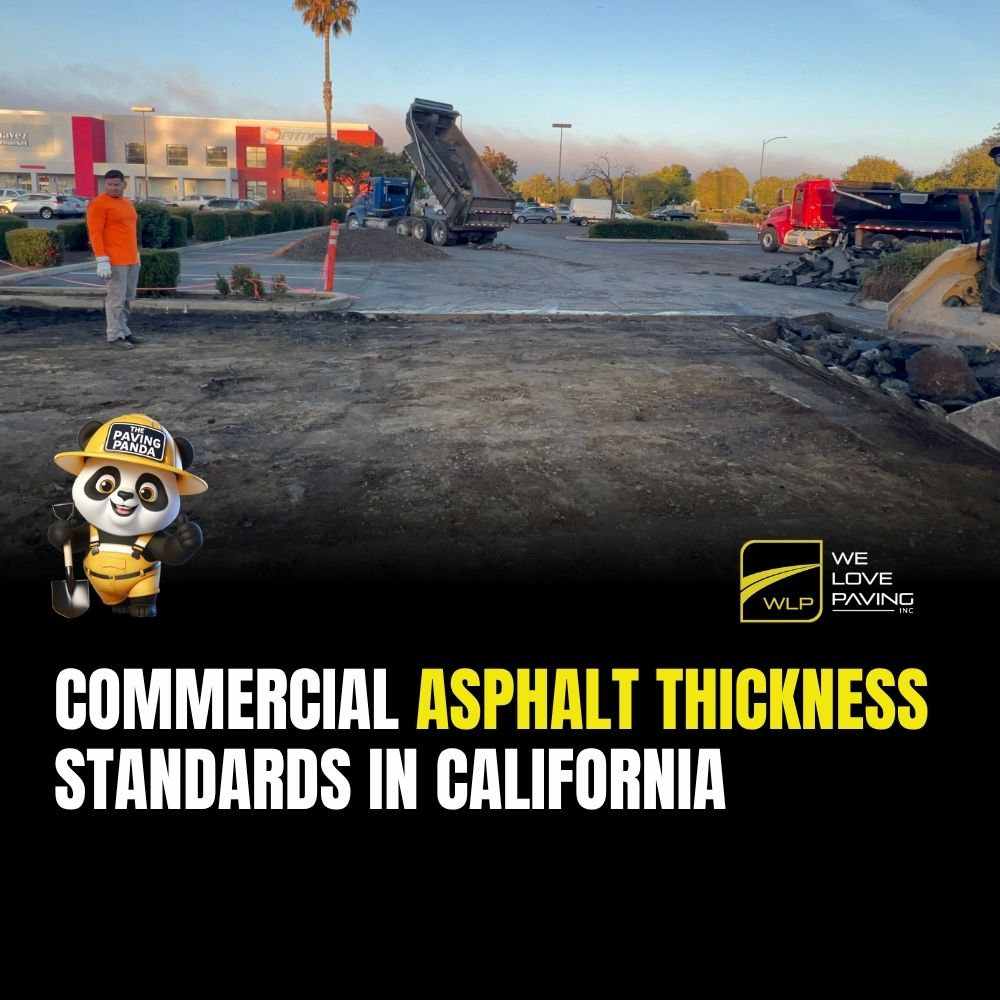
Installation of an aggregate base layer (Class II base rock, typically 4–8 inches)
💡 Pro Tip: Most asphalt failures come from poor base prep, not surface wear.
Phase 2: Asphalt Installation
Once the base is stable, hot mix asphalt (HMA) is laid and compacted.
The key to longevity here is temperature control and compaction timing.
Our crews follow strict QC standards:
-
Mix delivered at 275–300°F to ensure workability
-
Paving thickness designed for expected traffic loads (2” light-duty up to 6” heavy-duty)
-
Compaction completed before temperature drops below 185°F
-
Joints sealed for smooth transitions between passes
🧱 Result: A dense, watertight surface ready to handle years of use.
Phase 3: Preventive Maintenance (Years 1–5)
Even new asphalt begins oxidizing as soon as it’s exposed to sunlight and oxygen.
Preventive maintenance keeps the surface flexible and slows deterioration.
Recommended maintenance schedule:
-
Sealcoating every 2–3 years to block UV and moisture
-
Crackfilling annually to prevent water intrusion
-
Patching localized failures before they spread
-
Re-striping for safety and compliance
⏳ These steps can double the service life of commercial pavement compared to neglected surfaces.
Phase 4: Corrective Maintenance & Overlays (Years 6–12)
With time, heavier traffic and weather exposure lead to structural fatigue.
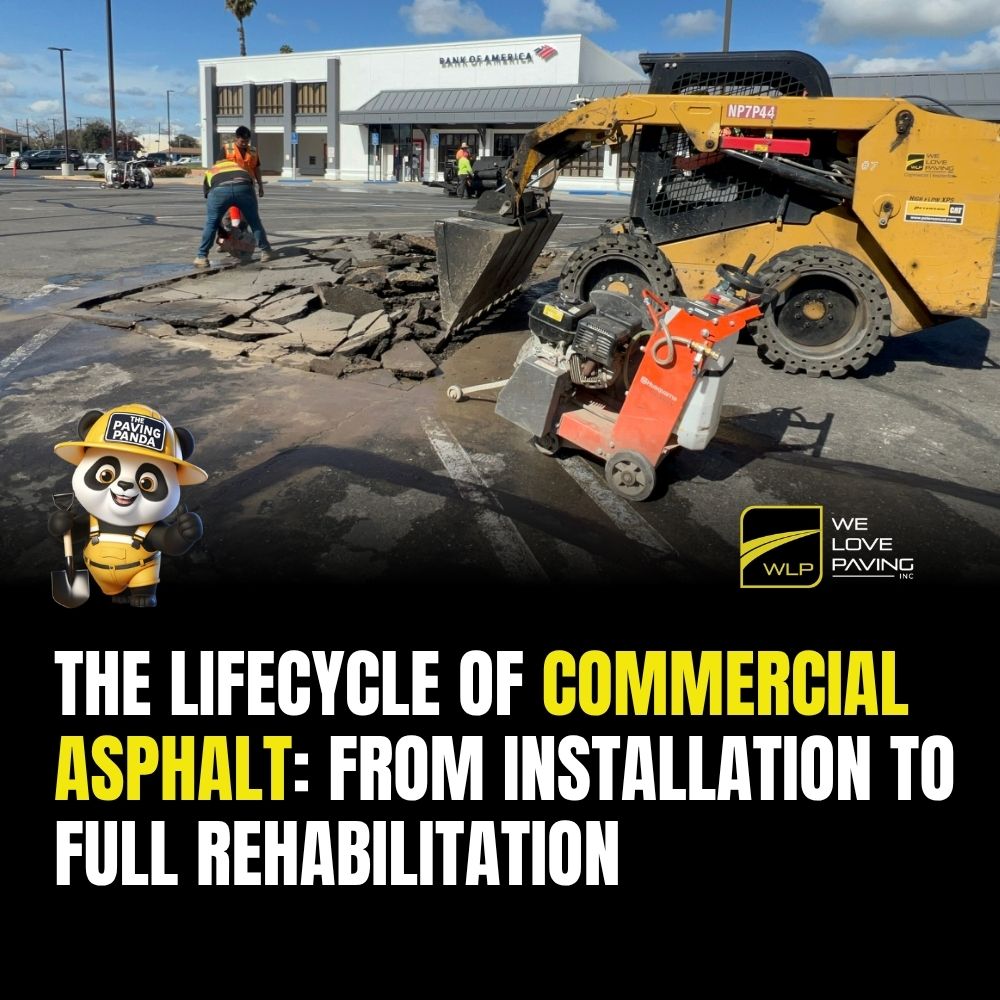
Rather than full replacement, many lots benefit from a mill and overlay process:
-
Milling 1–2 inches of worn asphalt
-
Cleaning and tack-coating the existing surface
-
Installing a new hot mix overlay for a smooth finish
This rejuvenates the pavement at a fraction of the cost of reconstruction and resets the clock on your pavement lifecycle.
Phase 5: Full Rehabilitation (Years 15–25+)
Eventually, all asphalt reaches a point where the subgrade or base fails.
At this stage, full-depth reclamation (FDR) or complete reconstruction is the most cost-effective solution.
Full rehabilitation includes:
-
Pulverizing and regrading existing layers
-
Adding fresh base material and compaction
-
Installing new HMA layers and fresh striping
-
Updating ADA ramps, signage, and drainage as required
This brings the pavement back to like-new condition and sets up another 20+ years of reliable service.
How We Love Paving Extends the Lifecycle Even Further
Our approach is simple: precision, quality, and proactive maintenance.
By combining laser grading, premium materials, and strict compaction standards, we help businesses across Northern California save thousands over the lifetime of their pavement.
Whether you manage a retail center, corporate facility, or industrial yard, we can tailor a multi-year maintenance planthat fits your traffic levels, budget, and compliance needs.
Ready to Plan Your Pavement’s Future?
Don’t wait until cracks turn into craters.
👉 Contact We Love Paving for a professional inspection and lifecycle assessment — and discover how proper maintenance can extend your pavement’s lifespan by over a decade.