For many properties, asphalt maintenance gets postponed for one simple reason:
“It still works.”
The parking lot looks usable.
Cars can park.
No major complaints yet.
But in pavement management, waiting one more year is rarely a neutral decision.
It’s usually the most expensive one.
Asphalt Doesn’t Pause — It Progressively Fails
Asphalt deterioration is not linear.
A parking lot doesn’t lose value evenly over time.
Instead, damage accelerates once the surface layer breaks down.
What causes this acceleration?
-
UV exposure dries and hardens the asphalt binder
-
Water penetrates microcracks
-
Traffic loads stress a weakened structure
-
Oxidation reduces flexibility
Once these forces combine, deterioration compounds — even if the lot still “looks acceptable.”
The Surface Is Your First Line of Defense
The top layer of asphalt is not cosmetic.
It’s protective.
When the surface is intact:
-
Water stays out
-
The base remains stable
-
Loads are distributed evenly
When the surface fails, the structure underneath begins to collapse.
This is why surface-level maintenance delivers the highest ROI in pavement management.
Deferred Maintenance Increases Liability Exposure
Beyond repair costs, delayed maintenance increases risk.
Common liability triggers include:
-
Uneven pavement
-
Potholes
-
Standing water
-
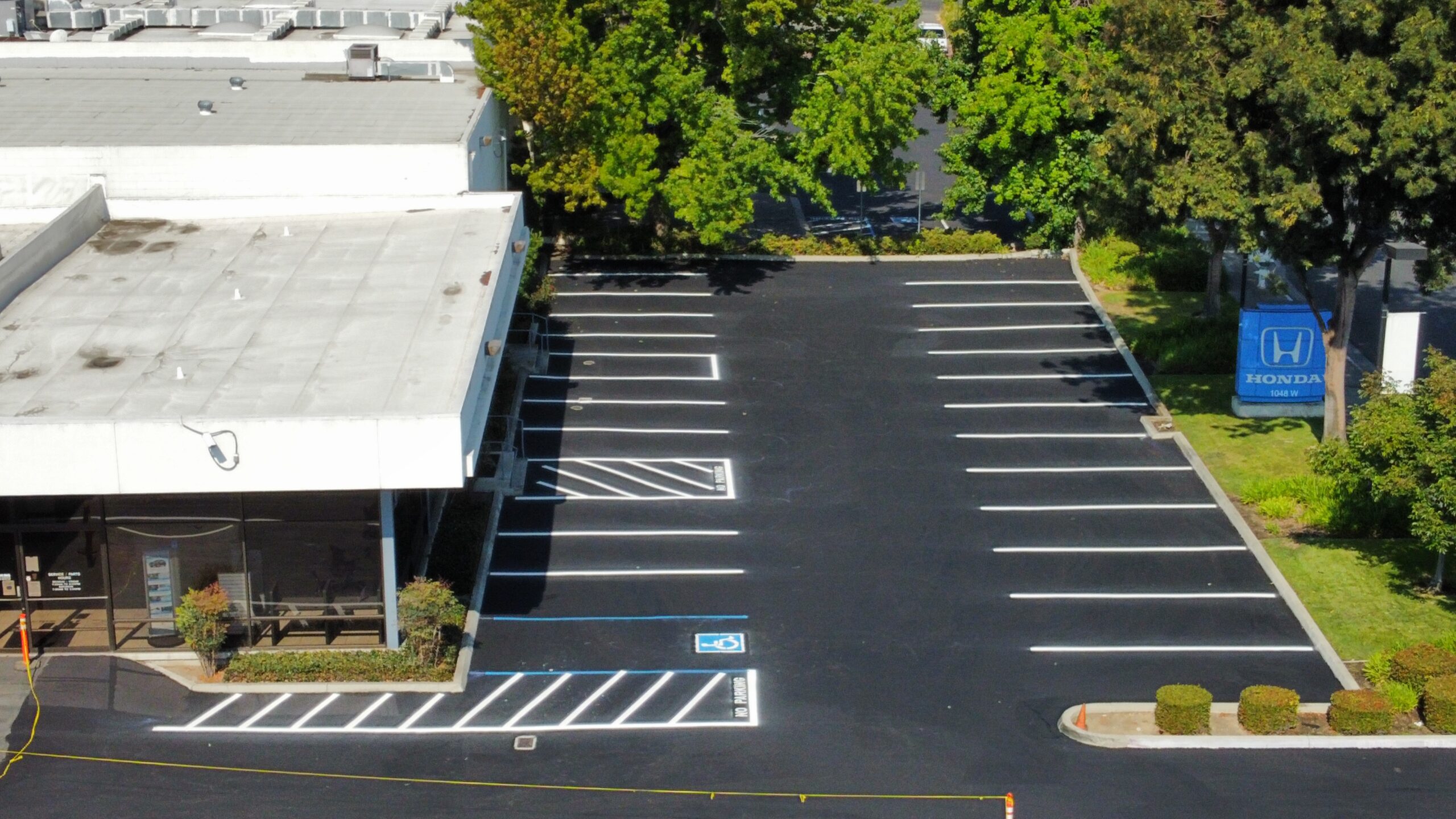
Faded or unclear striping
These conditions increase the likelihood of:
-
Slip-and-fall incidents
-
Vehicle damage claims
-
ADA compliance issues
Many claims don’t come from catastrophic failures —
they come from known conditions that were left unaddressed.
Replacement Is Rarely a Surprise — It’s a Result
Full-depth asphalt replacement is often treated as an unavoidable event.
In reality, it’s usually the result of years of deferred maintenance.
Once the base layer is compromised:
-
Crack sealing is no longer effective
-
Patching becomes temporary
-
Milling and replacement become the only option
At that stage, budgets shift from maintenance to capital expenditure — often unexpectedly.
Preventive Maintenance Preserves Optionality
The biggest advantage of preventive maintenance isn’t just cost savings.
It’s control.
A maintained parking lot gives property managers:
-
Predictable budgeting
-
Flexible scheduling
-
Fewer emergency repairs
-
Better long-term planning
Instead of reacting to failures, you stay ahead of them.
What a Smart Maintenance Strategy Includes
Effective pavement management is not a single service.
It’s a coordinated system.
A strong strategy typically includes:
-
Routine condition assessments
-
Crack sealing to stop water intrusion
-
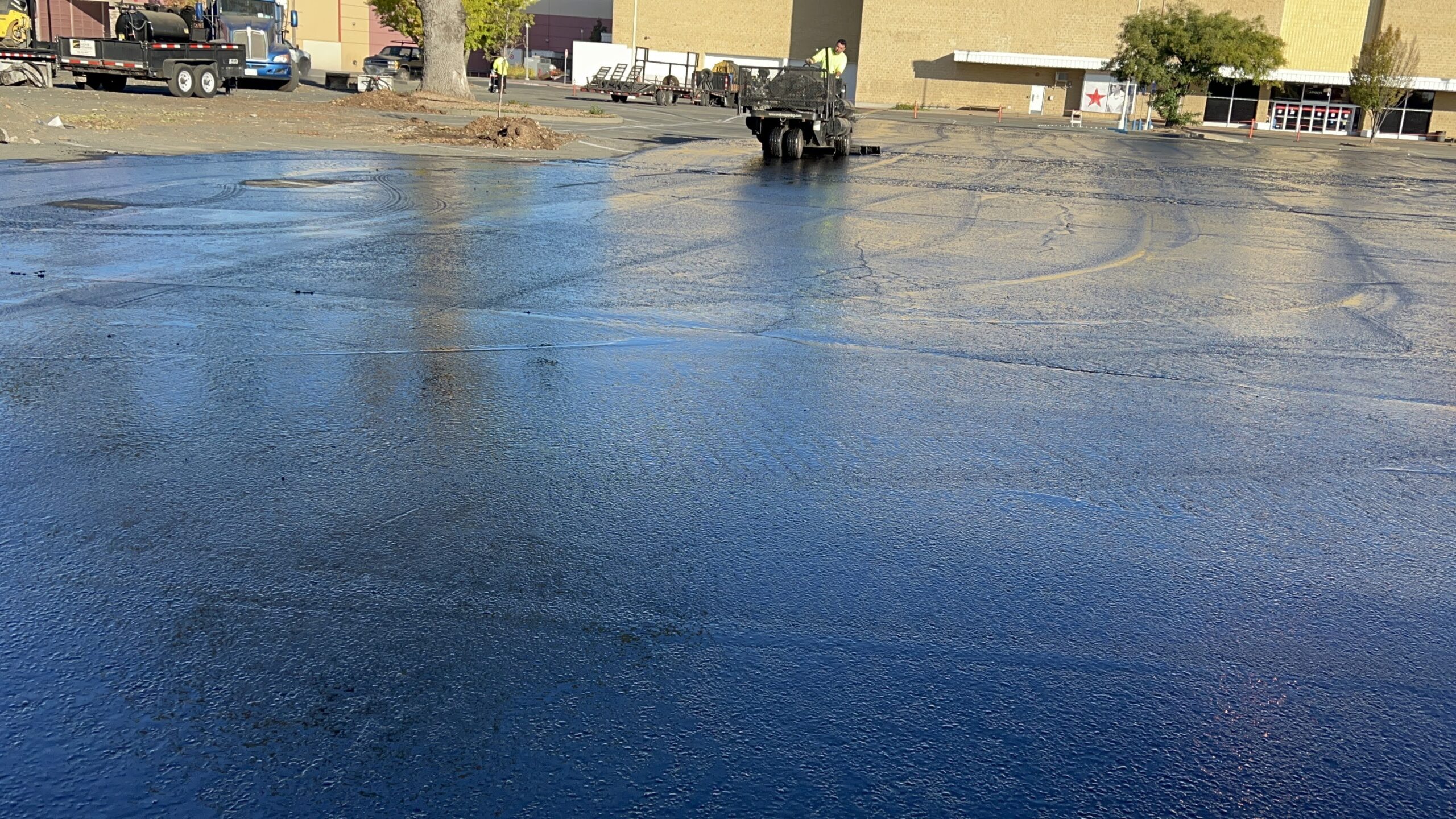
Sealcoating to protect the surface
-
Drainage evaluation
-
Targeted repairs before failure spreads
Each element supports the others — removing one accelerates wear on the rest.
The Financial Reality
Preventive maintenance represents a small percentage of total pavement lifecycle cost.
Yet it delivers:
-
Extended service life
-
Reduced liability exposure
-
Lower long-term operating costs
-
Preserved asset value
In most cases, well-maintained parking lots last nearly twice as long as neglected ones.
The We Love Paving Perspective
At We Love Paving, we approach asphalt as an asset — not a patchwork problem.
Our maintenance programs are designed to:
-
Slow deterioration
-
Stabilize budgets
-
Maintain safety and compliance
-
Extend pavement lifespan
We help property managers replace uncertainty with a clear plan.
Don’t Let “Next Year” Become a Capital Project
If your parking lot still works today, that’s the best time to protect it.
📩 Contact We Love Paving to build a maintenance plan that keeps repairs predictable — not reactive.