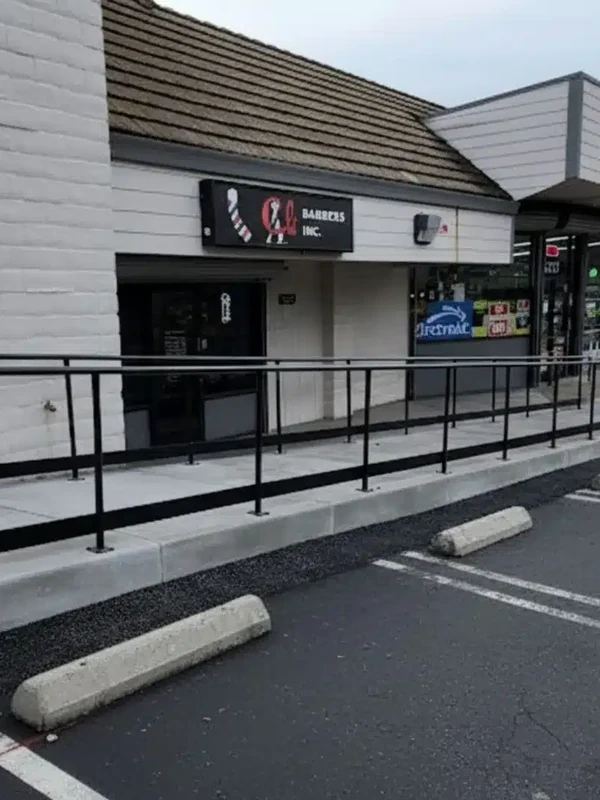
ADA Compliance Checklist California Paving Standards
Access infrastructure is more than a legal mandate; it is a cornerstone of modern civil engineering

INFORMATIONAL RESOURCE
What You’ll Find On This Page
Designing accessible surfaces requires deep knowledge of local topography and state building codes. Integrating rigorous standards ensures each project not only complies with the law but reflects operational excellence.
Cross-Slope Management
Implementation of drainage gradients that do not exceed 2.0%, ensuring stability for wheelchair users without compromising stormwater runoff.
Surface Integrity & Friction
Application of asphalt mixes and sealants that provide a firm, stable, and slip-resistant surface, exceeding required friction coefficients.
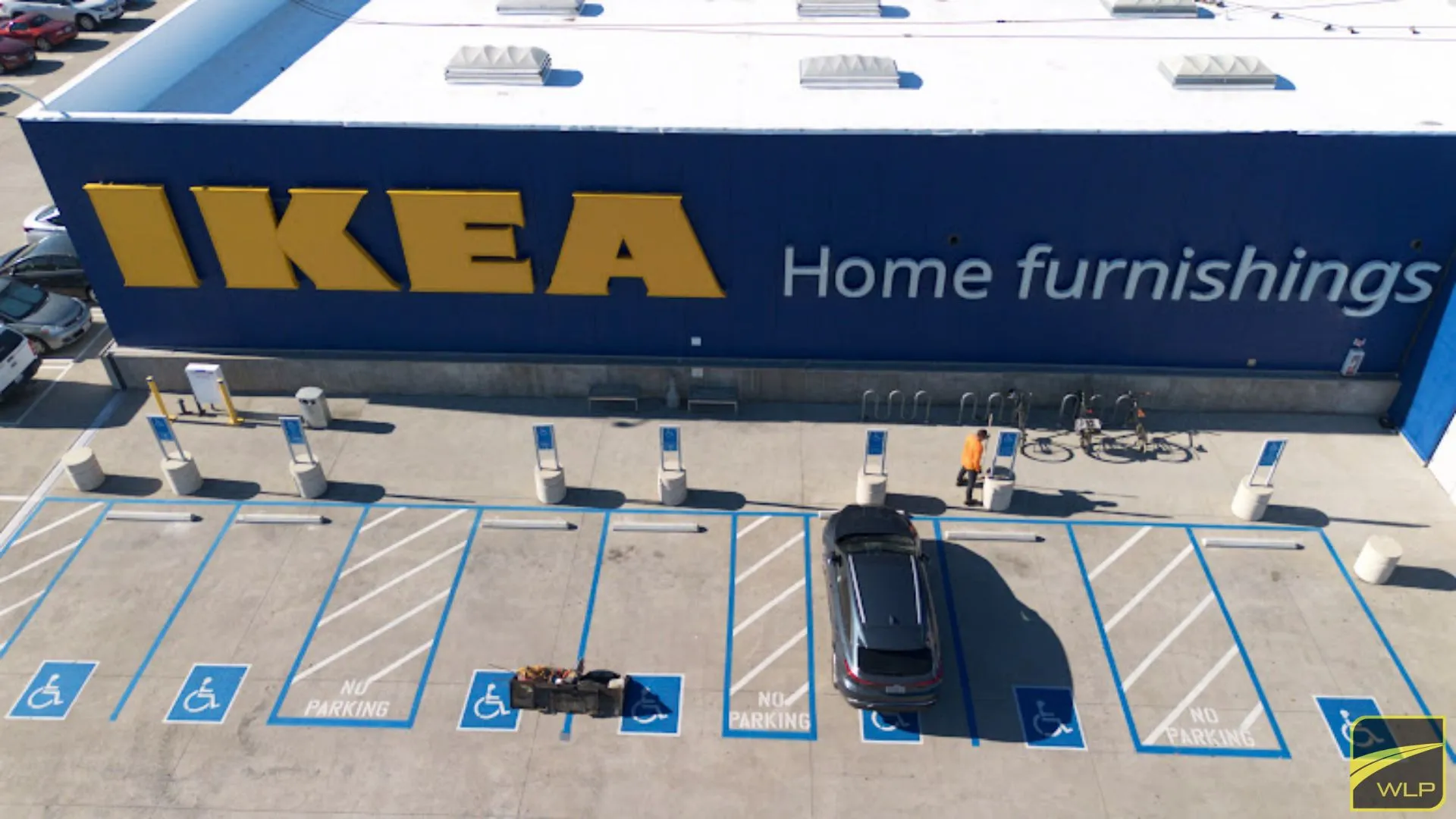
Access Zone Geometry
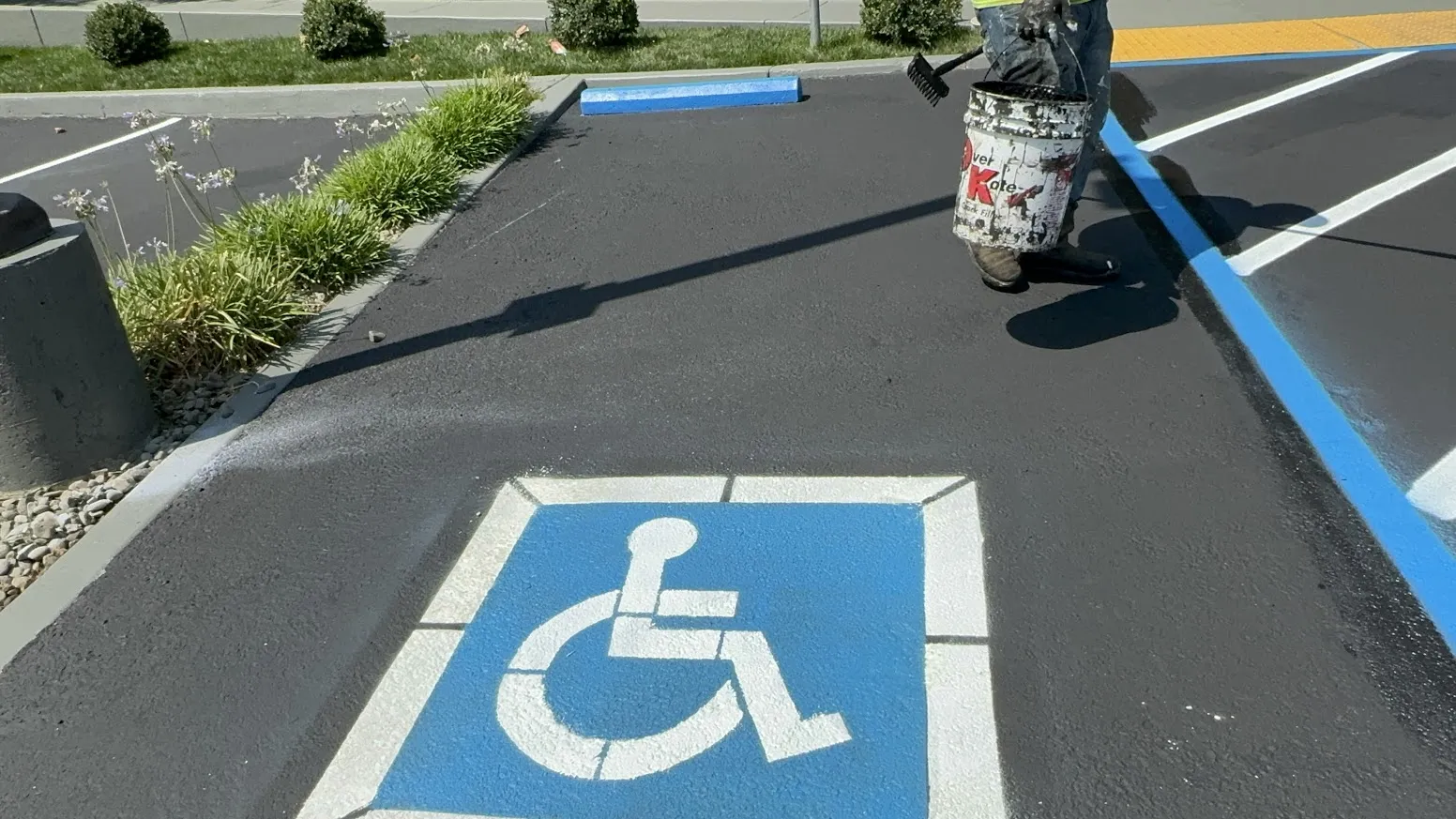
Precision-engineered access aisles and pavement markings with exact dimensions to facilitate safe transfer maneuvers.
Risk Mitigation through Preventive Engineering
Lack of technical compliance often leads to vulnerabilities beyond the physical deterioration of the pavement. Implementing a comprehensive ADA compliance checklist is the first line of defense against accessibility litigation. It is crucial to understand how ADA lawsuits in California have redefined the liability of infrastructure managers in 2026, demanding constant audits of transit areas.
Space Optimization and Advanced Mobility
Efficient parking area design must balance operational capacity with regulatory compliance. Integrating special configurations, such as analyzing what is tandem parking, requires a technical approach to avoid invalidating ADA access routes. Every inch counts when defining Paths of Travel that seamlessly connect entry points with vehicular flow.
Infrastructure Diagnosis and Quality Standards
Deteriorated pavement is, by definition, non-compliant pavement. Cracks, heaving, and faded markings create immediate architectural barriers. Evaluating if your parking lot is breaking the law is a technical process we perform using surface scans and laser leveling analysis, ensuring your infrastructure maintains its technical certification over time.
KEY HIGHLIGHTS
Important Elements to Extract From the Resource
This page is designed to present information in a clear, easy-to-scan format, making it simple to find key insights, understand the content, and take action with confidence.
Path of Travel
There must be at least one continuous, unobstructed route connecting all accessible elements. This includes a minimum width of 36 inches and surfaces free of level changes greater than 1/4 inch.
Detectable Warnings
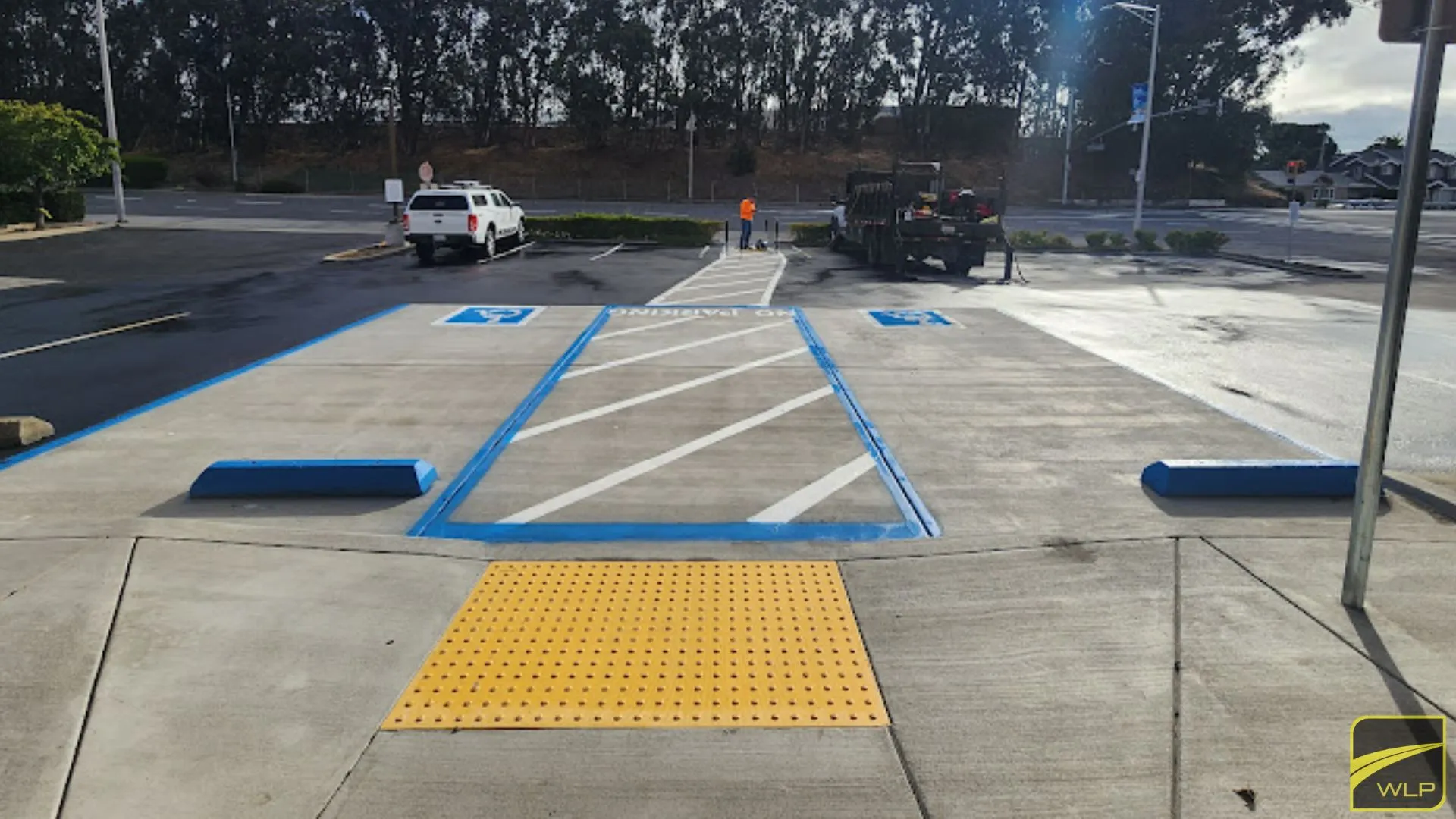
Installing contrasting truncated domes is mandatory at curb ramps and transition zones to alert visually impaired individuals of vehicular traffic.
Loading Zone Leveling
Designated passenger loading areas must have a maximum slope of 1:48 in all directions to allow for the safe deployment of vehicle ramps.
Vertical Signage Maintenance
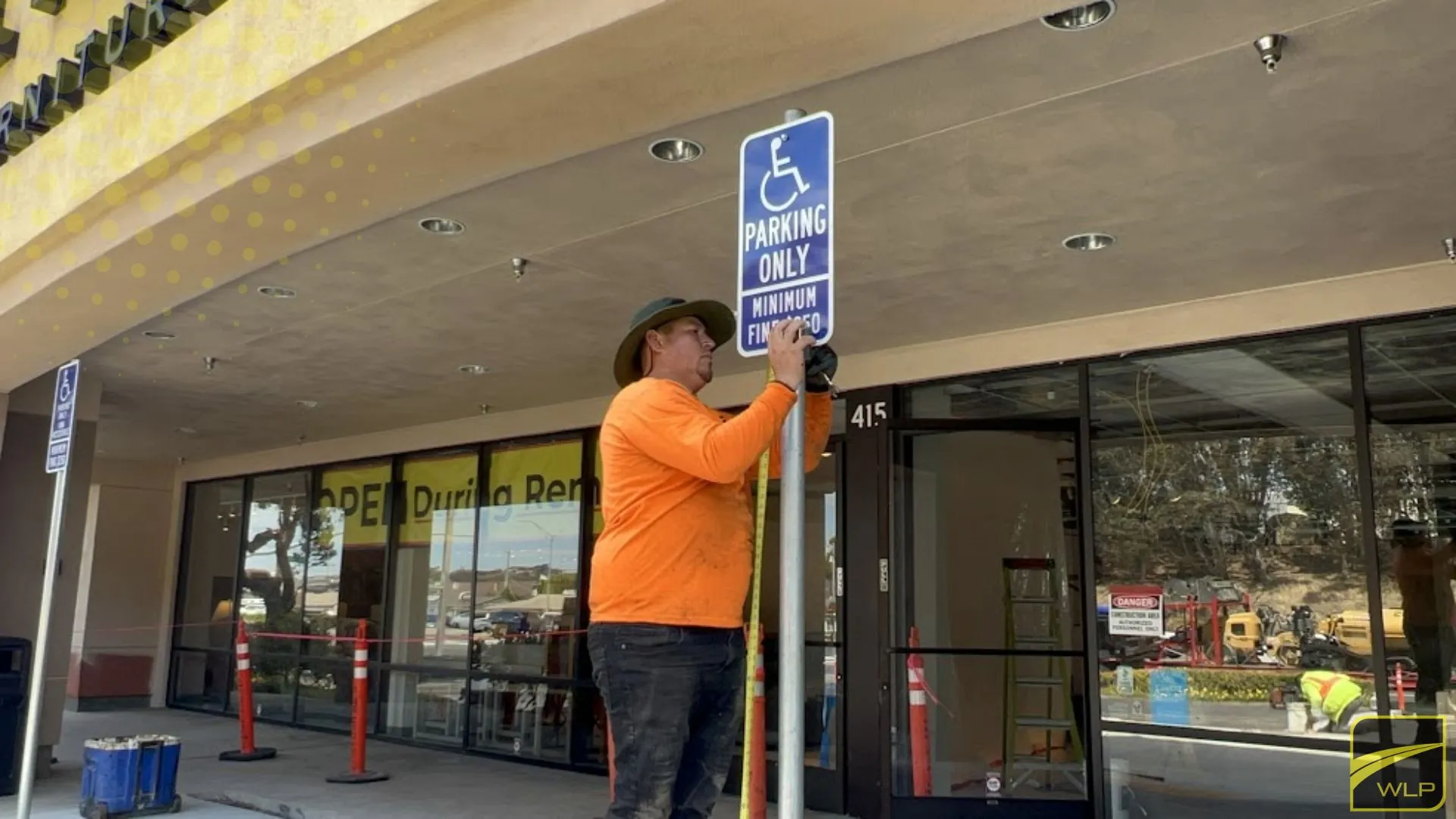
Signs must be mounted at a minimum height of 60 inches from the ground to the bottom of the sign, ensuring constant visibility and compliance with the California Building Code
KEY HIGHLIGHTS
Elevate Your Infrastructure Standards
Don’t let a technical deficiency compromise your liability or user safety. Our engineering team in California is ready to perform a high-precision diagnosis based on the latest ADA standards.

FAQ
Frequently Asked Questions
Quick answers to the questions we hear most about this topic.
The maximum allowable slope for an access ramp is 8.33% (a 1:12 ratio). However, it is essential that the cross-slope does not exceed 2.0% to prevent lateral slipping. In California, the Building Code (Title 24) specifies that any ramp with a rise greater than 6 inches must include handrails on both sides, designed with an ergonomic grip diameter and horizontal extensions at the ends to ensure user safety.
The pavement must be firm, stable, and slip-resistant under all weather conditions. Technically, this means the surface must not yield under the pressure of a wheelchair and must maintain an adequate static coefficient of friction. Using high-quality sealants and immediately repairing cracks larger than half an inch are critical processes to prevent the surface from becoming an architectural barrier according to federal accessibility standards.
Current lawsuits focus on slope precision and the maintenance state of access routes. In 2026, California case law requires owners to maintain active vigilance over level changes caused by root growth or soil settling. A proactive maintenance program, supported by technical audits, is the only effective strategy to mitigate legal risks associated with injuries or denial of access.
A van-accessible space must have a minimum width of 108 inches or, alternatively, 96 inches if combined with a 96-inch wide access aisle. Signage must clearly indicate “Van Accessible.” It is imperative that both the space and the access aisle maintain a level surface with slopes not exceeding 2% in any direction, ensuring hydraulic lifts function without mechanical interference.
Detectable warnings are surfaces with truncated domes that provide a tactile and visual alert. They must be installed at the edge of curb ramps, at pedestrian crossings, and at any point where a pedestrian path of travel crosses a vehicular way without physical separation. In California, color contrast (usually Safety Yellow) is a mandatory technical specification to help visually impaired individuals identify potential hazard zones.
Measurement should be performed using a calibrated digital level at least 24 inches long to obtain precise percentage readings. Measurements should not be taken at isolated points; instead, a surface mapping should be conducted to identify the steepest areas. At We Love Paving, we utilize laser technology to ensure every square foot of asphalt meets both drainage and accessibility specifications simultaneously, eliminating human error in the diagnosis.
READY TO GET STARTED?
Download the complete PDF or request a technical audit with no obligation.