
Comprehensive City Street Maintenance Solutions in California
Maximizing the service life of public infrastructure through advanced pavement engineering and proactive road asset management in California.
Calls may be monitored or recorded for quality assurance and training purposes.

Trusted By Property Managers & National Brands





Why Choose Us For Your Industry?


Pavement Engineering for Public Infrastructure
Municipal street maintenance requires a technical approach that goes beyond simple patching. In California’s dynamic environment, road asset management demands a deep understanding of subgrade and base preparation, critical factors that determine long-term structural integrity. Proper planning not only improves road safety but also optimizes public budgets by preventing catastrophic failures.
Optimize Your Road Infrastructure Today
Looking for a strategic partner for city street maintenance in California? Our technical team is ready to evaluate your public paving needs with precision and professionalism.
Technical Benefits for Municipal and Park Environments
Partnering with specialists in the public sector ensures that compliance and durability standards are strictly exceeded. Key benefits include:
- Extended Life Cycle: Implementation of surface treatments that delay the oxidation of the asphalt binder.
- Safety and Accessibility: Strict adherence to local and state regulations to ensure level and safe surfaces on streets and park trails.
- Urban Sustainability: Use of materials that contribute to the resilience of urban infrastructure.
Experienced Team
Safety First
No Work Stoppage
Guaranteed Results
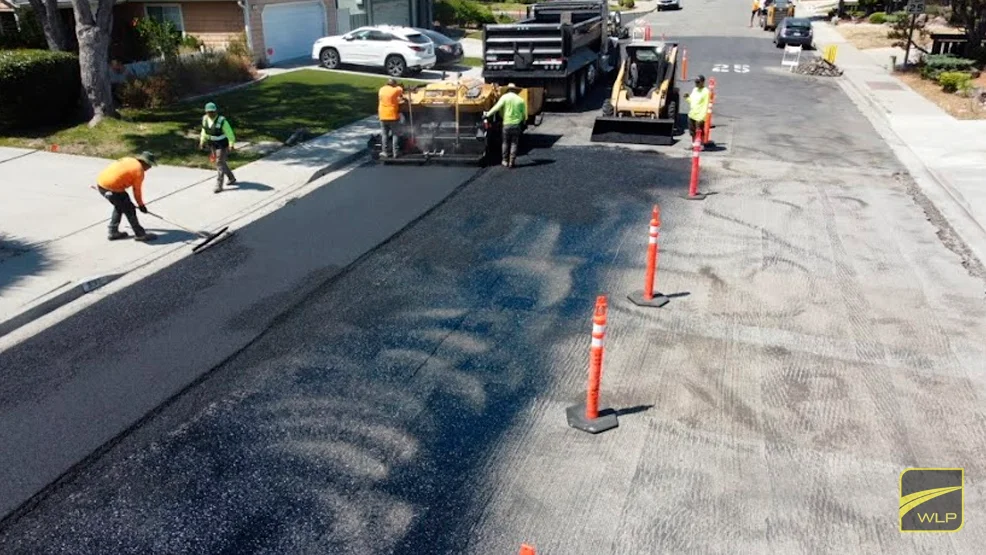
Pavement Preservation and Failure Mitigation
The key to an efficient road network lies in understanding why pavement fails. Factors such as poor drainage and structural fatigue must be addressed with corrective and preventive solutions. The application of technical sealants and high-quality wearing courses ensures that municipal arteries withstand projected traffic volumes without premature degradation.
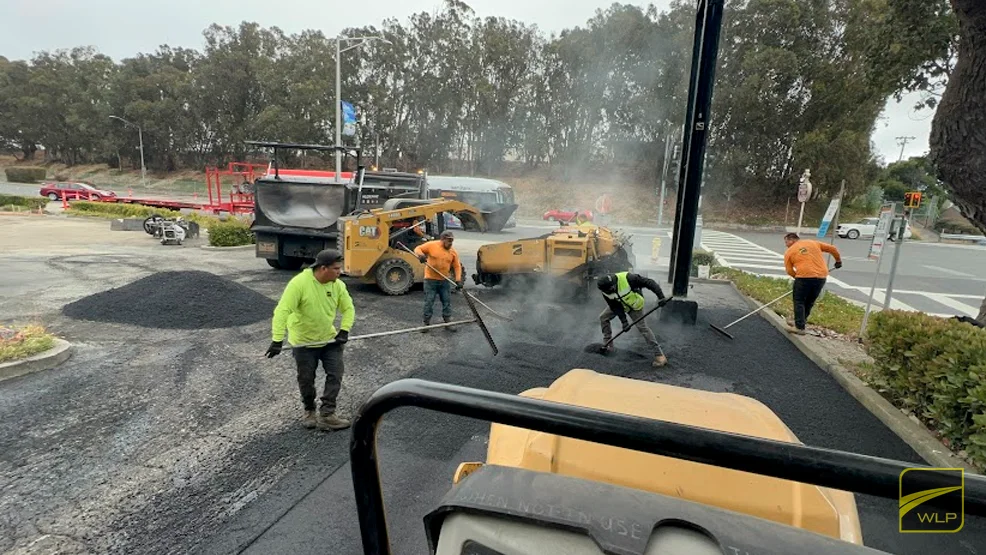
Technical Specifications for Streets and Recreational Areas
Every municipal project, from main avenues to public park routes, requires an asphalt mix designed for its specific use. Selecting the most durable paving solutions is vital to reducing the frequency of maintenance interventions, thereby minimizing citizen inconvenience and road closures.
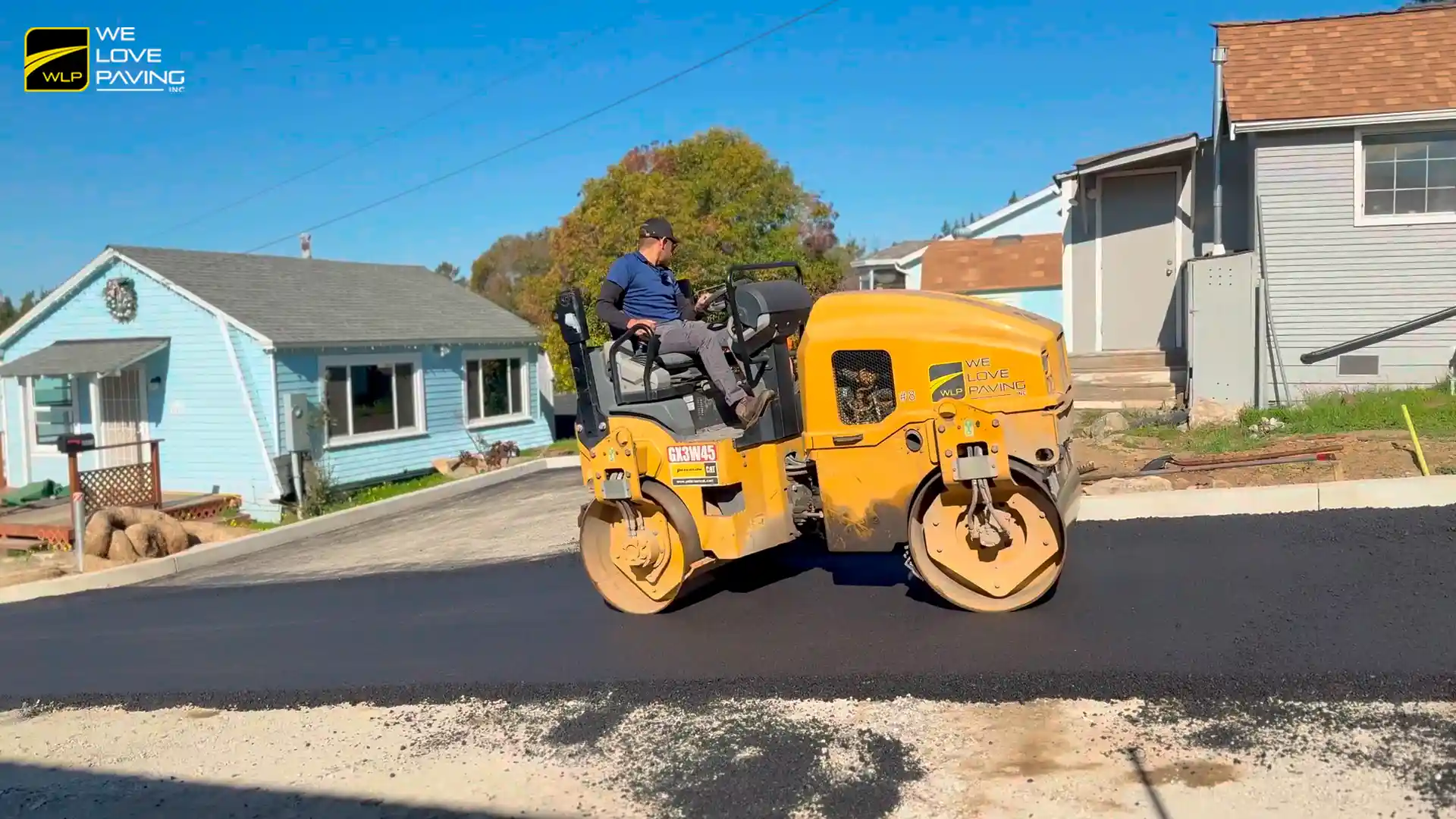
Technical excellence and complete transparency in municipal paving
At We Love Paving, we understand that municipal paving is the backbone of the community. Our methodology combines decades of technical expertise with a transparent and efficient approach. We back every project with The Panda Pledge, our guarantee of quality and transparency in execution that ensures public investment is protected under the highest industry standards, detailed in our guarantee and warranty.
This Is What Our Clients Say About Our Work
Frequently Asked Questions (FAQ)
Got Questions? Find Your Answers Here!!
The most effective method is cyclic preventive maintenance, including crack sealing and surface treatments like slurry seals. This approach stops water infiltration and thermal oxidation. Technically, applying treatments when the Pavement Condition Index (PCI) is still favorable allows extending the asset’s life by 5 to 10 years, avoiding the exponential cost of total base reconstruction.
The subgrade acts as the fundamental support for the structural load; if unstable, the asphalt will fail prematurely. Proper compaction and moisture content management are vital. In road engineering, a poorly prepared base leads to fatigue failures or “alligator cracking,” where the structure cannot distribute traffic loads to the natural soil uniformly.
Hot Mix Asphalt (HMA) with graded aggregates and polymer-modified binders offers the highest resistance to wear and weather variations. Durability depends on the air-void ratio and optimal asphalt content. Using certified materials ensures the surface maintains structural integrity against heavy traffic and typical California urban drainage conditions.
Preventive maintenance in recreational areas ensures user safety and prevents trip hazards from cracks or potholes. It also protects the initial public investment. From a technical standpoint, applying asphalt sealants on low-traffic trails is essential to prevent UV degradation, maintaining binder flexibility and preventing aggregate raveling.
Management is conducted via Traffic Control Plans (TCP) that prioritize safety and minimize closure times through the use of rapid-curing mixes. Technical logistics involve phased execution that allows for partial road openings in reduced timeframes, ensuring the material compaction has reached the minimum density required to support dynamic loads without deformation.
Projects must align with Caltrans standards and local Public Works specifications (Greenbook). These rules dictate everything from material gradation to friction coefficients. Technical compliance ensures the pavement is resilient against local rain cycles and meets ADA accessibility requirements, guaranteeing inclusive and durable infrastructure.
Contact
Start Your Free Proposal
Start your free proposal today. Speak with a paving advisor and find out if your asphalt, concrete, or ADA compliance project qualifies for The Panda Pledge™ long-term protection.
Reply by Next Business Day