How Long Does Asphalt Take to Dry? (2026 Guide)

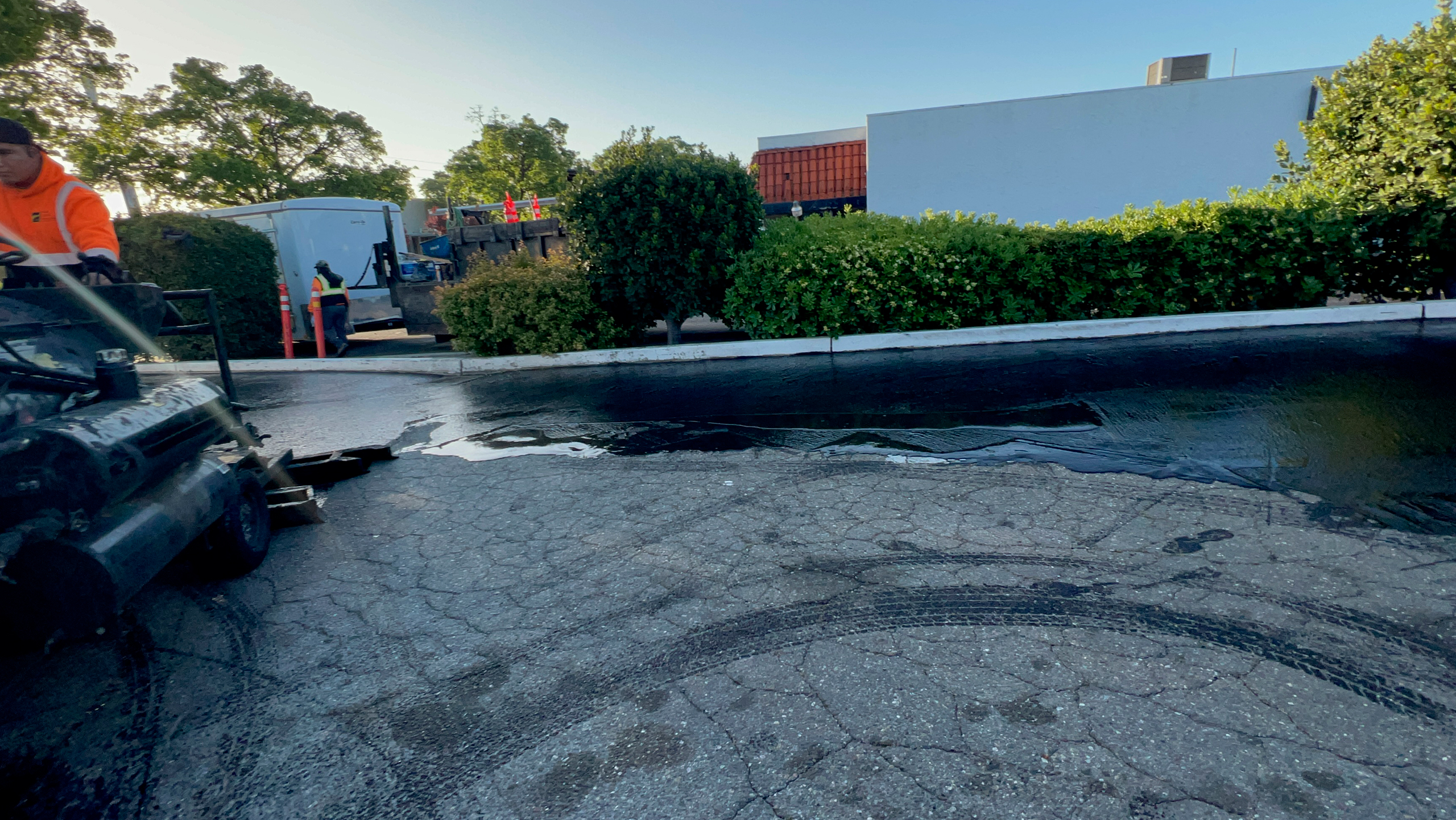
If you’re planning an asphalt project, one of the most common questions is: “How long does asphalt take to dry?”

Here’s the short answer:

  • Initial dry time: 2–4 hours

  • Ready for light traffic: 24 hours

  • Ready for heavy vehicles: 48–72 hours

  • Full cure: 30 days

But drying time depends heavily on weather, thickness, and how the surface will be used. Below is the full breakdown so you can plan your project with zero guesswork.


Drying vs. Curing: What’s the Difference?

Many people confuse drying and curing, but they’re not the same:

Drying (Top Surface Dryness)

This is when the surface becomes firm enough to walk on without leaving marks.
Time: 2–4 hours

Curing (Full Hardening)

This is when the asphalt reaches its full strength and can handle heavy loads.
Time: 24–72 hours for practical use
Up to 30 days for full chemical cure

Understanding this difference is crucial—especially for commercial parking lots and high-traffic properties.


How Weather Affects Drying Time

Weather is the biggest factor in asphalt drying.

Temperature

  • Hot weather (75°F–95°F): Fastest curing

  • Cold weather (below 60°F): Slows the process significantly

  • Very hot weather: Can cause the surface to stay soft longer

Humidity

High humidity delays drying because moisture stays trapped in the air.

Sun Exposure

  • Direct sunlight: Faster drying

  • Shade: Slower and uneven drying

Wind

A light breeze helps release moisture and speeds up drying.


How Asphalt Thickness Changes Drying Time

Not all asphalt jobs are the same thickness. More material = more time.

  • 1.5″ lift: Dries faster (common for overlays)

  • 2″–3″ lifts: Slower (common for new construction)

  • Multiple lifts: Each layer needs time to stabilize

Heavier parking lots or commercial drive lanes always require longer curing periods.


When Can You Walk, Drive, and Park on New Asphalt?

Here are the practical guidelines:

  • Walk on it: After 2–4 hours

  • Drive cars: After 24 hours

  • Park vehicles: After 24–48 hours

  • Heavy trucks / dumpsters / equipment: After 48–72 hours

  • Line striping or sealcoating: Usually after 30 days

Parking too soon can create depressions, scarring, and long-term structural damage.


How to Make Asphalt Dry Faster

You can’t control the weather, but you can avoid delays:

  • Keep all traffic off the surface

  • Avoid watering or washing the area

  • Protect the asphalt from oil or fuel spills

  • Use proper compaction and drainage

  • Don’t apply sealcoat too early

  • Avoid sharp turns from vehicles during the first 48–72 hours


Common Mistakes That Damage Fresh Asphalt

New asphalt is strong—but still vulnerable. Avoid:

  • Parking heavy vehicles too soon

  • Spinning tires while stationary

  • Dragging kickstands, jacks, or equipment

  • Turning wheels aggressively

  • Leaking fluids (oil, diesel, coolant)

These issues cause ruts, grooves, and soft spots that shorten the pavement’s lifespan.


For Property Managers & Commercial Owners

If you manage a commercial property, drying time affects:

  • Traffic flow and tenant access

  • Business hours and customer safety

  • ADA compliance

  • Proper scheduling of line striping and signage

  • Avoiding complaints from tenants and customers

A professional contractor should help you plan closures, communicate timelines, and minimize disruption.


Final Answer: How Long Does Asphalt Take to Dry?

  • Walkable: 2–4 hours

  • Driveable: ~24 hours

  • Heavy traffic: 48–72 hours

  • Fully cured: Up to 30 days

Drying time changes based on weather, thickness, and usage—so always plan ahead.


Need Help Planning an Asphalt Project?

If you want the job done with minimal downtime, correct scheduling, and ADA-compliant results, our team can help.

👉 Request a Free Parking Lot Assessment
We’ll inspect your asphalt, drainage, traffic flow, ADA markings, and give you a clear action plan.

Share

WHO IS FRED?

Fred, Regional Operations Manager, comes from a family of immigrant roots and a story built on sacrifice, discipline, and hard work. Growing up, Fred watched his parents work long hours and weekends to create a better future teaching him the values of perseverance, determination, and doing things the right way every single time.
We Love Paving began with Fred’s father, who started doing what he knew best: paving. Over the years, he built experience alongside respected professionals in the industry, refining his methods and developing a reputation for quality work that speaks for itself. As his clientele grew, so did the vision one built not only on skill, but on integrity and pride in every job.

Posts that might interest you

Seal Coat vs. Slurry Seal: Understanding the Differences and Benefits

Seal Coat vs. Slurry Seal: Understanding the Differences and Benefits

June 13, 2024

When it comes to maintaining and prolonging the life of asphalt pavements, two common treatments often come into play: seal coat and slurry seal. Both methods serve the purpose of protecting and enhancing asphalt surfaces, but they have distinct differences in composition, application, and suitability for various conditions. In this article, we’ll delve deep into

Do You Put Sand or Gravel Under Asphalt Paving? A Guide for Sacramento, California

Do You Put Sand or Gravel Under Asphalt Paving? A Guide for Sacramento, California

June 11, 2024

When it comes to installing asphalt paving in Sacramento, California, one of the most common questions homeowners and builders have is whether to use sand or gravel as a base. Both materials play crucial roles in ensuring a durable, stable, and aesthetically pleasing paved surface. This article explores the importance of using sand and gravel

What is Concreting in Construction? A Focus on Sacramento, California

What is Concreting in Construction? A Focus on Sacramento, California

June 11, 2024

Concreting is a fundamental process in construction, playing a crucial role in creating durable and robust structures. From residential homes to commercial buildings and infrastructure projects, concrete is a versatile and widely used material. In Sacramento, California, concreting is essential for the city’s ongoing growth and development. This article delves into the specifics of concreting

Why Choose Asphalt for Road Construction in San Mateo, California?

Why Choose Asphalt for Road Construction in San Mateo, California?

June 10, 2024

In the picturesque city of San Mateo, California, maintaining and developing infrastructure is vital to support a growing community and enhance the quality of life. When it comes to road construction, asphalt emerges as the material of choice, offering a blend of practicality, sustainability, and performance. This article explores why asphalt is favored in San

The Essential Guide to Road Base Depth in San Mateo, California

The Essential Guide to Road Base Depth in San Mateo, California

June 7, 2024

When it comes to constructing roads, one of the critical factors that influence durability and performance is the depth of the road base. This is particularly important in regions like San Mateo, California, where specific geological and environmental conditions can impact road stability. This article investigates the ideal road base depth for San Mateo, incorporating

An Investigation into Why Paving Slabs Are So Expensive

An Investigation into Why Paving Slabs Are So Expensive

June 6, 2024

Paving slabs, commonly used in patios, walkways, and driveways, are a popular choice for outdoor paving due to their durability and aesthetic appeal. However, one frequently raised concern is their high cost. This investigation explores the factors contributing to the expense of paving slabs, covering material selection, manufacturing processes, transportation, labor, and market dynamics. Understanding

An Investigation into the Two Main Types of Paving: Concrete and Asphalt

An Investigation into the Two Main Types of Paving: Concrete and Asphalt

June 6, 2024

Paving is a crucial aspect of urban development and infrastructure. The choice of paving material significantly impacts the durability, cost, maintenance, and overall aesthetic of roads, driveways, and other paved surfaces. This investigation delves into the two main types of paving: concrete and asphalt. By examining their composition, installation processes, advantages, disadvantages, and applications, we

What is a concrete service?

What is a concrete service?

June 5, 2024

A concrete service typically refers to a service provided by a concrete contractor or company. Concrete services encompass a wide range of offerings related to the installation, repair, and maintenance of concrete structures. These services may include: Concrete Installation This involves pouring and shaping concrete to create various structures such as driveways, sidewalks, foundations, retaining

Unveiling the Power of Concrete: A Masterpiece in Modern Construction

Unveiling the Power of Concrete: A Masterpiece in Modern Construction

June 5, 2024

In the realm of construction, few materials boast the versatility, durability, and sheer impact of concrete. Often regarded as the cornerstone of modern architecture and infrastructure, concrete stands as a testament to human ingenuity and engineering prowess. In this exploration, we delve into the myriad facets of concrete, uncovering its secrets, applications, and enduring significance

Depths for Asphalt Paving and Striping in Sacramento, California: A Comprehensive Guide for Residential Driveways

Depths for Asphalt Paving and Striping in Sacramento, California: A Comprehensive Guide for Residential Driveways

June 4, 2024

When it comes to constructing or renovating your driveway, getting the depth of asphalt paving and striping just right is crucial for longevity, durability, and compliance with local regulations. In this comprehensive guide, we’ll delve into the factors to consider when determining the optimal depths for your driveway in Sacramento, California. Asphalt Paving Depth Local

Previous Next