Beyond the Surface: How We Love Paving Engineers the Full Asphalt Lifecycle

Most paving companies focus only on installation. At We Love Paving, we take it further — engineering every surface with the entire asphalt lifecycle in mind. From soil compaction to preventative maintenance timelines, our work is designed not just to look good, but to last longer, perform better, and reduce total cost of ownership for property managers and municipalities alike.

Here’s how we build for decades — not just deliverables.


Phase 1: Subgrade Engineering & Soil Stabilization

The real strength of an asphalt surface starts where most never look: below the mat.

  • We conduct site-specific soil analysis to determine load-bearing capacity and drainage behavior.

  • Stabilization options include lime-treated subgrade or geo-grid reinforcement in areas with high clay or poor compaction values.

  • Laser grading ensures optimal slope and runoff performance, even before the first ton of asphalt is laid.

Result: A pavement system that resists failure from the ground up.


Phase 2: Material Selection Based on Application Type

Asphalt isn’t one-size-fits-all. WLP tailors every mix based on use case:

  • Type A dense-graded mixes for heavy-load areas like loading docks or fire lanes.

  • Type B/C for general use, optimized for thermal resistance and aging performance.

  • Rubberized or polymer-modified asphalt for areas with extreme temperature fluctuation or flexural needs.

  • All mixes are sourced from Caltrans-approved plants and tested for aggregate gradation, void ratio, and asphalt content.

Result: Every inch of asphalt is designed for its environment and purpose.


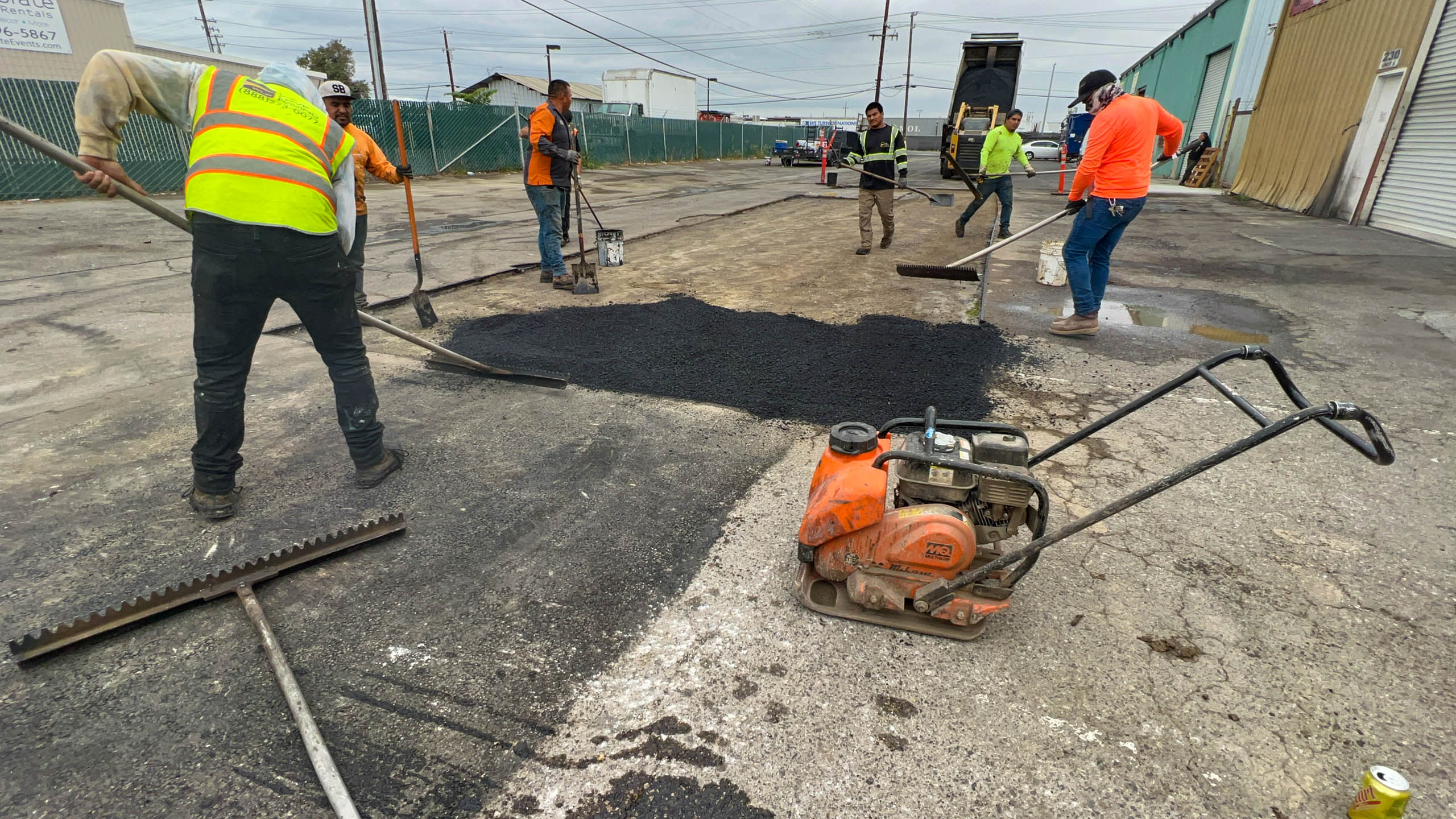
Phase 3: Strategic Compaction & Mat Density Control

The #1 predictor of long-term pavement health? Compaction.

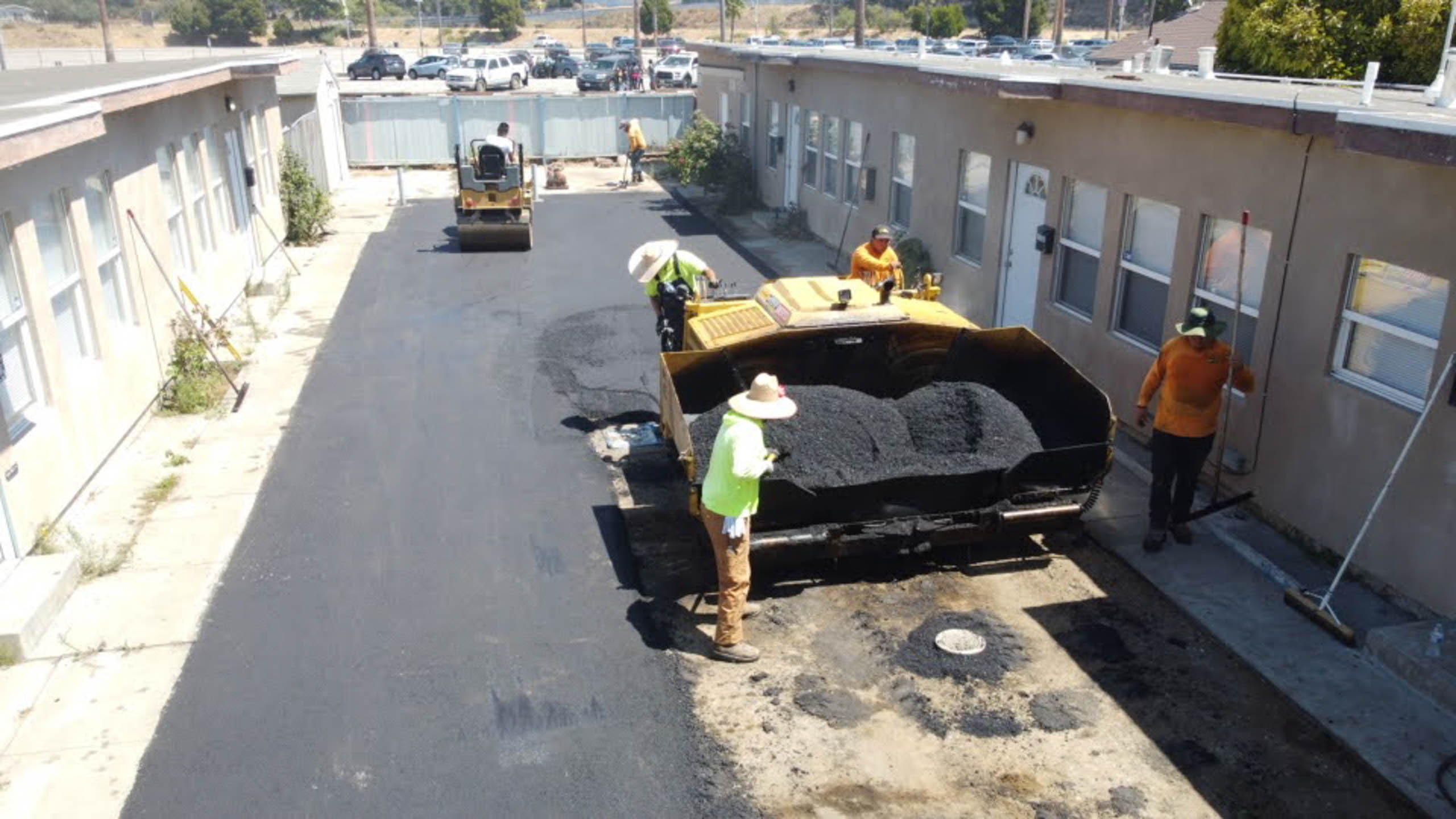
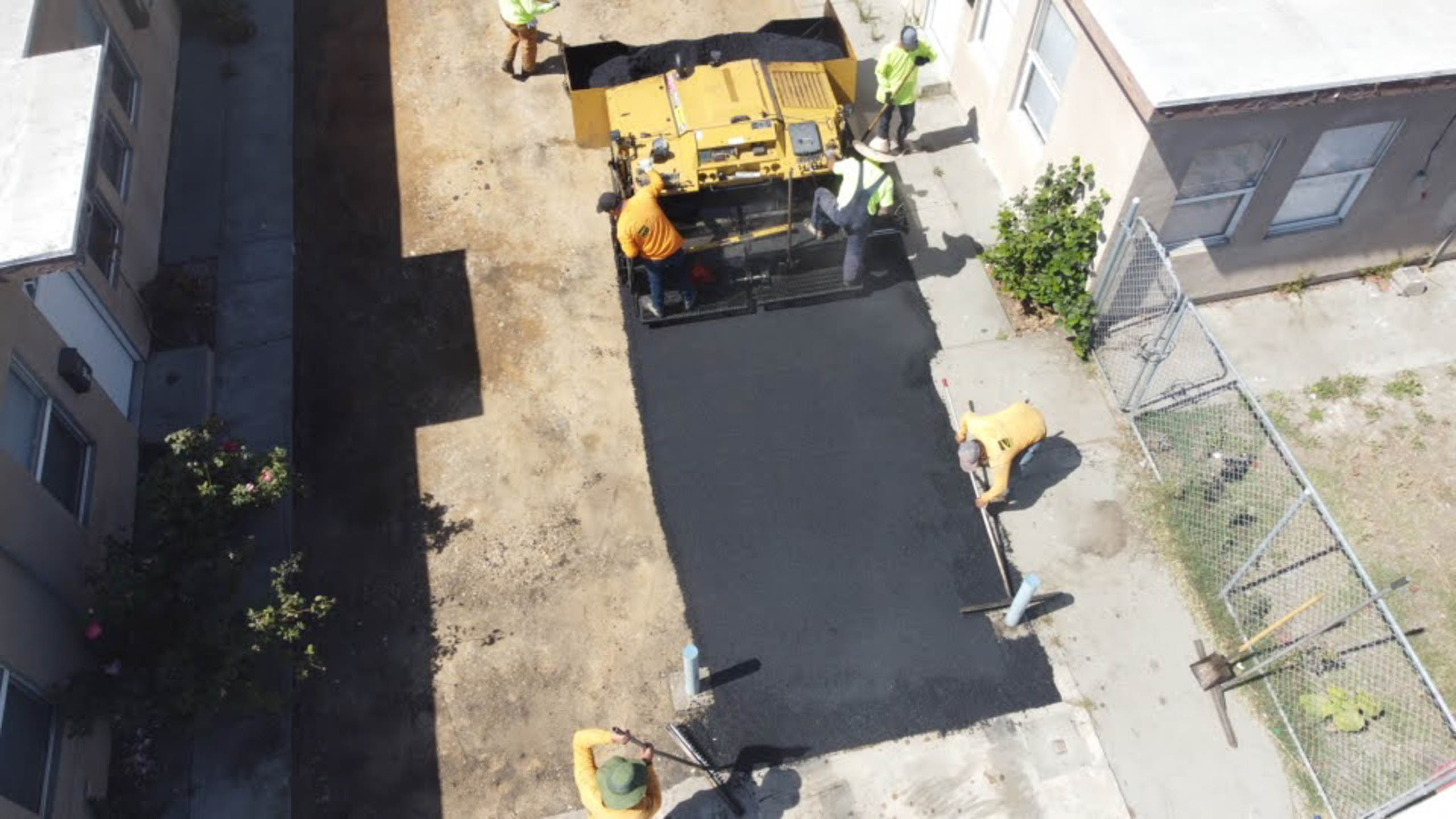
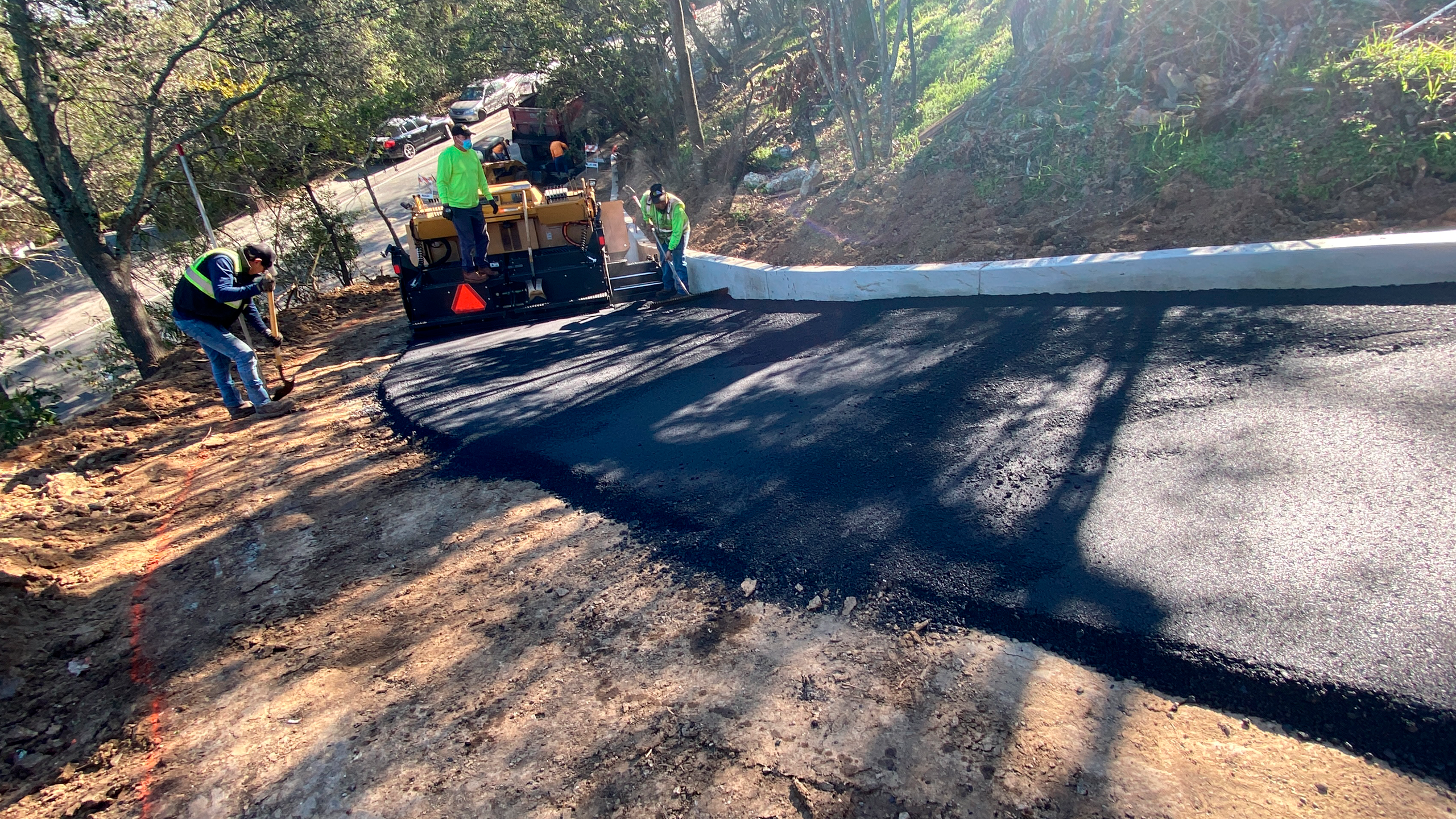
  • Our crews use GPS-calibrated steel drum and pneumatic rollers to meet 92–96% target density.

  • Seam overlaps are minimized with automated paver extensions and infrared reheating when needed.

  • For critical areas (ADA ramps, transitions), we verify compliance with laser slope measurement tools.

Result: A surface that holds shape, resists moisture intrusion, and requires fewer repairs over time.


Phase 4: Proactive Maintenance Planning

We don’t just walk away when the pavement sets.

  • Clients receive a custom 5- to 10-year lifecycle plan, including recommended sealcoating, crack filling, and load inspections.

  • We track UV exposure, traffic loads, and oil intrusion levels to recommend predictive service windows.

  • Maintenance contracts include annual inspections to address issues before they become liabilities.

Result: Up to 35% increase in surface lifespan with reduced total cost of ownership.


Conclusion: Paving with the Future in Mind

At We Love Paving, we don’t just install asphalt — we engineer long-term performance. Every material, compaction pass, and slope calculation is part of a bigger strategy to ensure your pavement performs like infrastructure, not just a surface.

📞 Ready for a smarter approach to paving? Contact WLP for a technical site evaluation and discover the difference that lifecycle-based engineering makes.


Share

WHO IS FRED?

Fred, Regional Operations Manager, comes from a family of immigrant roots and a story built on sacrifice, discipline, and hard work. Growing up, Fred watched his parents work long hours and weekends to create a better future teaching him the values of perseverance, determination, and doing things the right way every single time.
We Love Paving began with Fred’s father, who started doing what he knew best: paving. Over the years, he built experience alongside respected professionals in the industry, refining his methods and developing a reputation for quality work that speaks for itself. As his clientele grew, so did the vision one built not only on skill, but on integrity and pride in every job.

Posts that might interest you

The #1 Asphalt Calculator For Projects

The #1 Asphalt Calculator For Projects

November 21, 2024

How to Tell if Concrete Will Buckle: Expert Tips for California Homeowners

How to Tell if Concrete Will Buckle: Expert Tips for California Homeowners

November 21, 2024

Concrete is known for its strength and durability, but even in the best conditions, cracks can form. In California, the combination of unique environmental factors, soil types, and climate challenges can accelerate this process. Understanding why concrete cracks and how to prevent it is key to maintaining durable surfaces for years to come. Top Causes

Asphalt and What Is the Square Foot Price?

Asphalt and What Is the Square Foot Price?

September 5, 2024

Asphalt Paving FAQs for HOAs: A Comprehensive Guide

Asphalt Paving FAQs for HOAs: A Comprehensive Guide

August 26, 2024

Homeowners’ Associations (HOAs) are responsible for maintaining common areas within communities, ensuring that shared spaces remain safe, attractive, and functional. One of the most significant aspects of this responsibility is the maintenance and management of asphalt-paved areas, such as roads, driveways, and parking lots. Proper asphalt paving and maintenance can extend the lifespan of these

How to Calculate the Price of Asphalt

How to Calculate the Price of Asphalt

August 23, 2024

Asphalt is a popular paving material for driveways, parking lots, and roads due to its durability and cost-effectiveness. If you’re planning to pave an area with asphalt, one of the first things you’ll want to know is how much it will cost. Calculating the price of asphalt involves several factors, including the size of the

What is the Cheapest Form of Paving?

What is the Cheapest Form of Paving?

August 23, 2024

When it comes to enhancing your property with a paved surface, cost is often a major consideration. Whether you’re looking to pave a driveway, patio, walkway, or other outdoor areas, finding a budget-friendly solution that doesn’t compromise on quality is key. While there are numerous paving options available, each with its own set of advantages

Can You Asphalt Over an Old Asphalt Driveway?

Can You Asphalt Over an Old Asphalt Driveway?

August 19, 2024

Yes but only when the existing asphalt is structurally sound. Asphalt overlay works when the base beneath the driveway is stable and damage is limited to surface wear. If deeper issues exist, adding new asphalt will only mask problems temporarily. Asphalt driveways are known for their durability and longevity, but over time, even the best-maintained

What is the Difference Between Road Asphalt and Driveway Asphalt?

What is the Difference Between Road Asphalt and Driveway Asphalt?

August 16, 2024

If your driveway is looking cracked, faded, or worn out, you’re likely looking for the most efficient way to restore it. One of the most common questions property owners ask is: Can you put new asphalt over an old asphalt driveway? The short answer is yes, but it depends heavily on the condition of the

What Should a New Asphalt Driveway Look Like?

What Should a New Asphalt Driveway Look Like?

August 16, 2024

A properly installed asphalt driveway should have a smooth and even surface with no visible bumps, waves, or depressions. The surface should feel consistent when walking or driving over it, without sudden dips or raised areas. When freshly installed, asphalt typically has a deep black, uniform color, indicating the mix was applied and compacted correctly.

Is Asphalt Good for a Patio?

Is Asphalt Good for a Patio?

August 15, 2024

When it comes to creating outdoor spaces like patios, choosing the right material is crucial for both aesthetics and functionality. While materials like concrete, pavers, and natural stone are often the go-to choices, some homeowners and property owners consider asphalt as an alternative. But is asphalt a good option for a patio? In this blog

Previous Next