First Impressions Start in the Parking Lot: How Maintenance Impacts Your Business Image

Before a customer walks through your doors, they’ve already judged your business.

That judgment doesn’t start with your staff, your signage, or your lobby — it starts in the parking lot.

Cracks, potholes, faded lines, and puddles all communicate something powerful, even if it’s unintentional: This property isn’t maintained.”

Whether you manage a retail center, office complex, or industrial site, your parking lot is more than a surface — it’s the first impression of your brand.


The Psychology of the First Impression

Studies in consumer psychology show that people form impressions of a business within the first seven seconds of contact.
In the physical world, that means before they even reach your front door.

A smooth, clean, and well-marked parking lot says:

This company is professional, safe, and detail-oriented.”

Meanwhile, a neglected lot suggests disorganization, lack of care, and poor safety standards — even if the interior of your building is spotless.

The condition of your pavement silently sets the tone for everything else your customers or tenants experience.


Why Maintenance Is About More Than Aesthetics

Pavement maintenance isn’t just about appearance — it’s about function, safety, and value preservation.

When your asphalt begins to crack or your lines fade, you’re not just losing curb appeal — you’re exposing yourself to risks like:

  • Trip and fall accidents

  • Vehicle damage

  • ADA non-compliance

  • Drainage and flooding issues

  • Accelerated pavement deterioration

A clean, well-striped, and properly sealed lot communicates professionalism and responsibility — two traits that every property owner wants their brand to reflect.


The ROI of a Great First Impression

Let’s talk numbers.

Improvement Type Average Cost Business Impact
Sealcoating & Crack Filling $0.15–$1.00 per sq. ft. Extends pavement life 2–3×
Line Striping & ADA Markings $500–$1,000 avg. lot Enhances visibility and compliance
Full Resurfacing $4.00–$6.00 per sq. ft. Restores aesthetics and value
Parking Lot Cleaning $100–$300/month Improves perception and retention

For most businesses, investing in maintenance pays for itself through higher property value, reduced liability, and a stronger customer experience.


Case in Point: The Retail Center Example

A mid-sized retail center in California invested in full sealcoating and re-striping after years of neglect.


Within two weeks of completion:

  • Tenant satisfaction increased noticeably.

  • Foot traffic rose 18% (according to internal counters).

  • The property’s value appraisal increased by over $70,000.

All from an investment of less than $10,000.

Your parking lot is the first ad your customers see — and the one they’ll remember most.


Creating a Pavement Maintenance Plan

To keep your property looking professional year-round:

  • Inspect your lot every 6–12 months.

  • Sealcoat every 2–3 years.

  • Stripe annually or whenever lines fade.

  • Clean debris regularly to prevent staining and drainage issues.

  • Keep a photo log for accountability and budget planning.

Preventive care isn’t just maintenance — it’s brand management.


Turn Your Pavement Into a Statement

At We Love Paving, we help property owners and managers protect their investment and reputation through professional asphalt, concrete, and ADA maintenance services.

Whether you manage one property or fifty, we make sure your first impression is one that inspires confidence.

👉 Schedule your free parking lot inspection today
and see how professional maintenance transforms your property’s image.
Preventive vs. Reactive: The Two Types of Property Managers (Which One Are You?)

There are two types of property managers in the world: Those who stay ahead of pavement problems — and those who chase them.

The difference between the two?
One saves thousands in maintenance and keeps tenants happy.
The other deals with angry calls, emergency repairs, and unexpected invoices.

Which one are you?


The Preventive Property Manager

Preventive property managers treat pavement like an asset — not an afterthought.
They know that asphalt, like any structure, has a life cycle that can be extended dramatically with regular care.

Here’s what preventive managers do differently:

  • Schedule annual inspections to catch small cracks before they spread.

  • Sealcoat every 2–3 years to protect against water, sun, and oxidation.

  • Fix drainage issues early before they erode the base layer.

  • Stripe regularly to keep traffic flow organized and ADA compliant.

  • Keep maintenance logs for budgeting and accountability.

These managers understand that a $500 crack repair today prevents a $20,000 resurfacing tomorrow.

Prevention isn’t an expense — it’s insurance for your property’s lifespan.


The Reactive Property Manager

Reactive property managers have good intentions — but they wait until something looks “bad enough” to fix.
The problem is, by the time pavement looks bad, it’s usually too late.

Cracks have already allowed water to weaken the sub-base.
Potholes are forming. Lines are fading. Liability risks are increasing.

Reactive managers end up paying for:

  • Emergency asphalt repairs.

  • Trip-and-fall claims.

  • Customer complaints and lost trust.

  • Costly replacements instead of affordable maintenance.

A reactive approach always costs more — in money, time, and reputation.


The ROI of Preventive Maintenance

Let’s break it down with real numbers:

Type of Work Timing Average Cost Long-Term Impact
Crack Filling Every year $0.50–$1.00 per linear ft. Prevents base damage
Sealcoating Every 2–3 years $0.15–$0.25 per sq. ft. Doubles pavement lifespan
Pothole Patching Reactive $4.00–$5.00 per sq. ft. Short-term fix only
Full Replacement Reactive $6.00–$8.00 per sq. ft. 100% cost reset

A preventive plan typically costs 70% less over a 10-year period compared to reactive repairs.


Beyond Cost — The Reputation Factor

It’s not just about the numbers.
A well-maintained parking lot tells visitors and tenants:

“This property is safe, professional, and cared for.”

Faded lines, standing water, and cracks send the opposite message — even before someone steps inside the building.

Your pavement is your first impression. Don’t let it say “we don’t care.”


Which Type Are You?

If you’re reading this, you’re already thinking like a preventive manager — someone who wants to protect their investment, reputation, and tenants.

At We Love Paving, we help property managers move from reactive to preventive with tailored maintenance plans that fit your budget and goals.

👉 Schedule your free pavement assessment today
and discover how much you could save by planning ahead.

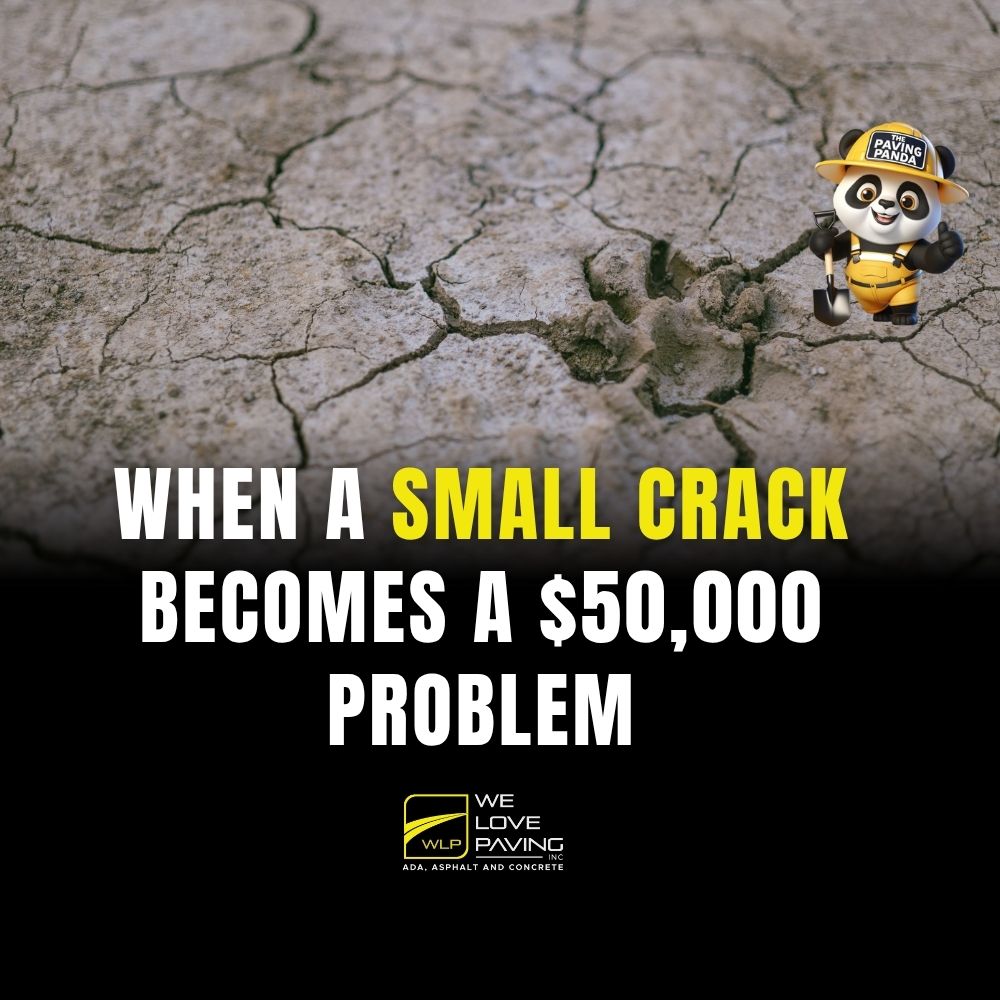
When a Small Crack Becomes a $50,000 Problem

It starts as a thin line across your parking lot. Barely noticeable — until it rains, freezes, and months later, your entire pavement starts to crumble.

Most property managers think of crack filling as cosmetic maintenance. In reality, it’s the first line of defense against structural failure that can turn a $300 fix into a $50,000 replacement.


The Real Cost of Ignoring Cracks

Water is pavement’s worst enemy. Once it seeps into small surface cracks, it weakens the layers underneath — the base and sub-base that keep your pavement stable.

As temperatures change, cracks expand and contract, allowing even more moisture to penetrate. Over time, what began as a hairline fracture evolves into alligator cracking, potholes, and full-depth failure.

Reactive repairs cost 10–20 times more than preventive crack filling. What could’ve been a simple maintenance task becomes a full reconstruction project.


Crack Filling Is Structural, Not Cosmetic

Crack filling restores the pavement’s structural integrity, not just its appearance. By sealing the openings, you prevent water, oil, and debris from infiltrating and compromising the base.

Professional crack filling involves:

  • Cleaning the cracks thoroughly to remove dirt and vegetation.

  • Routing to create uniform edges for better bonding.

  • Applying hot-pour sealant designed to expand and contract with temperature changes.

This process ensures flexibility and durability — keeping your surface sealed and strong year-round.


How Often Should You Fill Cracks?

Preventive maintenance is all about timing.

  • Inspect your pavement once a year, ideally in spring or fall.

  • Crack filling works best when temperatures are between 40°F and 75°F.

  • Pair it with sealcoating every 2–3 years to maximize pavement life.

Regular maintenance can double your pavement’s lifespan — from 8–10 years to as much as 20.


Real-World Math: The $50,000 Lesson

A 50,000-square-foot commercial parking lot in California skipped crack filling for three consecutive years. What started as minor surface cracking evolved into widespread base erosion and structural failure.

The result? Full milling and asphalt overlay were required.
Total cost: $48,700.
Estimated cost of annual crack filling: ~$600/year.

A small oversight turned into a massive repair bill.


How to Stay Ahead

Here’s a simple checklist to protect your pavement investment:

  • Inspect at the beginning and end of each season.

  • Fill cracks larger than ¼ inch immediately.

  • Hire licensed professionals — not general handymen.

  • Keep photo records and maintenance logs.

Being proactive today prevents massive reconstruction tomorrow.


Don’t Let a Small Crack Become Your Biggest Expense

At We Love Paving, we don’t just patch problems — we prevent them.
Our crack filling services are designed to stop damage before it spreads, protecting your property and your budget.

👉 Schedule your free crack inspection today and keep small problems from becoming $50,000 headaches.

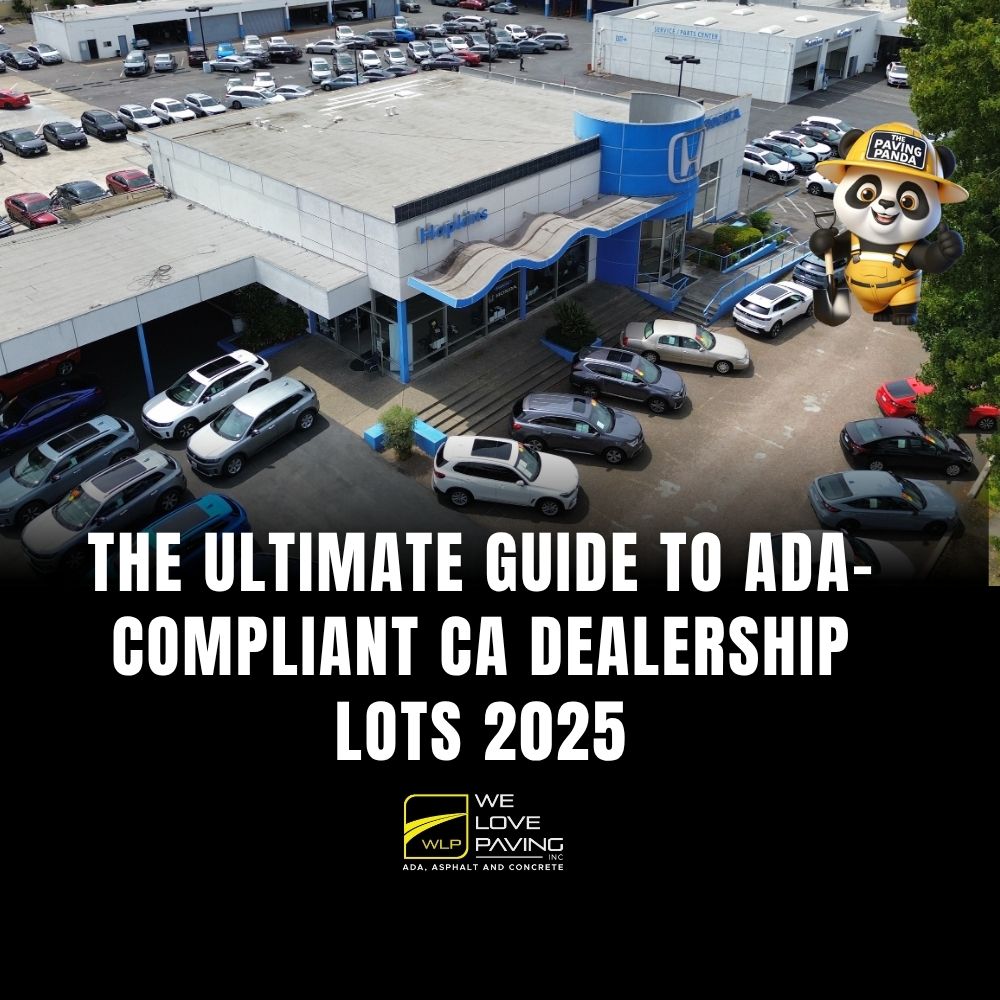
Paving for Automotive Dealerships: Custom Striping and Display Area Enhancements in California

Introduction to Automotive Dealership Paving Needs

California automotive dealerships require specialized paving solutions to enhance curb appeal, ensure safety, and meet strict ADA compliance standards. At We Love Paving, we provide expert automotive paving California services, including dealership parking lot striping, custom asphalt paving for dealerships, and ADA-compliant dealership paving.

Our tailored approach transforms high-traffic lots into functional, attractive spaces for Bay Area and Southern California dealerships.

This guide covers 2025 trends, practical solutions, and how optimized paving boosts your dealership’s ROI.

Why Custom Paving Matters for Dealerships

A well-maintained parking lot is critical for automotive paving California success. Industry studies show 70% of customers judge businesses by exterior appearance, making custom asphalt paving for dealerships a key investment.

A smooth, visually appealing lot with dealership parking lot striping enhances vehicle displays, improves navigation, and ensures ADA-compliant dealership paving. Neglecting maintenance risks safety hazards and fines up to $4,000 per ADA violation in California.

Key Benefits of Custom Paving

  • Curb Appeal: Custom asphalt paving for dealerships creates a polished look to showcase vehicles.

  • Safety: Dealership parking lot striping with high-contrast lines reduces accidents.

  • ADA Compliance: Proper slopes and markings ensure ADA-compliant dealership paving.

  • Durability: Quality materials withstand heavy traffic and California’s coastal weather.

Custom Striping for Functionality and Aesthetics

Effective dealership parking lot striping optimizes space and enhances aesthetics. In 2025, California dealerships are adopting bold custom striping for car lots with reflective paints for visibility in low-light conditions, crucial for evening test drives or foggy Bay Area weather.

We Love Paving uses durable materials to ensure long-lasting California car lot enhancements.

Striping Techniques for Dealerships

  1. Display Area Layouts: Angled custom striping for car lots maximizes vehicle visibility.

  2. ADA Markings: Van-accessible spaces with 8-foot aisles meet ADA-compliant dealership paving standards.

  3. Branded Borders: Incorporate dealership colors for unique California car lot enhancements.

  4. Service Zones: Clear markings for loading areas streamline operations.

Case Example: A San Francisco dealership increased customer dwell time by 15% after implementing custom striping for car lots with reflective white and blue borders, boosting both safety and appeal.

Durable Asphalt Solutions for High-Traffic Lots

Dealership lots face heavy wear from vehicles and customers, making automotive paving California critical.

We Love Paving uses hot-mix asphalt for custom asphalt paving for dealerships, paired with sealcoating to protect against UV rays, oil spills, and rain.

Regular maintenance, like crack sealing every 2-3 years, extends lot life by up to 12 years, reducing car dealership asphalt repair costs.

Asphalt Best Practices

  • Base Preparation: Stable subgrades prevent settling in earthquake-prone areas, key for high-traffic paving solutions California.

  • Sealcoating: Apply every 3-5 years for durable California car lot enhancements.

  • Pothole Repairs: Fast patching minimizes disruptions, supporting car dealership asphalt repair.

Statistic: Maintained asphalt lots cut car dealership asphalt repair costs by 50% over 10 years, per the Asphalt Institute.

ADA Compliance: Avoiding Costly Violations

California’s strict ADA laws demand ADA-compliant dealership paving to avoid fines up to $4,000 per violation. 2025 updates require 2% maximum slopes for accessible spaces and proper truncated domes.

We Love Paving offers audits and retrofits to ensure parking lot safety California and compliance.

ADA Checklist for Dealerships

  • Accessible Spaces: One van-accessible space per 25 spots for ADA-compliant dealership paving.

  • Signage: High-contrast signs at 60 inches above ground.

  • Path of Travel: Slip-resistant walkways from lot to showroom.

2025 Trends in Dealership Paving

Stay ahead with automotive paving California trends for 2025:

  • Eco-Friendly Materials: Permeable asphalt for water conservation, aligning with California car lot enhancements.

  • Smart Striping: Sensor-embedded custom striping for car lots for maintenance alerts.

  • Bold Aesthetics: Mixed-size pavers for premium displays, enhancing California car lot enhancements.

Trend Insight: Permeable asphalt reduces stormwater runoff by 80%, per EPA, ideal for eco-conscious automotive paving California.

Why Choose We Love Paving for Your Dealership

As a family-owned business, We Love Paving delivers automotive paving California with minimal disruptions, using quick-dry materials for dealership parking lot striping and custom asphalt paving for dealerships. Our solutions are tailored to your dealership’s needs, ensuring compliance and appeal.

Elevate your lot with California car lot enhancements. Call (888) 555-1234 or visit www.welovepaving.com for a free quote.

Conclusion

Investing in automotive paving California with custom asphalt paving for dealerships and dealership parking lot striping enhances safety, compliance, and customer appeal. Transform your dealership today.


🧱 How Cracks and Joints Create a Domino Effect in Pavement Deterioration

🚧 Introduction

At first glance, a few small cracks in your parking lot might not seem like a big deal.
But what starts as a hairline fracture can quickly become a chain reaction of damage — a domino effect that destroys your pavement from the inside out.

Understanding how this process happens is key to preventing costly repairs and extending the lifespan of your asphalt.


🔍 1. Every Crack Tells a Story

Cracks and joints form naturally over time due to traffic load, temperature changes, and oxidation.
When ignored, they become entry points for water, oils, and debris — the real enemies of asphalt integrity.
Once water seeps beneath the surface, it weakens the base layer, forming voids and soft spots that eventually lead to potholes and structural failure.

💡 Think of it like a chain reaction: one small crack allows water in → the base erodes → the surface loses support → the crack widens → and new cracks appear.


💦 2. Water Is the True Enemy of Asphalt

Water doesn’t just sit quietly under the surface — it moves.
During rainfall, irrigation, or snowmelt, that trapped moisture expands and contracts with temperature changes, breaking the bond between asphalt layers.
Over time, this creates alligator cracking, rutting, and ultimately complete failure of the pavement section.

That’s why moisture control is the foundation of pavement longevity.


🧰 3. How Preventive Maintenance Stops the Domino Effect

The earlier you intervene, the cheaper and more effective the fix.
Here’s how to stop cracks before they multiply:

  • Crackfilling: Seals the openings that let water penetrate.

  • Sealcoating: Adds a protective layer against UV rays and moisture.

  • Drainage checks: Ensures water flows away from the pavement.

  • Regular inspections: Detect early signs of distress before they spread.

🕒 A single crack repaired in time can prevent a full resurfacing job later — saving thousands of dollars.


🌡️ 4. The Role of Temperature and Traffic

Extreme weather accelerates the domino effect.

  • In hot climates, asphalt expands and becomes more brittle as oils evaporate.

  • In cold regions, water freezes and expands inside cracks, forcing them open further.

  • Heavy vehicle traffic compounds the stress, widening cracks and deepening ruts.

This combination of environmental and mechanical stress is why routine maintenance is non-negotiable for long-term performance.


🧾 5. A Simple Rule: Seal Small, Save Big

It’s always cheaper to fix a crack than to rebuild a road.
Crack sealing and sealcoating cost a fraction of full-depth replacement, yet they can extend pavement life by 5–7 years when applied on time.

At We Love Paving, we help property managers and business owners set up proactive schedules that stop the domino effect before it starts.


⚡ Conclusion

A small crack is never “just a crack.”
It’s the beginning of a chain reaction that can destroy your pavement — unless you stop it early.

Protect your investment with preventive maintenance that keeps water out, structure intact, and your property looking professional year-round.

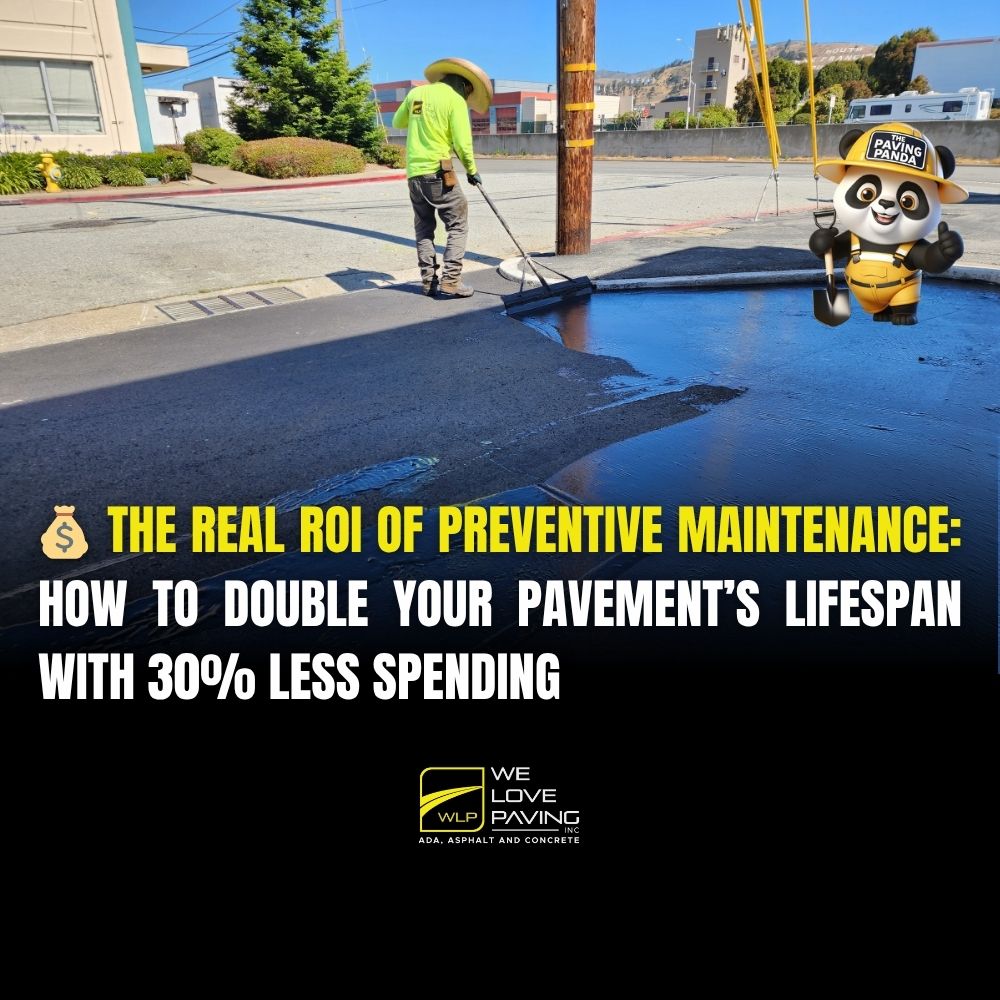
💰 The Real ROI of Preventive Maintenance: How to Double Your Pavement’s Lifespan with 30% Less Spending

🧱 Introduction

Many property managers think waiting until pavement shows visible damage saves money.
In reality, every dollar you delay in preventive maintenance today can cost you five to ten tomorrow.

At We Love Paving, we’ve seen firsthand how timely preventive care can double the lifespan of asphalt surfaces while cutting total expenses by up to 30%.


🚧 1. The Hidden Cost of “Waiting to Repair”

Fixing cracks, potholes, or depressions only after they appear might seem smart — but by then, the damage runs deep.
Water and UV rays have already weakened the sub-base, causing structural failures that can’t be solved with a simple sealcoat.

Reactive maintenance costs 4–6× more than preventive work, and it often disrupts business operations, creates complaints, and damages your property’s reputation.


🕒 2. When to Invest in Preventive Maintenance

The goal is to act before functional deterioration begins, not after.
Key signs your pavement needs preventive attention:

  • Faded or gray color (oxidation).

  • Small linear or transverse cracks.

  • Worn-out pavement markings.

  • Standing water or minor drainage issues.

👉 Addressing these early can extend your pavement’s life up to 2× at a fraction of the cost.


🧾 3. The 30/70 Strategy: Spend Smarter, Not More

An optimized pavement plan allocates budget like this:

  • 30% for prevention: sealcoating, crack filling, surface cleaning, and restriping.

  • 70% for structural upkeep: light overlays or slurry seals every 3–5 years.

This approach avoids full-depth reconstruction (which can cost $8–10 per sq. ft.) and keeps surfaces functional and attractive for over a decade.


🌦️ 4. Factors That Drive ROI

Several variables affect your maintenance ROI:

  • Climate: rainy or high-temperature regions need more frequent sealing.

  • Traffic load: heavy-use areas (shopping centers, warehouses) deteriorate faster.

  • Material quality: low-grade aggregates fail sooner without sealcoating.

  • Maintenance history: consistency drastically reduces long-term costs.

📊 On average, WLP clients who perform preventive maintenance every three years cut cumulative costs by 32% over a 10-year period.


🧰 5. How to Start: Get a Free Pavement Evaluation

Before spending a dollar, request a no-obligation pavement assessment.
Our team inspects thickness, drainage, cracking, and usage to deliver a detailed report with recommendations and savings projections — so you can budget confidently with real data, not assumptions.


⚡ Conclusion

Preventive maintenance isn’t an expense — it’s an investment with measurable returns.
While others wait for pavement to “cry for help,” We Love Paving clients enjoy smoother, safer, and longer-lasting surfaces — with lower total cost of ownership.

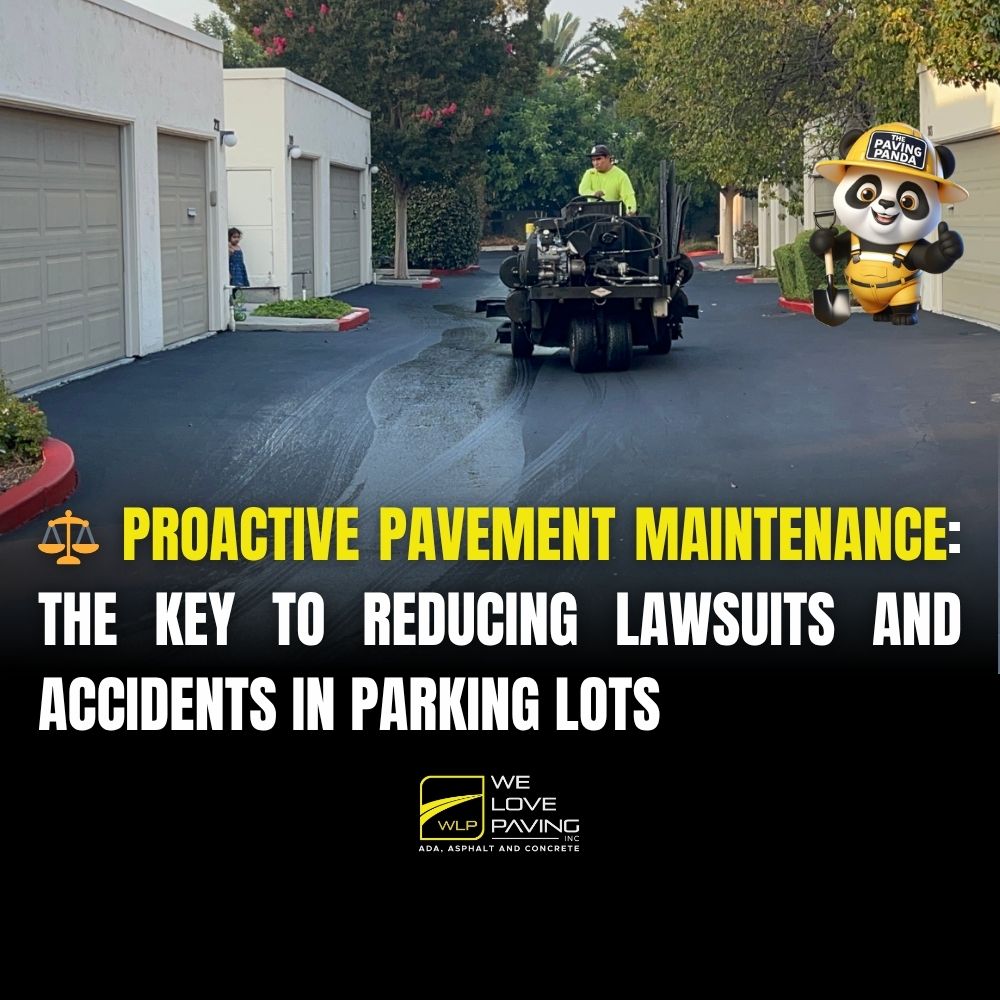
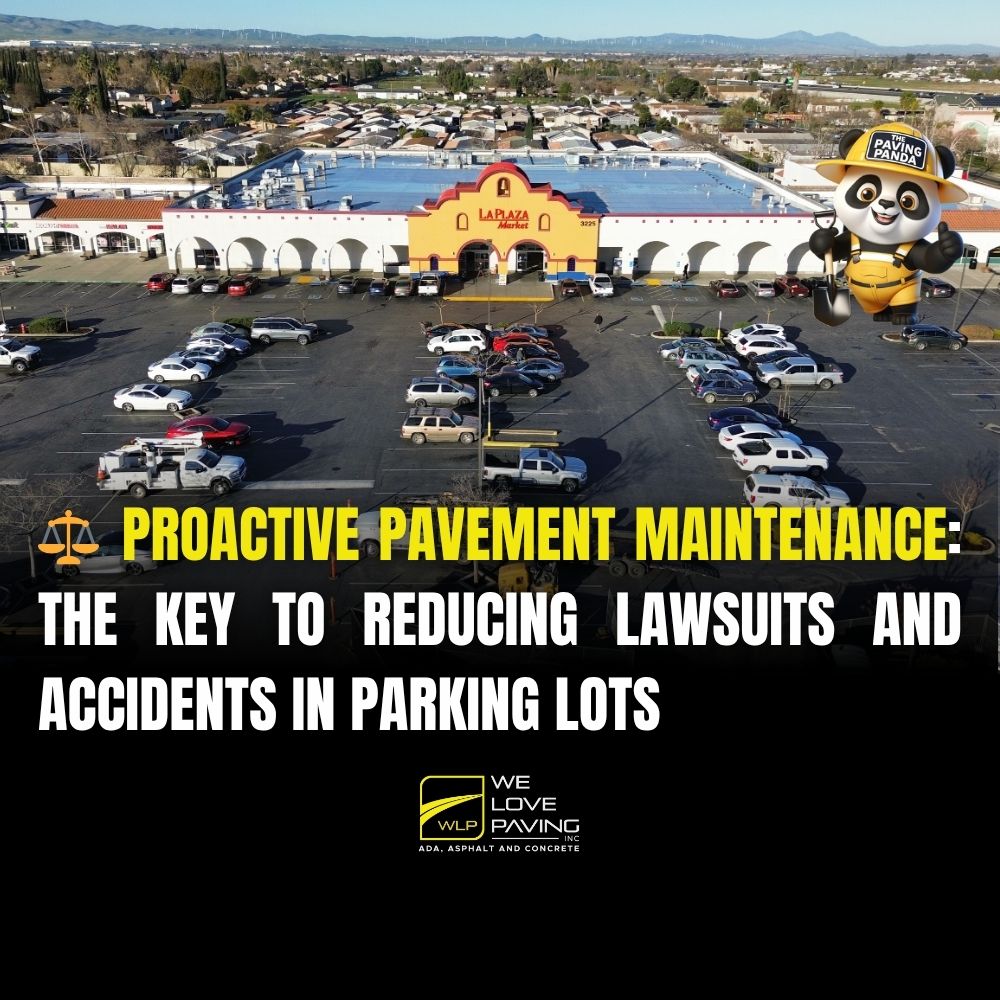
⚖️ Is Your Property Liability-Free? Pavement Hazards That Can Get You Sued

When most property owners think about liability, they picture insurance policies — not parking lots.
But the truth is, asphalt is one of the biggest hidden risks on your property.

Cracks, faded striping, potholes, and uneven surfaces can all lead to injuries, vehicle damage, and ADA violations — and that means lawsuits.

Let’s break down the most common pavement hazards that can get you into legal trouble, and how to prevent them before they happen.


🚶‍♀️ 1. Trip-and-Fall Hazards

Small cracks or dips might seem harmless, but to a tenant or visitor, they’re a trap.

Under premises liability law, property owners are responsible for maintaining safe walking surfaces.
If someone trips over a crack, raised edge, or uneven patch — you could be held liable for:

  • Medical expenses

  • Lost wages

  • Pain and suffering

  • Legal fees

💡 Tip: Schedule regular inspections to catch surface changes before they cause accidents.


🚗 2. Potholes and Vehicle Damage

Potholes don’t just damage cars — they damage your reputation.
Even one complaint on Google or a tenant review about “dangerous parking conditions” can cost you far more than a repair.

Legally, if a pothole causes an accident and the owner was aware of it but failed to fix it, the property can be found negligent.

💡 Tip: Fix potholes as soon as they appear. Patching costs a fraction of what a lawsuit or insurance claim would.


♿ 3. ADA Non-Compliance

The Americans with Disabilities Act (ADA) requires that all public and commercial properties provide accessible parking and routes.

Violations can include:

  • Incorrect slope or ramp angles

  • Faded handicap striping or signage

  • Uneven transitions between ramps and surfaces

  • Missing van-accessible spaces

Fines start around $5,000–$10,000 per violation, not counting the cost of reconstruction and legal defense.

💡 Tip: Re-stripe and re-sign every 2–3 years to maintain compliance.


🌧️ 4. Poor Drainage and Standing Water

Water pooling on your pavement isn’t just inconvenient — it’s a sign of structural failure.
When water doesn’t drain properly, it penetrates the asphalt base, softens it, and causes premature cracking.

Slippery conditions from puddles can also cause slip-and-fall claims, especially in shaded or high-traffic zones.

💡 Tip: Include drainage checks in every maintenance plan. Preventing water damage is much cheaper than rebuilding a collapsed base.


🚧 5. Faded Striping and Lack of Visibility

When lines, crosswalks, and directional arrows fade, accidents become more likely — and so does liability.

Property owners can be held responsible for unsafe traffic flow or poor visibility that leads to collisions, especially in shared parking lots or HOAs.

💡 Tip: Re-stripe every 2–4 years, depending on traffic volume and sun exposure.


🧠 The Legal Bottom Line

Neglecting pavement maintenance isn’t just bad for business — it’s a liability time bomb.
The good news? Every risk listed here is 100% preventable with a proactive maintenance plan.

At We Love Paving, we help property managers and HOAs:
✅ Identify potential ADA and liability hazards
✅ Create affordable preventive maintenance plans
✅ Keep properties safe, compliant, and looking sharp year-round


✅ The Smart Move

Don’t wait until a resident or visitor files a claim.
Start with a free pavement inspection and know exactly where your risks are.

📅 Book your free liability-check inspection today — and keep your property compliant, safe, and lawsuit-proof.

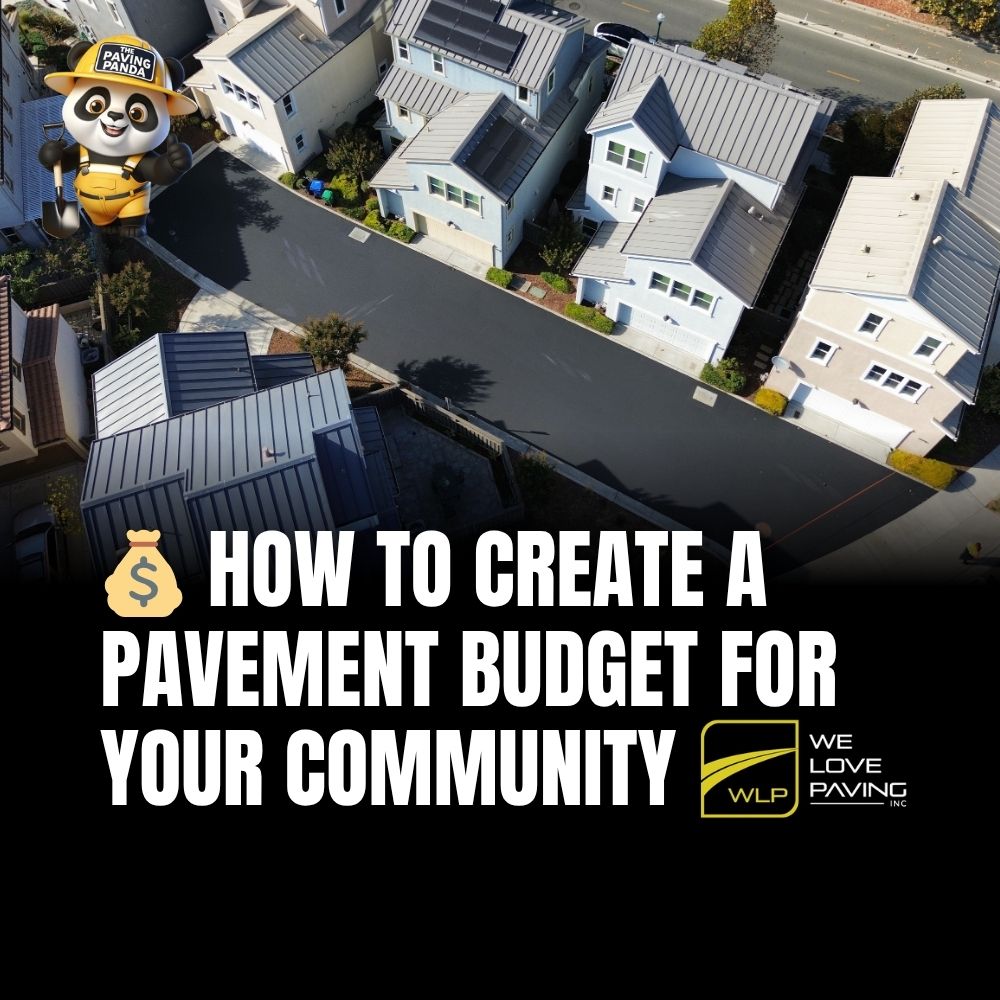
💰 How to Create a Pavement Budget for Your community

Managing a property means managing its pavement — but most budgets forget that asphalt has a life cycle.
The result? Unexpected repairs, frustrated boards, and expensive surprises that could have been avoided with a smart, proactive plan.

This guide walks you through how to build a clear, predictable pavement maintenance budget that keeps your property safe, compliant, and financially healthy year after year.


🧭 Step 1. Know the Lifespan of Your Pavement

Asphalt typically lasts 20–25 years, but only if it’s maintained properly. Without sealcoating, crack filling, and routine inspections, that number can drop by half.

Think of your pavement like a car — it needs oil changes, not engine replacements.
Budgeting for regular “tune-ups” is how you stretch your investment.


📊 Step 2. Understand the 3 Maintenance Categories

When creating a budget, split your costs into these three predictable buckets:

Category Frequency Typical Cost Range Example Tasks
Preventive 1–3 years 💲 Crack filling, sealcoating
Corrective 5–10 years 💲💲💲 Patching, resurfacing
Reconstructive 15–25 years 💲💲💲💲 Full removal and repaving

💡 Rule of thumb: $1 spent on prevention saves $5–$10 in reconstruction.


🧱 Step 3. Schedule Maintenance in Cycles

A well-planned HOA or commercial property divides pavement areas into zones and rotates work each year.

Example plan:

  • Year 1: Crack fill & sealcoat front lot

  • Year 2: Repair high-traffic drive lanes

  • Year 3: Refresh striping & signage for ADA compliance

  • Year 4: Repeat the cycle

This approach keeps surfaces fresh, budgets predictable, and operations smooth.


🧾 Step 4. Get Real Numbers From a Contractor Who Thinks Long-Term

Don’t rely on one-off quotes. Ask for a multi-year lifecycle estimate from a licensed paving contractor.
A good partner will:

  • Inspect your pavement condition (oxidation, drainage, base health)

  • Map zones by priority level

  • Recommend a maintenance calendar

  • Provide projected costs for 3, 5, and 10 years

That’s how you move from reactive spending to planned investment.


📈 Step 5. Present It Like a Pro to Your Board or Stakeholders

When pitching a maintenance budget, focus on:

  • Cost avoidance: “Every $1 in prevention saves $10 later.”

  • Resident experience: “Less disruption, safer surfaces.”

  • Asset value: “A maintained lot increases property value.”

  • Compliance: “We avoid ADA fines and insurance claims.”

You’re not just asking for funding — you’re protecting the community’s investment.


✅ Step 6. Reassess Annually

Budgets aren’t static. Each year, review:

  • Pavement condition changes

  • Traffic patterns and usage

  • Upcoming capital projects

  • Updated material and labor costs

Then adjust your budget accordingly. Consistency is what makes lifecycle planning actually work.


🚧 The Smart Move

If your property hasn’t had a professional pavement assessment in the last 12 months, start there.

At We Love Paving, we help HOA boards and property managers build predictable, cost-effective maintenance plansthat extend pavement life and prevent budget shocks.

📅 Schedule your free pavement assessment today and take the first step toward smarter budgeting.

Lifecycle Costing: The Smart Way to Budget for Asphalt Maintenance

When it comes to pavement maintenance, the biggest mistake property managers and HOA boards make isn’t ignoring the asphalt — it’s budgeting the wrong way.

Most budgets focus on reacting to damage instead of preventing it. And that single habit can multiply your long-term costs by 5 to 10 times.

Let’s break down how lifecycle costing helps you protect your budget — and your parking lot — year after year.


🧱 What Is Lifecycle Costing?

Lifecycle costing is the process of planning maintenance and repairs across the entire lifespan of your pavement, not just reacting when it fails.

It’s like routine checkups for your pavement: small, scheduled interventions that save you from major surgeries later.

A typical asphalt surface lasts 20–25 years — if it’s maintained on schedule. Without regular sealcoating and crack filling, that lifespan can drop by half.

📉 The Cost Curve: Preventive vs. Corrective Work

Here’s what the math says:

Type of Work Frequency Cost Impact What Happens If You Skip It
Crack Filling Every 1–2 years 💲 (Lowest cost) Water seeps in, cracks widen
Sealcoating Every 3–5 years 💲💲 Oxidation & surface wear accelerate
Patching & Overlay Every 8–12 years 💲💲💲 Structural damage begins
Full Replacement 15–20+ years 💲💲💲💲💲 Complete failure of pavement

💡 Rule of Thumb:
$1 spent on preventive maintenance saves $5–$10 in future repairs.


🔍 How to Build a Smarter Maintenance Budget

  1. Start with a Pavement Assessment – Have your surface professionally inspected for cracks, drainage, and oxidation.

  2. Create a 5–10 Year Plan – Spread out smaller, predictable expenses instead of facing one major rebuild.

  3. Combine Services Strategically – Crack fill + sealcoat cycles extend life significantly when done together.

  4. Track Aging by Zone – Divide your property into sections with separate maintenance timelines.

  5. Partner with a Contractor Who Thinks Long-Term – At We Love Paving, we don’t just fix — we forecast.


📈 Real Example: The $1 vs $10 Lesson

A property in California skipped crack filling for four years to “save budget.”
Result: cracks widened, water reached the base layer, and the pavement failed.

  • Preventive plan would’ve cost: $7,500 total.

  • Reactive overlay and patching: $68,000.

That’s the price of postponing maintenance.


🧠 Why Boards and Property Managers Love Lifecycle Planning

  • Predictable Budgets – Know what’s coming, avoid surprise expenses.

  • Longer Pavement Lifespan – Each preventive cycle adds 3–7 years.

  • Less Disruption – No emergency repairs or blocked access.

  • Professional Credibility – You look informed and proactive to your board or residents.

Before repaving, make sure you understand what you should lay under asphalt


✅ The Smart Move: Get a Lifecycle Maintenance Plan

If your pavement hasn’t been inspected in the last 12 months, you’re already behind the curve.
Our team can create a custom lifecycle plan for your property — free of charge.

📅 Book your free assessment today and protect your pavement (and your budget) before the next rainy season.