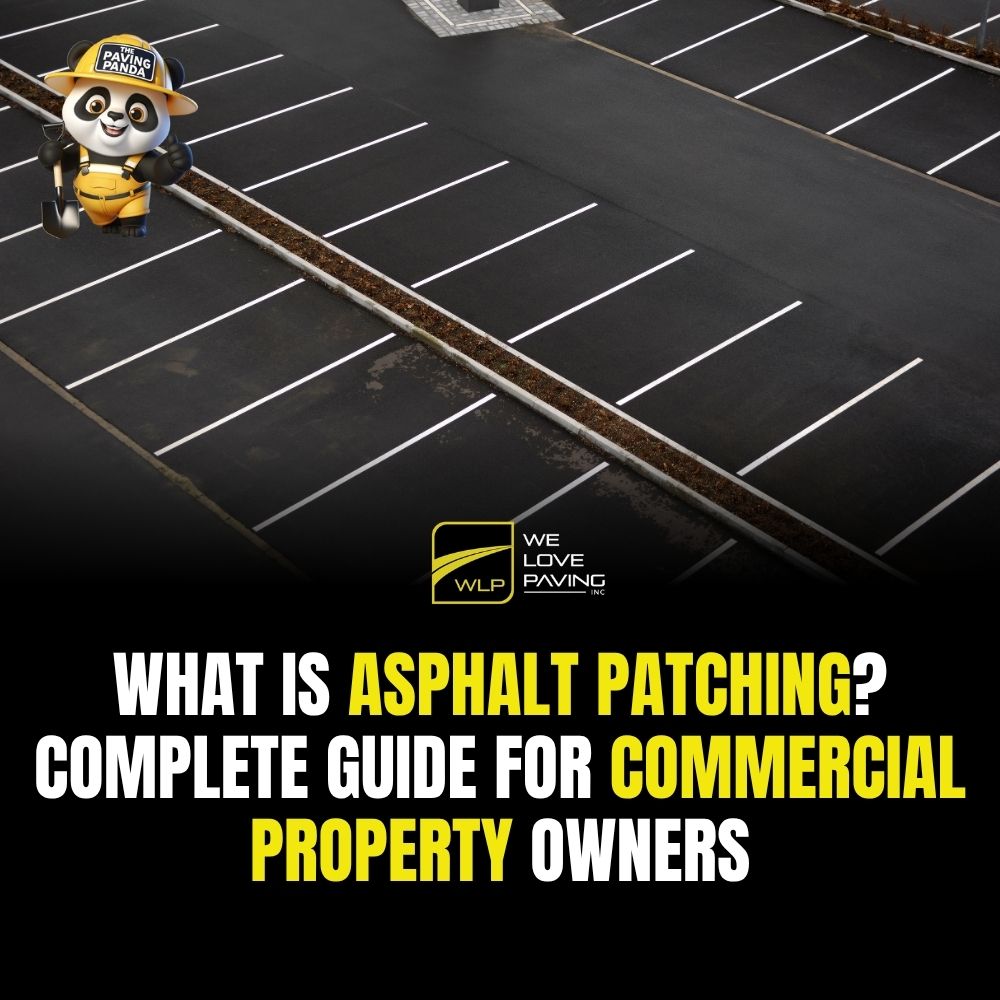
What Is Asphalt Patching? Complete Guide for Commercial Property Owners

What Is Asphalt Patching?

Asphalt patching is one of the most effective ways to repair damaged pavement without replacing the entire surface. It involves removing the deteriorated section of asphalt and replacing it with new material, restoring the integrity and safety of the pavement.

Whether you manage a commercial parking lot, HOA, or municipal property, patching is an essential maintenance step that prevents costly replacements later.

Ignoring small cracks or potholes allows water to seep beneath the surface, weakening the base and causing larger failures.
By patching early, you:

  • Prevent water infiltration and structural damage

  • Extend the life of your asphalt pavement

  • Improve safety and appearance

  • Save money on future repairs

At We Love Paving, we help property managers and facility owners protect their investment through high-quality asphalt patching and resurfacing across the Bay Area and Sacramento.


Common Types of Asphalt Patching

1. Surface Patching

This method repairs shallow defects by applying new asphalt directly over the existing surface.
✅ Ideal for: minor depressions and surface cracks.
⚠️ Lifespan: temporary (6–12 months).

2. Remove & Replace (Full-Depth Patching)

The damaged section is saw-cut, excavated to the base, and replaced with new hot-mix asphalt.
✅ Ideal for: potholes, severe cracking, and base failures.
💪 Lifespan: 5–10 years.

3. Infrared Asphalt Repair

Uses infrared heat to blend new asphalt with the existing surface for a seamless finish.
✅ Ideal for: localized damage and cold-weather repairs.
🔥 Benefits: faster, cost-efficient, and eco-friendly.

4. Skin Patching

Applies a thin layer of asphalt to smooth surface irregularities.
✅ Ideal for: short-term fixes before resurfacing or sealcoating.


How Much Does Asphalt Patching Cost?

The cost depends on the size, depth, and location of the repair. On average:

  • Small patches (1–2 sq ft): $150–$250 each

  • Medium patches (3–6 sq ft): $300–$600 each

  • Larger sections (>10 sq ft): $5–$10 per sq ft

💡 Tip: Performing annual inspections and addressing minor patches early can cut your long-term paving costs by up to 40%.


Best Time of Year for Asphalt Patching in California

Spring and early summer are optimal for asphalt patching in California, thanks to dry weather and stable temperatures.
However, infrared repairs allow WLP to perform high-quality patches even during colder months.


How Asphalt Patching Supports ADA Compliance

Cracked or uneven pavement can cause accessibility issues and potential ADA violations.
By maintaining smooth surfaces and level transitions, asphalt patching keeps your property safe and compliant with ADA accessibility standards.


When to Call We Love Paving

You should schedule a professional inspection if you notice:

  • Potholes or depressions

  • Uneven surfaces or standing water

  • Alligator cracking

  • Areas that crumble under traffic

We’ll assess the damage, recommend the right repair method, and deliver a long-lasting solution.


Why Choose We Love Paving

  • Local California experts with decades of experience

  • Commercial-grade materials and equipment

  • ADA-compliant repairs and detailed site reports

  • Fast turnaround and guaranteed quality


Get a Free Asphalt Inspection

If you’re seeing cracks, potholes, or fading asphalt, don’t wait until it becomes a costly reconstruction.
👉 Contact We Love Paving today for a free on-site inspection and quote.
We proudly serve Sacramento, the Bay Area, and surrounding cities with quality you can see and trust.
Asphalt Backyard Ideas: Affordable, Durable, and Low-Maintenance Outdoor Design

What Is an Asphalt Backyard?

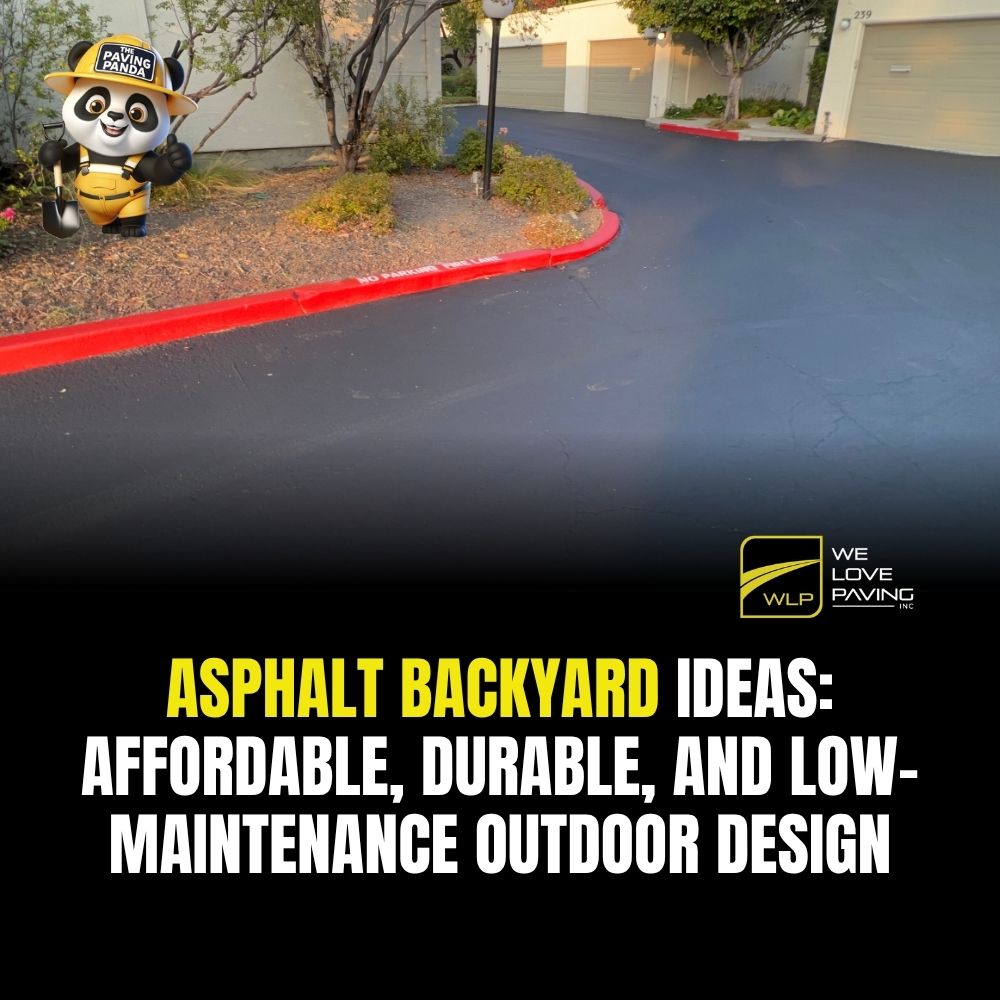
An asphalt backyard is a paved outdoor area made from the same durable material used for driveways and parking lots — but designed for residential comfort and functionality. It’s a smooth, cost-effective surface ideal for patios, play areas, walkways, or even backyard courts.

Unlike concrete or pavers, asphalt creates a clean, uniform finish that blends easily with landscaping, furniture, and lighting setups — making it perfect for homeowners who want a modern, practical outdoor space without overspending.


Why Choose Asphalt for Your Backyard

Many homeowners overlook asphalt as an option for outdoor living spaces, but it offers several powerful advantages:

  • 💰 Budget-Friendly: Asphalt is one of the most affordable paving materials available, typically costing less per square foot than concrete or stone.

  • 🛠️ Quick Installation: Most asphalt patios or backyard courts can be installed in just one to two days.

  • 🌦️ Weather Resistant: Properly sealed asphalt stands up to sun, rain, and seasonal changes with minimal cracking.

  • ♻️ Eco-Friendly: Asphalt is 100% recyclable and can be resurfaced instead of replaced.

  • 🧽 Low Maintenance: With simple resealing every few years, your asphalt surface stays smooth and dark for decades.

In short — asphalt is the perfect mix of strength, simplicity, and style.


Top Asphalt Backyard Ideas

If you’re planning to upgrade your backyard, here are some creative ways to use asphalt:

🏀 1. Backyard Sports Court

A smooth asphalt surface is ideal for basketball, pickleball, or mini-tennis courts. It provides excellent traction, quick drainage, and a professional finish that’s easy to maintain.

🔥 2. Outdoor Fire Pit Patio

Combine asphalt paving with decorative edging stones or stamped concrete borders for a sleek, low-cost patio that looks modern and feels cozy underfoot.

🌳 3. Garden Walkways

Create simple asphalt pathways that connect your patio, garden, and seating areas. The contrast between the dark surface and greenery adds a striking, modern aesthetic.

🚗 4. Driveway Extension + Patio Combo

Blend your driveway and backyard patio into a continuous asphalt surface. It’s efficient, cost-effective, and ideal for multi-use family spaces.

🌿 5. Asphalt + Artificial Turf Hybrid

Alternate sections of asphalt and turf to add color and function. This combination is great for play areas or outdoor entertainment zones.


Asphalt vs. Concrete Backyards

Before deciding which material is right for you, here’s how asphalt compares to concrete:

Feature Asphalt Concrete
Cost Lower installation cost Higher material + labor cost
Installation Time 1–2 days 3–5 days
Maintenance Simple resealing Cracks and stains harder to fix
Durability Flexible surface (less cracking) Can chip under temperature swings
Look Smooth, modern black finish Rigid, customizable texture

For most homeowners looking for an affordable, clean, and functional surface — asphalt wins.


Maintenance Tips for Asphalt Backyards

Keeping your asphalt backyard in great condition is simple with proper care:

  • Sealcoat every 2–3 years to protect against oxidation and fading.

  • Clean oil or chemical spills promptly.

  • Prevent standing water by checking for drainage issues.

  • Fill cracks early before they expand.

  • Sweep regularly to remove debris and dust.

These steps can extend your asphalt surface’s lifespan by 20 years or more.


Work With Professionals You Can Trust

At We Love Paving, we’ve helped hundreds of homeowners and property managers across Northern California build and maintain long-lasting asphalt surfaces — from driveways and patios to complete backyard makeovers.

We specialize in:

  • Residential asphalt paving and resurfacing

  • Sealcoating and crack filling

  • Custom layouts for patios, walkways, and courts

  • ADA and drainage compliance

Our team provides a seamless experience — from design and permits to the final smooth finish.

Ready to upgrade your backyard?
Contact We Love Paving today for a free on-site estimate and see how asphalt can transform your outdoor space.

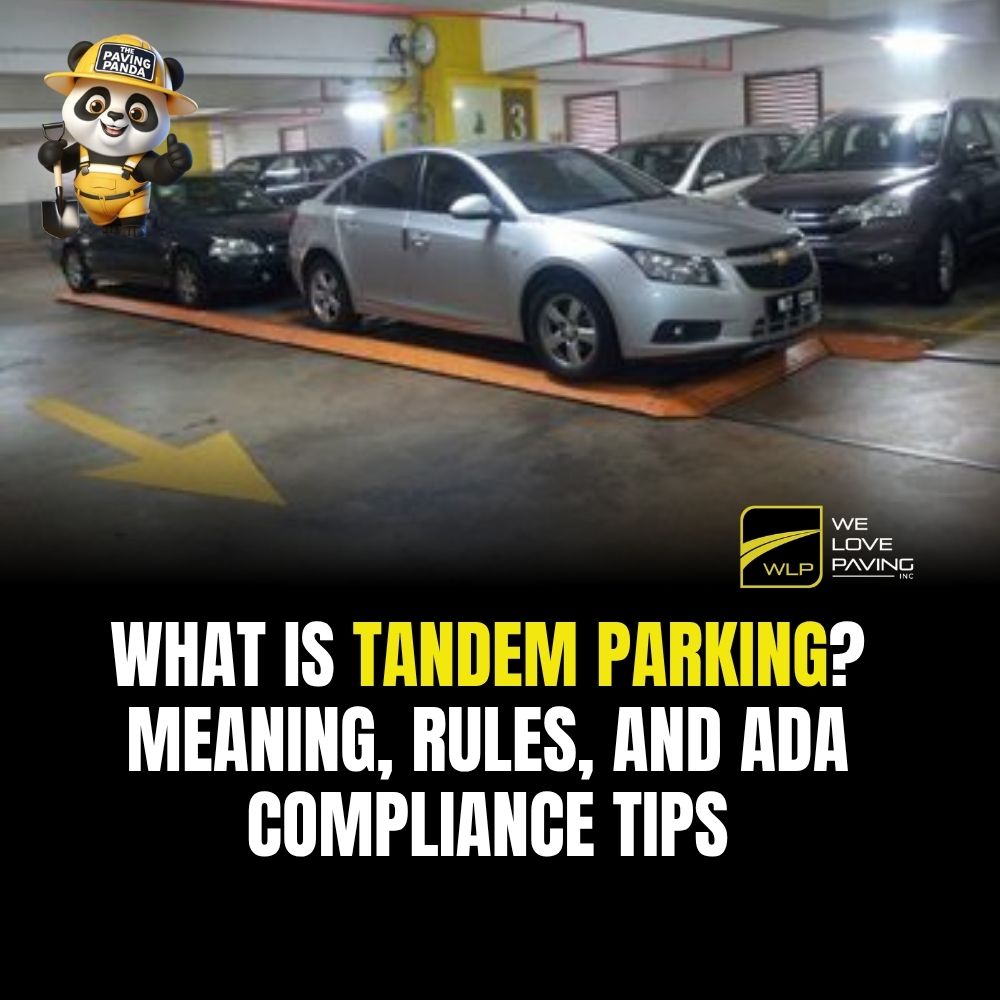
What Is Tandem Parking? Meaning, Rules, and ADA Compliance Tips

What Is Tandem Parking?

Tandem parking refers to two or more vehicles parked end-to-end within a single elongated parking space. In this setup, one car must move to let the other exit, similar to cars sharing a narrow driveway.

It’s a design solution often used in space-limited properties, such as multi-family buildings, apartment complexes, or commercial lots where maximizing parking density is a priority.

If you want to make sure your tandem parking layout meets California ADA requirements, check out the ADA Parking Spaces in 2026: The Complete Compliance Guide — it covers dimensions, slopes, accessible aisles, and the latest updates.


Why Tandem Parking Is Common

Tandem parking helps maximize the number of parking spaces in a constrained area. Property managers and developers often use it when:

  • The property has limited square footage.

  • Local codes require a specific number of spaces per unit.

  • The lot layout cannot accommodate traditional single-entry spaces.

This layout is practical, but it comes with challenges that must be considered.


Common Problems With Tandem Parking

Although efficient, tandem parking can lead to:

  • 🚗 Blocked access: One vehicle must move before the other can exit.

  • 🧭 Coordination issues: Tenants must constantly communicate to avoid blocking each other.

  • ⚠️ Emergency access concerns: Tandem spots may block fire lanes or emergency routes if poorly designed.

  • ADA non-compliance: Many tandem setups fail to meet accessibility standards for people with disabilities.


Tandem Parking and ADA Requirements

Under the Americans with Disabilities Act (ADA), accessible parking spaces must provide independent access — meaning a person with mobility impairments should not need another driver to move their car.

👉 Therefore, tandem parking spaces are generally not allowed to count as accessible (ADA) spaces, unless specific modifications exist:

  • The space includes a dedicated access aisle.

  • The space is reserved exclusively for valet or staff use with proper signage.

  • The layout follows local city code exceptions under a permit-approved design.

Every city has slightly different rules. For example, many California municipalities prohibit tandem parking in commercial lots unless approved through a planning or conditional use process.


How We Love Paving Ensures Compliance

At We Love Paving, we design and build parking lots that meet both ADA and city code standards while maximizing space efficiency.

Our team helps property owners:

  • Reconfigure existing tandem layouts for ADA compliance.

  • Stripe and sign accessible parking areas properly.

  • Handle city permit approvals for parking redesigns.

  • Create custom pavement markings and traffic flow systems that improve safety and accessibility.

Most property managers miss ADA issues because they don’t have a checklist of all required elements (slopes, signage heights, van-access dimensions, etc.).
You can download the full ADA Parking Lot Compliance Checklist from StopADA here.


Final Thoughts

Tandem parking can be an excellent way to maximize space—but only when designed properly. Failing to meet ADA or local code standards can lead to costly fines or required re-striping.

We Love Paving helps property managers, developers, and business owners ensure every parking layout is legal, accessible, and professionally executed.

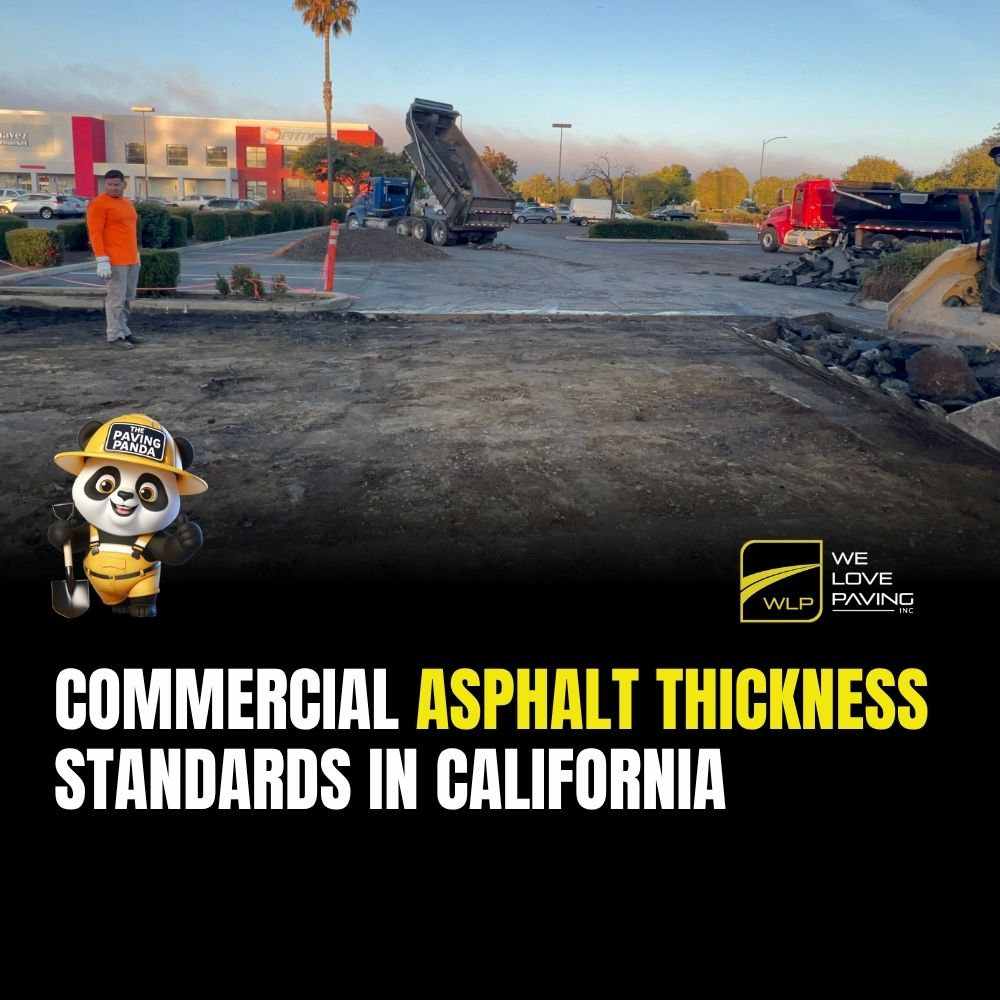
Commercial Asphalt Thickness Standards in California

When it comes to paving in California, asphalt thickness isn’t just a construction detail — it’s a business decision that directly affects your property’s longevity, maintenance costs, and curb appeal.
Whether you manage a shopping center in the Bay Area or an industrial lot in Sacramento, the right pavement thickness ensures durability against heavy traffic, temperature swings, and water runoff.

In this guide, we’ll break down the recommended asphalt thickness standards for commercial properties in California — plus what every property manager, contractor, or business owner should know before paving or resurfacing.

⚙️ Understanding Asphalt Pavement Structure

A well-built asphalt pavement is made up of multiple layers that work together to handle different stresses:

  1. Subgrade – The natural soil foundation.

  2. Aggregate Base – Crushed stone that supports the asphalt and distributes loads evenly.

  3. Asphalt Layers – The binder and surface courses that provide flexibility and a smooth, durable finish.

👉 Each layer’s thickness and compaction are critical to prevent premature cracking, rutting, or water damage.


📏 Recommended Asphalt Thickness by Use Case

Here’s a quick reference based on California commercial paving standards and our field experience at We Love Paving:

Type of Area Recommended Asphalt Thickness Base Layer (Aggregate) Typical Traffic Load
Light Commercial (Parking lots, small offices) 3″ – 4″ 4″ – 6″ Cars, light delivery vehicles
Medium Duty (Shopping centers, restaurants) 4″ – 5″ 6″ – 8″ Daily delivery trucks, moderate traffic
Heavy Duty (Industrial yards, loading docks) 6″ – 8″ 8″ – 10″ Semi-trucks, forklifts, heavy loads
Drive lanes or fire lanes 5″ – 6″ 6″ – 8″ Frequent traffic + turning stress

💡 Pro Tip: In colder or high-moisture areas (like the Sierra foothills or coastal zones), adding an extra inch of asphalt and proper drainage can dramatically increase pavement life.


🧪 Local Codes & Engineering Standards in California

California municipalities often follow Caltrans Section 39 (Asphalt Concrete) and ASTM D692 for asphalt mix and compaction standards.
Key local standards include:

  • Compaction: Minimum 95% relative compaction of base material.

  • Asphalt Mix: Type A or B hot-mix asphalt, depending on climate and expected load.

  • Drainage: Minimum 2% slope to ensure proper runoff.

  • Temperature range: 280°F–310°F lay-down temperature for optimal density.

Before starting a project, always verify city or county paving codes—for instance, San Jose and Oakland may require stricter ADA slope and drainage compliance.


🧱 Consequences of Using the Wrong Asphalt Thickness

Cutting corners on asphalt thickness is one of the most expensive mistakes property owners make.
Common results include:

  • Premature cracking due to insufficient load support

  • Potholes and rutting within 1–2 years

  • Drainage failures leading to base erosion

  • Costly resurfacing earlier than expected

In other words, saving a few thousand now can cost you tens of thousands later.


🔍 Case Example: Bay Area Retail Center

We recently completed a commercial repaving project in Fremont, CA, where the existing lot had only 2 inches of asphalt over a poor-quality base.
After evaluation, our engineers recommended a 5-inch hot-mix asphalt surface with an 8-inch Class II aggregate base.

Result:

  • Load-bearing capacity increased by 60%

  • Surface life expectancy extended from 5 years to 15+

  • ADA slope compliance achieved without drainage issues


🧠 Expert Insight from We Love Paving

At We Love Paving, we’ve learned that the difference between a 5-year surface and a 15-year surface often comes down to one inch of asphalt and proper compaction.

We handle every step—from soil testing and grading to asphalt mix design—to ensure your investment performs for decades, not just seasons.


📞 Get a Free Property Assessment

If you’re planning a commercial paving, repair, or resurfacing project in California, let our experts inspect your site and provide a custom plan that meets state and local standards.

✅ Free on-site assessment
✅ Detailed thickness & drainage recommendations
✅ ADA and safety compliance report

📩 Schedule your free property assessment today
or call us at (888) 273-0077

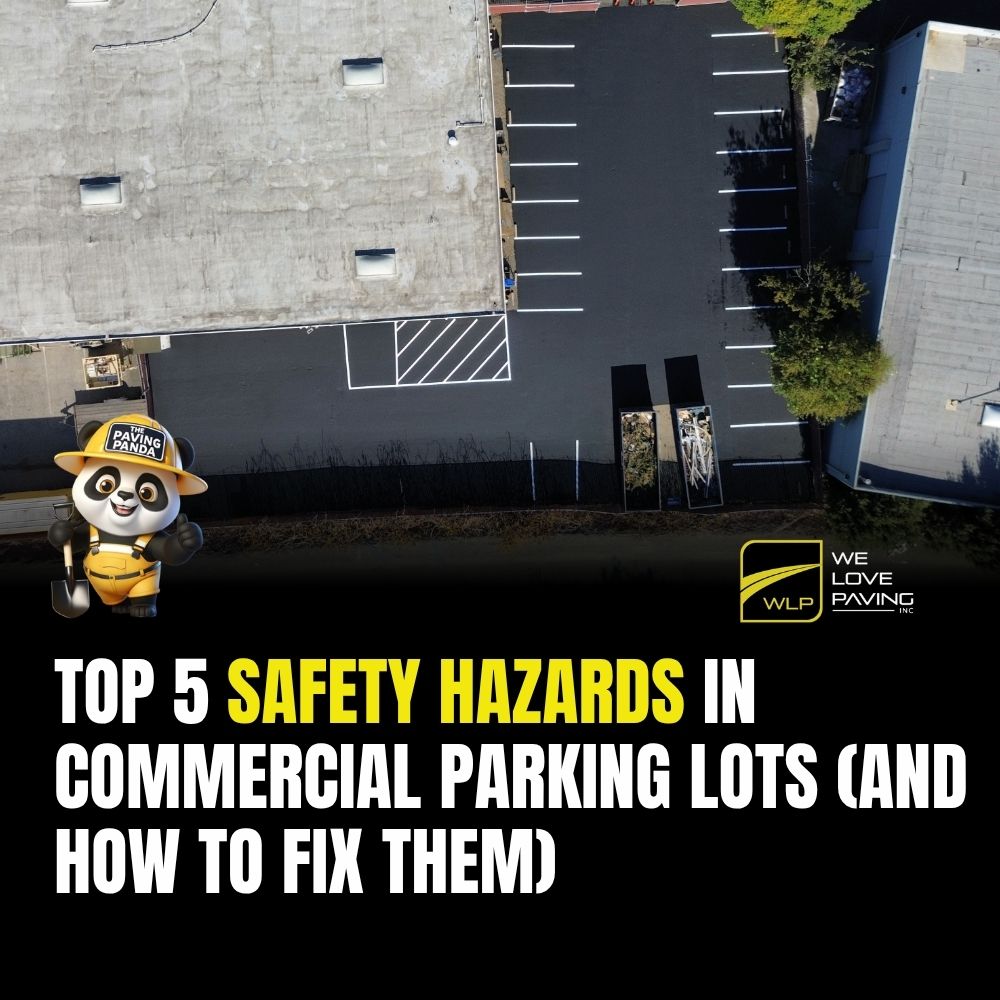
Top 5 Safety Hazards in Commercial Parking Lots (and How to Fix Them)

Your parking lot is more than a place to park — it’s the first and last part of your property that every visitor experiences.
And if it’s not maintained properly, it can quickly become a liability nightmare.

From trip hazards to poor visibility, these seemingly small issues can lead to accidents, lawsuits, and damaged reputations.
Here are the top 5 safety hazards we see every week — and how to fix them before they cost you thousands.


1️⃣ Cracks, Potholes & Uneven Surfaces

The problem:
Pavement cracks and potholes form from water intrusion, heavy loads, and time.
They’re not just ugly — they create tripping hazards for pedestrians and vehicle damage risks for tenants and customers.

The fix:
Crackfilling and patching immediately after noticing damage prevents water from spreading beneath the surface.
Sealcoating every 2–3 years protects against UV and weather deterioration.
Routine inspections help spot early-stage failures before they become liabilities.

Pro tip: The cost of a small patch today can save you from a full repave tomorrow.


2️⃣ Faded Striping and Illegible Markings

The problem:
Over time, parking lines, arrows, and ADA symbols fade under UV exposure and traffic.
When that happens, drivers park incorrectly, pedestrians lose safe walkways, and accessibility compliance is lost.

The fix:
Restriping every 12–18 months maintains visibility and ADA compliance.
✅ Use high-visibility thermoplastic paint or premium traffic coatings that last longer.
✅ Ensure ADA stalls, loading zones, and directional flow are clearly marked.

Fresh striping not only prevents confusion — it also makes your property look clean and well-managed.


3️⃣ Poor Drainage & Standing Water

The problem:
Ponding or puddles might seem harmless, but they signal deeper drainage issues.
Standing water weakens the subbase, causes cracks to expand, and creates slippery areas for pedestrians.

The fix:
Regrade problem areas to ensure proper water flow.
✅ Clean and maintain catch basins and inlets regularly.
✅ Apply crack sealant to prevent water penetration during the rainy season.

Good drainage = long pavement life. It’s the most overlooked factor in asphalt durability.


4️⃣ Insufficient Lighting

The problem:
Dim or broken lights increase the risk of accidents, theft, and vandalism.
Even if your pavement is flawless, poor visibility makes people feel unsafe.

The fix:
Upgrade to LED lighting for energy efficiency and brightness.
✅ Ensure consistent coverage across drive lanes and walkways.
✅ Conduct quarterly lighting inspections to replace bulbs and test sensors.

Lighting is one of the simplest and cheapest ways to boost both safety and tenant satisfaction.


5️⃣ Lack of ADA Compliance

The problem:
Non-compliant slopes, missing signage, or faded handicap markings can lead to hefty fines and legal action.
It’s not just a legal issue — it’s about accessibility and inclusion.

The fix:
✅ Schedule an ADA compliance inspection with a certified paving contractor.
✅ Refresh signage, ramps, and striping regularly.
✅ Ensure access aisles, slope grades, and signage heights meet the latest standards (Title 24 & ADA 2025 updates).

ADA compliance isn’t optional — it’s peace of mind for property owners and tenants alike.


🧱 Keep Your Property Safe, Clean, and Liability-Free

At We Love Paving, we help commercial property managers protect their investments through proactive maintenance and professional inspections.
From crack repair and sealcoating to ADA upgrades and restriping, our team ensures your parking lot stays safe, compliant, and visually appealing year-round.


💬 Schedule Your Free Property Safety Assessment

Get ahead of potential hazards before they turn into problems.
👉 Request Your Free Assessment and our experts will walk your site, identify risks, and provide a clear, actionable plan — at no cost.

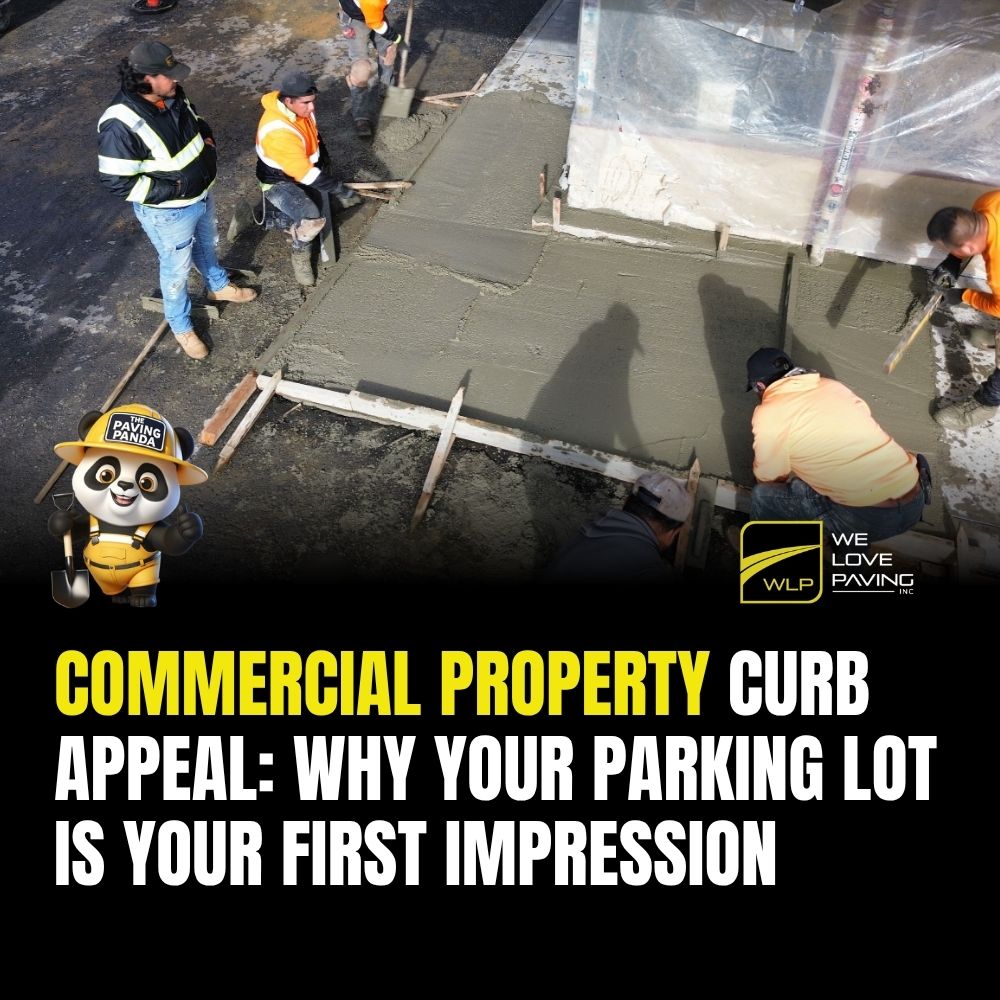
Commercial Property Curb Appeal: Why Your Parking Lot Is Your First Impression

When a tenant, client, or investor drives onto your property, the parking lot is the very first thing they see — and whether you realize it or not, it’s already speaking volumes about how you manage your assets.

Just like landscaping or building facades, your pavement’s condition reflects your professionalism, attention to detail, and long-term property care. A well-maintained lot sends a clear message: “We take pride in this property.”


🚗 The Psychology of First Impressions

Studies show that visitors form opinions within the first seven seconds of arriving at a business. Cracks, potholes, and faded striping subconsciously communicate neglect — even if your interiors are spotless.

For commercial tenants and customers, the parking lot is part of your brand experience. Smooth pavement, clean markings, and organized flow make people feel safe and welcome before they even step inside.


🧱 The Financial Side of Curb Appeal

Parking lots aren’t just cosmetic. They directly affect property value and occupancy rates.

A deteriorating surface can:

  • Decrease perceived property value by up to 10–15%

  • Lead to liability risks from uneven surfaces and puddling

  • Push away tenants seeking well-maintained environments

  • Increase future repair costs exponentially due to water infiltration

In contrast, a well-maintained lot helps you:
✅ Justify higher rent rates
✅ Retain long-term tenants
✅ Reduce insurance and maintenance claims
✅ Boost overall property appraisal


⚙️ What Smart Property Managers Do

Top-performing property managers don’t wait for visible damage — they plan preventive maintenance.
Here’s what their annual checklist usually includes:

  1. Sealcoating every 2–3 years to protect against water and UV damage.

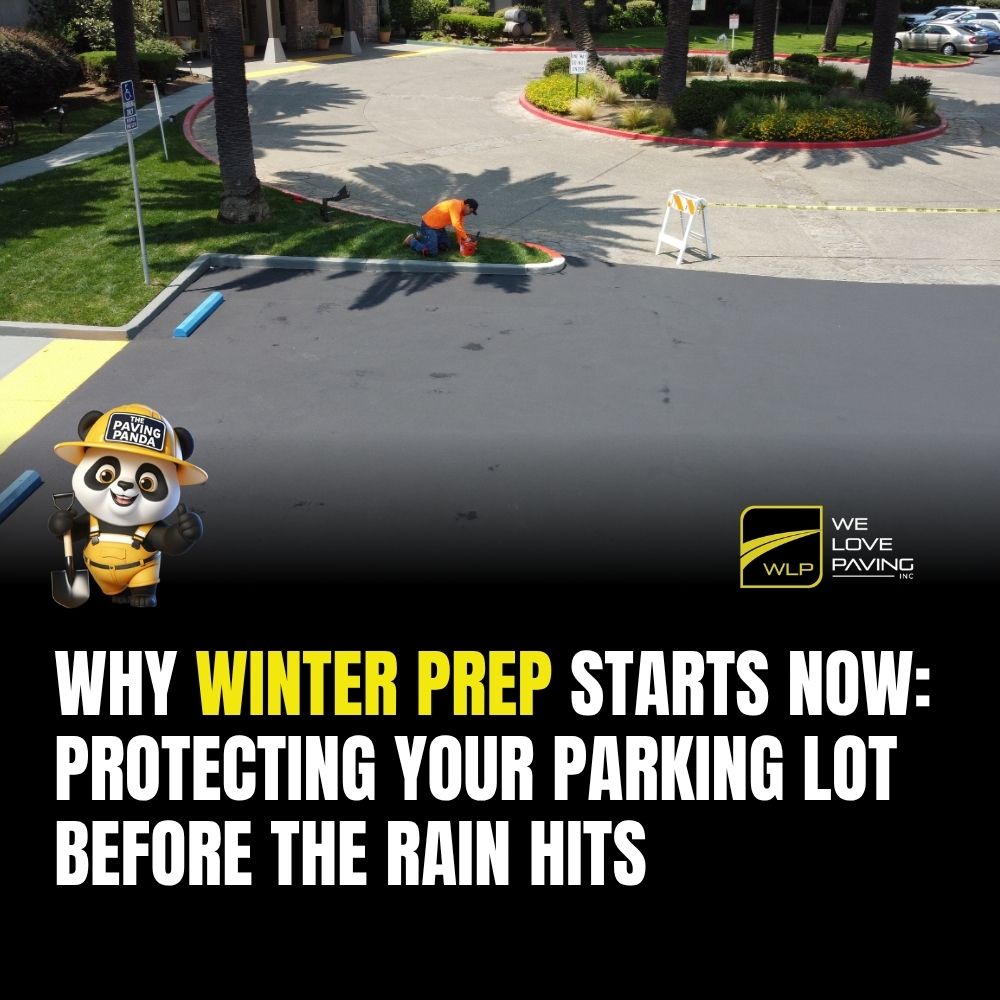
  2. Crackfilling before winter rains to prevent pothole formation.

  3. Re-striping for ADA compliance, safety, and a fresh look.

  4. Drainage inspection to prevent ponding and subbase deterioration.

  5. Power cleaning to remove debris and oils that degrade asphalt.

Each of these steps costs a fraction of a full replacement — yet dramatically extends pavement life.


🧭 Curb Appeal as a Long-Term Strategy

Think of your pavement as an asset, not an expense.
When managed proactively, it can extend its usable life by up to 20 years and reduce capital expenses by thousands annually.

Commercial property investors understand this well:
👉 Every dollar spent on preventive maintenance can save $4 to $6 in major repairs down the road.


🦺 Partner With Professionals Who Care

At We Love Paving, we don’t just fix parking lots — we help property owners protect and enhance their investments.
Our team specializes in:

  • Asphalt paving and resurfacing

  • Concrete flatwork and ADA upgrades

  • Sealcoating and crackfilling

  • Striping and signage for compliance and aesthetics

Whether you manage one retail center or an entire commercial portfolio, we’ll help you create a lasting first impression that drives tenant satisfaction and property value.


💬 Ready to Enhance Your Property’s First Impression?

Get a Free Property Assessment today and discover how a professional pavement plan can protect your investment for years to come.

Pavement Density Testing: Why Compaction Is the #1 Factor in Asphalt Longevity

It’s Not the Mix — It’s the Density

When it comes to asphalt pavement, most property owners focus on the mix. But the truth is, the quality of your asphalt mix matters far less than how well it’s compacted.
Even the best hot mix asphalt will fail prematurely if it’s not properly densified. That’s why pavement density testing is one of the most critical — and often overlooked — steps in the paving process.

At We Love Paving, we measure success not just by how smooth your parking lot looks on day one, but by how well it holds up ten years later.


Why Compaction Matters

Asphalt starts out as a mix of aggregates, sand, and bitumen binder. Right after paving, the material is hot, flexible, and full of air voids.
If too many of those voids remain after compaction, water and oxygen can penetrate the surface — leading to:

  • Raveling (loose aggregate separating from the surface)

  • Oxidation and brittleness

  • Cracking and potholes within a few seasons

Proper compaction compresses the mix to the ideal 92–96% of its maximum theoretical density, which locks particles together and limits voids to the optimal 4–8% range.

💡 Think of it like concrete without air pockets — the denser it is, the stronger and longer it lasts.


How Density Is Tested on a Jobsite

Professional paving isn’t guesswork. It’s measurement and verification.
Here are the main methods used to test density in the field:

1. Core Sampling (ASTM D2726)

Small cylindrical samples (typically 4–6 inches in diameter) are drilled and sent to a lab.
Technicians weigh the samples in air and water to calculate density and compare it to the maximum theoretical value.
Pros: Highly accurate
⚠️ Cons: Destructive (leaves small holes to patch)

2. Nuclear Density Gauge (ASTM D2950)

This device emits low-level gamma radiation to measure the density and moisture content without damaging the surface.
It gives instant readings, allowing crews to adjust roller patterns on the fly.
Pros: Fast, non-destructive
⚠️ Cons: Requires certification and calibration

3. Intelligent Compaction (IC)

The latest paving machines use GPS and onboard sensors to monitor compaction in real time.
IC maps out roller passes and identifies areas needing additional coverage — improving consistency and eliminating human error.
Pros: High precision, data-driven
⚠️ Cons: Higher cost and limited availability


The Relationship Between Density and Pavement Life

Every 1% drop in asphalt density can reduce pavement life by up to 10%.
Inadequate compaction leads to micro-voids that absorb water and accelerate oxidation, turning flexible asphalt into brittle material far sooner than expected.
Over the years, that difference adds up to thousands of dollars in repairs or full replacement costs that could’ve been avoided with proper testing.


We Love Paving’s Quality Control Standards

At We Love Paving, we treat every commercial job as if it were a DOT project.
Our process includes:

  • Monitoring mat temperature and rolling patterns throughout paving

  • Conducting nuclear density readings on every project over 10,000 sq ft

  • Documenting average density results for transparency and quality assurance

  • Using vibratory steel and pneumatic rollers to achieve uniform compaction

The result: surfaces that remain smooth, watertight, and structurally sound for decades.


How Business Owners Benefit

For property managers and business owners, proper compaction means:

  • Fewer repairs and lower long-term maintenance costs

  • Improved curb appeal — surfaces stay smooth and dark longer

  • Reduced liability from trip hazards and surface degradation

  • Higher ROI from a pavement that truly lasts


Final Thoughts

Perfect paving isn’t just about appearance — it’s about density.
A parking lot that looks flawless today but lacks proper compaction will begin to fail within a few years.
That’s why We Love Paving invests in density testing, temperature monitoring, and advanced rolling techniques to deliver pavement that’s built to last.


Ready to Test the Strength of Your Pavement?

Get a free on-site evaluation and see if your asphalt meets industry compaction standards.
👉 Contact We Love Paving today for a professional density test and maintenance plan.


The Lifecycle of Commercial Asphalt: From Installation to Full Rehabilitation

Why Understanding Pavement Lifecycle Matters

Every parking lot and roadway has a lifespan — but how long it lasts depends on how it’s designed, installed, and maintained.
For property owners and facility managers, understanding the lifecycle of asphalt pavement is key to planning budgets, extending surface life, and avoiding costly full replacements.

At We Love Paving, we see every project as part of a long-term system — not just a surface to pour and forget.


Phase 1: Design & Subgrade Preparation

The foundation of durable pavement begins below the surface.
A proper subgrade — the compacted soil layer beneath the asphalt — ensures load-bearing strength and prevents settlement.

Technical steps include:

  • Soil testing and classification (AASHTO or ASTM standards)

  • Grading for uniform support and drainage (1–2% slope minimum)

  • Compaction to 95% or greater density using vibratory rollers

  • Installation of an aggregate base layer (Class II base rock, typically 4–8 inches)

💡 Pro Tip: Most asphalt failures come from poor base prep, not surface wear.


Phase 2: Asphalt Installation

Once the base is stable, hot mix asphalt (HMA) is laid and compacted.
The key to longevity here is temperature control and compaction timing.

Our crews follow strict QC standards:

  • Mix delivered at 275–300°F to ensure workability

  • Paving thickness designed for expected traffic loads (2” light-duty up to 6” heavy-duty)

  • Compaction completed before temperature drops below 185°F

  • Joints sealed for smooth transitions between passes

🧱 Result: A dense, watertight surface ready to handle years of use.


Phase 3: Preventive Maintenance (Years 1–5)

Even new asphalt begins oxidizing as soon as it’s exposed to sunlight and oxygen.
Preventive maintenance keeps the surface flexible and slows deterioration.

Recommended maintenance schedule:

  • Sealcoating every 2–3 years to block UV and moisture

  • Crackfilling annually to prevent water intrusion

  • Patching localized failures before they spread

  • Re-striping for safety and compliance

⏳ These steps can double the service life of commercial pavement compared to neglected surfaces.


Phase 4: Corrective Maintenance & Overlays (Years 6–12)

With time, heavier traffic and weather exposure lead to structural fatigue.
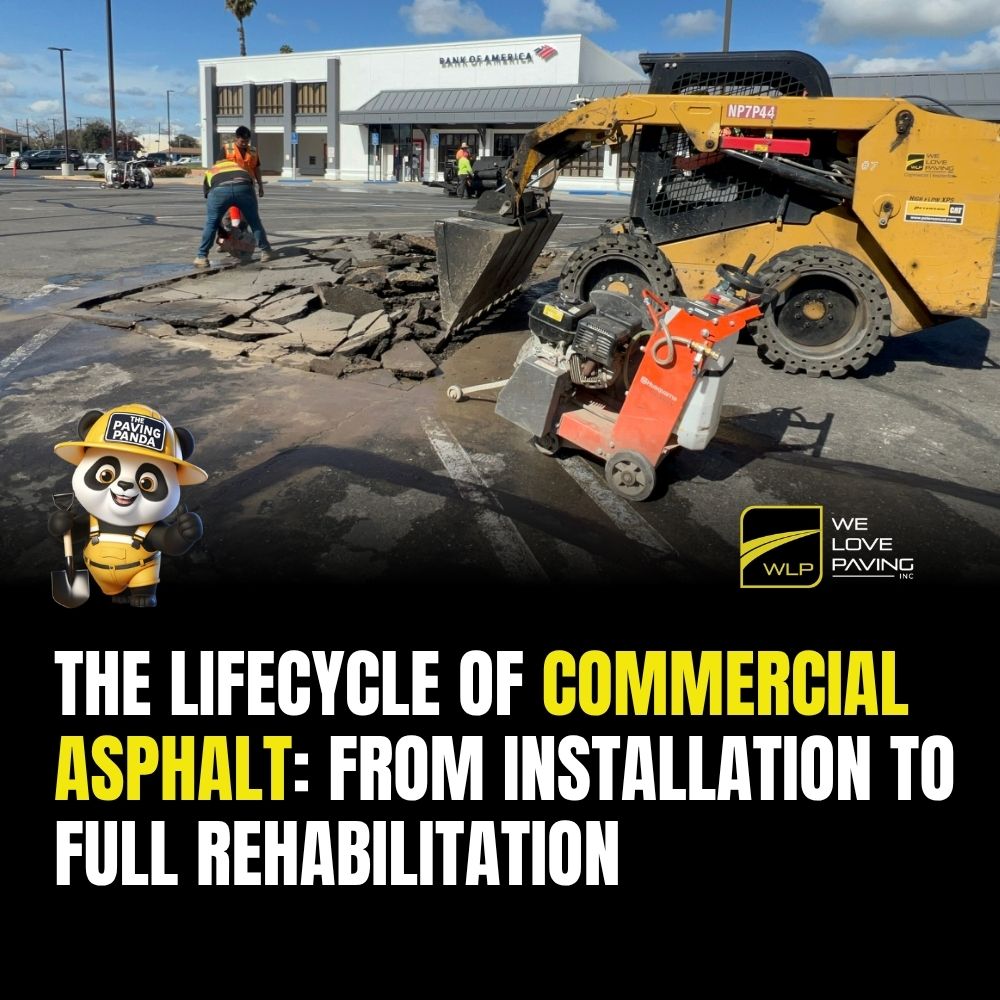
Rather than full replacement, many lots benefit from a mill and overlay process:

  • Milling 1–2 inches of worn asphalt

  • Cleaning and tack-coating the existing surface

  • Installing a new hot mix overlay for a smooth finish

This rejuvenates the pavement at a fraction of the cost of reconstruction and resets the clock on your pavement lifecycle.


Phase 5: Full Rehabilitation (Years 15–25+)

Eventually, all asphalt reaches a point where the subgrade or base fails.
At this stage, full-depth reclamation (FDR) or complete reconstruction is the most cost-effective solution.

Full rehabilitation includes:

  • Pulverizing and regrading existing layers

  • Adding fresh base material and compaction

  • Installing new HMA layers and fresh striping

  • Updating ADA ramps, signage, and drainage as required

This brings the pavement back to like-new condition and sets up another 20+ years of reliable service.


How We Love Paving Extends the Lifecycle Even Further

Our approach is simple: precision, quality, and proactive maintenance.
By combining laser grading, premium materials, and strict compaction standards, we help businesses across Northern California save thousands over the lifetime of their pavement.

Whether you manage a retail center, corporate facility, or industrial yard, we can tailor a multi-year maintenance planthat fits your traffic levels, budget, and compliance needs.


Ready to Plan Your Pavement’s Future?

Don’t wait until cracks turn into craters.
👉 Contact We Love Paving for a professional inspection and lifecycle assessment — and discover how proper maintenance can extend your pavement’s lifespan by over a decade.

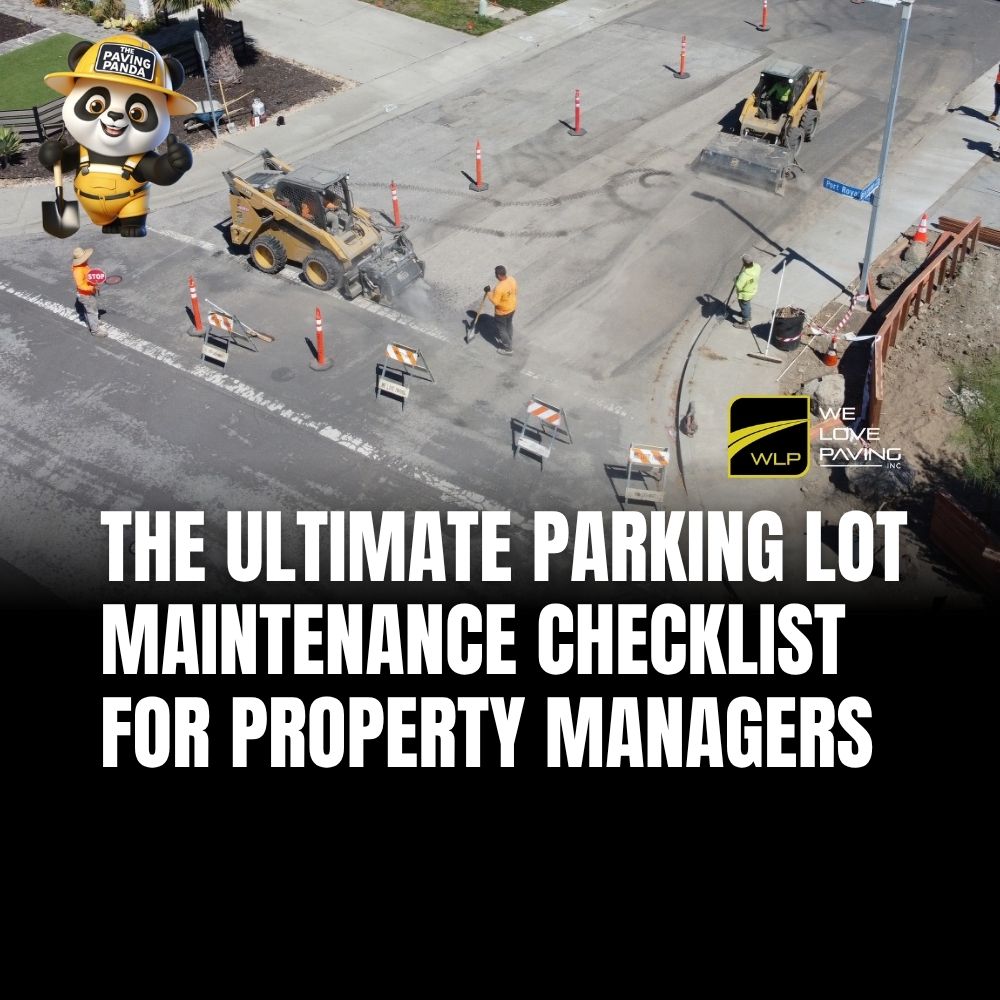
The Ultimate Parking Lot Maintenance Checklist for Northern California Property Managers

If you manage a commercial property in Northern California, you already know: your parking lot says a lot about your business.
It’s the first and last thing tenants, visitors, and customers see — and it’s often where safety, liability, and property value intersect.

The good news? A well-maintained parking lot doesn’t just look better — it lasts longer and costs less in the long run.
That’s why we created the ultimate parking lot maintenance checklist, designed specifically for property managers in the Bay Area, Sacramento, and Modesto.


1. Inspect Your Pavement Quarterly

Northern California’s mix of heat, rain, and traffic takes a toll on asphalt.
A quarterly inspection helps you spot small problems before they turn into costly repairs.

What to look for:

  • Cracks or “alligator” cracking patterns.

  • Standing water or poor drainage.

  • Potholes, depressions, or surface ruts.

  • Oil stains or chemical spills.

🧠 Pro Tip: Keep a simple photo log each quarter — it makes vendor quotes and budgeting much easier later.


2. Schedule Regular Cleaning and Sweeping

Dirt, leaves, and debris don’t just look bad — they hold moisture and accelerate pavement damage.
Routine sweeping keeps the surface clean and improves drainage.

Recommended frequency:

  • Monthly: General sweeping and trash removal.

  • Quarterly: Power sweeping for commercial or high-traffic lots.


3. Sealcoat Every 2–3 Years

Sealcoating acts as a shield against UV rays, oil, and water — the three biggest enemies of asphalt.
It also restores the deep black finish that makes your property look new again.

Signs it’s time for sealcoating:

  • Faded color.

  • Surface feels dry or rough.

  • Visible oxidation or cracks forming.

🧠 Pro Tip: Plan sealcoating during spring or early summer for best curing in Northern California’s climate.


4. Crackfill Annually

Small cracks allow water to penetrate the base layers, causing structural failure.
Professional crackfilling once a year prevents costly resurfacing later.

Avoid DIY fillers — they rarely bond properly and usually fail after the first rain.


5. Re-Stripe and Re-Marking Every 18–24 Months

Faded lines not only look bad, they’re a safety hazard and ADA liability.
Re-striping ensures compliance and keeps traffic organized.

Include in your inspection:

  • Handicap stalls and signage (ADA).

  • Fire lanes and loading zones.

  • Directional arrows and curbs.

🎯 Pro Tip: Pair re-striping with sealcoating to save time and reduce closures.


6. Check Drainage Systems Before Rainy Season

Blocked or inefficient drains cause standing water — the #1 cause of asphalt degradation.

Inspect and clean:

  • Catch basins and inlets.

  • Gutters and concrete curbs.

  • Slopes and water flow paths.


7. Repair Potholes Immediately

A single pothole can grow fast — and it’s a liability risk.
Cold patch fixes rarely last; a professional infrared or hot mix repair provides long-term stability.


8. Review ADA Compliance Annually

California’s ADA regulations are strict, and violations can lead to lawsuits.
Ensure your parking lot layout, ramps, and signage meet current standards.

🧠 Pro Tip: Ask We Love Paving for a free ADA compliance assessment — we handle layout, signage, and surface slope verification.


9. Budget for Preventive Maintenance

Smart property managers treat pavement like a long-term asset, not a short-term expense.
Plan for annual maintenance funds that cover sealcoating, striping, and small repairs — typically 10–15¢ per sq. ft. annually.


10. Partner with a Trusted Local Contractor

Consistency is everything.
At We Love Paving, we understand the climate, soil, and wear patterns unique to Northern California.
Our crews deliver reliable, professional service — from asphalt repair to ADA compliance — with minimal disruption to your tenants.


Final Thought

Your parking lot doesn’t need to be a headache.
With regular inspections, preventive care, and a reliable paving partner, you’ll keep your property safe, compliant, and looking sharp year-round.

📞 Request your free maintenance quote at www.welovepaving.com