Asphalt overlay is a widely used method for restoring and rejuvenating deteriorating parking lots. This process involves applying a new layer of asphalt over the existing surface, providing numerous benefits such as improved appearance, increased durability, enhanced safety, and cost-effectiveness. In this article, we will conduct an in-depth investigation into why asphalt overlay stands out as a cost-effective solution for parking lot maintenance.
Improved Appearance
Research shows that the appearance of a parking lot significantly influences the perception of a business by customers and employees. A study conducted by the International Parking Institute (IPI) found that well-maintained parking lots contribute to a positive overall impression of a business establishment. Asphalt overlay plays a vital role in enhancing the appearance of a parking lot by providing a fresh, smooth surface that looks clean and well-maintained. This aesthetic improvement can lead to increased customer satisfaction, improved brand perception, and ultimately, higher patronage, making it a worthwhile investment for businesses.
Increased Durability
A comprehensive analysis of asphalt overlay projects conducted by the National Asphalt Pavement Association (NAPA) reveals that the new layer of asphalt significantly enhances the durability of parking lots. The study found that overlay projects exhibit improved resistance to wear and tear caused by heavy traffic, adverse weather conditions, and environmental factors. By reinforcing the surface, asphalt overlay reduces the occurrence of cracks, potholes, and other forms of damage, thereby extending the lifespan of the parking lot. This increased durability translates into long-term cost savings by minimizing the need for frequent repairs and maintenance.
The Deciding Factor: Subgrade Preparation Index
The cost-effectiveness of an overlay depends critically on the structural stability of the existing soil, a concept we define as the Subgrade Preparation Index. Many owners make the mistake of budgeting only for the surface asphalt wearing course. However, true engineering lies in the volume of aggregate needed to stabilize the base ground. If the subgrade is weak, even the most expensive asphalt will fail prematurely due to lack of support. Properly assessing soil bearing capacity before paving ensures your investment is durable and technically sound.
Impact of Stormwater Runoff Permits on Budgeting
Online cost estimators often overlook a critical administrative and technical expense: stormwater runoff management. Across various California jurisdictions, environmental regulations require certified drainage designs to prevent flooding and water pollution. These regulations mandate the integration of retention systems or precision grading that can add between 5% and 10% to the fixed project cost. Failing to account for these permits from the start can lead to severe municipal fines and premature structural failure of your pavement due to standing water accumulation.
Enhanced Safety
Safety is a paramount concern in parking lot management, with studies indicating that well-maintained surfaces can help prevent accidents and injuries. Research published in the Journal of Transportation Engineering highlights the role of asphalt overlay in enhancing safety standards by providing a smooth, even surface that minimizes the risk of trips, slips, and falls for pedestrians and vehicles. Furthermore, the improved drainage capabilities of asphalt overlay help prevent the accumulation of standing water, reducing the potential for accidents during inclement weather conditions. These safety enhancements not only protect patrons but also mitigate liability risks for property owners, making asphalt overlay a sound investment in risk management.
Cost-Effectiveness
An in-depth cost-benefit analysis conducted by the American Society of Civil Engineers (ASCE) indicates that asphalt overlay offers significant cost savings compared to full reconstruction for parking lot maintenance. The study found that overlay projects require fewer materials, labor, and time, resulting in lower upfront costs for property owners. Furthermore, by extending the lifespan of the parking lot and minimizing the need for extensive repairs, asphalt overlay delivers long-term economic benefits. A comprehensive life-cycle cost analysis conducted by the Federal Highway Administration (FHWA) confirms that the lifecycle cost of overlay projects is substantially lower than that of full reconstruction, making it a cost-effective solution for parking lot maintenance.
20-Year Total Cost of Ownership (TCO) Analysis
Real savings emerge when comparing the operational life cycle of pavement. A total repaving after 20 years of neglect can cost $12.00 per square foot, a massive and sudden financial burden. In contrast, a triennial sealcoating program requires smaller investments of approximately $0.25 per square foot per application. After two decades, preventive maintenance totals just $1.75 per square foot, keeping the structural integrity intact. Opting for proactive care reduces total expenditure by 85%, protecting your cash flow and maximizing the asset’s useful life.
Beyond the Surface
At We Love Paving, we don’t just see asphalt; we see the critical infrastructure that supports your property’s value. Our technical investigation confirms that an asphalt overlay is far more than an aesthetic fix it is a strategic engineering decision that balances long-term durability with fiscal efficiency. By integrating critical variables like the Subgrade Preparation Index and strict compliance with stormwater runoff mandates, we transform routine maintenance into a high-performance asset.
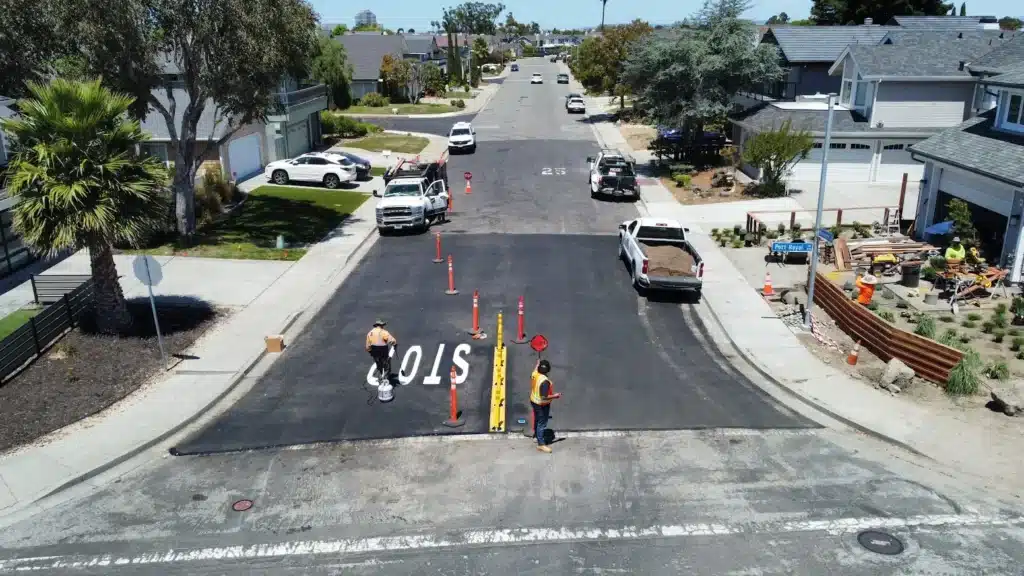
Our commitment is to help you navigate the complexities of Total Cost of Ownership (TCO). We have demonstrated that a timely technical intervention, paired with a proactive maintenance program, can reduce your operational expenditures by up to 85% over 20 years. If your goal is to protect your equity with solutions that withstand both heavy traffic loads and environmental cycles, an engineered overlay stands as the gold standard for sustainable and economically superior pavement restoration.
Frequently Asked Questions (FAQ)
General Questions About Our Professional Services and Project Execution
Bonus depreciation allows businesses to immediately deduct 100% of the cost of qualifying assets, such as parking lots, in the year they are placed in service. Unlike standard depreciation, which spreads deductions over decades, this tax incentive accelerates the recovery of capital to boost immediate liquidity. Under current regulations, land improvements with a MACRS recovery period of 20 years or less qualify for this full expensing, provided the asset is new or substantially improved.
Yes, an overlay typically costs 40% less than a full reconstruction by leveraging the existing base. This technique applies a new wearing course that immediately restores friction and aesthetics. However, its technical success depends on a base free of deep structural defects. NAPA data indicates that a well-executed overlay extends pavement life by 10 to 15 years, significantly optimizing the ROI for commercial real estate assets.
Stormwater runoff permits and drainage engineering can add between 5% and 10% to the project’s fixed cost. In jurisdictions with strict environmental mandates, regulations require certified retention systems or precision grading to prevent flooding. Neglecting these administrative requirements risks severe municipal fines and leads to standing water accumulation, which is the leading cause of accelerated asphalt stripping and loss of aggregate cohesion.
Proactive maintenance reduces total life-cycle expenditure by 85% compared to operational neglect. While a full repave after 20 years of “run-to-failure” management can cost $12.00 per square foot, a triennial sealcoating program totals only $1.75 per square foot over the same period. This low-impact financial approach breaks down into small **$0.25 per square foot** investments, preserving bitumen flexibility and preventing subgrade collapse.
Surface durability is directly tethered to the stabilization of the base ground, not the thickness of the asphalt. If the soil has low bearing capacity, heavy load deflection will trigger “alligator cracking” almost immediately. An engineering design that prioritizes crushed stone volume in the base ensures the investment survives extreme climate cycles. The asphalt is merely the visible face; long-term profitability lives in the compacted base supporting the traffic.