The Hidden ADA Violations Inside Your Path of Travel (Why Most Properties Fail Without Knowing It)

Introduction: The Most Overlooked ADA Risk Is Not the Parking Stall — It’s the Path of Travel

Most property managers spend time checking their ADA parking stalls:

  • Is the blue paint visible?

  • Is the sign at the right height?

  • Is the access aisle properly marked?

But here’s the truth:

Most ADA lawsuits don’t start at the parking stall — they start on the Path of Travel.

The Path of Travel (POT) is the pedestrian route from your ADA stall to your building entrance.
If this route has any discontinuity — even ¼ inch — the property is liable.

And the scary part?

90% of the violations on a Path of Travel cannot be seen from a car.
Tenants notice them. Lawyers notice them. Inspectors notice them.
But the PM often doesn’t… until a complaint arrives.

This blog exposes the hidden ADA violations that quietly cost properties thousands every year.


1. What Exactly Is the Path of Travel?

According to ADA + CBC guidelines, your Path of Travel must be:

  • Continuous (no gaps or disruptions)

  • Stable (no loose edges, cracks, broken areas)

  • Slip-resistant

  • Free of obstacles

  • Properly sloped (≤ 2% cross slope, ≤ 5% running slope)

  • Clearly marked where required

  • Fully connected from:
    ADA Stall → Access Aisle → Walkway → Ramp → Entrance

If any part of that chain fails, your whole property fails.


2. The 7 Hidden ADA Violations Inside Your Path of Travel

These are the issues we uncover on almost every property…
none of which the PM usually knew about.


1. Micro-Trip Hazards (¼ Inch Uplift)

The ADA threshold is tiny:

Any vertical change over ¼ inch is non-compliant.

Most PMs think:
“It’s just a small bump — not a big deal.”

But to ADA, that’s a trip hazard.
And trip hazards = lawsuits.

Common causes:

  • tree roots

  • concrete slabs shifting

  • water erosion

  • old patches

  • broken expansion joints


2. Incorrect Cross Slope on Walkways

Most PMs don’t measure walkways.
Inspectors do.

Walkways must maintain:

  • ≤ 2% cross slope

When the walkway tilts — even slightly — it becomes non-compliant.

This happens often because:

  • asphalt settles differently over time

  • concrete shifts unevenly

  • patchwork jobs create slope variations


3. Ramps That Used to Be Compliant… But Aren’t Anymore

Ramps deteriorate:

  • cracks

  • sinking edges

  • missing texture

  • washed-out transitions

  • slope increases from pavement movement

If the ramp is older than 15 years:
80% chance it is no longer compliant.


4. Missing or Non-Compliant Landings

Every ramp needs a flat landing area at the top and bottom.

Violations include:

  • landing too small

  • landing out of level

  • landing blocked by landscaping

  • landing sloping more than 2%

Landings are one of the top causes of failed inspections.


5. Damaged Detectable Warnings (Truncated Domes)

These must be:

  • secured

  • bright

  • fully intact

  • correctly sized

  • placed at the right location

Broken, faded, or missing domes = violation.


6. Obstructions Along the Walkway

The Path of Travel must be free of barriers.

Common hidden obstructions:

  • bollards too close

  • leaning signs

  • trash bins

  • overgrown landscaping

  • delivery packages

  • temporary construction debris

  • sprinkler heads sitting too high

Any obstruction reduces the minimum clear width → violation.


7. Water Drainage Issues That Create Hazards

Water pooling = one of the fastest ways to fail ADA.

Inspectors check:

  • does water collect on the walkway?

  • do slopes channel water toward the route?

  • does pooling create slippery surfaces?

Even seasonal pooling is non-compliant.


3. Why These Violations Are So Dangerous for PMs in 2026

These violations are dangerous because:

1. They are easy to document

A tenant only needs a smartphone picture.

2. They are inexpensive for lawyers to target

A single trip hazard can justify statutory penalties.

3. Inspectors now check full routes, not only stalls

Cities and CASp inspectors follow stricter guidelines.

4. Small issues turn into big repairs if ignored

A ¼ inch uplift becomes a 2-inch hazard in a year.

5. Insurance companies increasingly require ADA reports

Properties with repeated violations get flagged.


4. How Property Managers Can Fix These Issues Before 2026

This is the simple framework we use at WLP for ADA Path of Travel repair.


Step 1 — Full ADA Route Audit

We walk:

  • from the ADA stall

  • through the access aisle

  • across the walkway

  • through the ramp

  • into the entrance

We photograph and document every risk.


Step 2 — Prioritize Violations by Risk Level

High-risk:

  • trip hazards

  • broken ramps

  • standing water

  • missing detectable warnings

Medium-risk:

  • fading markings

  • minor cracks

  • minor slope issues

Low-risk:

  • cosmetic details

  • old paint

  • minor alignment issues


Step 3 — Perform Targeted Repairs

Repairs might include:

  • grinding concrete

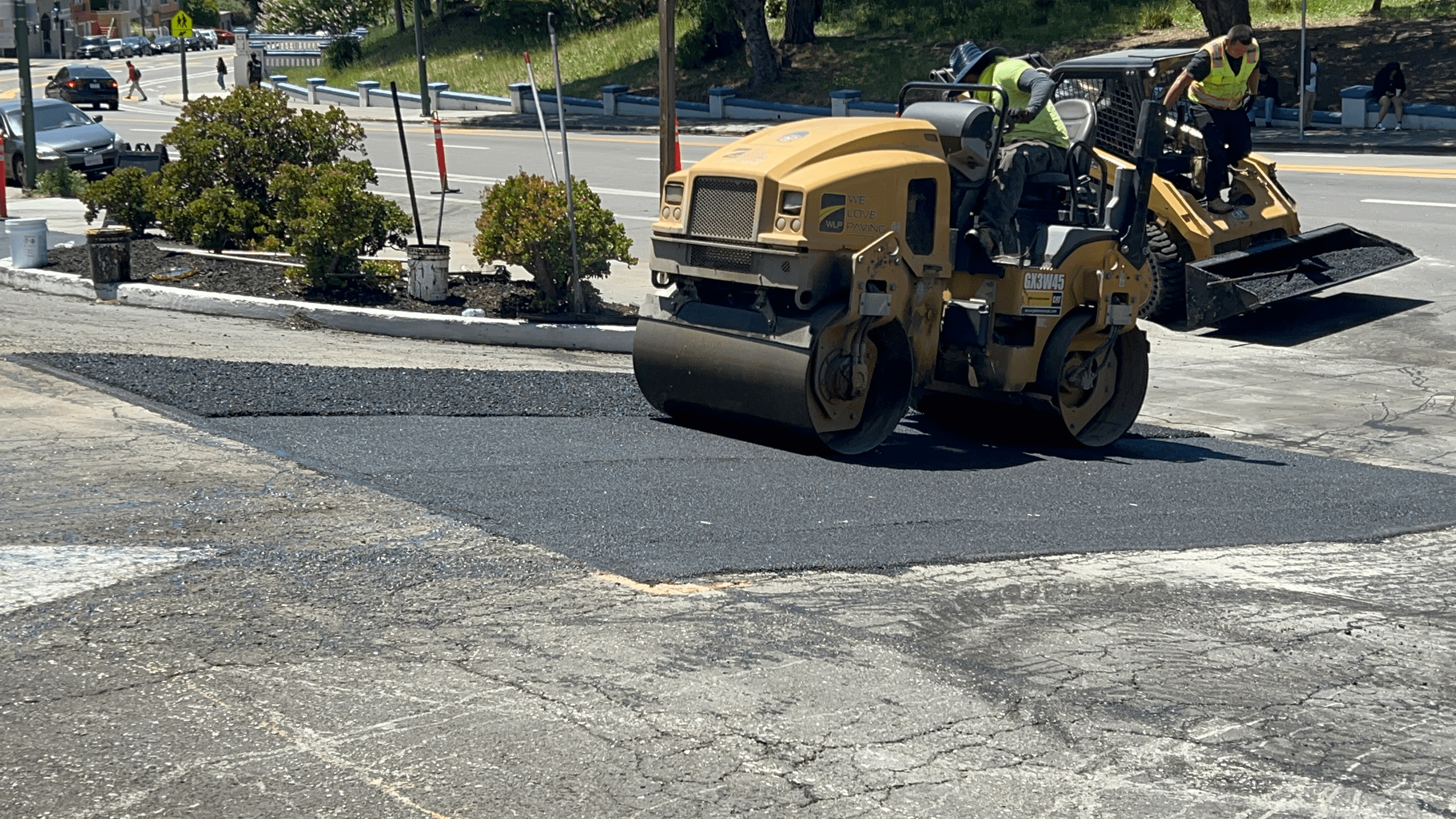
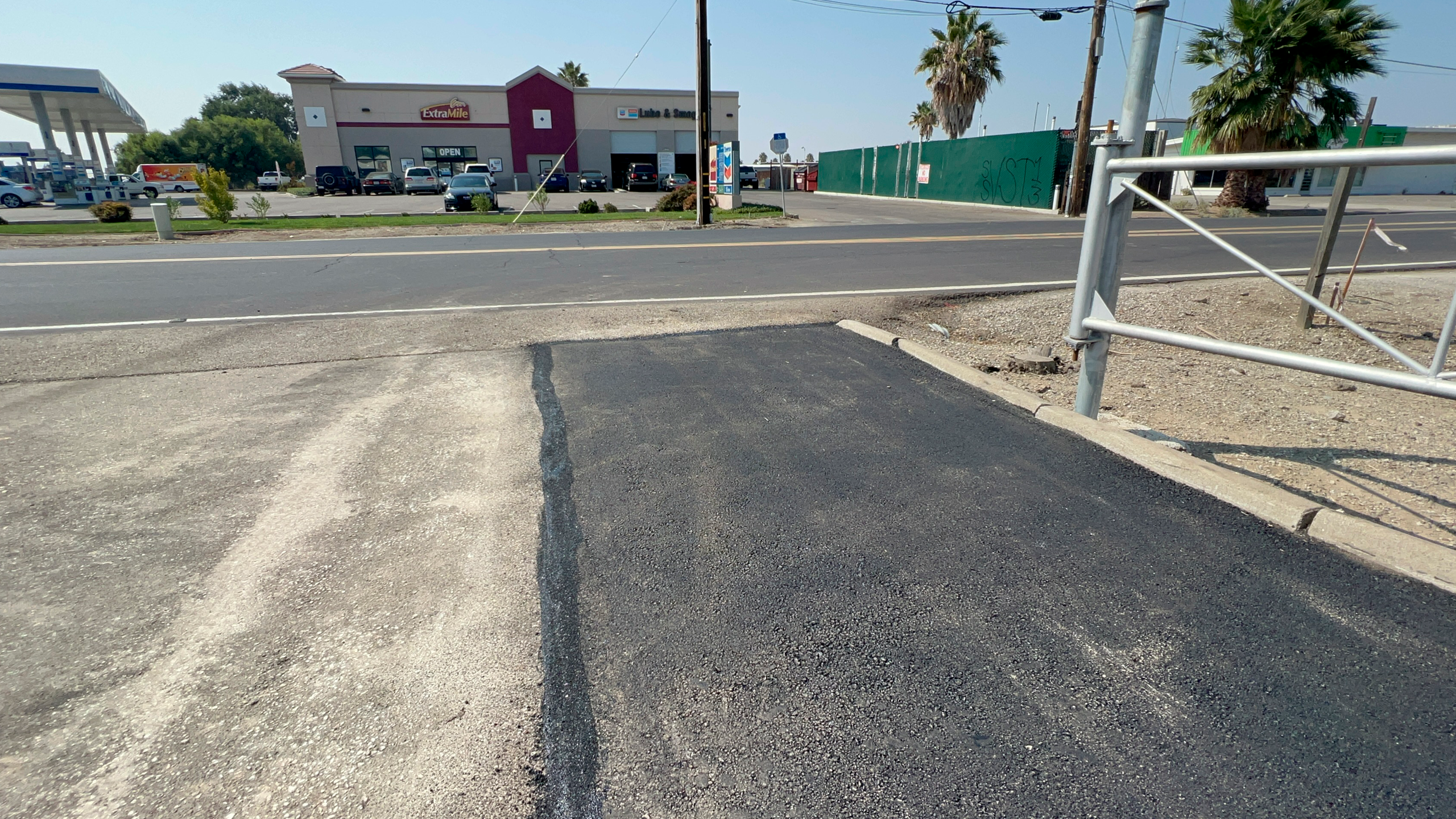
  • asphalt patching

  • re-pouring transitions

  • rebuilding ramps

  • correcting slopes

  • installing new warnings

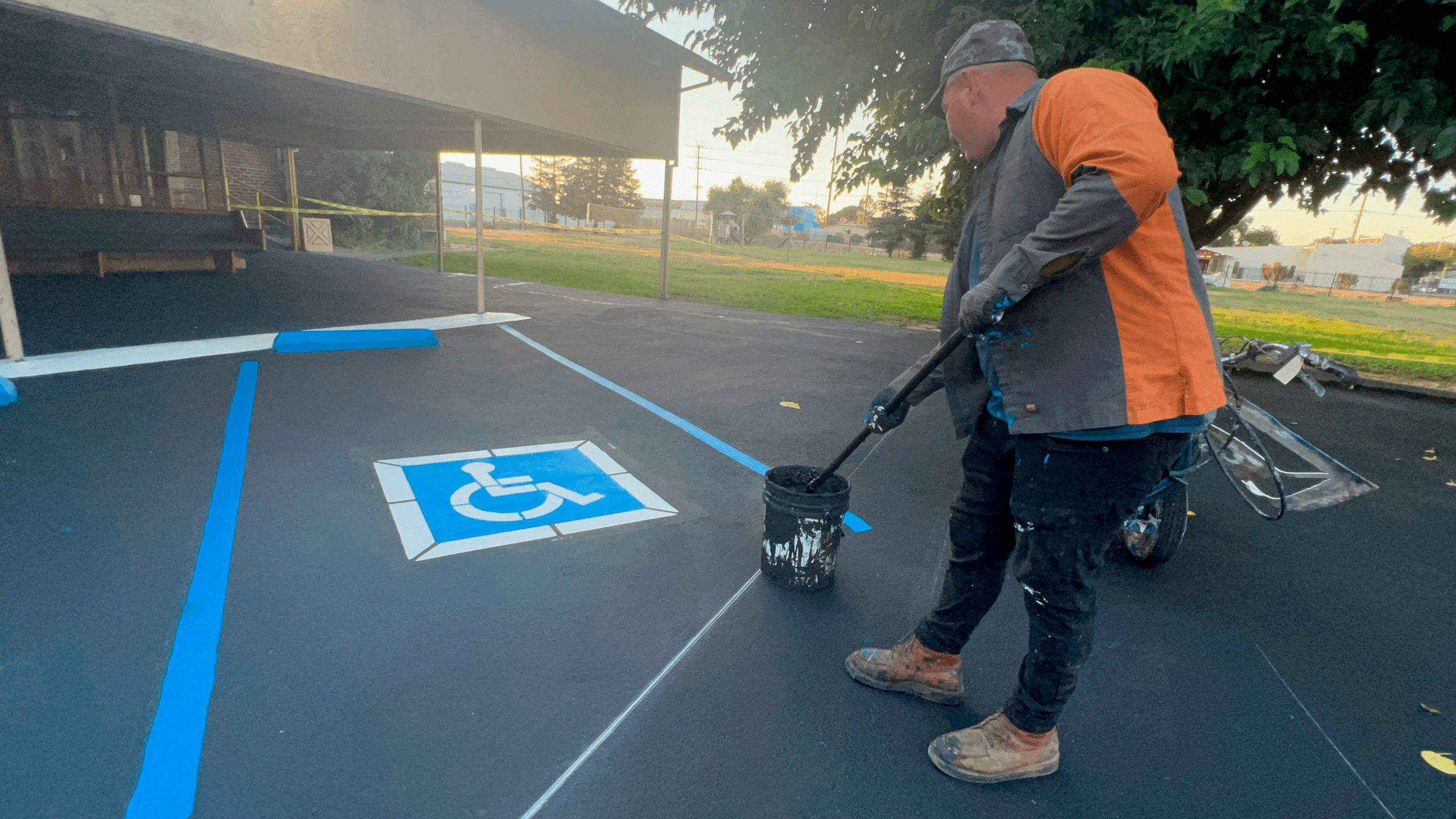
  • restriping accessible walkways

Every repair must meet ADA + CBC specs.


Step 4 — Document Everything With Before/After Photos

Documentation protects PMs from:

  • tenant complaints

  • legal claims

  • compliance audits

  • insurance issues


Step 5 — Schedule Annual Maintenance

Because:

  • concrete shifts

  • asphalt settles

  • paint fades

  • weather damages signage

  • roots uplift slabs

ADA is not one-time. It’s ongoing maintenance.


5. The WLP Path of Travel Compliance Program

We created a specific program to protect properties in California:

✔ Full Path of Travel Audit

✔ Slope & Level Measurements

✔ Trip Hazard Removal

✔ Ramp & Landing Corrections

✔ Truncated Domes Installation

✔ Walkway Repairs

✔ ADA Walkway Striping

✔ Documentation for Legal Protection

✔ Annual Maintenance Schedule

Our crews are trained specifically for ADA + CBC compliance.


6. Get a Free Path of Travel Inspection (California Properties)

We offer a free, quick Path of Travel assessment for:

  • retail centers

  • industrial parks

  • HOAs

  • multifamily

  • medical offices

  • commercial buildings

Includes:

  • 10-minute walkthrough

  • photos

  • list of violations

  • risk-level breakdown

  • recommended fixes

👉 Message us or visit welovepaving.com to schedule your free ADA route assessment.


Share

WHO IS FRED?

Fred, Regional Operations Manager, comes from a family of immigrant roots and a story built on sacrifice, discipline, and hard work. Growing up, Fred watched his parents work long hours and weekends to create a better future teaching him the values of perseverance, determination, and doing things the right way every single time.
We Love Paving began with Fred’s father, who started doing what he knew best: paving. Over the years, he built experience alongside respected professionals in the industry, refining his methods and developing a reputation for quality work that speaks for itself. As his clientele grew, so did the vision one built not only on skill, but on integrity and pride in every job.

Posts that might interest you

Does Asphalt Harden Over Time? Understanding the Aging Process and Its Implications

Does Asphalt Harden Over Time? Understanding the Aging Process and Its Implications

July 16, 2024

Asphalt, commonly known as bitumen, is a vital material used in constructing roads, driveways, and parking lots. Known for its durability and flexibility, asphalt provides a smooth driving surface and withstands various environmental conditions. However, one question that often arises is, “Does asphalt harden over time?” Understanding the hardening process of asphalt is crucial for

How Can You Tell if Asphalt is Bad in Sacramento, California?

How Can You Tell if Asphalt is Bad in Sacramento, California?

July 9, 2024

Asphalt is the backbone of Sacramento’s infrastructure, from the driveway of a charming home in East Sacramento to the expansive parking lots of Arden-Arcade. However, the Valley’s unique climate—with its blistering summer heat and damp winters—can be unforgiving. Knowing the warning signs of failing pavement can save you thousands of dollars in reconstruction costs. In

What is ADA Compliance in Sacramento, California?

What is ADA Compliance in Sacramento, California?

July 9, 2024

The Americans with Disabilities Act (ADA) is a federal civil rights law enacted in 1990 to prevent discrimination against individuals with disabilities. ADA compliance ensures that public spaces and facilities are accessible to everyone, regardless of their physical abilities. In Sacramento, California, ADA compliance is essential for both public and private entities, including businesses, educational

Asphalt Paving Service in Sacramento: What You Need to Know

Asphalt Paving Service in Sacramento: What You Need to Know

July 9, 2024

Sacramento, California, with its sunny climate and bustling urban environment, is an ideal location for durable and attractive asphalt paving projects. Whether you’re a homeowner looking to enhance your driveway or a business owner seeking to improve your parking lot, asphalt paving services in Sacramento offer a range of solutions to meet your needs. In

Is an Asphalt Paving Patio Better Than Concrete?

Is an Asphalt Paving Patio Better Than Concrete?

July 9, 2024

When planning an outdoor living space, homeowners often face the choice between an asphalt paving patio and a concrete patio. Both options offer unique benefits and drawbacks, and the decision largely depends on factors such as aesthetics, budget, durability, and maintenance requirements. In this article, we will explore the pros and cons of asphalt paving

Why is My Asphalt Driveway Cracking?

Why is My Asphalt Driveway Cracking?

July 8, 2024

Asphalt driveways are a popular choice for many homeowners due to their durability, cost-effectiveness, and ease of installation. However, over time, it’s common for asphalt driveways to develop cracks. Understanding the underlying causes of these cracks can help homeowners take preventative measures and address issues before they escalate into more significant problems. In this article,

What are the Requirements for ADA Parking in California?

What are the Requirements for ADA Parking in California?

July 8, 2024

The Americans with Disabilities Act (ADA) ensures that individuals with disabilities have equal access to public accommodations, including parking facilities. California, known for its progressive stance on accessibility, has specific regulations that complement federal ADA standards to ensure that parking facilities are accessible to all individuals. Understanding these requirements is crucial for property owners, architects,

The Benefits of Asphalt Paving in Sacramento

The Benefits of Asphalt Paving in Sacramento

July 5, 2024

Asphalt is a crucial component of Sacramento’s infrastructure, serving as the foundation for mobility, safety, and urban aesthetics. However, not all asphalt surfaces are created equal. A key factor in the quality of an asphalt surface is its thickness. The required thickness depends on the traffic load and soil conditions. Cost-Effective Asphalt is cheaper to

How Long Should an Asphalt Driveway Last Before Cracking?

How Long Should an Asphalt Driveway Last Before Cracking?

July 5, 2024

When investing in an asphalt driveway, homeowners often wonder about its longevity and durability. Asphalt driveways are popular due to their affordability, aesthetic appeal, and resilience. However, like any material, asphalt is not immune to wear and tear, and over time, cracking can occur. This article explores the lifespan of asphalt driveways before cracking, with

What Temperature Should Asphalt Be Between Lifts? Insights from Sacramento, California

What Temperature Should Asphalt Be Between Lifts? Insights from Sacramento, California

July 5, 2024

Asphalt paving is a precise and methodical process where temperature plays a critical role in ensuring the durability and quality of the pavement. This is particularly true for the placement of multiple lifts or layers of asphalt. In Sacramento, California, with its distinctive climate, understanding the optimal temperature for asphalt between lifts is essential for

Previous Next