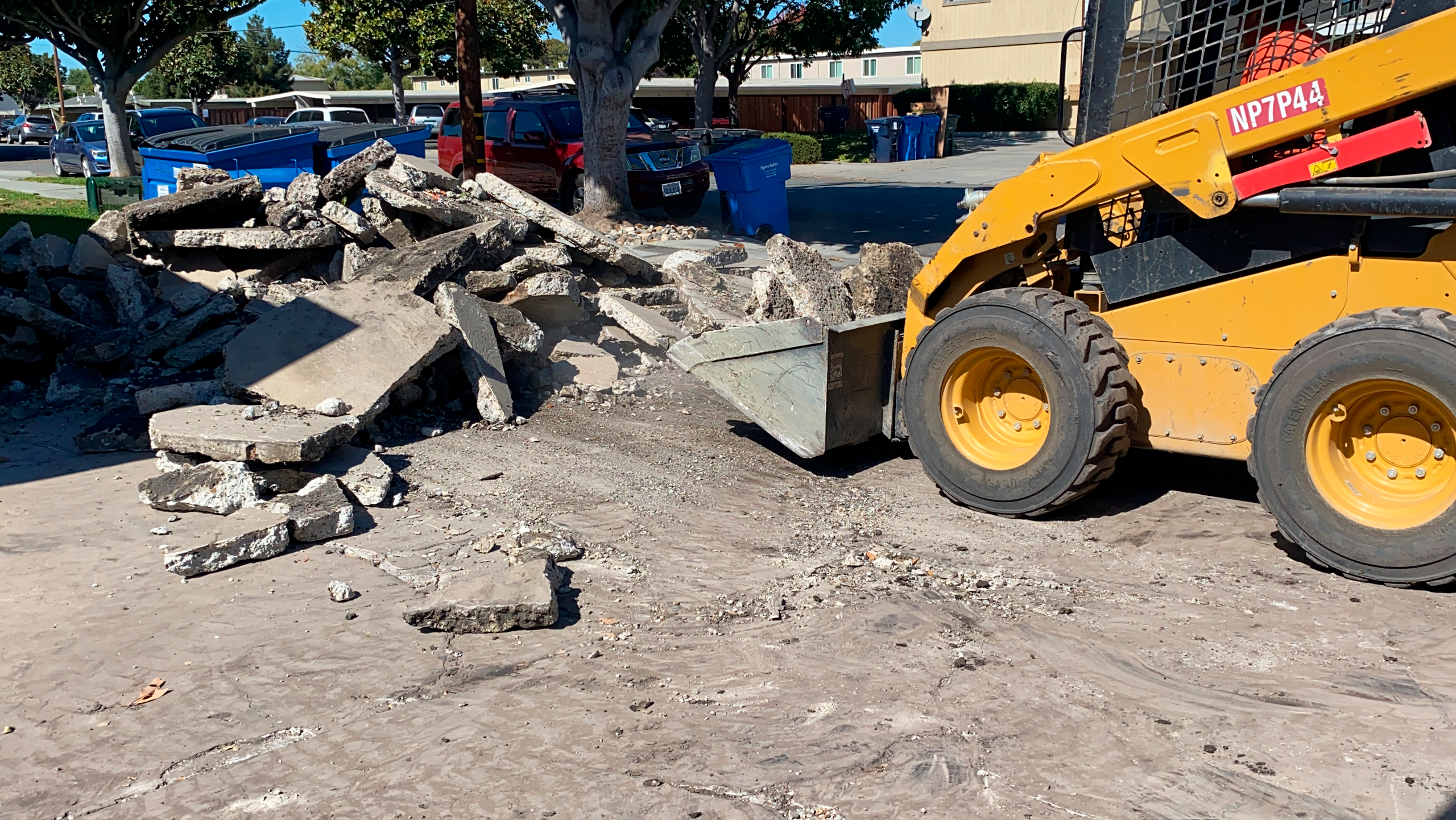
Why Parking Lots Fail Faster Than Property Owners Expect

Many property owners are surprised when a parking lot begins to deteriorate sooner than expected.

From the surface, the pavement may still look acceptable. Striping may be visible. There may be no major cracks or potholes. Yet underneath, deterioration is already in progress.

Parking lots often fail earlier than owners anticipate not because they were poorly built — but because pavement is commonly misunderstood.


Parking Lots Are Structural Assets, Not Cosmetic Features

A parking lot is not just a finished surface.

It is a layered system designed to handle:

  • Constant vehicle loads

  • Repeated turning stress

  • Water exposure

  • Temperature changes

  • Public accessibility requirements

Even when the surface looks intact, stress is being transferred through the pavement structure every day.

Unlike interior assets, parking lots are exposed continuously — and deterioration begins long before visual damage appears.


Traffic Load Accelerates Wear More Than Age

Many owners assume pavement lifespan is tied mainly to time.

In reality, traffic patterns matter more than age.

High-stress areas degrade first:

  • Drive lanes with constant turning

  • Trash enclosures

  • Fire lanes

  • Delivery and loading zones

  • Accessible parking areas

Turning movements and heavy loads create shear stress that weakens pavement faster than straight-line traffic. These areas often fail years before the rest of the lot.


Water Is the Primary Driver of Pavement Failure

Water is the most common and most underestimated cause of early pavement failure.

Once water penetrates the surface, it:

  • Weakens the base layer

  • Creates uneven settlement

  • Accelerates cracking

  • Alters surface slopes

Drainage issues do not always look severe. Shallow pooling or recurring damp spots are often early indicators of deeper structural problems.

Over time, water-related issues compound quietly — until repairs become unavoidable.


Deferred Maintenance Speeds Up Deterioration

Small issues are often postponed because they do not seem urgent.

Examples include:

  • Hairline cracking

  • Minor settlement

  • Fading striping

  • Subtle drainage problems

When maintenance is delayed, these minor issues allow water intrusion and structural movement to continue unchecked.

What could have been addressed through preventive maintenance often escalates into full-depth repairs or premature replacement.


Appearance Is a Poor Indicator of Pavement Health

One of the most common misconceptions is that a parking lot is performing well because it looks fine.

Visual condition alone does not reveal:

  • Subsurface movement

  • Slope deviations

  • Drainage failures

  • Base layer degradation

By the time damage becomes obvious, deterioration has usually been occurring for years.


Why Early Failure Often Feels “Unexpected”

From an owner’s perspective, early pavement failure can feel sudden.

In reality, failure is usually gradual and predictable — it simply goes unnoticed until visible signs appear.

This gap between actual pavement condition and perceived condition is why many parking lots fail sooner than expected.


A Maintenance-First Approach Extends Pavement Life

Parking lots last longer when they are managed as long-term assets, not reactive repairs.

This includes:

  • Routine inspections

  • Monitoring high-stress areas

  • Addressing drainage early

  • Sealing and repairing at the right time

  • Planning maintenance instead of reacting to damage

Preventive maintenance does not eliminate deterioration — but it slows it significantly and preserves value.


The We Love Paving Perspective

At We Love Paving, parking lots are approached as infrastructure systems, not cosmetic surfaces.

Understanding how and why pavement deteriorates allows property owners to:

  • Avoid premature failure

  • Reduce long-term costs

  • Minimize operational disruption

  • Protect property value

Pavement rarely fails suddenly.
It fails quietly — until it can no longer be ignored.


Share

WHO IS FRED?

Fred, Regional Operations Manager, comes from a family of immigrant roots and a story built on sacrifice, discipline, and hard work. Growing up, Fred watched his parents work long hours and weekends to create a better future teaching him the values of perseverance, determination, and doing things the right way every single time.
We Love Paving began with Fred’s father, who started doing what he knew best: paving. Over the years, he built experience alongside respected professionals in the industry, refining his methods and developing a reputation for quality work that speaks for itself. As his clientele grew, so did the vision one built not only on skill, but on integrity and pride in every job.

Posts that might interest you

How to Save Money on Paving Your Driveway in Sacramento, California.

How to Save Money on Paving Your Driveway in Sacramento, California.

June 14, 2024

Paving a driveway can be a significant investment, but with careful planning and smart choices, you can save money while ensuring a quality result. Sacramento, with its unique climate and soil conditions, requires specific considerations. Here’s a comprehensive guide on how to save money on paving your driveway in Sacramento. Plan and Budget Wisely Before

Seal Coat vs. Slurry Seal: Understanding the Differences and Benefits

Seal Coat vs. Slurry Seal: Understanding the Differences and Benefits

June 13, 2024

When it comes to maintaining and prolonging the life of asphalt pavements, two common treatments often come into play: seal coat and slurry seal. Both methods serve the purpose of protecting and enhancing asphalt surfaces, but they have distinct differences in composition, application, and suitability for various conditions. In this article, we’ll delve deep into

Do You Put Sand or Gravel Under Asphalt Paving? A Guide for Sacramento, California

Do You Put Sand or Gravel Under Asphalt Paving? A Guide for Sacramento, California

June 11, 2024

When it comes to installing asphalt paving in Sacramento, California, one of the most common questions homeowners and builders have is whether to use sand or gravel as a base. Both materials play crucial roles in ensuring a durable, stable, and aesthetically pleasing paved surface. This article explores the importance of using sand and gravel

What is Concreting in Construction? A Focus on Sacramento, California

What is Concreting in Construction? A Focus on Sacramento, California

June 11, 2024

Concreting is a fundamental process in construction, playing a crucial role in creating durable and robust structures. From residential homes to commercial buildings and infrastructure projects, concrete is a versatile and widely used material. In Sacramento, California, concreting is essential for the city’s ongoing growth and development. This article delves into the specifics of concreting

Why Choose Asphalt for Road Construction in San Mateo, California?

Why Choose Asphalt for Road Construction in San Mateo, California?

June 10, 2024

In the picturesque city of San Mateo, California, maintaining and developing infrastructure is vital to support a growing community and enhance the quality of life. When it comes to road construction, asphalt emerges as the material of choice, offering a blend of practicality, sustainability, and performance. This article explores why asphalt is favored in San

The Essential Guide to Road Base Depth in San Mateo, California

The Essential Guide to Road Base Depth in San Mateo, California

June 7, 2024

When it comes to constructing roads, one of the critical factors that influence durability and performance is the depth of the road base. This is particularly important in regions like San Mateo, California, where specific geological and environmental conditions can impact road stability. This article investigates the ideal road base depth for San Mateo, incorporating

An Investigation into Why Paving Slabs Are So Expensive

An Investigation into Why Paving Slabs Are So Expensive

June 6, 2024

Paving slabs, commonly used in patios, walkways, and driveways, are a popular choice for outdoor paving due to their durability and aesthetic appeal. However, one frequently raised concern is their high cost. This investigation explores the factors contributing to the expense of paving slabs, covering material selection, manufacturing processes, transportation, labor, and market dynamics. Understanding

An Investigation into the Two Main Types of Paving: Concrete and Asphalt

An Investigation into the Two Main Types of Paving: Concrete and Asphalt

June 6, 2024

Paving is a crucial aspect of urban development and infrastructure. The choice of paving material significantly impacts the durability, cost, maintenance, and overall aesthetic of roads, driveways, and other paved surfaces. This investigation delves into the two main types of paving: concrete and asphalt. By examining their composition, installation processes, advantages, disadvantages, and applications, we

What is a concrete service?

What is a concrete service?

June 5, 2024

A concrete service typically refers to a service provided by a concrete contractor or company. Concrete services encompass a wide range of offerings related to the installation, repair, and maintenance of concrete structures. These services may include: Concrete Installation This involves pouring and shaping concrete to create various structures such as driveways, sidewalks, foundations, retaining

Unveiling the Power of Concrete: A Masterpiece in Modern Construction

Unveiling the Power of Concrete: A Masterpiece in Modern Construction

June 5, 2024

In the realm of construction, few materials boast the versatility, durability, and sheer impact of concrete. Often regarded as the cornerstone of modern architecture and infrastructure, concrete stands as a testament to human ingenuity and engineering prowess. In this exploration, we delve into the myriad facets of concrete, uncovering its secrets, applications, and enduring significance

Previous Next