The Ultimate Parking Lot Maintenance Checklist for Northern California Property Managers

If you manage a commercial property in Northern California, you already know: your parking lot says a lot about your business.
It’s the first and last thing tenants, visitors, and customers see — and it’s often where safety, liability, and property value intersect.

The good news? A well-maintained parking lot doesn’t just look better — it lasts longer and costs less in the long run.
That’s why we created the ultimate parking lot maintenance checklist, designed specifically for property managers in the Bay Area, Sacramento, and Modesto.


1. Inspect Your Pavement Quarterly

Northern California’s mix of heat, rain, and traffic takes a toll on asphalt.
A quarterly inspection helps you spot small problems before they turn into costly repairs.

What to look for:

  • Cracks or “alligator” cracking patterns.

  • Standing water or poor drainage.

  • Potholes, depressions, or surface ruts.

  • Oil stains or chemical spills.

🧠 Pro Tip: Keep a simple photo log each quarter — it makes vendor quotes and budgeting much easier later.


2. Schedule Regular Cleaning and Sweeping

Dirt, leaves, and debris don’t just look bad — they hold moisture and accelerate pavement damage.
Routine sweeping keeps the surface clean and improves drainage.

Recommended frequency:

  • Monthly: General sweeping and trash removal.

  • Quarterly: Power sweeping for commercial or high-traffic lots.


3. Sealcoat Every 2–3 Years

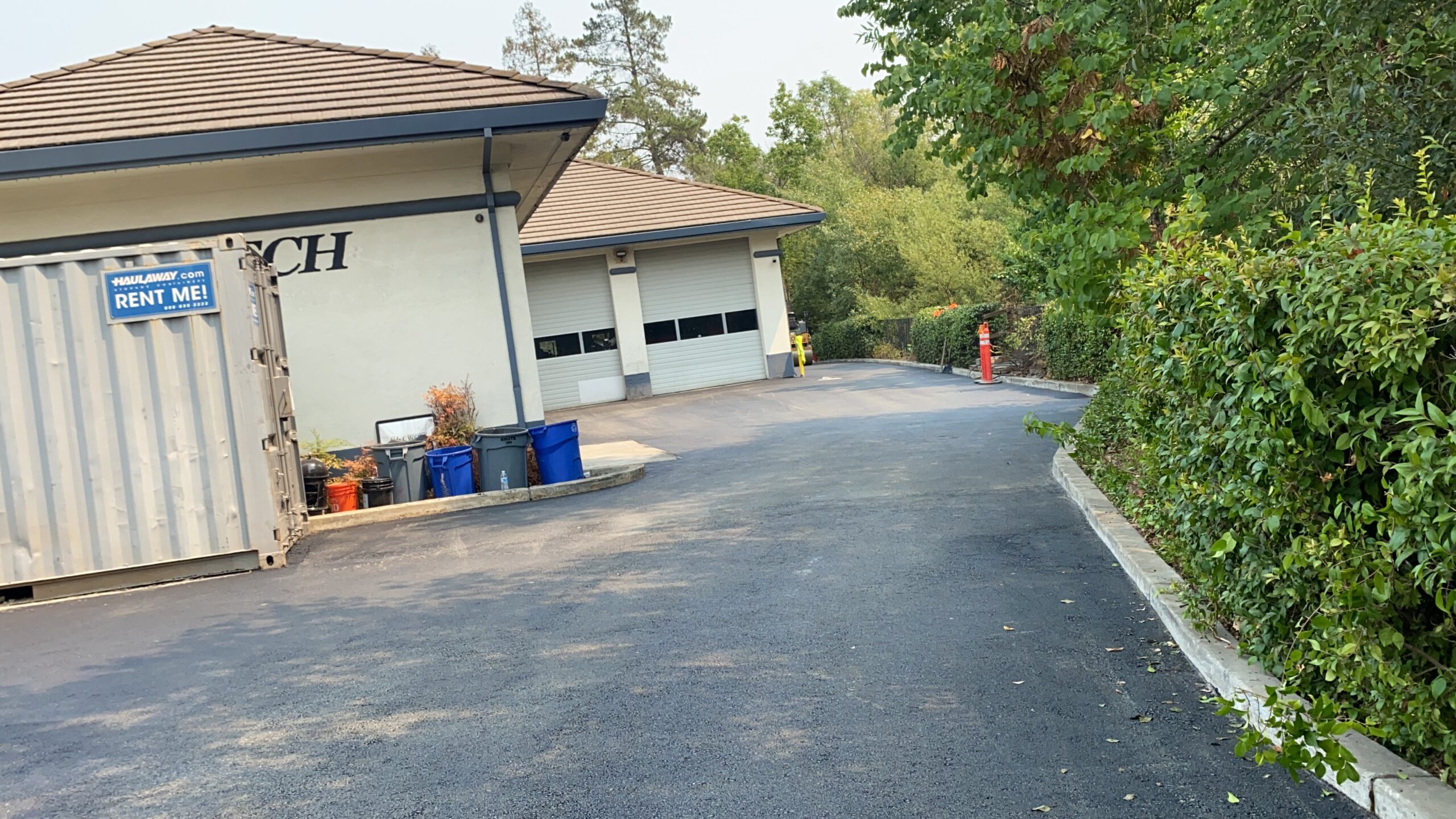
Sealcoating acts as a shield against UV rays, oil, and water — the three biggest enemies of asphalt.
It also restores the deep black finish that makes your property look new again.

Signs it’s time for sealcoating:

  • Faded color.

  • Surface feels dry or rough.

  • Visible oxidation or cracks forming.

🧠 Pro Tip: Plan sealcoating during spring or early summer for best curing in Northern California’s climate.


4. Crackfill Annually

Small cracks allow water to penetrate the base layers, causing structural failure.
Professional crackfilling once a year prevents costly resurfacing later.

Avoid DIY fillers — they rarely bond properly and usually fail after the first rain.


5. Re-Stripe and Re-Marking Every 18–24 Months

Faded lines not only look bad, they’re a safety hazard and ADA liability.
Re-striping ensures compliance and keeps traffic organized.

Include in your inspection:

  • Handicap stalls and signage (ADA).

  • Fire lanes and loading zones.

  • Directional arrows and curbs.

🎯 Pro Tip: Pair re-striping with sealcoating to save time and reduce closures.


6. Check Drainage Systems Before Rainy Season

Blocked or inefficient drains cause standing water — the #1 cause of asphalt degradation.

Inspect and clean:

  • Catch basins and inlets.

  • Gutters and concrete curbs.

  • Slopes and water flow paths.


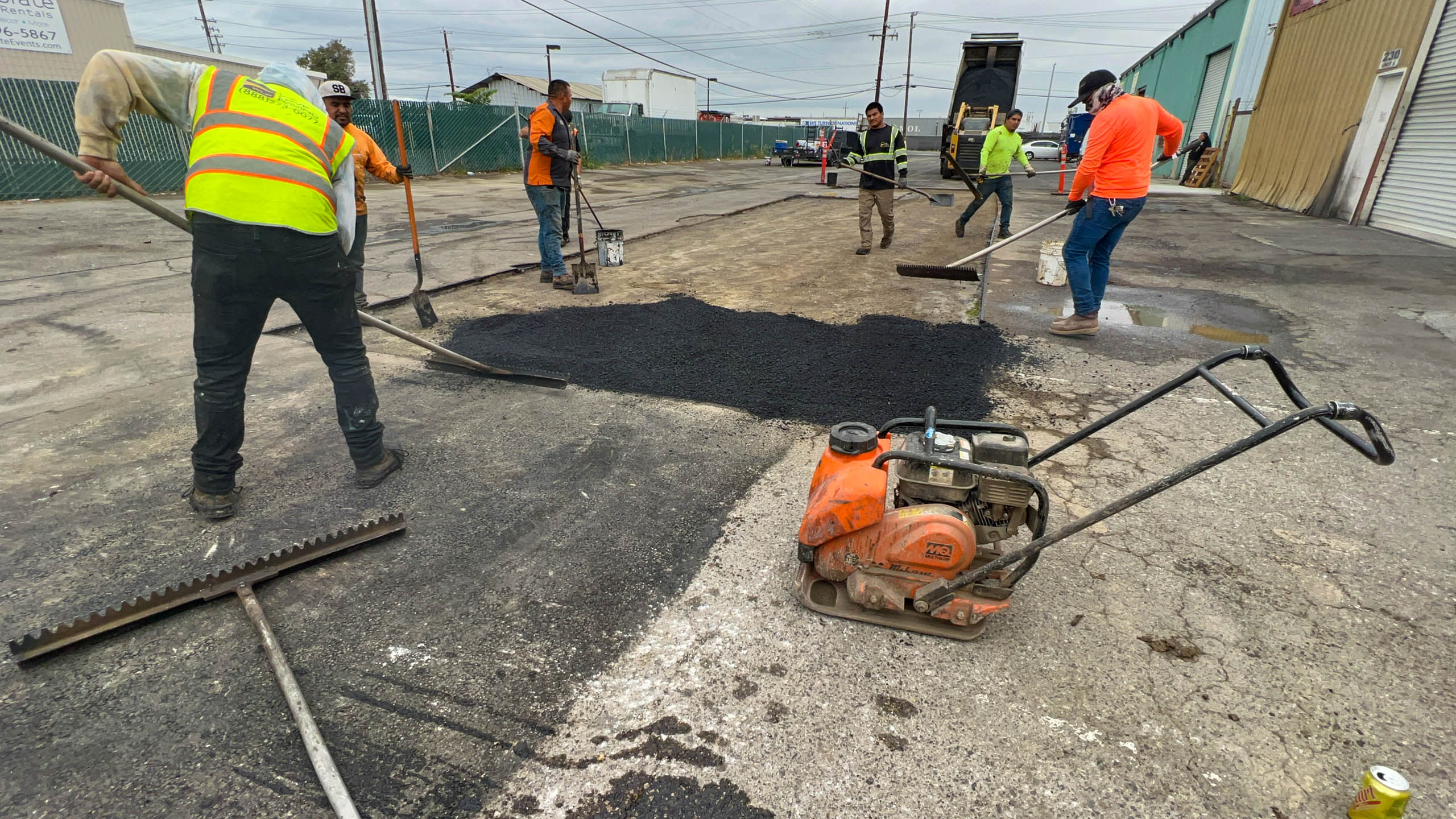
7. Repair Potholes Immediately

A single pothole can grow fast — and it’s a liability risk.
Cold patch fixes rarely last; a professional infrared or hot mix repair provides long-term stability.


8. Review ADA Compliance Annually

California’s ADA regulations are strict, and violations can lead to lawsuits.
Ensure your parking lot layout, ramps, and signage meet current standards.

🧠 Pro Tip: Ask We Love Paving for a free ADA compliance assessment — we handle layout, signage, and surface slope verification.


9. Budget for Preventive Maintenance

Smart property managers treat pavement like a long-term asset, not a short-term expense.
Plan for annual maintenance funds that cover sealcoating, striping, and small repairs — typically 10–15¢ per sq. ft. annually.


10. Partner with a Trusted Local Contractor

Consistency is everything.
At We Love Paving, we understand the climate, soil, and wear patterns unique to Northern California.
Our crews deliver reliable, professional service — from asphalt repair to ADA compliance — with minimal disruption to your tenants.


Final Thought

Your parking lot doesn’t need to be a headache.
With regular inspections, preventive care, and a reliable paving partner, you’ll keep your property safe, compliant, and looking sharp year-round.

📞 Request your free maintenance quote at www.welovepaving.com


Share

WHO IS FRED?

Fred, Regional Operations Manager, comes from a family of immigrant roots and a story built on sacrifice, discipline, and hard work. Growing up, Fred watched his parents work long hours and weekends to create a better future teaching him the values of perseverance, determination, and doing things the right way every single time.
We Love Paving began with Fred’s father, who started doing what he knew best: paving. Over the years, he built experience alongside respected professionals in the industry, refining his methods and developing a reputation for quality work that speaks for itself. As his clientele grew, so did the vision one built not only on skill, but on integrity and pride in every job.

Posts that might interest you

The #1 Asphalt Calculator For Projects

The #1 Asphalt Calculator For Projects

November 21, 2024

How to Tell if Concrete Will Buckle: Expert Tips for California Homeowners

How to Tell if Concrete Will Buckle: Expert Tips for California Homeowners

November 21, 2024

Concrete is known for its strength and durability, but even in the best conditions, cracks can form. In California, the combination of unique environmental factors, soil types, and climate challenges can accelerate this process. Understanding why concrete cracks and how to prevent it is key to maintaining durable surfaces for years to come. Top Causes

Asphalt and What Is the Square Foot Price?

Asphalt and What Is the Square Foot Price?

September 5, 2024

Asphalt Paving FAQs for HOAs: A Comprehensive Guide

Asphalt Paving FAQs for HOAs: A Comprehensive Guide

August 26, 2024

Homeowners’ Associations (HOAs) are responsible for maintaining common areas within communities, ensuring that shared spaces remain safe, attractive, and functional. One of the most significant aspects of this responsibility is the maintenance and management of asphalt-paved areas, such as roads, driveways, and parking lots. Proper asphalt paving and maintenance can extend the lifespan of these

How to Calculate the Price of Asphalt

How to Calculate the Price of Asphalt

August 23, 2024

Asphalt is a popular paving material for driveways, parking lots, and roads due to its durability and cost-effectiveness. If you’re planning to pave an area with asphalt, one of the first things you’ll want to know is how much it will cost. Calculating the price of asphalt involves several factors, including the size of the

What is the Cheapest Form of Paving?

What is the Cheapest Form of Paving?

August 23, 2024

When it comes to enhancing your property with a paved surface, cost is often a major consideration. Whether you’re looking to pave a driveway, patio, walkway, or other outdoor areas, finding a budget-friendly solution that doesn’t compromise on quality is key. While there are numerous paving options available, each with its own set of advantages

Can You Asphalt Over an Old Asphalt Driveway?

Can You Asphalt Over an Old Asphalt Driveway?

August 19, 2024

Yes but only when the existing asphalt is structurally sound. Asphalt overlay works when the base beneath the driveway is stable and damage is limited to surface wear. If deeper issues exist, adding new asphalt will only mask problems temporarily. Asphalt driveways are known for their durability and longevity, but over time, even the best-maintained

What is the Difference Between Road Asphalt and Driveway Asphalt?

What is the Difference Between Road Asphalt and Driveway Asphalt?

August 16, 2024

If your driveway is looking cracked, faded, or worn out, you’re likely looking for the most efficient way to restore it. One of the most common questions property owners ask is: Can you put new asphalt over an old asphalt driveway? The short answer is yes, but it depends heavily on the condition of the

What Should a New Asphalt Driveway Look Like?

What Should a New Asphalt Driveway Look Like?

August 16, 2024

A properly installed asphalt driveway should have a smooth and even surface with no visible bumps, waves, or depressions. The surface should feel consistent when walking or driving over it, without sudden dips or raised areas. When freshly installed, asphalt typically has a deep black, uniform color, indicating the mix was applied and compacted correctly.

Is Asphalt Good for a Patio?

Is Asphalt Good for a Patio?

August 15, 2024

When it comes to creating outdoor spaces like patios, choosing the right material is crucial for both aesthetics and functionality. While materials like concrete, pavers, and natural stone are often the go-to choices, some homeowners and property owners consider asphalt as an alternative. But is asphalt a good option for a patio? In this blog

Previous Next