The Real Difference Between Patching, Overlaying & Repaving

If you manage a commercial property, you’ve probably heard contractors throw around terms like “patching,” “overlaying,” and “repaving.”
Most property managers know these are repair methods — but not the real difference between them.

After more than a decade working on commercial parking lots, here’s what we see:

👉 Choosing the wrong repair type leads to wasted money.
👉 Choosing the right one can extend the life of your pavement by years.

This guide breaks down the differences in simple terms so you can make the best decision for your property and your budget.


1. Patching — Best for Localized Damage

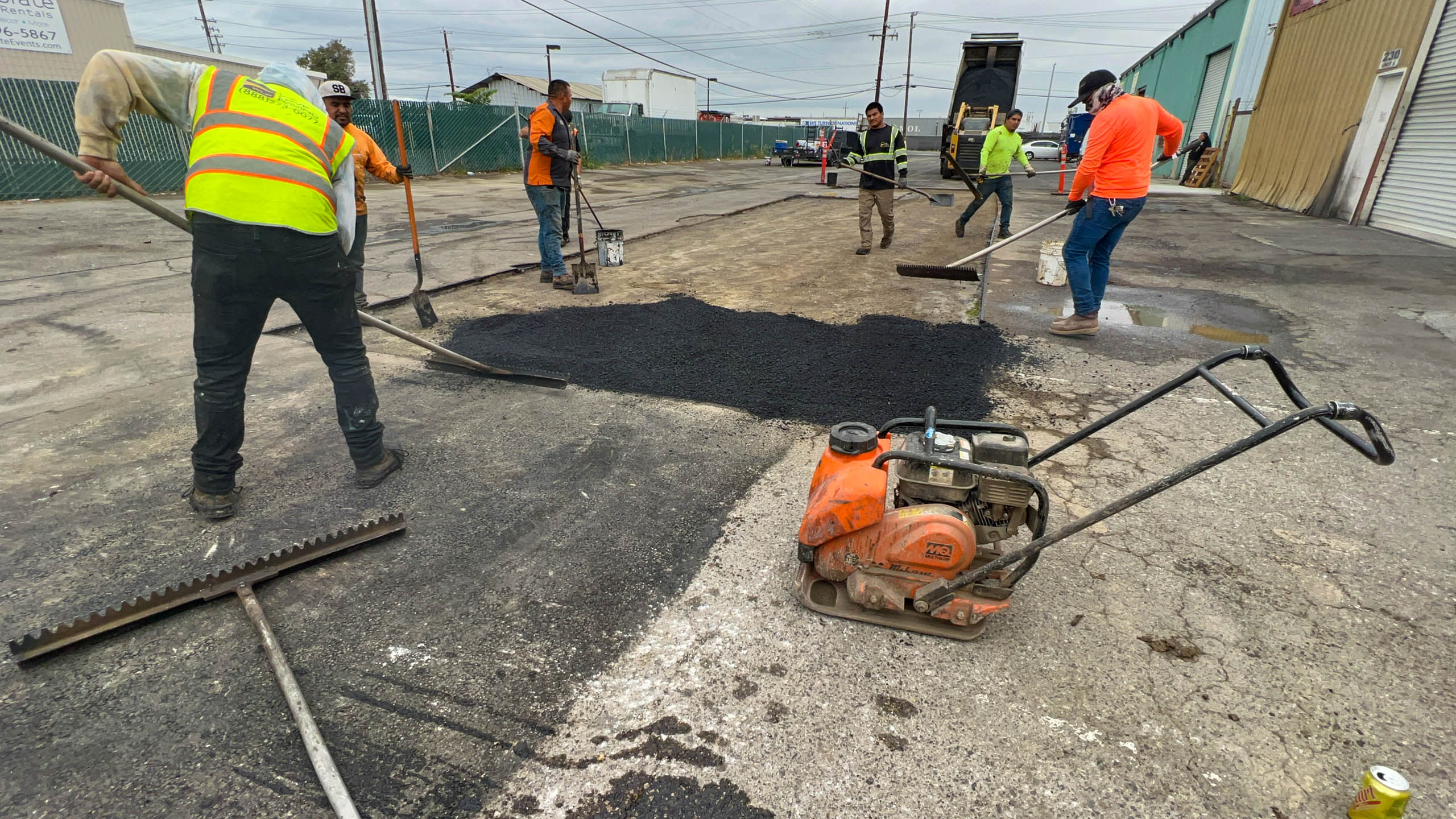
Patching is designed to fix specific problem areas, not the entire parking lot.

When to Use Patching:

  • Potholes

  • Alligator cracks in small sections

  • Soft spots

  • Areas where water has already penetrated

  • Damage under 10–15% of the total lot

Two Types of Patching:

✔ Surface Patch (Temporary Fix)

Adds new asphalt on top of damaged pavement.
Useful for quick improvements, but rarely a long-term solution.

✔ Full-Depth Patch (Permanent Fix)

Removes damaged asphalt and the failed base underneath, then rebuilds the structure.

Most PMs don’t realize this:

👉 If the base is damaged, no surface patch will last.
Full-depth patching is the only true fix.

Cost Range (estimated):

  • $300–$3,000 depending on size and depth

Bottom line:
Patching is perfect for isolated problems — but not for widespread failure.


2. Overlaying — A New Surface on Top of the Old One

Overlaying is also called “resurfacing.”
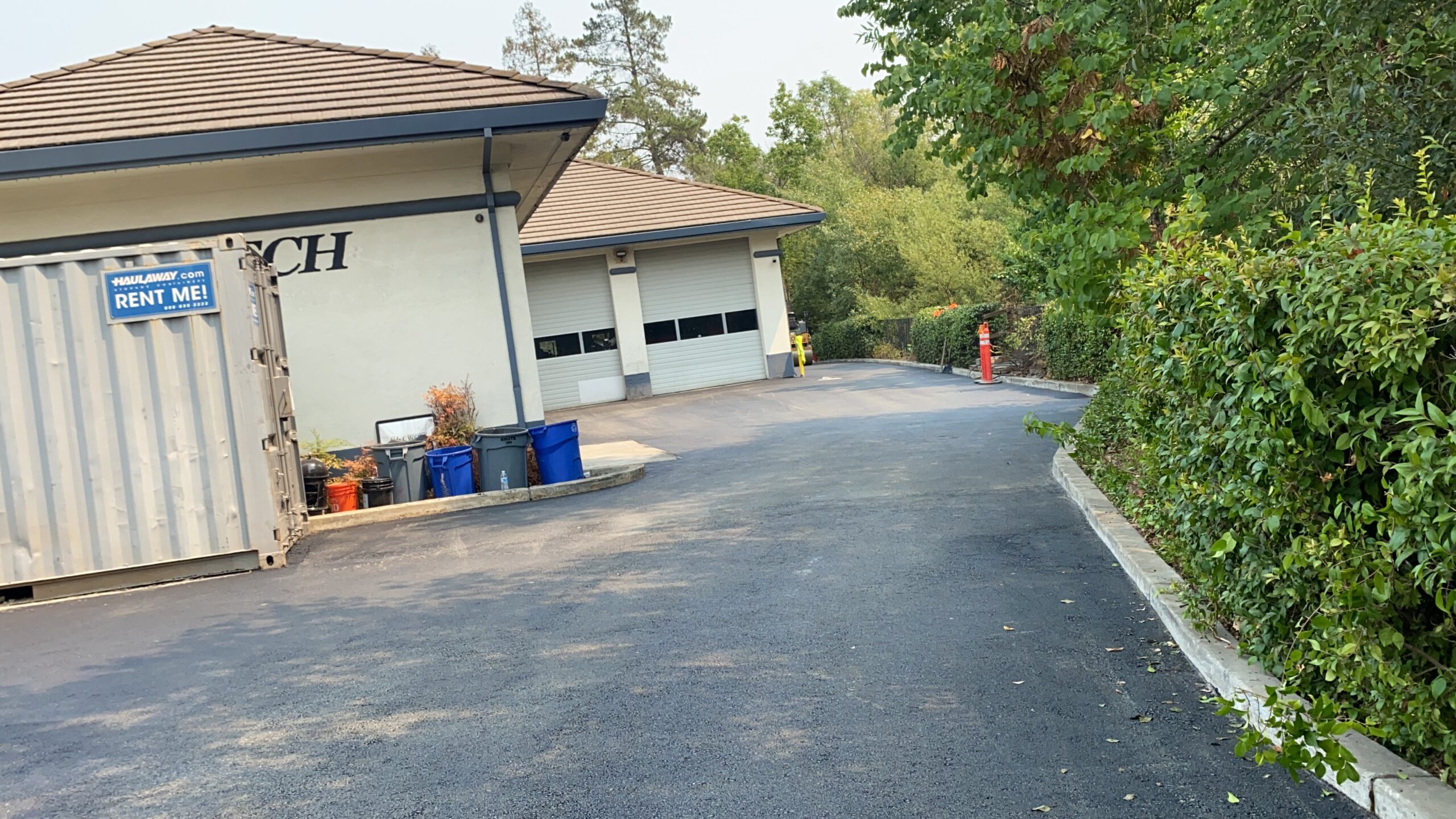
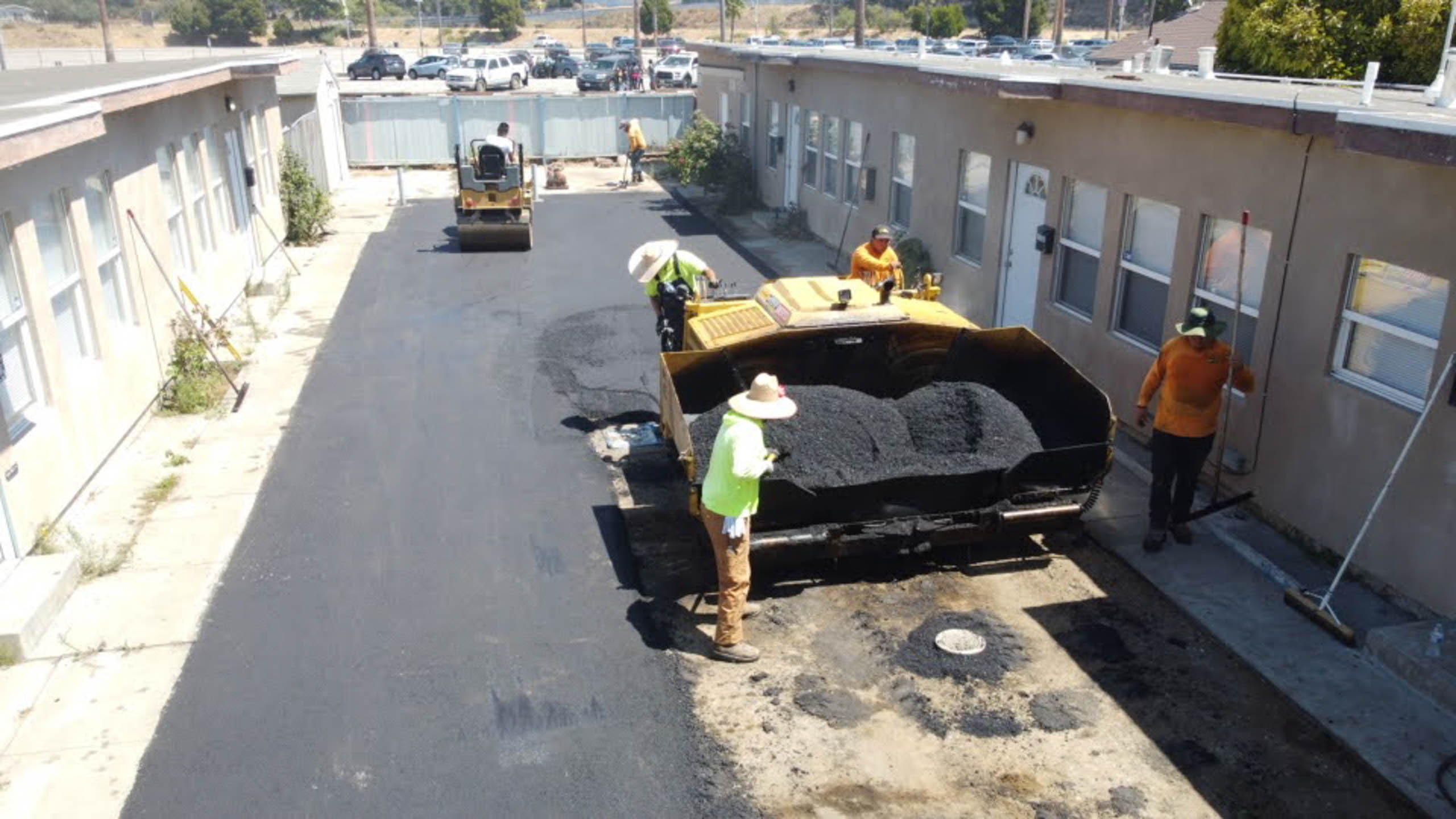
It adds a fresh layer of asphalt (usually 1.5”–2.5”) on top of existing pavement.

When Overlaying Works:

  • The base is still structurally strong

  • The surface is worn, cracked, or oxidized

  • 50–70% of the lot shows aging, but no major base failure

  • Budget doesn’t allow full replacement

What Overlaying CANNOT Fix:

  • Deep structural cracks

  • Alligator cracking

  • Drainage issues

  • Soft sub-base

  • Large potholes

If the structural foundation is bad, an overlay will crack again — sometimes within months.

Benefits of Overlaying:

  • Looks like a brand-new parking lot

  • Faster and cheaper than repaving

  • Extends life by 7–12 years when done correctly

Cost Range (estimated):

  • $1.50–$4.00 per sq ft

Bottom line:
Overlaying is a great middle option — but only if the underlying structure is solid.


3. Repaving — A Full Replacement for Long-Term Performance

Repaving means removing and replacing the entire pavement surface, and sometimes the base too.

This is the most durable and long-lasting solution.

When Repaving Is Needed:

  • Severe cracking across large areas

  • Base failure or sinking

  • Major drainage issues

  • Potholes are appearing in multiple zones

  • The pavement is 20+ years old

  • Previous overlays have failed

What Repaving Fixes:

  • Structural issues

  • Improper thickness

  • Old or weak base

  • Poor drainage

  • Long-term performance requirements

Benefits:

  • Restores the pavement structure

  • Improves drainage design

  • Provides a fresh, long-lasting surface

  • Reduces maintenance costs for years

Cost Range (estimated):

  • $4.50–$10.00+ per sq ft depending on depth and base work

Bottom line:
Choose repaving when you want a long-term solution and the pavement has reached the end of its useful life.


Which Option Is Right for Your Property?

Here’s the simplest breakdown:

Repair Type Best For Worst For
Patching Isolated damage Widespread failure
Overlaying Surface deterioration Base problems
Repaving Full structural repair Tight emergency budgets

A property manager should never rely on appearance alone — the pavement might look rough on top but be healthy underneath, or look OK but have a failing base.

That’s why inspections matter.


How We Love Paving Helps You Choose the Right Repair Method

We evaluate:

  • Base stability

  • Drainage patterns

  • Traffic load

  • Past repairs

  • Structural vs. surface issues

  • Long-term property plans

  • Budget constraints

Then we recommend the solution that gives you the best return on investment, not just the lowest quote.


Thinking About Repairs? Let’s Walk the Lot Together.

A quick evaluation can save you thousands in unnecessary work.

👉 Request a free assessment from We Love Paving.
We’ll tell you exactly whether your property needs patching, an overlay, or a full repave — with honest recommendations based on real field experience.

Share

WHO IS FRED?

Fred, Regional Operations Manager, comes from a family of immigrant roots and a story built on sacrifice, discipline, and hard work. Growing up, Fred watched his parents work long hours and weekends to create a better future teaching him the values of perseverance, determination, and doing things the right way every single time.
We Love Paving began with Fred’s father, who started doing what he knew best: paving. Over the years, he built experience alongside respected professionals in the industry, refining his methods and developing a reputation for quality work that speaks for itself. As his clientele grew, so did the vision one built not only on skill, but on integrity and pride in every job.

Posts that might interest you

TOP 5 Tips for A Perfect Asphalt Driveway Or Parking Lot

TOP 5 Tips for A Perfect Asphalt Driveway Or Parking Lot

November 26, 2024

Installing an asphalt driveway or parking lot is a long-term investment that requires proper planning and execution. Whether you’re a homeowner or managing a commercial project, ensuring the quality of the asphalt and the paving process is crucial. Here are the top 5 tips to achieve a flawless asphalt surface. 1.⁠ ⁠Start with Accurate Measurements

The #1 Asphalt Calculator For Projects

The #1 Asphalt Calculator For Projects

November 21, 2024

How to Tell if Concrete Will Buckle: Expert Tips for California Homeowners

How to Tell if Concrete Will Buckle: Expert Tips for California Homeowners

November 21, 2024

Concrete is known for its strength and durability, but even in the best conditions, cracks can form. In California, the combination of unique environmental factors, soil types, and climate challenges can accelerate this process. Understanding why concrete cracks and how to prevent it is key to maintaining durable surfaces for years to come. Top Causes

Asphalt and What Is the Square Foot Price?

Asphalt and What Is the Square Foot Price?

September 5, 2024

Asphalt Paving FAQs for HOAs: A Comprehensive Guide

Asphalt Paving FAQs for HOAs: A Comprehensive Guide

August 26, 2024

Homeowners’ Associations (HOAs) are responsible for maintaining common areas within communities, ensuring that shared spaces remain safe, attractive, and functional. One of the most significant aspects of this responsibility is the maintenance and management of asphalt-paved areas, such as roads, driveways, and parking lots. Proper asphalt paving and maintenance can extend the lifespan of these

How to Calculate the Price of Asphalt

How to Calculate the Price of Asphalt

August 23, 2024

Asphalt is a popular paving material for driveways, parking lots, and roads due to its durability and cost-effectiveness. If you’re planning to pave an area with asphalt, one of the first things you’ll want to know is how much it will cost. Calculating the price of asphalt involves several factors, including the size of the

What is the Cheapest Form of Paving?

What is the Cheapest Form of Paving?

August 23, 2024

When it comes to enhancing your property with a paved surface, cost is often a major consideration. Whether you’re looking to pave a driveway, patio, walkway, or other outdoor areas, finding a budget-friendly solution that doesn’t compromise on quality is key. While there are numerous paving options available, each with its own set of advantages

Can You Asphalt Over an Old Asphalt Driveway?

Can You Asphalt Over an Old Asphalt Driveway?

August 19, 2024

Yes but only when the existing asphalt is structurally sound. Asphalt overlay works when the base beneath the driveway is stable and damage is limited to surface wear. If deeper issues exist, adding new asphalt will only mask problems temporarily. Asphalt driveways are known for their durability and longevity, but over time, even the best-maintained

What is the Difference Between Road Asphalt and Driveway Asphalt?

What is the Difference Between Road Asphalt and Driveway Asphalt?

August 16, 2024

If your driveway is looking cracked, faded, or worn out, you’re likely looking for the most efficient way to restore it. One of the most common questions property owners ask is: Can you put new asphalt over an old asphalt driveway? The short answer is yes, but it depends heavily on the condition of the

What Should a New Asphalt Driveway Look Like?

What Should a New Asphalt Driveway Look Like?

August 16, 2024

A properly installed asphalt driveway should have a smooth and even surface with no visible bumps, waves, or depressions. The surface should feel consistent when walking or driving over it, without sudden dips or raised areas. When freshly installed, asphalt typically has a deep black, uniform color, indicating the mix was applied and compacted correctly.

Previous Next