Whether you’re designing a parking lot, renovating a commercial property, or simply curious, understanding standard parking space sizes is critical for safety, compliance, and efficiency. Parking spaces that are too small frustrate drivers, while oversized ones waste valuable real estate. In this guide, we’ll break down standard parking space dimensions (in feet), key regulations, and expert tips to optimize your layout.
What Is the Standard Parking Space Size?
In the U.S., the minimum standard parking space size is 9 feet wide by 18 feet long for perpendicular (90-degree) parking. However, dimensions vary based on location, vehicle type, and regional building codes. Here’s a quick reference:
| Parking Type | Width (ft) | Length (ft) | Total Area (sq. ft) |
|---|---|---|---|
| Standard Perpendicular | 9 | 18 | 162 |
| Angled Parking (60°) | 9 | 20 | 180 |
| Compact Cars | 8 | 16 | 128 |
| ADA-Compliant Spaces | 8 | 18* | 144 + 60 (access aisle) |
| Truck/Trailer Spaces | 12 | 40+ | 480+ |
*ADA spaces require an adjacent 5-foot-wide access aisle.
Factors That Influence Parking Space Dimensions
1. Local Building Codes
Municipalities set minimum parking space sizes. For example:
-
New York City: 8.5’ x 23’ for parallel parking.
-
Los Angeles: 9’ x 18’ for standard perpendicular spaces.
-
International Variations: In Europe, spaces average 8.2’ x 16.4’ due to smaller vehicles.
Always check local regulations before finalizing designs.
2. Angled vs. Perpendicular Parking
-
Angled Parking (30°–60°)
Easier for drivers to enter/exit but requires more aisle space.-
60° Angle: 20’ length, 12’ aisle width.
-
45° Angle: 19’ length, 14’ aisle width.
-
-
Parallel Parking
Common in urban areas, with spaces averaging 8’ x 22’.
3. Vehicle Type
-
Compact Cars: 8’ x 16’ (common in garages or dense areas).
-
SUVs/Trucks: 10’ x 20’ (increasingly popular due to larger vehicles).
-
ADA Spaces: 8’ x 18’ with a 5’ access aisle (mandatory under the Americans with Disabilities Act).
4. Aisle Width
Aisles must accommodate turning radii. For perpendicular parking:
-
One-Way Aisles: 12’–18’ wide.
-
Two-Way Aisles: 20’–24’ wide.
ADA-Compliant Parking Space Requirements
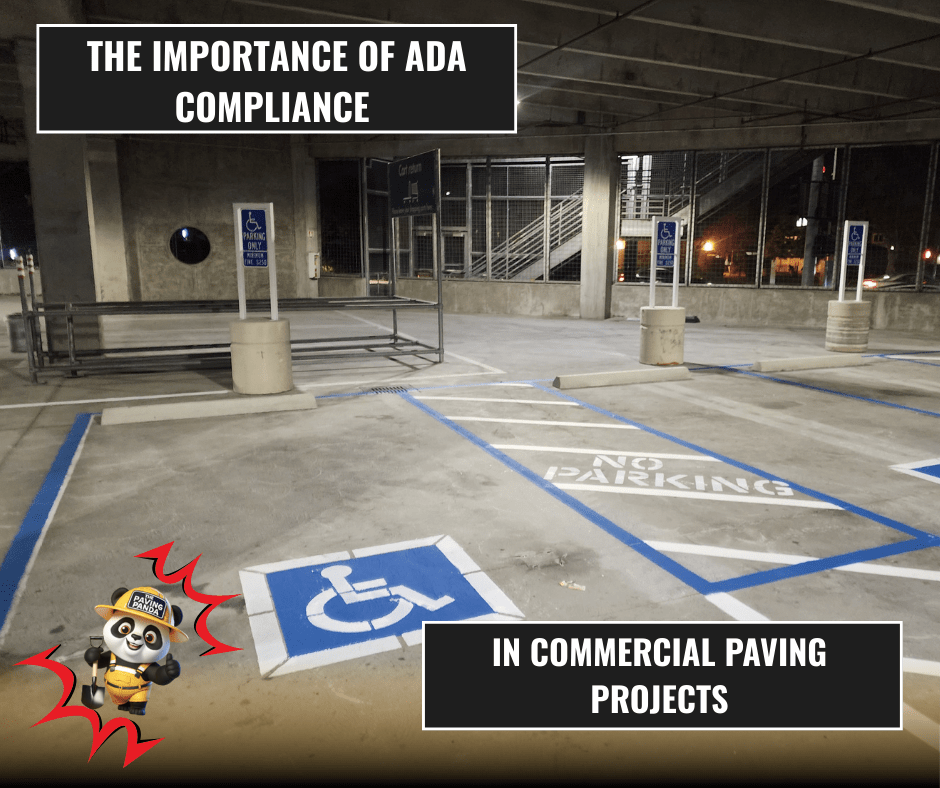
The ADA mandates strict guidelines for accessible parking:
-
Van-Accessible Spaces: 11’ wide + 5’ aisle (for wheelchair lifts).
-
Standard Accessible Spaces: 8’ wide + 5’ aisle.
-
Slope: Maximum 1:48 (2%) gradient for accessibility.
-
Signage: Clearly marked with the International Symbol of Accessibility.
At least 1 in 6 accessible spaces must be van-accessible.
Common Parking Layout Mistakes to Avoid
-
Ignoring Aisle Space: Tight aisles cause collisions and frustration.
-
Overlooking Curb Cuts: Ensure smooth transitions for wheelchairs and carts.
-
Poor Drainage: Sloped spaces should direct water away from vehicles.
-
Inadequate Lighting: Dark lots increase safety risks.
-
Mixing Compact/Standard Sizes: Drivers often ignore “Compact Only” signs, leading to overcrowding.
5 Tips to Optimize Parking Lot Design
-
Use Angled Parking for High Traffic: 45°–60° layouts improve flow in retail or office lots.
-
Stagger Compact Spaces: Group them in less desirable areas (e.g., far from entrances).
-
Add Green Space: Incorporate islands with trees or shrubs to reduce heat and runoff.
-
Plan for EV Chargers: Allocate 12’ x 20’ spaces for electric vehicles with chargers.
-
Test with Software: Tools like AutoCAD or ParkCAD simulate traffic patterns and space efficiency.
FAQs About Parking Space Sizes
Q: Can parking spaces be smaller for compact cars?
A: Yes, but local codes often require a portion of spaces to be compact (e.g., 8’ x 16’).
Q: How much space is needed for a parking lot?
A: A 100-space lot with standard 9’x18’ stalls and 24’ aisles requires ~32,400 sq. ft (0.75 acres).
Q: Are parking space sizes increasing?
A: Yes! Many lots now use 10’x20’ spaces to accommodate SUVs and trucks.
Q: What’s the minimum parking space size in the UK?
A: 8.2’ x 16.4’ for off-street parking, per UK guidelines.
Q: Do bike racks count toward parking requirements?
A: Some cities allow bike parking to offset vehicle space mandates.
Why Professional Design Matters
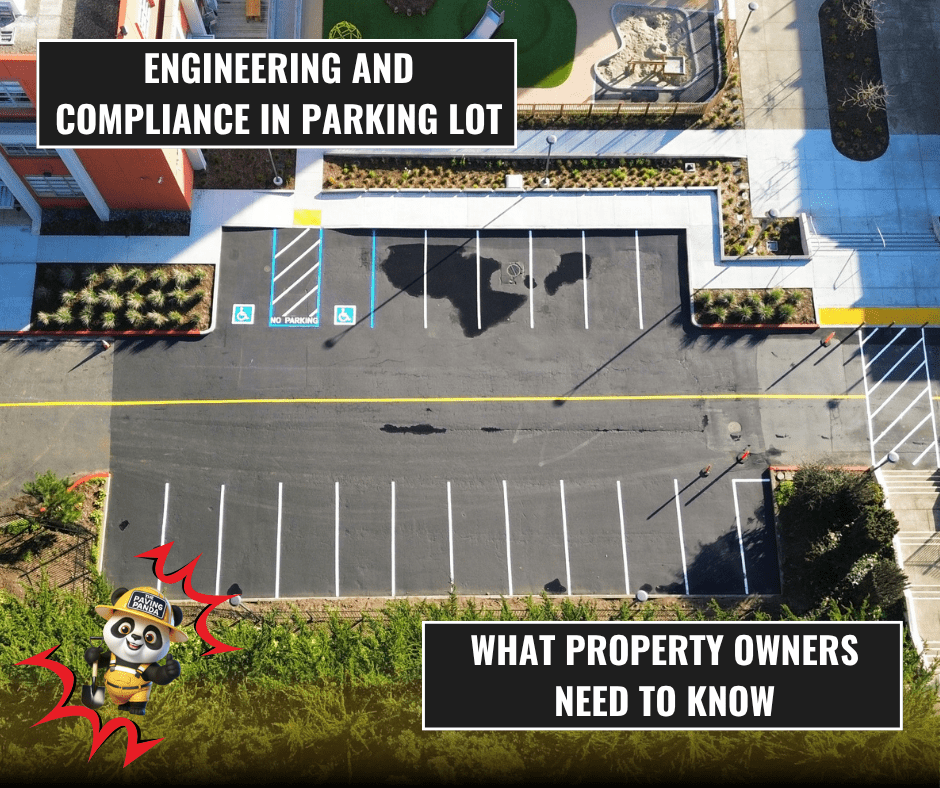
Poorly planned parking lots lead to accidents, wasted space, and non-compliance fines. At We Love Paving, we combine civil engineering expertise with local code knowledge to design lots that are:
-
Safe: Clear signage, lighting, and ADA compliance.
-
Efficient: Maximized space without compromising accessibility.
-
Durable: High-quality asphalt or concrete for long-term use.
Need a Parking Lot Designed or Resurfaced?
Don’t leave your layout to chance! Whether you’re building a new lot or updating an existing one, We Love Paving ensures every inch meets legal standards and driver needs.
Contact us today for a consultation—we’ll measure, plan, and execute a parking solution that works smarter, not harder.
Parking Aisle Width and Design (2025 Update)
When planning a parking lot, aisle width is just as important as space size.
The aisle allows vehicles to safely maneuver between rows and determines whether the layout is one-way or two-way.
| Layout Type | Aisle Width (Feet) | Recommended Parking Angle | Description |
|---|---|---|---|
| One-way (45°) | 12–14 ft | 45° | Common in commercial lots; maximizes space efficiency |
| One-way (60°) | 16–18 ft | 60° | Easier vehicle maneuvering and visibility |
| Two-way (90°) | 22–26 ft | 90° | Standard for large lots and high-traffic areas |
| ADA-Accessible Aisles | +5 ft to adjacent space | 90° | Must allow wheelchair clearance per ADA standards |
Pro tip:
For high-traffic commercial lots, consider angled one-way layouts — they reduce congestion and improve flow efficiency by up to 20%.
📏 H3: How to Determine Ideal Parking Aisle Width
-
Measure the turning radius of your most common vehicle type.
-
Check your local city’s minimum width requirements (varies from 12–26 ft).
-
Ensure clear signage for “ONE WAY” or “TWO WAY” movement.
-
Include drainage slope (1–2%) for proper runoff.
ADA Compliance for Parking Aisles
Under ADA guidelines:
-
Aisles next to accessible spaces must provide at least 60 inches (5 ft) of clearance.
-
Surface must be flat, slip-resistant, and connected to an accessible route.
-
Marked with cross-hatching or paint contrast for visibility.
📎 Learn more: ADA Parking Requirements California