Mastering the Art of Asphalt: A Step-by-Step Guide

Whether you’re paving a driveway, a parking lot, or a road, laying asphalt is a precise process that demands attention to detail. With the right equipment, materials, and techniques, you can achieve a smooth, durable surface that will withstand the test of time. In this comprehensive guide, we’ll walk you through the step-by-step process of laying asphalt like a pro.

Step 1: Preparation

Before you can start laying asphalt, proper preparation is crucial. Begin by clearing the area of any debris, vegetation, or existing pavement. This ensures a clean surface for the new asphalt to adhere to. Next, inspect the subgrade to ensure it is stable and properly graded. Any soft spots or uneven areas should be addressed before proceeding.

Step 2: Base Installation

Once the area is prepped, it’s time to install the base layer. This typically consists of crushed stone or gravel, which provides a stable foundation for the asphalt. The base material should be spread evenly and compacted using a roller or compactor to achieve the desired density. Proper compaction is essential to prevent settling and ensure the longevity of the pavement.

Step 3: Edge Preparation

To create clean, crisp edges, it’s important to prepare the perimeter of the paved area. This can be done using a hand tamper or mechanical edging tool to establish a straight edge along the borders. Proper edging helps contain the asphalt and prevents it from spreading beyond the desired boundaries.

Step 4: Asphalt Mix Preparation

With the base in place, it’s time to prepare the asphalt mix. Asphalt is typically composed of aggregate (such as gravel or sand) bound together with a bitumen binder. The specific mix design will depend on factors such as climate, traffic volume, and intended use. The asphalt mix should be heated to the appropriate temperature to ensure workability and proper compaction.

Step 5: Asphalt Application

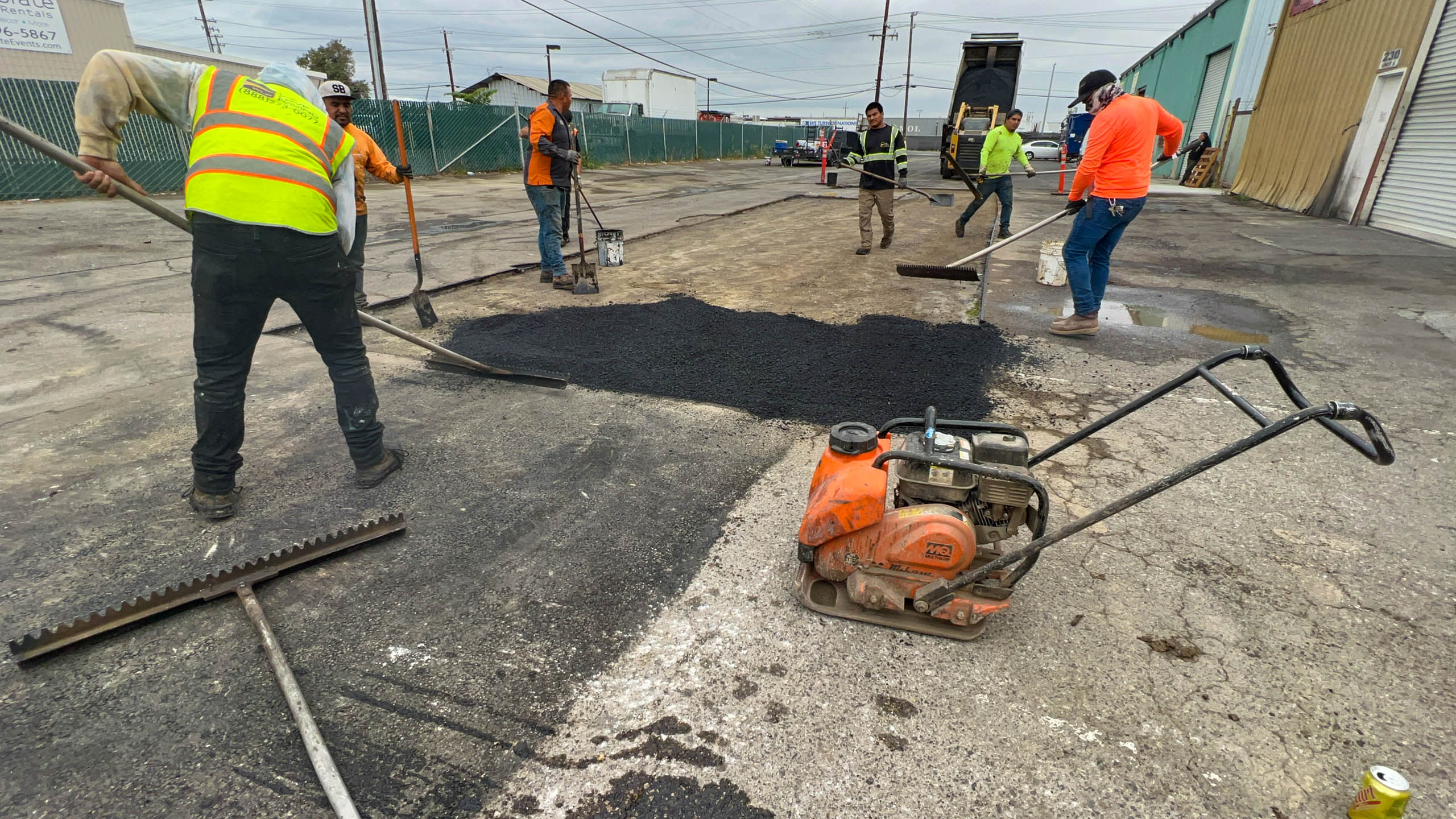
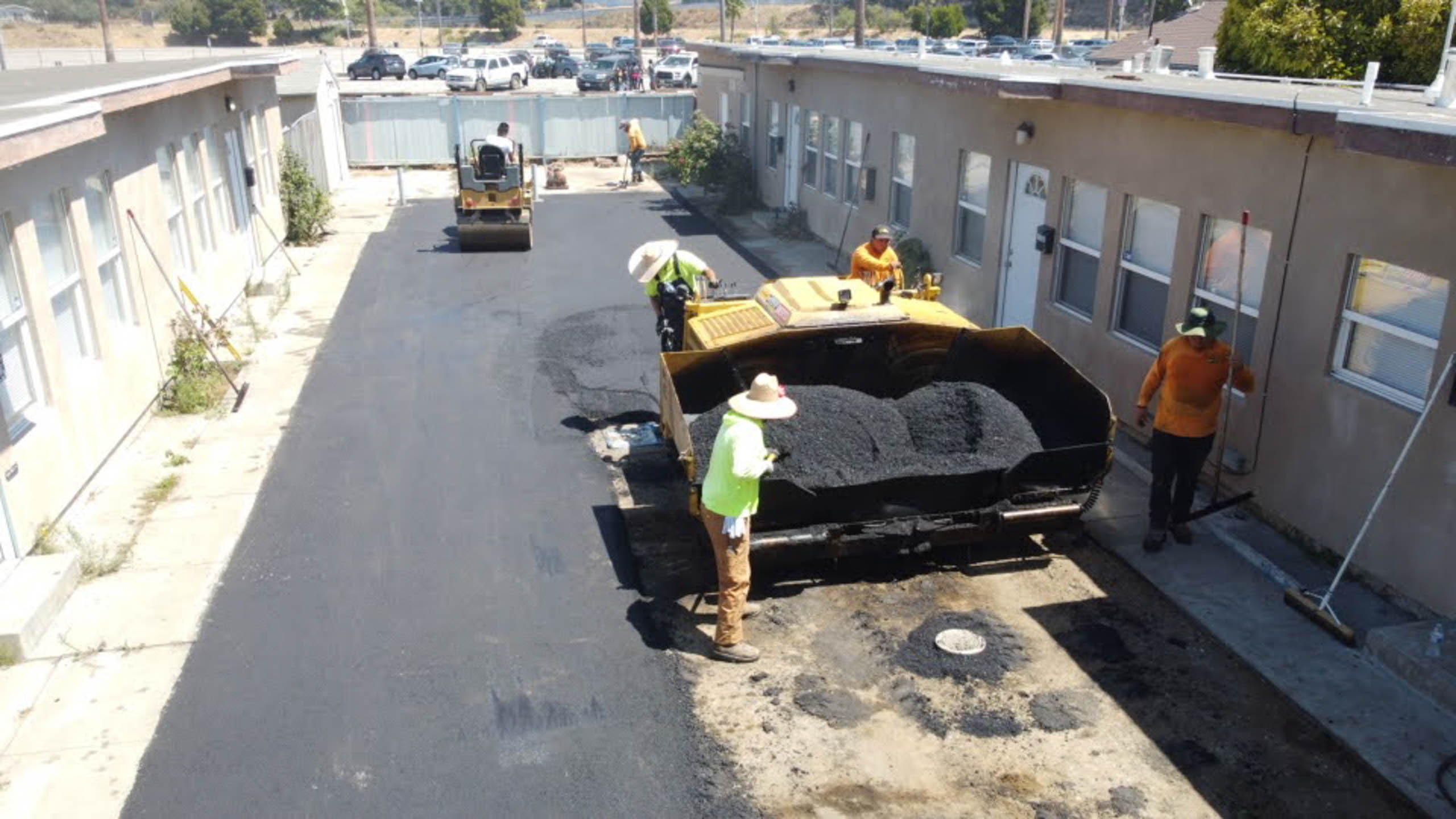
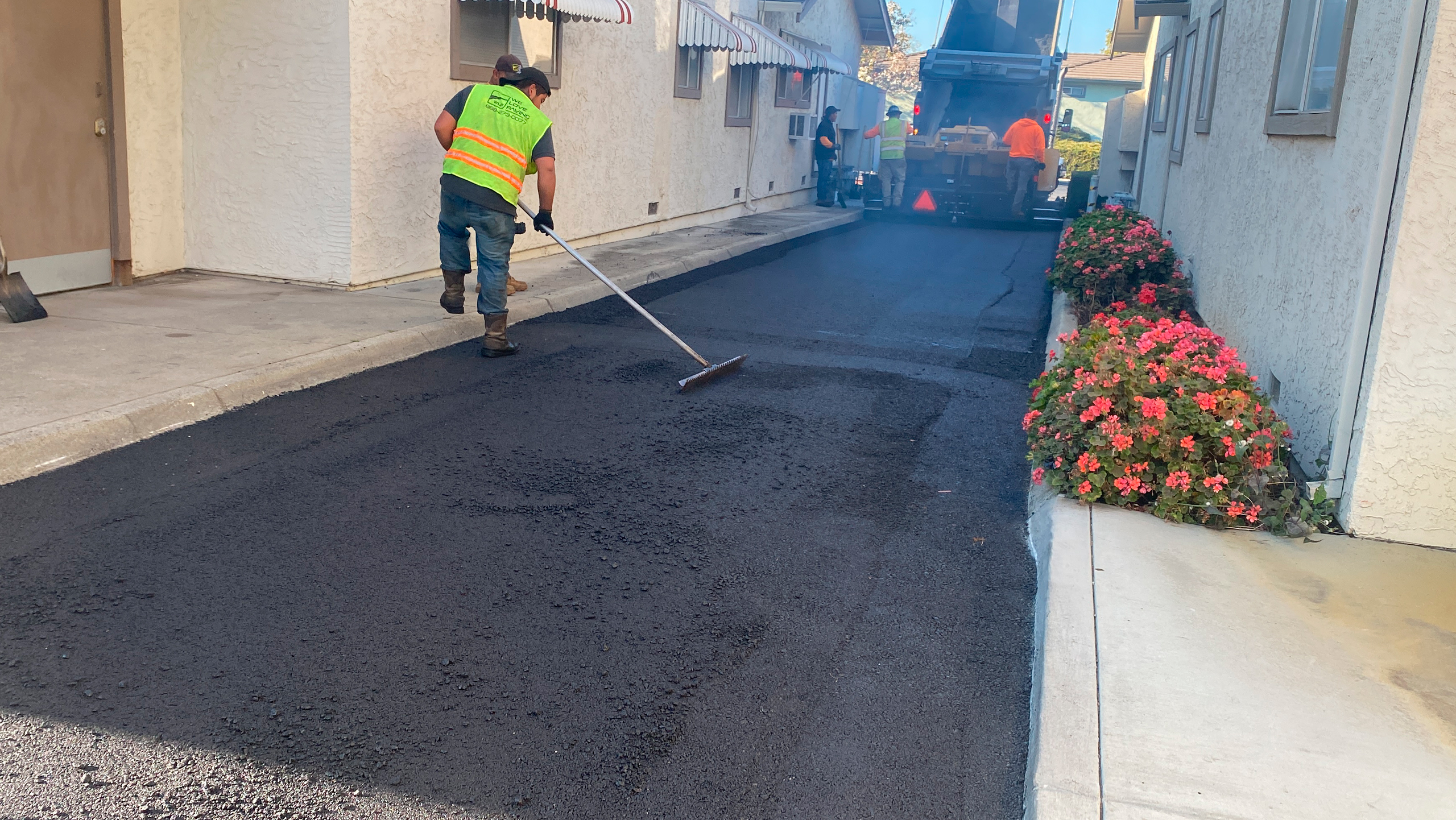
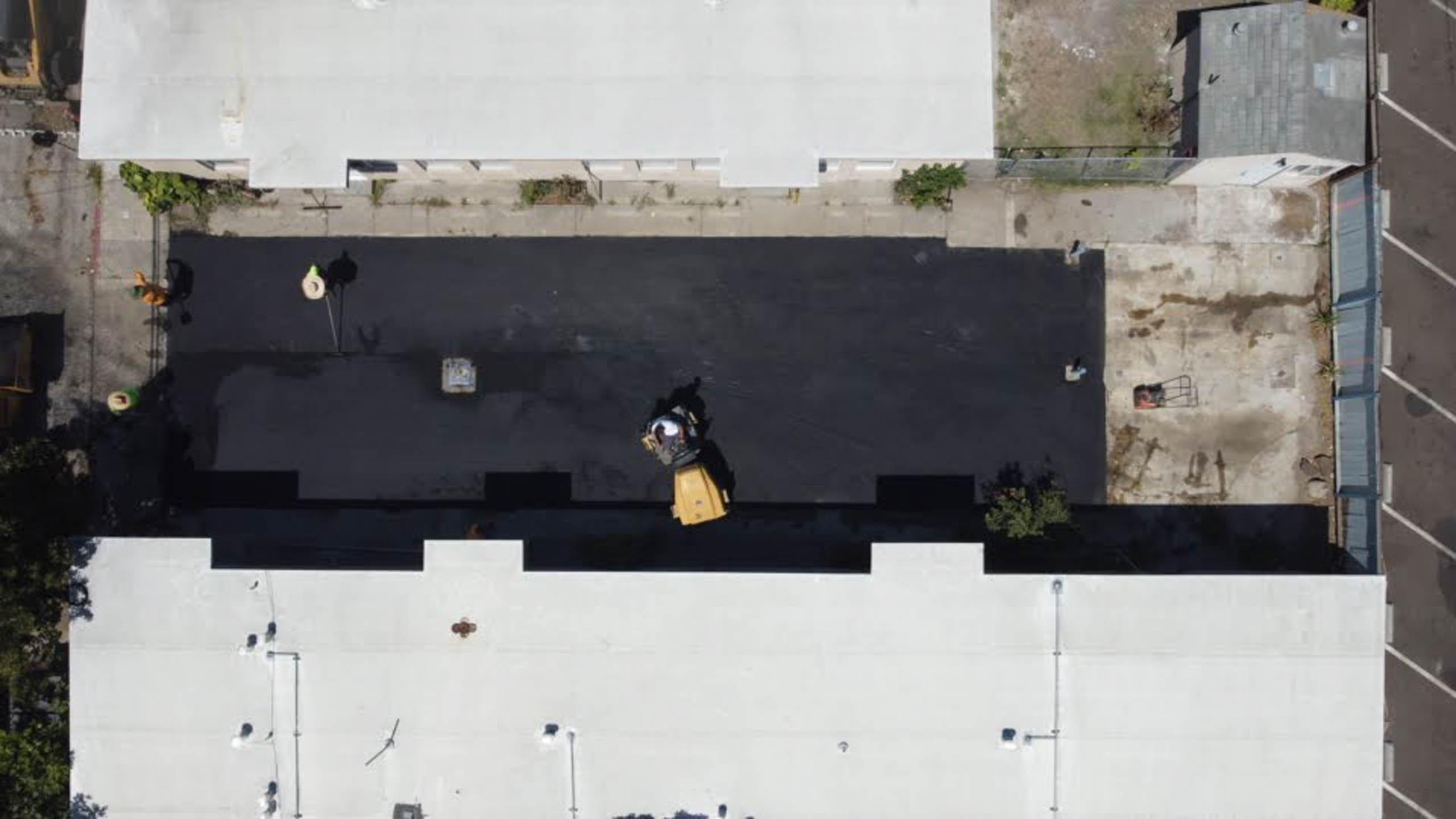
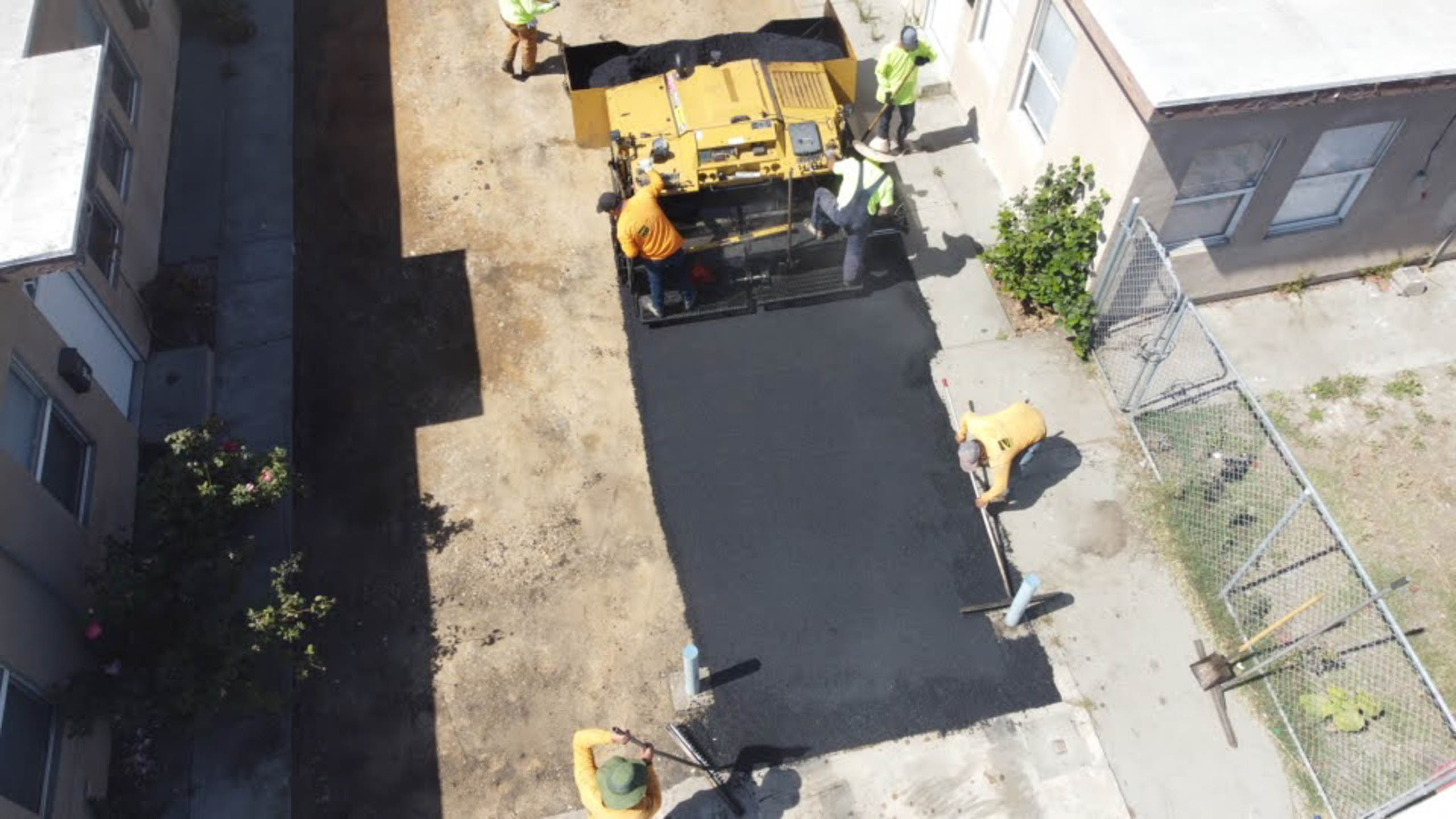
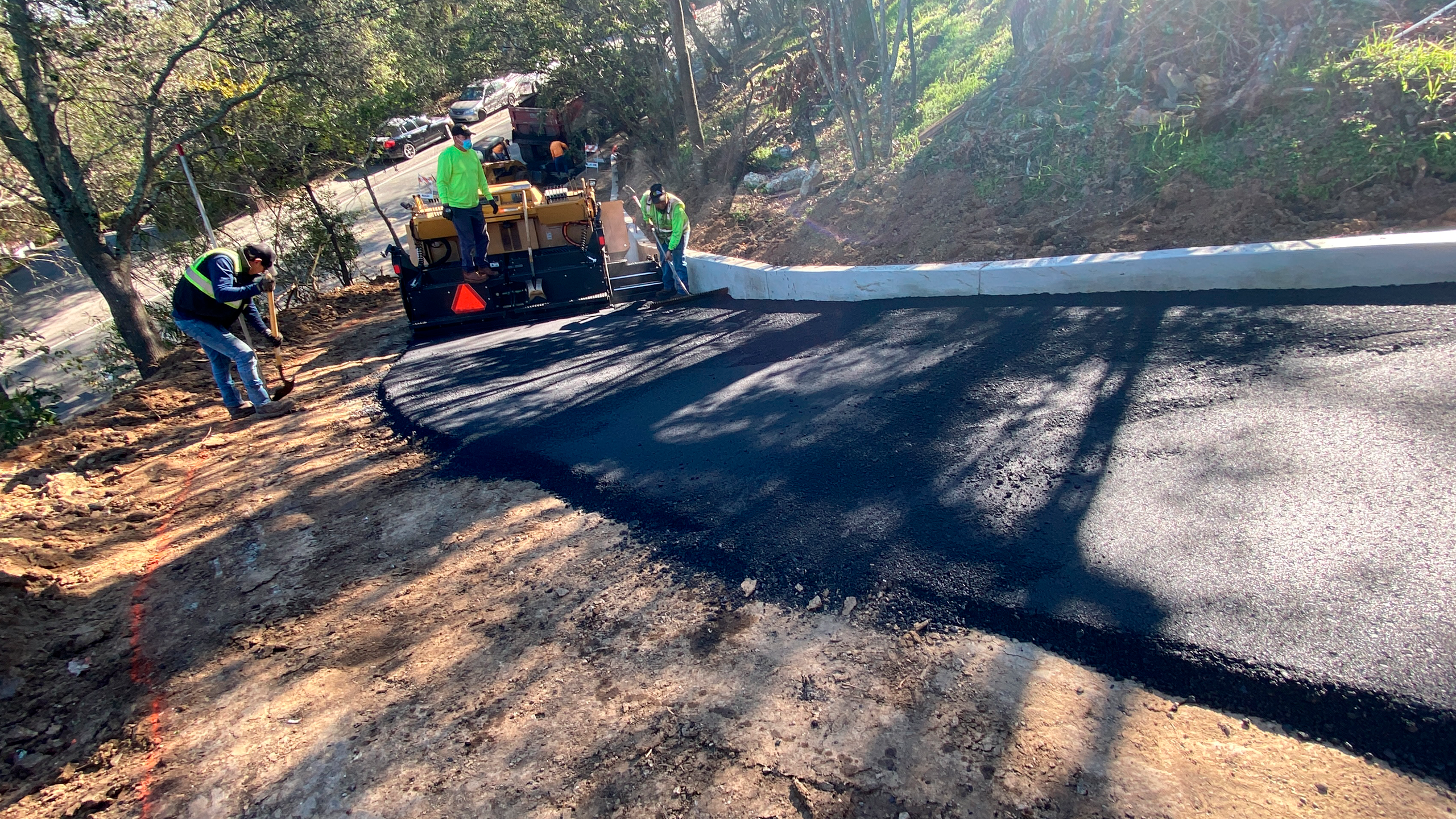
Once the asphalt mix is prepared, it can be applied to the prepared surface. This is typically done using a paving machine, which spreads the asphalt evenly across the area. The asphalt should be applied in multiple layers, with each layer being compacted to the desired thickness. Proper compaction is essential to achieve a smooth, uniform surface and maximize the durability of the pavement.

Step 6: Compaction

Compaction is perhaps the most critical step in the asphalt laying process. It involves using a heavy roller or compactor to compress the asphalt layers, removing air voids and ensuring proper bonding between the particles. Compaction should be performed systematically, starting from the edges and working towards the center to achieve uniform density across the pavement.

Step 7: Finishing Touches

Once the asphalt is compacted, it’s time to add the finishing touches. This may include applying a sealant to protect the surface from water damage and UV exposure. Additionally, any markings or signage can be added to designate traffic lanes, parking spaces, or other relevant information.

Step 8: Curing

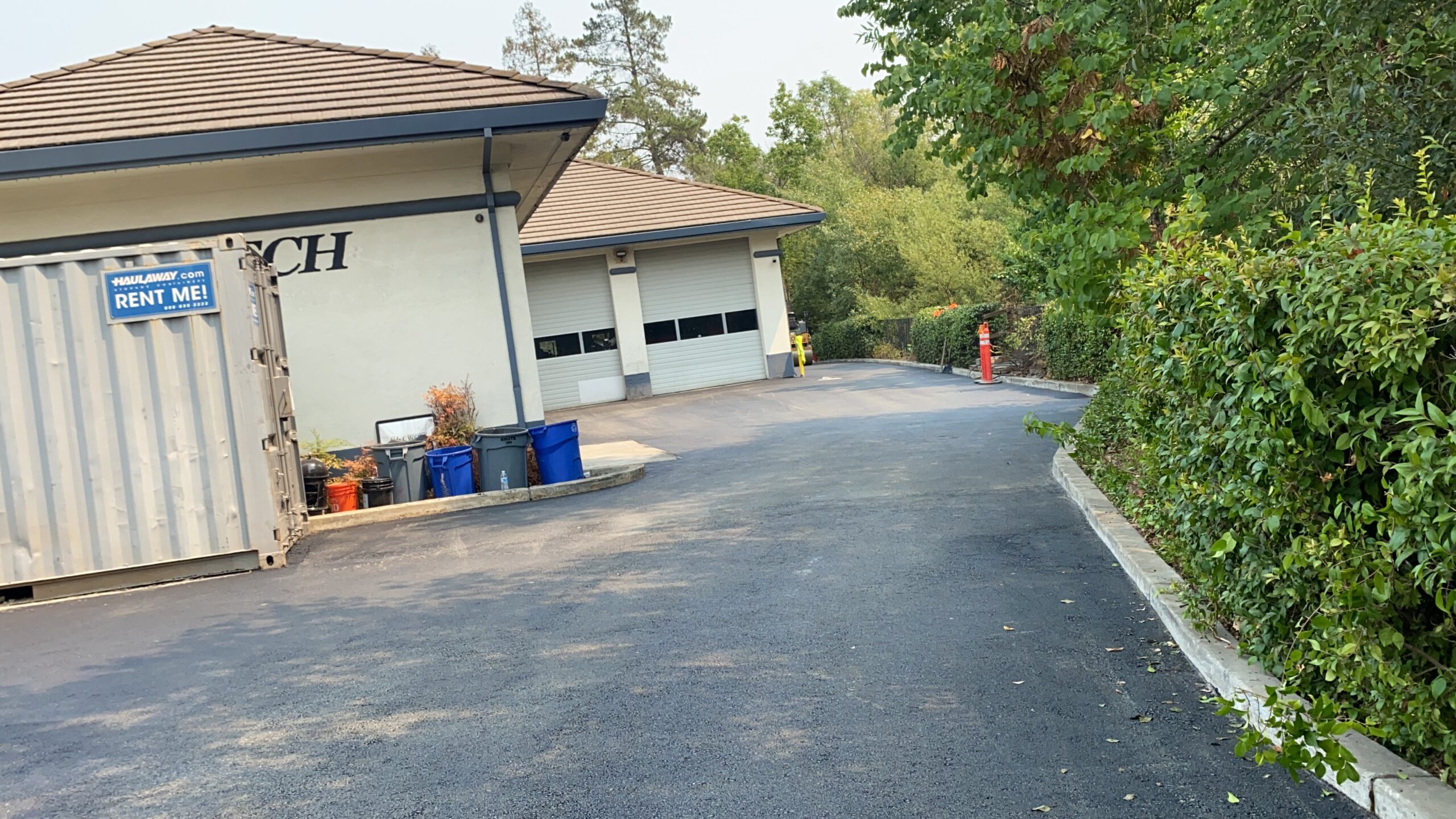
After the asphalt is laid and compacted, it requires time to cure and harden properly. This typically takes a few days, during which traffic should be kept off the pavement to avoid damage. Proper curing is essential to ensure the asphalt reaches its full strength and durability.

Step 9: Maintenance

Finally, proper maintenance is essential to prolong the life of the asphalt pavement. This may include regular sweeping to remove debris, periodic sealing to protect the surface, and timely repairs to address any cracks or damage. By staying proactive with maintenance, you can ensure your asphalt pavement remains in top condition for years to come.

Conclusion

Laying asphalt is a precise process that requires careful planning, attention to detail, and the right equipment and materials. By following these step-by-step guidelines, you can achieve professional results and create a durable, long-lasting pavement that will serve you well for years to come. Whether you’re tackling a small driveway or a large parking lot, mastering the art of asphalt laying is a skill that pays dividends in the long run.


Share

WHO IS FRED?

Fred, Regional Operations Manager, comes from a family of immigrant roots and a story built on sacrifice, discipline, and hard work. Growing up, Fred watched his parents work long hours and weekends to create a better future teaching him the values of perseverance, determination, and doing things the right way every single time.
We Love Paving began with Fred’s father, who started doing what he knew best: paving. Over the years, he built experience alongside respected professionals in the industry, refining his methods and developing a reputation for quality work that speaks for itself. As his clientele grew, so did the vision one built not only on skill, but on integrity and pride in every job.

Posts that might interest you

The #1 Asphalt Calculator For Projects

The #1 Asphalt Calculator For Projects

November 21, 2024

How to Tell if Concrete Will Buckle: Expert Tips for California Homeowners

How to Tell if Concrete Will Buckle: Expert Tips for California Homeowners

November 21, 2024

Concrete is known for its strength and durability, but even in the best conditions, cracks can form. In California, the combination of unique environmental factors, soil types, and climate challenges can accelerate this process. Understanding why concrete cracks and how to prevent it is key to maintaining durable surfaces for years to come. Top Causes

Asphalt and What Is the Square Foot Price?

Asphalt and What Is the Square Foot Price?

September 5, 2024

Asphalt Paving FAQs for HOAs: A Comprehensive Guide

Asphalt Paving FAQs for HOAs: A Comprehensive Guide

August 26, 2024

Homeowners’ Associations (HOAs) are responsible for maintaining common areas within communities, ensuring that shared spaces remain safe, attractive, and functional. One of the most significant aspects of this responsibility is the maintenance and management of asphalt-paved areas, such as roads, driveways, and parking lots. Proper asphalt paving and maintenance can extend the lifespan of these

How to Calculate the Price of Asphalt

How to Calculate the Price of Asphalt

August 23, 2024

Asphalt is a popular paving material for driveways, parking lots, and roads due to its durability and cost-effectiveness. If you’re planning to pave an area with asphalt, one of the first things you’ll want to know is how much it will cost. Calculating the price of asphalt involves several factors, including the size of the

What is the Cheapest Form of Paving?

What is the Cheapest Form of Paving?

August 23, 2024

When it comes to enhancing your property with a paved surface, cost is often a major consideration. Whether you’re looking to pave a driveway, patio, walkway, or other outdoor areas, finding a budget-friendly solution that doesn’t compromise on quality is key. While there are numerous paving options available, each with its own set of advantages

Can You Asphalt Over an Old Asphalt Driveway?

Can You Asphalt Over an Old Asphalt Driveway?

August 19, 2024

Yes but only when the existing asphalt is structurally sound. Asphalt overlay works when the base beneath the driveway is stable and damage is limited to surface wear. If deeper issues exist, adding new asphalt will only mask problems temporarily. Asphalt driveways are known for their durability and longevity, but over time, even the best-maintained

What is the Difference Between Road Asphalt and Driveway Asphalt?

What is the Difference Between Road Asphalt and Driveway Asphalt?

August 16, 2024

If your driveway is looking cracked, faded, or worn out, you’re likely looking for the most efficient way to restore it. One of the most common questions property owners ask is: Can you put new asphalt over an old asphalt driveway? The short answer is yes, but it depends heavily on the condition of the

What Should a New Asphalt Driveway Look Like?

What Should a New Asphalt Driveway Look Like?

August 16, 2024

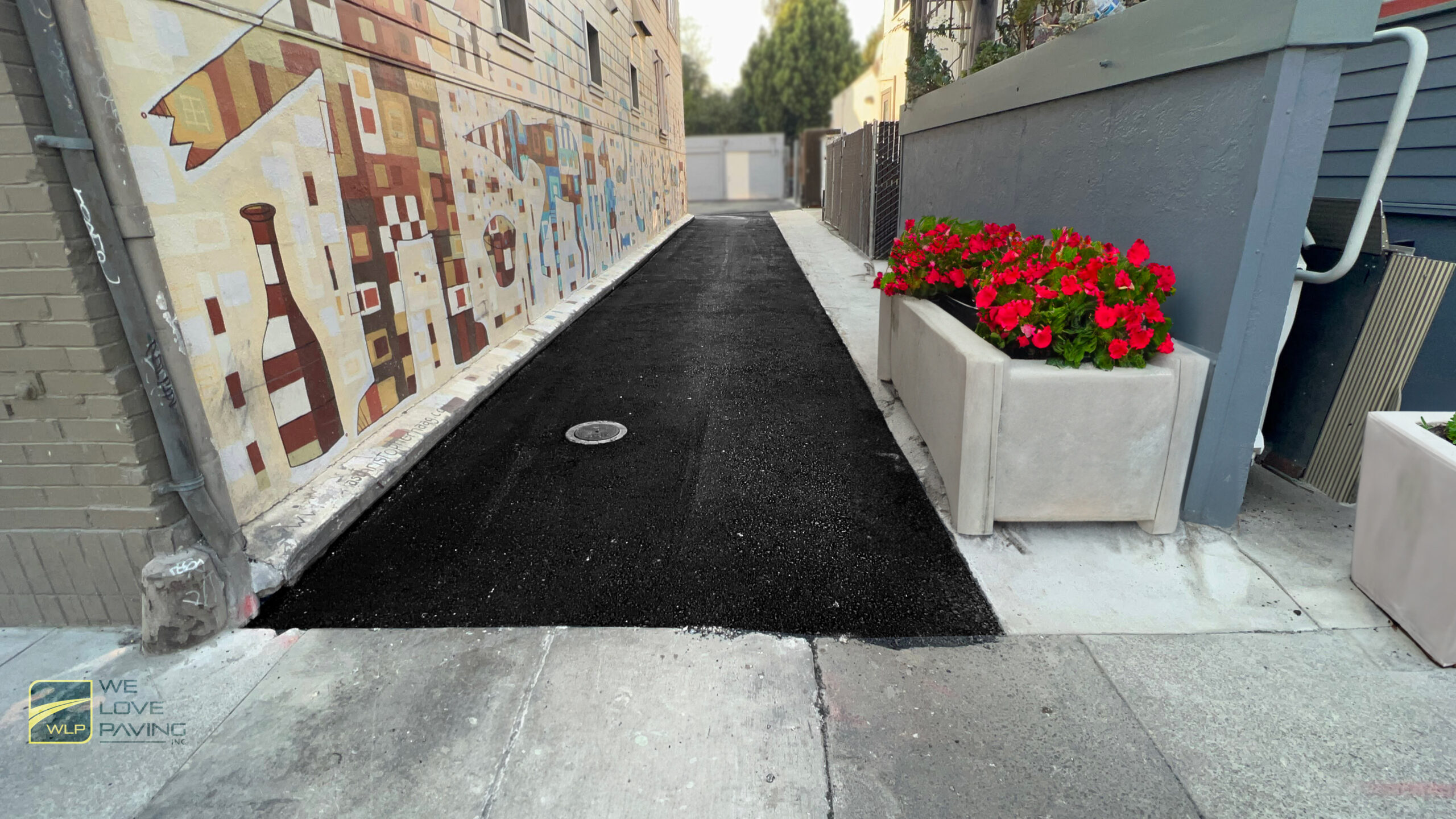
A properly installed asphalt driveway should have a smooth and even surface with no visible bumps, waves, or depressions. The surface should feel consistent when walking or driving over it, without sudden dips or raised areas. When freshly installed, asphalt typically has a deep black, uniform color, indicating the mix was applied and compacted correctly.

Is Asphalt Good for a Patio?

Is Asphalt Good for a Patio?

August 15, 2024

When it comes to creating outdoor spaces like patios, choosing the right material is crucial for both aesthetics and functionality. While materials like concrete, pavers, and natural stone are often the go-to choices, some homeowners and property owners consider asphalt as an alternative. But is asphalt a good option for a patio? In this blog

Previous Next