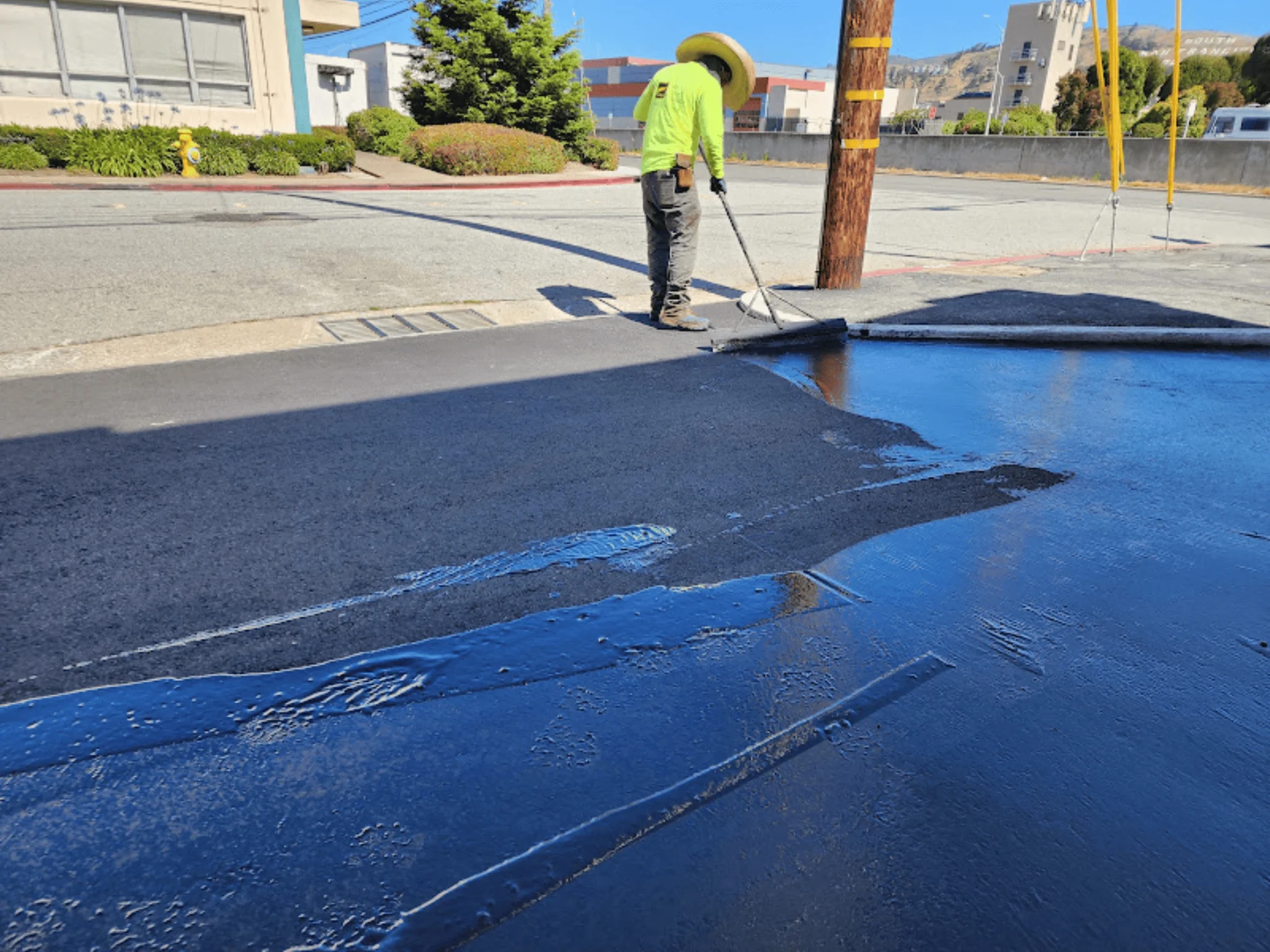
Can You Pave in the Rain? A Technical Guide to Asphalt Integrity

We Love Paving services in Contra Costa County. Professional paving contractor serving Contra Costa County and Bay Area areas.
Get My Free Quote

Need Help with Your Paving Project?

✔ Free Project Evaluation
✔ ADA Compliance Experts
✔ Commercial & Residential

Certainly! Conducting a more extensive investigation on the impact of rain on paving would involve exploring various aspects such as the specific effects of rain on different types of paving materials, the techniques and technologies used to mitigate these effects, case studies highlighting the consequences of paving in rainy conditions, and any regulatory or industry standards governing paving practices in inclement weather.

Asphalt Viscosity and ASTM D3381 Standards in Wet Weather

The structural integrity of pavement depends on the binder’s viscosity. To achieve proper compaction, asphalt must stay within a temperature range where the binder remains fluid enough to rearrange aggregates. Rain causes evaporative cooling, prematurely increasing viscosity and preventing the mix from reaching its design density (typically 92%-97% of Gmm). We adhere to Performance Grade (PG) classifications under ASTM D3381 standards. Paving in rain increases “stripping” risk, voiding technical specs and leading to premature fatigue.

Effects of Rain on Different Paving Materials

Asphalt: Investigate how rainwater affects the composition and integrity of asphalt mixtures, including the process of erosion, weakening of the binder, and susceptibility to cracking.

Concrete: Examine the impact of rain on freshly poured concrete, considering issues like surface water accumulation, reduced strength due to excess moisture, and potential surface defects.

Mitigation Techniques and Technologies

Explore the methods employed to protect paving projects from rain, such as temporary covers, drainage systems, and waterproofing additives in asphalt mixtures.

Investigate emerging technologies, such as rapid-setting materials or moisture-tolerant paving techniques, designed to minimize the negative effects of rain during construction.

The 50°F Paving Rule

We enforce the 50°F (10°C) and rising rule. In our local climate, humidity affects the “cooling curve.” Paving below this threshold during rain leaves only a minimal window for rollers to achieve density before the mix hits the 175°F cessation temperature. Peak rainfall from November to March can increase project scheduling costs by 15% due to remobilization and the need for specialized chemical additives.

Case Studies

Analyze real-world examples where paving projects were conducted in rainy conditions, documenting the challenges faced, the extent of damage incurred, and the subsequent remediation efforts required.

Highlight successful paving projects completed under adverse weather conditions, showcasing innovative strategies or best practices adopted to mitigate the impact of rain.

Regulatory and Industry Standards

Review existing regulations and industry guidelines pertaining to paving operations in inclement weather, including recommendations for postponing work during heavy rainfall or implementing specific precautions to ensure safety and quality.

Investigate any differences in standards between regions or countries with varying climates and precipitation patterns.

Asphalt Compaction Window and Temperature Chart

Weather ConditionAir TemperatureLayer ThicknessWindow of FinishDensity Risk
Optimal (Dry)90°F (32°C)2 inches45 – 50 minutesLow
Standard (Dry)70°F (21°C)2 inches25 – 30 minutesModerate
Minimum (Dry)50°F (10°C)2 inches12 – 15 minutesHigh
Critical (Rain)50°F (10°C)2 inches< 5 minutesCritical Failure

Environmental Impact

Assess the environmental implications of paving in rainy conditions, such as runoff contamination, soil erosion, and habitat disruption, and explore sustainable practices to minimize these impacts.

Economic Considerations

Estimate the financial costs associated with paving delays or repairs caused by rain-related damage, considering factors like labor expenses, material wastage, project timeline extensions, and potential liabilities.

By delving into these aspects through extensive research, interviews with industry experts, and analysis of relevant data and literature, a comprehensive investigation can provide valuable insights into the complex relationship between rain and paving, informing decision-making processes for construction projects and paving operations.
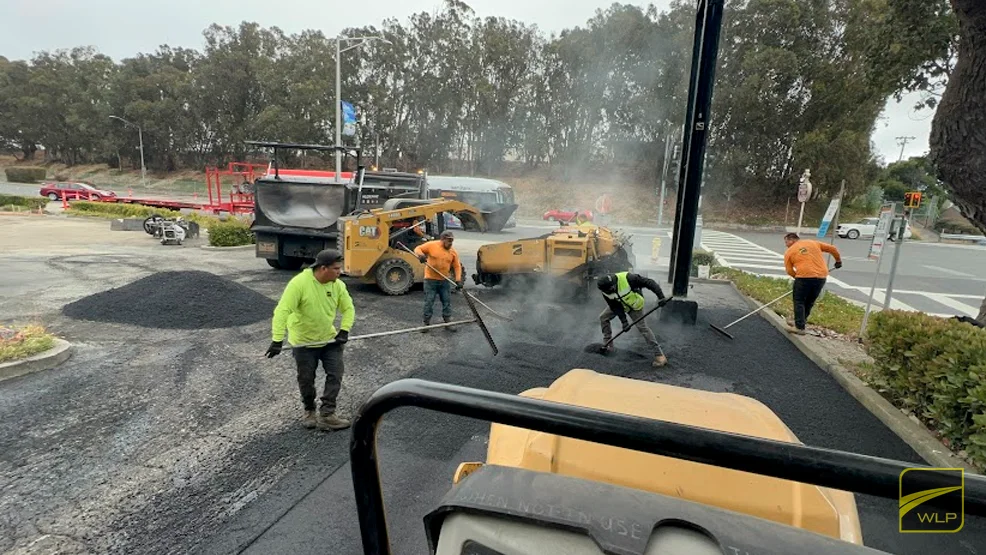
Asphalt paving e

Your Expert Partner for Resilient Paving Projects

At We Love Paving, we don’t just lay asphalt; we manage the integrity of your infrastructure. We understand that weather is unpredictable, but our technical response is not. By rigorously applying the 50°F rule and ASTM standards, we ensure every project delivers the density and longevity your investment deserves. If you have questions about your project timeline or need a climate risk assessment, our engineering team is ready to ensure your pavement stands the test of time and the elements.

Need Immediate Help?

Let's Talk About Your Project

Don't wait until minor damage turns into major expenses. Our team of experts is ready to provide you with guaranteed solutions. Contact us now for direct advice from a professional.

Frequently Asked Questions (FAQ)

Got Questions? Find Your Answers Here!!

Can asphalt be laid on a damp subbase?

No. Asphalt requires a dry, stable subbase for proper bonding. Moisture in the sublayers can trap steam, causing internal pressure that leads to surface blistering and structural instability over time. The subbase must be dry to the touch before paving resumes.

What is the minimum temperature for asphalt paving in humid conditions?

The industry standard is 50°F (10°C) and rising. High humidity slows down the evaporation of surface moisture and affects the cooling rate of the mix, requiring precise thermal monitoring to ensure the mat achieves 95% density before it hits 175°F.

How does rain affect the asphalt binder chemistry?

Rainwater causes "stripping," where the petroleum-based bitumen separates from the stone aggregate. This chemical failure breaks the cohesive bond of the pavement, leading to immediate raveling and the premature formation of potholes after the first freeze-thaw cycle.

Can you use Warm Mix Asphalt (WMA) during light drizzle?

WMA uses chemical additives or foaming processes to improve workability at lower temperatures. While it offers more flexibility than Hot Mix Asphalt (HMA), it should still not be applied during active rainfall to avoid compromising the chemical integrity of the binder.

What happens if it rains immediately after paving?

If the asphalt has been properly compacted and reached its "set" temperature, light rain is manageable. However, heavy rain can cause rapid surface cooling and "thermal shock," leading to surface cracks and preventing the material from curing uniformly.

Professional customer review project by We Love Paving in Northern California, California. Verified local construction quality.

Fred / Founder

Fred, Founder and Regional Operations Manager at We Love Paving, comes from a family that values hard work and discipline. Growing up watching his parents work long hours with integrity and dedication, Fred learned early on that quality paving isn’t just about asphalt, it’s about consistency, accountability, and doing the job right.

Share

Posts That Might Interest You

Unveiling the Asphalt Avengers: Essential Insights for Property Managers Seeking Paving Company Vendors

Unveiling the Asphalt Avengers: Essential Insights for Property Managers Seeking Paving Company Vendors

March 24, 2026

Navigating the Road to Excellence – What Property Managers Should Consider Greetings, property managers and guardians of asphalt-clad territories! Today, we embark on a quest to uncover the crucial factors that should guide your search for the ultimate paving company vendor. Much like the meticulous selection of a supercar, finding the right partner to tame and conquer your

Standard Car Parking Space Dimensions in the USA: A Comprehensive Guide by WeLovePaving

Standard Car Parking Space Dimensions in the USA: A Comprehensive Guide by WeLovePaving

March 16, 2026

Parking spaces may seem like a mundane aspect of urban planning, but their dimensions play a critical role in safety, convenience, and regulatory compliance. At We Love Paving, we understand that well-designed parking lots enhance traffic flow, maximize space efficiency, and ensure accessibility for all drivers. This guide explores the standard car parking space dimensions

Paving Company Vendors Unearthed: The Hunt Begins for Property Managers

Paving Company Vendors Unearthed: The Hunt Begins for Property Managers

March 12, 2026

Unveiling the Path to Finding the Perfect Paving Partner Rev up your search engines and prepare for a thrilling expedition, property managers! The quest for the ideal paving company vendor requires a keen eye, a dose of resourcefulness, and a touch determination. In this article, we unveil the secret roadmaps to discovering the paving partners of

What is Concrete and how it Powers Modern Infrastructure

What is Concrete and how it Powers Modern Infrastructure

March 9, 2026

What is concrete? Concrete, the stalwart composite amalgamation of cement, aggregates, and water, stands as the linchpin of contemporary construction. Its unwavering durability, exceptional strength, and flexibility position it as the bedrock of architectural ingenuity and infrastructure resilience. Industrial standards and structural integrity: Beyond the basics Structural safety is never arbitrary; it is governed by

Next

Need Help with Your Paving Project?

✔ Free Project Evaluation
✔ ADA Compliance Experts
✔ Commercial & Residential