a vs c

ASPHALT VS CONCRETE

Here at WE LOVE PAVING we’re transparent with our clients, we make sure that every aspect of your job is detailed to your needs.

 When it comes to constructing roads and pavements, two materials dominate the market – concrete and asphalt. Both materials have their advantages and disadvantages, making it crucial to choose the right material for a specific project.

Concrete:

Concrete is a versatile material that has been used for construction purposes for centuries. It is made up of a mixture of cement, water, and aggregates like sand and gravel. Concrete is a rigid material that offers excellent durability and strength, making it ideal for heavy traffic areas like highways and airports.

Pros of concrete:

  • Durability: Concrete is incredibly durable and can withstand heavy loads without cracking or deforming. It can also resist weathering and erosion, making it an excellent choice for long-lasting pavements.
  • Low maintenance: Concrete pavements require minimal maintenance and can last up to 30 years or more without needing major repairs.
  • Safety: Concrete offers excellent skid resistance, making it a safer option for high-traffic areas like highways and intersections.

Cons of concrete:

  • Cost: Concrete pavements can be more expensive than asphalt pavements due to the higher cost of materials and installation.
  • Slow installation: Concrete takes longer to install than asphalt, which can delay the completion of a project.
  • Environmental impact: The production of cement, a key ingredient in concrete, produces a significant amount of carbon dioxide, which contributes to climate change.

Asphalt:

Asphalt, also known as blacktop, is a mixture of aggregates like sand and gravel, and a petroleum-based binder. Asphalt is a flexible material that can adjust to slight movements in the underlying surface, making it ideal for areas with varying temperatures and freeze-thaw cycles.

Pros of asphalt:

  • Cost-effective: Asphalt is generally less expensive than concrete, making it an ideal choice for projects with budget constraints.
  • Quick installation: Asphalt can be installed more quickly than concrete, which can help complete a project on time.
  • Recyclable: Asphalt is a recyclable material that can be reused, making it an environmentally-friendly option.

Cons of asphalt:

  • Maintenance: Asphalt pavements require regular maintenance and may need to be resurfaced every 10 to 20 years.
  • Durability: Asphalt does retain more heat than concrete, during high temperature asphalt can crack.
  • Safety: Asphalt pavements can form potholes if left unattended 

Choosing between concrete and asphalt depends on the specific project requirements, budget, and environmental concerns. It is crucial to weigh the pros and cons that’s why We Love Paving is here with our team of professionals to make the job that much easier.


Share

WHO IS FRED?

Fred, Regional Operations Manager, comes from a family of immigrant roots and a story built on sacrifice, discipline, and hard work. Growing up, Fred watched his parents work long hours and weekends to create a better future teaching him the values of perseverance, determination, and doing things the right way every single time.
We Love Paving began with Fred’s father, who started doing what he knew best: paving. Over the years, he built experience alongside respected professionals in the industry, refining his methods and developing a reputation for quality work that speaks for itself. As his clientele grew, so did the vision one built not only on skill, but on integrity and pride in every job.

Posts that might interest you

5 Signs Your Asphalt Needs Professional Attention (Before It Costs You More)

5 Signs Your Asphalt Needs Professional Attention (Before It Costs You More)

June 2, 2025

Why Pavement Fails (And How to Prevent It)

Why Pavement Fails (And How to Prevent It)

May 30, 2025

How to Extend the Life of Your Pavement: 5 Pro Tips from the Pros at WLP

How to Extend the Life of Your Pavement: 5 Pro Tips from the Pros at WLP

May 29, 2025

Regular inspections are essential to extending the life of asphalt pavement. Evaluating the surface at least twice a year helps identify early cracking, surface wear, and drainage issues before they escalate into costly repairs. Early detection reduces long-term damage and preserves pavement integrity. Crack sealing and minor asphalt repairs should be addressed as soon as

How Quality Paving Increases Property Value and Long-Term ROI

How Quality Paving Increases Property Value and Long-Term ROI

May 23, 2025

Engineering and Compliance in Parking Lot Design: What Property Owners Need to Know

Engineering and Compliance in Parking Lot Design: What Property Owners Need to Know

May 22, 2025

The Importance of ADA Compliance in Commercial Paving Projects

The Importance of ADA Compliance in Commercial Paving Projects

May 21, 2025

When it comes to commercial paving, aesthetics and durability are important—but ADA compliance is non-negotiable. Failure to meet federal accessibility standards doesn’t just lead to fines—it exposes your business to lawsuits, limits customer access, and damages your reputation. At We Love Paving, we specialize in paving solutions that are fully ADA-compliant from the ground up—because

Why Proper Grading Is the Foundation of Every Successful Paving Project

Why Proper Grading Is the Foundation of Every Successful Paving Project

May 20, 2025

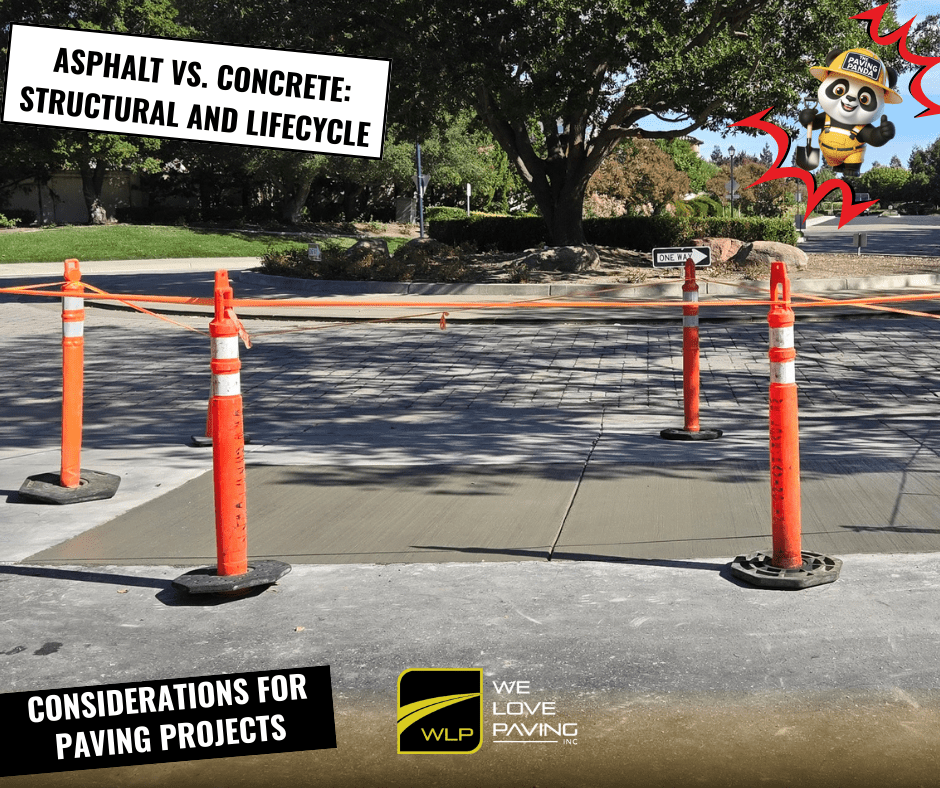
Asphalt vs. Concrete: Structural and Lifecycle Considerations for Paving Projects

Asphalt vs. Concrete: Structural and Lifecycle Considerations for Paving Projects

May 19, 2025

Why Sealcoating Is One of the Smartest Investments for Your Asphalt

Why Sealcoating Is One of the Smartest Investments for Your Asphalt

May 16, 2025

The Real Impact of Neglected Asphalt Maintenance

The Real Impact of Neglected Asphalt Maintenance

May 15, 2025

Previous Next