common assumption among property owners is that new asphalt automatically means long-term performance.
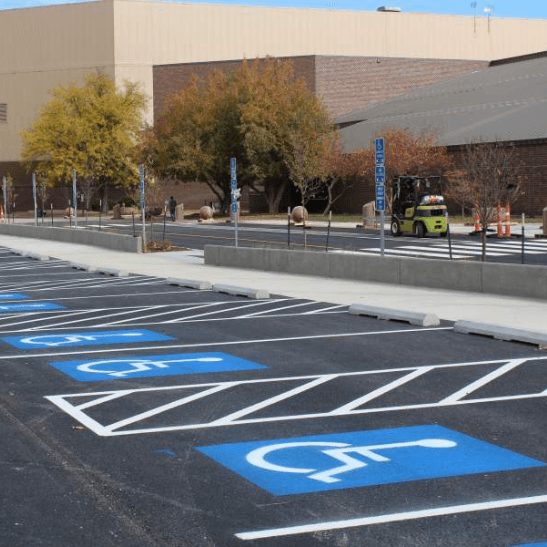
The surface looks smooth. Striping is crisp. There are no cracks, no potholes, no visible issues. Yet in many cases, signs of failure begin appearing far sooner than expected.
Early asphalt failure is rarely caused by a single mistake. More often, it is the result of underlying conditions that are invisible at the surface.
New Asphalt Does Not Eliminate Structural Variables
Fresh asphalt is only the top layer of a pavement system.
Below the surface are:
-
The base layer
-
The sub-base
-
The soil conditions beneath
If these layers are compromised, even brand-new asphalt will reflect those weaknesses over time.
New pavement does not correct poor drainage, unstable subgrades, or long-standing settlement patterns. It simply covers them.
Base and Sub-Base Conditions Matter More Than Surface Age
One of the most common causes of early failure is inadequate base preparation.
If the base layer:
-
Is not properly compacted
-
Contains moisture
-
Was built over unstable soils
The asphalt above it will move, settle, and crack regardless of how new it is.
Surface appearance may remain acceptable for months or even years, but structural movement continues underneath.
Water Exposure Begins Immediately
Water is the single most damaging factor for asphalt performance.
Even new asphalt is vulnerable to:
-
Poor drainage design
-
Low spots that allow water to pool
-
Inadequate slope control
-
Water intrusion at edges and joints
Once water penetrates the pavement system, it weakens the base and accelerates deterioration. This process often starts long before visible damage appears.
Traffic Stress Is Often Underestimated
Many parking lots are designed based on average traffic assumptions.
In reality, stress is concentrated in specific areas:
-
Drive lanes with turning movements
-
Fire lanes
-
Trash enclosures
-
Delivery and loading zones
These areas experience higher shear forces and repeated stress, causing early wear even when the asphalt itself is new.
Without reinforcement or targeted design considerations, early distress is likely.
New Asphalt Can Mask Existing Problems
Overlay projects are especially prone to early failure.
When new asphalt is placed over an existing surface without addressing underlying issues, it can temporarily improve appearance while hiding:
-
Drainage deficiencies
-
Slope deviations
-
Settlement zones
The result is a lot that looks new but continues to behave like an old pavement system.
Early Visual Condition Can Be Misleading
New asphalt often gives a false sense of security.
Because the surface looks intact, owners may delay inspections or maintenance. Meanwhile, small issues develop unnoticed:
-
Subtle settlement
-
Minor cracking
-
Early water intrusion
By the time damage becomes visible, corrective options are more limited and more costly.
Early Maintenance Still Matters on New Asphalt
One of the most overlooked factors in early failure is delayed maintenance.
New asphalt still requires:
-
Timely sealing
-
Monitoring of high-stress areas
-
Drainage observation
-
Early crack repair
Waiting too long allows small issues to grow into structural problems.
Why Early Failure Often Comes as a Surprise
From a property owner’s perspective, early failure feels sudden.
In reality, the conditions that caused it were present from the beginning — just not visible.
This disconnect between appearance and performance is why new asphalt can still fail far earlier than expected.
The We Love Paving Perspective
At We Love Paving, asphalt performance is evaluated as a system — not a surface.
Understanding what lies beneath the pavement allows property owners to:
-
Set realistic lifespan expectations
-
Protect new investments
-
Reduce premature repairs
-
Plan maintenance strategically
New asphalt is an improvement, not a guarantee.
Long-term performance depends on what supports it.