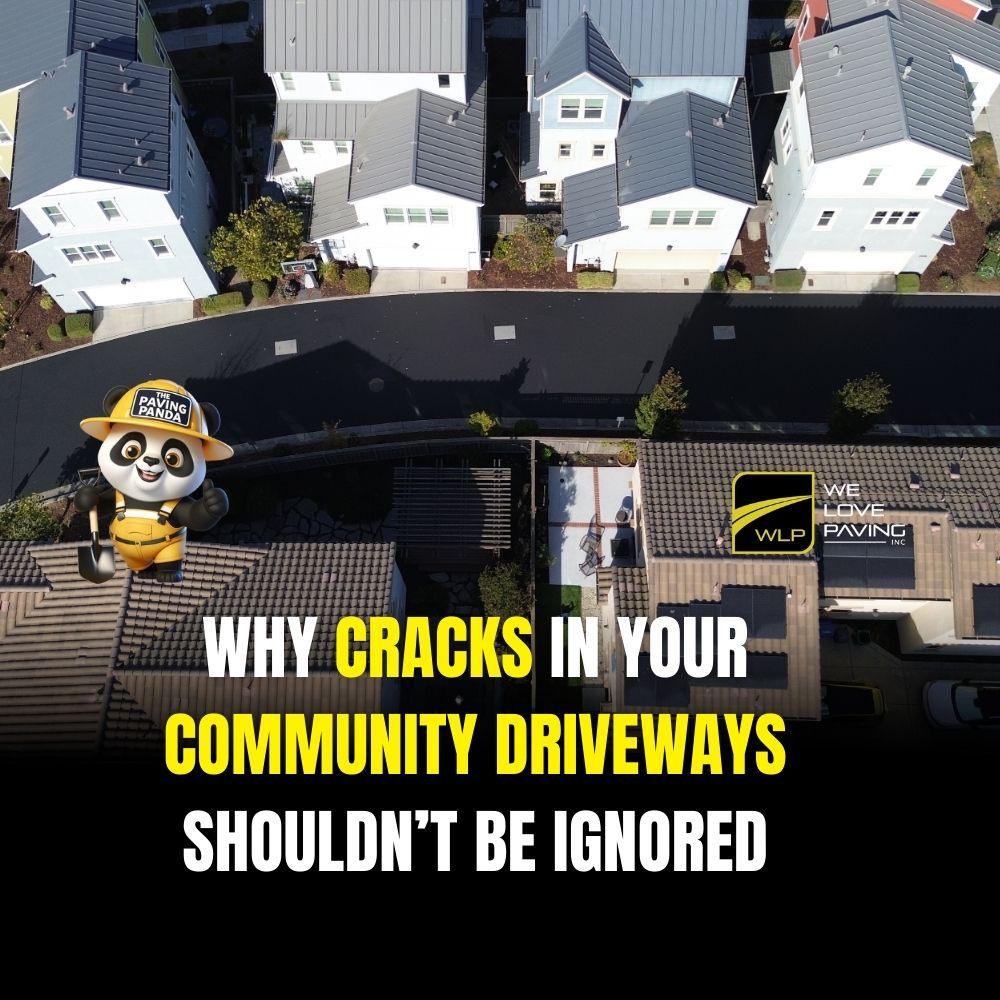
Cracks in community driveways are easy to overlook.
Cars still pass.
People still walk through.
Nothing feels urgent — at least not yet.
But cracks are rarely just a surface issue. In shared driveways and common access areas, they’re often the first visible sign of a bigger problem underneath.
Cracks Are How Bigger Damage Begins
Driveways don’t suddenly fail overnight.
Most major pavement problems start with:
-
Small cracks
-
Hairline separations
-
Minor surface openings
Once a crack appears, water enters the pavement structure. From there, damage accelerates below the surface where it’s harder to see.
What looks like a minor issue today can quietly turn into:
-
Potholes
-
Uneven surfaces
-
Large sections of failure
Water Is the Real Problem
Cracks allow water to seep into the pavement base.
Over time, water:
-
Weakens the structure underneath
-
Causes shifting and settling
-
Expands damage during temperature changes
-
Speeds up deterioration after every rain
This is why cracks tend to spread, connect, and worsen — even if nothing seems to change on the surface.
Cracks Affect Safety for Everyone
In community driveways, cracks don’t just affect appearance.
They can:
-
Create trip hazards for pedestrians
-
Increase slip risk when wet
-
Make surfaces harder to navigate for children, seniors, and pets
-
Damage vehicle tires and suspensions
Because these areas are used daily, small defects get repeated exposure, increasing wear and risk over time.
Ignoring Cracks Makes Repairs More Expensive
One of the most common misconceptions is that waiting saves money.
In reality:
-
Early crack sealing is inexpensive
-
Delayed repairs require larger patching
-
Structural damage leads to resurfacing or repaving
-
Emergency fixes cost significantly more
Cracks are the stage where maintenance is most cost-effective.
Once they’re ignored, options become fewer — and more expensive.
Cracks Spread Faster Than Most People Expect
Driveways experience:
-
Constant vehicle traffic
-
Turning and braking
-
Delivery and trash trucks
-
Weather exposure year-round
This stress causes cracks to widen and multiply quickly, especially in high-use areas like entrances, intersections, and curves.
What starts as one crack often becomes many.
Appearance Can Be Misleading
A driveway may still “look fine” overall.
But cracks often indicate:
-
Early base movement
-
Loss of pavement flexibility
-
Aging materials
-
Drainage problems
Addressing cracks early helps preserve the structure before visible failure appears.
Why Early Attention Matters for Communities
In shared driveways, pavement issues affect everyone.
Proactive maintenance:
-
Keeps surfaces safer
-
Prevents sudden repair projects
-
Helps control HOA expenses
-
Protects long-term property value
-
Reduces the need for emergency assessments
It’s easier — and cheaper — to maintain pavement than to rebuild it.
The Bottom Line
Cracks are not just cosmetic.
They are warning signs.
Ignoring them doesn’t stop deterioration — it allows it to grow quietly beneath the surface.
Early attention keeps driveways safer, smoother, and more affordable to maintain for the entire community.
When to Take Action
If cracks are:
-
Spreading
-
Connecting
-
Appearing in multiple areas
-
Holding water
It’s time for a professional evaluation.
📩 Contact We Love Paving to assess your community driveways and help your HOA address issues early — before small cracks turn into major repairs.