In the world of paving, accessibility and inclusivity have become non-negotiable elements of modern construction. The Americans with Disabilities Act (ADA), enacted in 1990, has played a pivotal role in ensuring equal access to public spaces for individuals with disabilities. Despite the importance of ADA compliance, many paving companies are reluctant to engage in such projects due to the significant challenges they present. This article investigates the reasons behind this reluctance and explores the multifaceted difficulties paving companies encounter when dealing with ADA compliance work.
Understanding the ADA: A Complex Web of Regulations
The ADA outlines a broad range of accessibility requirements that impact various paved areas, including sidewalks, parking lots, ramps, and curb cuts. These guidelines are not merely suggestions but are legally binding, with stringent criteria for slope gradients, cross slopes, detectable warning surfaces, and curb ramp dimensions. The complexity of these standards necessitates a deep understanding of engineering and design principles, which many paving companies may not fully grasp.
Technical Challenges: The ADA guidelines require precise measurements and specific materials to ensure that surfaces are accessible to individuals with mobility impairments. For example, curb ramps must have a slope ratio that does not exceed 1:12, and cross slopes must be no greater than 2%. These technical specifications demand meticulous attention to detail and can be challenging to implement correctly, especially in retrofitting existing structures.
Lack of Expertise: Many paving companies, particularly smaller ones, may lack the in-house expertise to navigate these complex requirements. ADA compliance is often viewed as a specialized niche within the broader construction industry, requiring knowledge that goes beyond standard paving practices. Companies without this expertise may find themselves overwhelmed by the intricacies of ADA regulations, leading to hesitancy in taking on such projects.
Legal and Financial Risks: A High-Stakes Game
The legally binding nature of ADA compliance introduces significant risks for paving companies. Non-compliance, even if unintentional, can result in costly lawsuits, fines, and damage to a company’s reputation. The potential for legal repercussions is a major deterrent for many paving companies, who may view ADA projects as too risky compared to standard paving work.
Liability Concerns: The fear of litigation is a powerful motivator for avoidance. ADA-related lawsuits are not uncommon, and the consequences can be severe. A single mistake, such as an incorrectly installed curb ramp or a parking lot that does not meet slope requirements, can lead to legal action. For smaller companies, the financial burden of a lawsuit could be devastating, making the risks of ADA compliance work outweigh the potential rewards.
Insurance Implications: Engaging in ADA compliance work can also impact a company’s insurance costs. Insurance providers may charge higher premiums for companies involved in ADA projects due to the increased risk of litigation. This additional cost can further erode profit margins, making ADA work less attractive from a financial standpoint.
Specialized Equipment and Training: The Cost of Compliance
Achieving ADA compliance is not just a matter of following guidelines; it often requires specialized equipment and training. Paving companies must invest in tools and technologies that ensure precision in meeting ADA standards, which can be costly and may not be justifiable for companies that do not regularly engage in ADA projects.
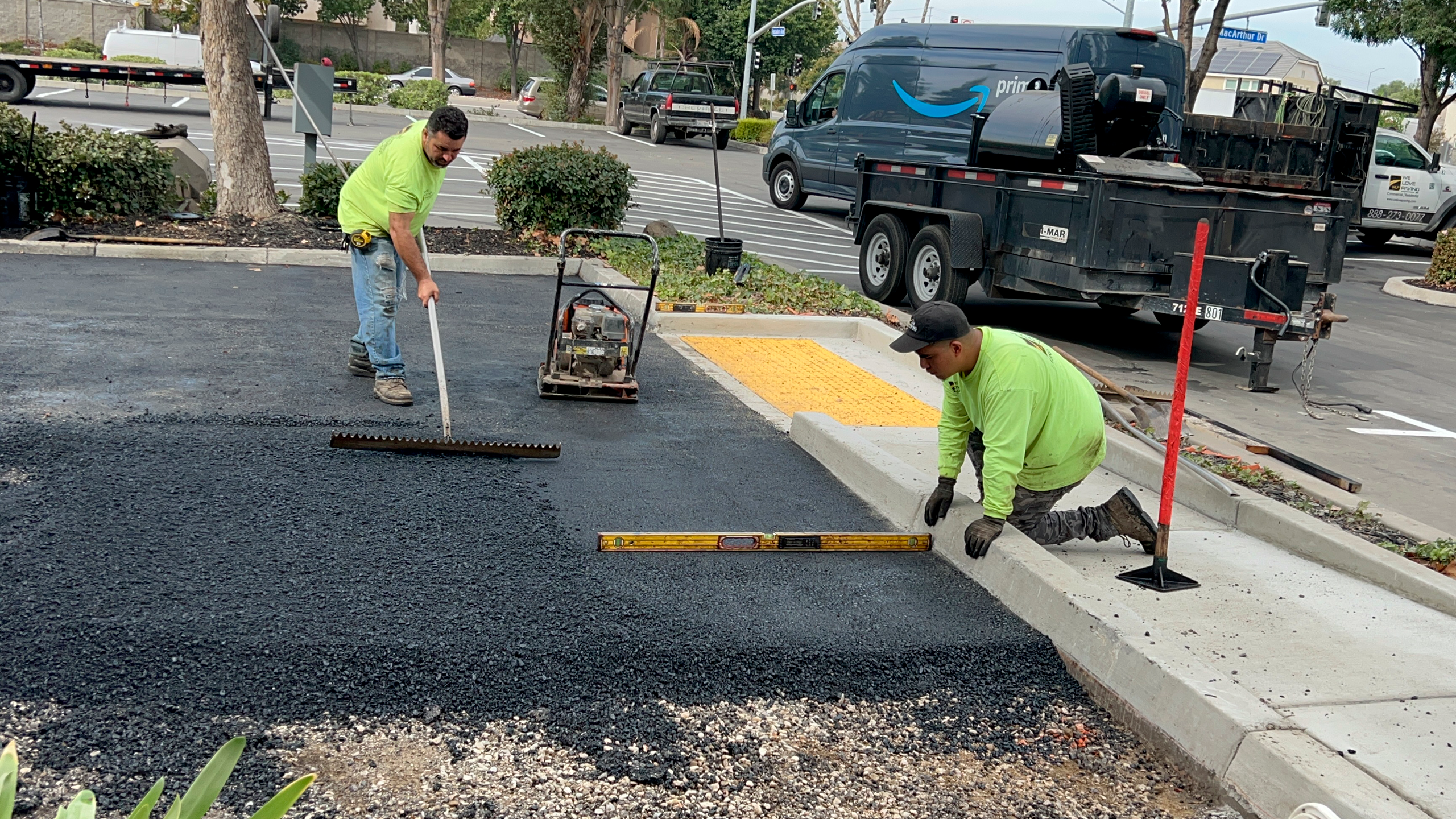
Equipment Needs: ADA compliance may require specific machinery, such as laser-guided grading systems, to achieve the precise slopes and surfaces required. Additionally, installing detectable warning surfaces, which are necessary at pedestrian crossings and other locations, often requires specialized materials and installation techniques. The investment in such equipment can be prohibitive, particularly for smaller companies or those with limited resources.
Training Requirements: Employees must be trained to understand and implement ADA standards correctly. This training goes beyond basic paving skills and includes education on legal requirements, best practices for accessibility, and the technical aspects of ADA compliance. Providing this level of training can be expensive and time-consuming, adding another layer of complexity for paving companies.
Time and Labor: The Extended Project Timelines
ADA compliance work is often more time-consuming and labor-intensive than standard paving projects. The need for precision in meeting ADA guidelines can extend project timelines, which can be problematic for companies managing multiple projects simultaneously.
Extended Timelines: Meeting the detailed requirements of ADA compliance often means that projects take longer to complete. For example, ensuring that a parking lot meets all ADA requirements, including proper signage, striping, and accessible pathways, can require more time than a standard paving job. This can be particularly challenging for companies that rely on quick project turnarounds to maintain profitability.
Labor Intensity: The labor required for ADA projects is also more intensive. Workers must pay close attention to detail, ensuring that every aspect of the project meets the stringent ADA standards. This increased labor intensity can lead to higher labor costs, further reducing the profitability of ADA projects.
Competitive Bidding: The Impact on Profit Margins
Paving companies often compete in bidding processes for contracts, and ADA compliance work can complicate this process. The additional complexities and potential risks associated with ADA projects can make it difficult for companies to submit competitive bids while still covering the costs associated with compliance.
Cost Considerations: Ensuring proper ADA compliance often involves higher costs, from specialized equipment and training to extended project timelines. These costs must be factored into bids, which can make them less competitive compared to bids for standard paving work. The result is that companies may lose out on contracts if they cannot offer competitive pricing.
Profit Margins: Even when companies win ADA contracts, the profit margins may be slim. The higher costs associated with compliance, combined with the risks of potential legal action, can significantly reduce profitability. For some companies, the financial return on ADA projects may not justify the risks and investment, leading them to focus on more lucrative, less risky work.
The Niche Market: Limited Opportunities for ADA Work
While ADA compliance is essential for public spaces, the demand for such specialized paving projects is relatively limited compared to traditional paving work. This creates a niche market that may not offer enough opportunities to sustain a company focused solely on ADA projects.
Market Demand: The demand for ADA-compliant paving work is often concentrated in specific sectors, such as government contracts, educational institutions, and healthcare facilities. While these sectors are important, they represent only a small portion of the overall paving market. For many companies, the limited demand for ADA work means that it cannot be a primary focus, leading them to prioritize more mainstream projects.
Business Strategy: Some paving companies may prefer to focus on projects with broader appeal, such as residential driveways, commercial parking lots, and roadways. These projects offer more opportunities and often come with fewer regulatory challenges. As a result, companies may choose to avoid the niche ADA market altogether, focusing instead on areas where they can achieve higher volumes of work and better profit margins.
Case Studies: Real-World Challenges and Lessons Learned
To further illustrate the challenges paving companies face with ADA compliance, it’s helpful to look at real-world examples. Consider the following case studies:
Case Study 1: Small Paving Company Faces Lawsuit A small paving company in the Midwest took on an ADA compliance project for a local school district. Despite their best efforts, they failed to meet the required slope gradient for a curb ramp, resulting in a lawsuit. The legal fees and settlement costs nearly bankrupted the company, highlighting the severe financial risks of ADA non-compliance.
Case Study 2: Investment in Specialized Equipment Pays Off A larger paving company in California decided to invest in specialized equipment and training for ADA compliance. While the initial costs were high, the company was able to secure several lucrative government contracts that required ADA compliance. Over time, their investment paid off, and they established a reputation as a leader in accessible paving solutions.
Case Study 3: Missed Opportunities Due to Limited Market A regional paving company in the Southeast attempted to focus on ADA projects but found the market too limited to sustain their business. After struggling to find enough work, they shifted their focus back to traditional paving projects, where they could achieve higher volumes and better profitability.
Moving Forward: Addressing the Challenges
As awareness of the importance of accessibility continues to grow, paving companies may need to rethink their approach to ADA compliance work. Addressing the challenges outlined above requires a multifaceted strategy:
- Education and Training: Investing in ongoing education and training can help companies build the expertise needed to navigate ADA regulations confidently.
- Collaboration with Experts: Partnering with accessibility consultants or hiring in-house experts can reduce the risks associated with ADA projects.
- Investment in Technology: Embracing new technologies and specialized equipment can streamline the process of achieving compliance and improve project outcomes.
- Strategic Bidding: Developing a clear understanding of the costs associated with ADA compliance can help companies submit more competitive bids without sacrificing profitability.
By addressing these challenges head-on, paving companies can play a crucial role in creating more inclusive and accessible public spaces, while also positioning themselves for success in a competitive market.