Parts of a Parking Lot: What Your Paving Bid Should Cover
For California property and facility managers comparing paving proposals.

FOR PROPERTY AND FACILITY MANAGERS
What are the Parts of a Parking lot?
A parking lot is more than its asphalt. It has a surface people drive and park on, edges that guide traffic, accessible parking, a drainage system, and layers underneath that carry the load. Paving bids often cover different combinations of these parts, so two prices for the same lot can describe two different jobs. Knowing the names helps you compare scopes, not just totals.
What you see
Stalls, drive aisles, striping, signs, curbs, islands and wheel stops.
What keeps it working
Accessible parking and the slopes and catch basins that move water away.
What you cannot see
The base and subgrade under the surface that carry every load.
The Surface and Edges you see
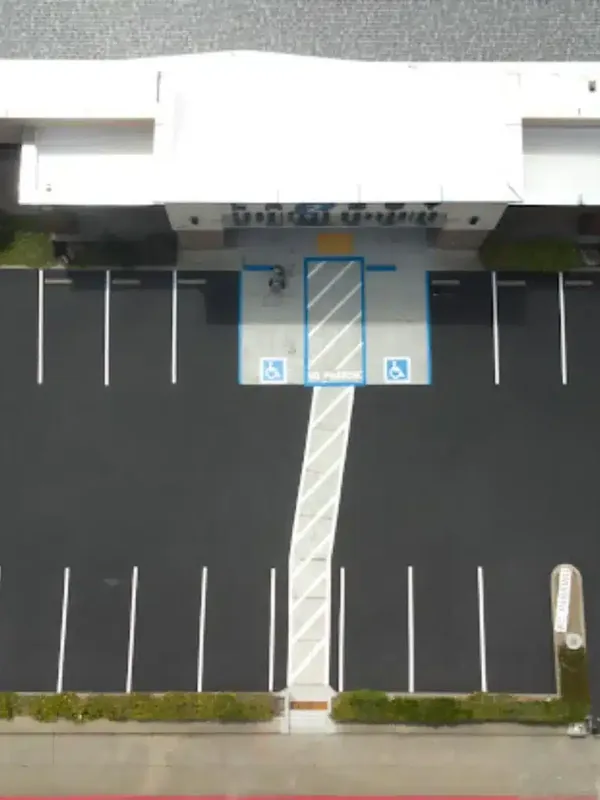
The surface course is the top layer of asphalt, the one cars drive on. On top of it sit the parking stalls, the drive aisles between them, and the striping and signs that organize traffic. Around the edges, curbs and landscape islands guide vehicles and protect walkways, and wheel stops keep cars from rolling into sidewalks or planters. In a bid, these items often appear as separate lines: patching or overlay for the surface, restriping for markings, and curb repair or wheel stop replacement for the edges.

Accessible Parking is Part of the Lot, not an Extra
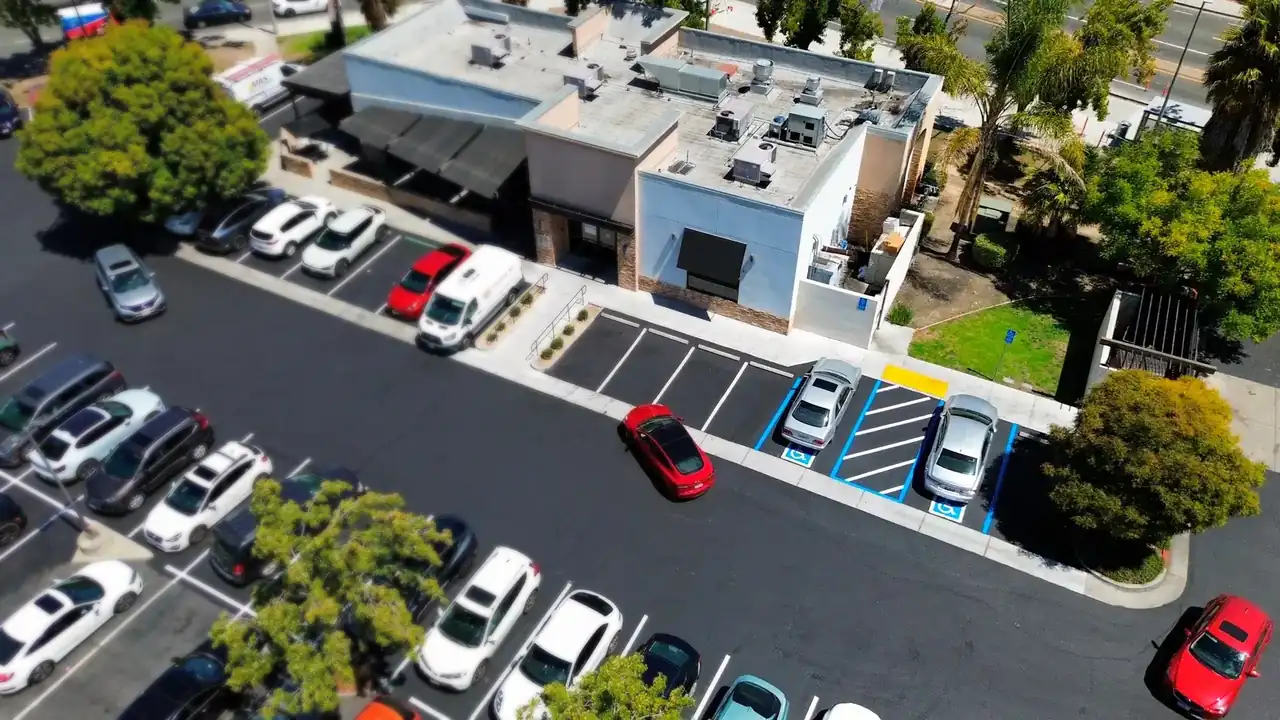
Accessible stalls, the striped access aisles next to them, the accessible route to the building entrance and the required signs are part of the parking lot. In California they follow the federal ADA Standards and the California Building Code, Chapter 11B. When a lot is resurfaced or restriped, these elements are repainted and sometimes affected by grade changes, so they should appear in the bid instead of being assumed.
Drainage and the Layers you Cannot See
Slopes and catch basins move water off the pavement. When water stands on the surface, it works its way into cracks and down into the layers below. Under the surface course sits the base, a layer of compacted aggregate that spreads the load, and under that the subgrade, the native soil that supports everything. When the base or subgrade fails, a new coat on top does not fix the problem. At a commercial and industrial site in Santa Clara, standing water and an unstable base meant removing the pavement down to the base, regrading and correcting the slopes before paving.

USE THIS ON YOUR NEXT BID
A 5-part Checklist for Comparing Paving Bids
Put the bids side by side and check each part of the lot. A good bid says what it includes and what it leaves out.
Surface
Does the bid say whether the surface gets crack sealing, patching, sealcoating or an overlay, and where?
Edges and stops
Are damaged curbs, islands and wheel stops included, or left out?
Accessible parking
Does the scope cover accessible stalls, access aisles, routes and signs?
Drainage
Does it address standing water, slopes and catch basins?
KEY HIGHLIGHTS
Comparing paving bids?
We walk your lot and show you which parts need work, so every bid can be compared on the same scope.
FAQ
Frequently Asked Questions
Quick answers to the questions we hear most about this topic.
A parking lot has visible parts and hidden parts. The visible ones are the surface course, stalls, drive aisles, striping, signs, curbs, islands and wheel stops. It also includes accessible parking and drainage, such as slopes and catch basins. Underneath are the base and the subgrade, which carry the load of every vehicle.
The surface course is the top layer of asphalt, the part vehicles drive and park on. It takes the wear from traffic and weather and protects the layers below from water. Maintenance such as crack sealing, sealcoating and patching is applied to this layer, while an overlay adds a new surface course on top.
The base is a layer of compacted aggregate placed under the asphalt to spread the weight of vehicles. The subgrade is the native soil underneath that supports the base. Both are hidden once the lot is paved, and when either one fails, the damage shows up on the surface as cracks, depressions or potholes.
Bids often cover different parts of the lot. One may include crack sealing, curb repair, accessible parking and base repairs, while another prices only the surface. Comparing line by line, part by part, shows whether the bids describe the same job before you compare their totals.
It should be listed in the scope. Accessible stalls, access aisles, accessible routes and signs are part of the parking lot, and in California they follow the ADA Standards and California Building Code Chapter 11B. Ask each contractor how their bid handles these elements instead of assuming they are included.
Look at the lot a day after rain. Water that is still standing on the surface, in stalls or near catch basins, points to slopes or drains that are not moving water off the pavement. Standing water seeps into cracks and weakens the base, so it is worth addressing before resurfacing.
READY TO GET STARTED?
Download the complete PDF or request a technical audit with no obligation.