HOA Reserve Study: Check the Pavement Line Before You Vote
For California HOA board members and community managers reviewing next year’s budget.


FOR HOA BOARDS AND MANAGERS
What is an HOA reserve study?
An HOA reserve study is the plan that tells a board what its major common area components will cost to repair or replace, when that money will be needed, and how the association will fund it. California’s Department of Real Estate describes it in two parts: a physical analysis of the components and a financial analysis of the funding. If your association maintains private streets or parking, pavement is one of the components that plan has to account for.
Every 3 years
A reasonably competent and diligent visual inspection of the accessible areas of the major components.
Every year
The board reviews the study and adjusts the reserve analysis as needed.
The 30-year window
Every major component with less than 30 years of remaining life, with its cost and a funding plan.
Why Does the Pavement Line Deserve a Second Look?
Because the numbers behind it are only as good as the measurements, the prices and the assumptions used. The DRE guidelines say paving quantities should be measured in square or linear feet, that replacement costs can come from local licensed contractors or cost manuals, and that the cost should include removing the existing material when that applies. They also say remaining life assumes the association keeps up preventive maintenance. If your community has skipped crack sealing or sealcoating, the remaining life printed in the study may no longer describe the pavement you actually have.

Why one “Asphalt” Line can Hide When the Money is Needed
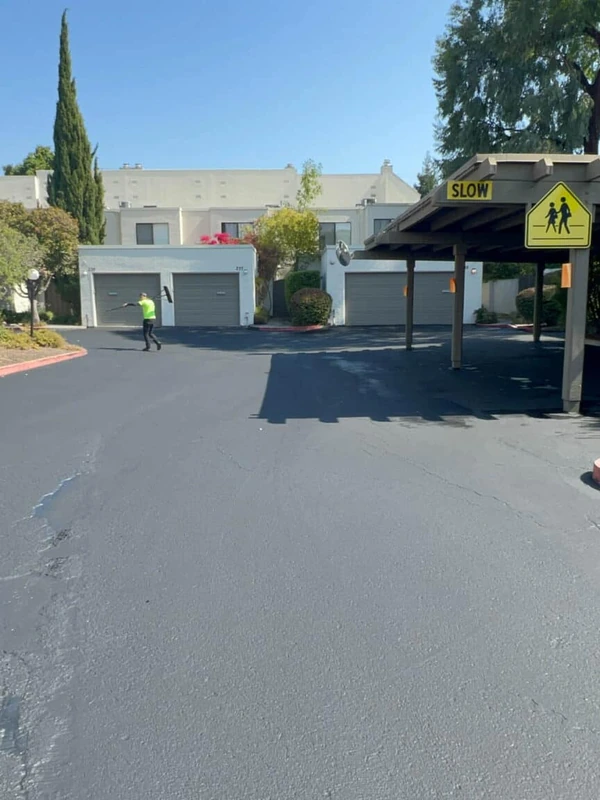
Crack sealing, sealcoating, patching, striping and overlay do not happen on the same schedule, and they do not cost the same. When a study groups them under a single asphalt line, the board sees one date and one number, and loses the view of the smaller work that protects the larger investment. Ask your reserve specialist to show each treatment as its own line. Prep work matters too: at a Mountain View townhome community, our crew had to clear roots from the cracks and repair potholes before the sealcoat could go down. Budget the prep, not just the coat.
What Owners see When the Pavement Numbers are off
The reserve study does not stay in the boardroom. California’s annual budget report, distributed 30 to 90 days before the end of the fiscal year, has to include a summary of the reserves, say whether the board has deferred repairs of major components, and say whether a special assessment is expected. The reserve summary also reports the percent funded and the reserve deficiency per unit. A pavement line that is too low or too late shows up in those numbers.

BRING THIS TO YOUR NEXT REVIEW
5 Questions to ask About the Pavement Line
Use these with your reserve specialist, your manager or any paving contractor. A good answer is specific: a date, a measurement, a photo or a named source.
When was our pavement last walked on site?
Good answer: a date within the last three years and notes or photos of the streets and parking, not only a desk update.
Is each treatment its own line?
Good answer: separate lines for crack sealing, sealcoating, patching, striping and overlay, each with its own year and cost.
Where did the cost estimates come from?
Good answer: a named source, such as a local licensed contractor or a cost manual adjusted to your area and year, with removal included when it applies.
Which areas of our site show wear first?
Good answer: specific locations, such as entrances, trash enclosure areas or low spots where water sits, with photos.
KEY HIGHLIGHTS
Need pavement input before your budget meeting?
We can walk your community’s streets and parking areas and give you photos and a scope your board and reserve specialist can work from.

FAQ
Frequently Asked Questions
Quick answers to the questions we hear most about this topic.
California Civil Code 5550 requires a visual inspection of the accessible areas of the major components at least once every three years, and a board review of the study every year. The requirement applies when the replacement value of the major components is at least half of the association’s gross budget, excluding the reserve account.
If the association is responsible for maintaining its streets, drives or parking, and the pavement has less than 30 years of remaining life, it falls inside what Civil Code 5550 asks the study to cover. The study must list that component, estimate its repair or replacement cost, and show how the association plans to fund it.
California’s DRE guidelines say replacement costs can come from manufacturers, local licensed contractors or recognized cost estimating manuals adjusted for the area and the year. Paving quantities should be measured in square or linear feet, and the estimate should include removing the existing material when that is part of the work.
The deferral does not stay internal. Under Civil Code 5300, the annual budget report must tell owners whether the board has deferred repairs or replacement of major components and whether a special assessment is expected. The reserve summary also shows the percent funded, so a gap in the pavement line becomes visible to every owner.
Ask for a site walk with photos, measured areas for each street and parking section, and a scope that separates crack sealing, sealcoating, patching, striping and overlay. That gives your reserve specialist current field information instead of an old estimate, and it shows the board where the pavement stands today.
California’s DRE guidelines say a board can hire outside professionals, such as engineers, accountants or cost estimators, prepare the study itself, or combine both approaches. Either way, the board stays responsible for the result. For pavement, a site walk and measured areas from a licensed paving contractor give whoever prepares the study better field data.
READY TO GET STARTED?
Download the complete PDF or request a technical audit with no obligation.