Parking Lot Size Standards: How to Design Safe and Efficient Lots That Meet Code

Parking lots might look simple — just stripes and asphalt — but behind every safe, compliant layout there’s a set of precise size standards and design rules that keep traffic flowing and people safe.

If you’re planning to build, expand, or re-stripe a lot, knowing these dimensions helps you avoid code violations, improve traffic flow, and maximize usable space.

Let’s break it down.


📏 1. Standard Parking Space Dimensions

In the U.S., parking space sizes vary slightly by city, but the general rule of thumb for commercial lots is:

Type of Stall Width Length Aisle Width (Two-Way)
Standard Car 9 ft 18 ft 24 ft
Compact Car 8 ft 16 ft 22 ft
Accessible (ADA) 8 ft stall + 8 ft access aisle 18 ft 24 ft
Van Accessible (ADA) 12 ft stall + 8 ft access aisle 18 ft 24 ft

💡 Pro Tip: Always check your city’s local zoning or planning code, as requirements can vary slightly — for example, some municipalities allow 8.5 ft stalls in high-density urban areas.


🚙 2. Angled vs. Straight Parking — Efficiency vs. Flow

Choosing between 90°, 60°, or 45° parking angles affects how easy your lot is to navigate and how many cars fit.

Angle Space Efficiency Traffic Flow Notes
90° Maximum capacity Requires wider aisles Ideal for high-traffic commercial lots
60° Easier to maneuver One-way traffic Great for tight sites
45° Fast in/out Lower capacity Common for retail and smaller lots

If your property experiences high turnover (like retail or medical), angled parking often improves flow and reduces accidents.
For long-term or employee lots, 90° stalls maximize capacity.


3. ADA & Accessibility Requirements

Federal ADA Standards (and California’s Title 24) set strict rules for accessible parking:

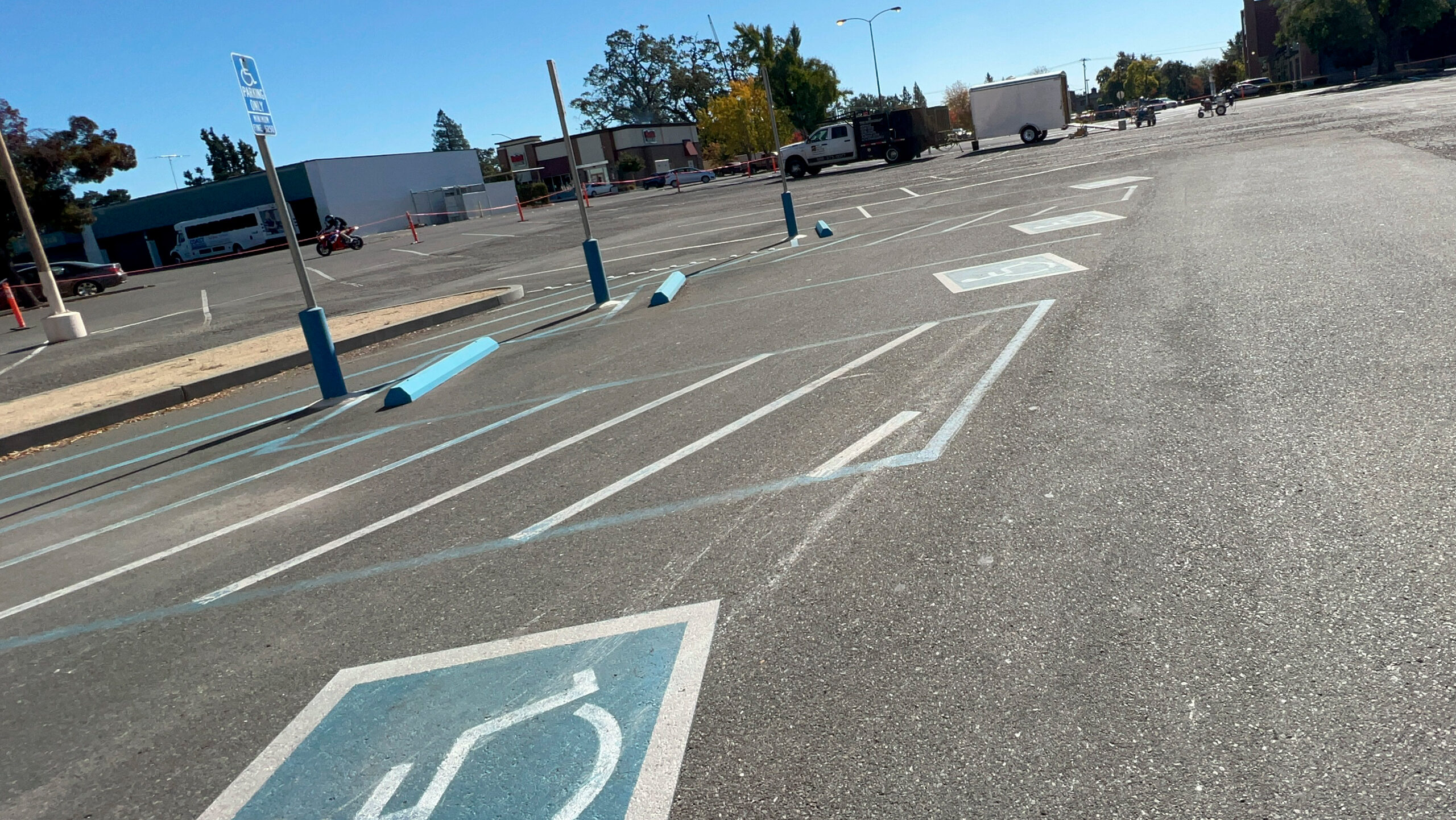
  • At least one accessible space per 25 total spaces.

  • Access aisles: must be marked with blue hash lines and connect to a safe route.

  • Surface slope: no more than 2% in any direction.

  • Signage: blue reflective background, at least 80 in tall, including the phrase “Minimum Fine $250.”

  • Location: closest possible to accessible building entrance.

Skipping these details can trigger immediate compliance violations — even if the rest of your lot looks perfect.


🛞 4. Drive Aisles and Circulation

Drive aisles control how vehicles move safely through your property.

  • Two-way traffic: 24 ft minimum width

  • One-way (angled stalls): 12–18 ft

  • Entrance radius: 15–25 ft recommended for smooth turns

  • Pedestrian routes: must be clearly marked and separate from vehicle lanes when possible.

Good design reduces conflict points between drivers and pedestrians — which also means fewer liability claims.


🌿 5. Layout Design Tips to Maximize Efficiency

A functional parking lot does three things well:

  1. Moves cars safely

  2. Protects pedestrians

  3. Minimizes maintenance headaches

Design tips from the field:

  • Keep row lengths under 300 ft to reduce confusion.

  • Use landscaping islands every 10–15 stalls to manage runoff and guide drivers visually.

  • Ensure proper drainage slopes (1.5–2%) — puddles destroy asphalt faster than traffic.

  • Add wheel stops only where absolutely needed (they often cause trip hazards if overused).


🧠 6. The Role of Maintenance in Design

Even the best design fails if it’s not maintained.
Cracks, faded striping, and blocked drains turn compliant lots into liabilities.

  • Re-stripe every 2–3 years or after each sealcoat.

  • Re-check ADA slopes during resurfacing.

  • Inspect signage visibility annually.

Compliance isn’t a one-time project — it’s an ongoing process.


🤝 7. Work With Experts Who Know the Code

Whether you’re designing from scratch or just refreshing striping, working with a contractor who understands code, compliance, and engineering saves you time and money.

At We Love Paving, we design, build, and maintain parking lots that meet or exceed:

  • ADA & Title 24 regulations

  • Local zoning and slope codes

  • Drainage and runoff standards

  • Aesthetic and safety expectations

👉 Book your Free Parking Lot Layout Consultation today.
We’ll review your current design, check compliance, and show you how to make your layout safer, more efficient, and fully up to code.

Share

WHO IS FRED?

Fred, Regional Operations Manager, comes from a family of immigrant roots and a story built on sacrifice, discipline, and hard work. Growing up, Fred watched his parents work long hours and weekends to create a better future teaching him the values of perseverance, determination, and doing things the right way every single time.
We Love Paving began with Fred’s father, who started doing what he knew best: paving. Over the years, he built experience alongside respected professionals in the industry, refining his methods and developing a reputation for quality work that speaks for itself. As his clientele grew, so did the vision one built not only on skill, but on integrity and pride in every job.

Posts that might interest you

Depths for Asphalt Paving and Striping in Sacramento, California: A Comprehensive Guide for Residential Driveways

Depths for Asphalt Paving and Striping in Sacramento, California: A Comprehensive Guide for Residential Driveways

June 4, 2024

When it comes to constructing or renovating your driveway, getting the depth of asphalt paving and striping just right is crucial for longevity, durability, and compliance with local regulations. In this comprehensive guide, we’ll delve into the factors to consider when determining the optimal depths for your driveway in Sacramento, California. Asphalt Paving Depth Local

Uncovering the Importance of Paving in Sacramento, California: A Comprehensive Investigation

Uncovering the Importance of Paving in Sacramento, California: A Comprehensive Investigation

June 4, 2024

Sacramento, California, known for its rich history, diverse culture, and bustling urban landscape, stands as the capital city of the Golden State. Amidst its vibrant tapestry, one often overlooked yet crucial aspect of urban infrastructure emerges – paving. In this investigation, we delve deep into the significance of paving in Sacramento, exploring its impact on

Unveiling the Reigning Champion: The Most Durable Paving Solutions

Unveiling the Reigning Champion: The Most Durable Paving Solutions

May 31, 2024

In the realm of construction, durability reigns supreme. When it comes to paving, the quest for the most durable solution is paramount, especially for infrastructure subjected to heavy traffic, harsh weather conditions, and the test of time. But what exactly constitutes durability in paving, and which materials emerge as the undisputed champions? Join us as

Paving the Way: Exploring the Pros and Cons of Using Pavers in Your Landscape

Paving the Way: Exploring the Pros and Cons of Using Pavers in Your Landscape

May 31, 2024

Pavers are a versatile and popular choice for landscaping projects, offering durability, aesthetic appeal, and ease of installation. Whether you’re considering a patio, driveway, walkway, or even a pool deck, pavers can be an excellent option to enhance the functionality and beauty of your outdoor space. In this comprehensive guide, we’ll delve into the world

Decoding Paving in Construction: Understanding Its Significance

Decoding Paving in Construction: Understanding Its Significance

May 30, 2024

In the vast landscape of construction terminology, few terms are as ubiquitous and multifaceted as “paving.” From roads and driveways to sidewalks and parking lots, paving plays a crucial role in shaping our built environment and facilitating transportation and accessibility. But what exactly does paving entail, and why is it so integral to the construction

Why Concrete Paving? Unraveling the Advantages

Why Concrete Paving? Unraveling the Advantages

May 30, 2024

In the realm of construction and infrastructure, concrete paving stands out as a versatile and durable solution for a wide range of projects. From roads and sidewalks to parking lots and airport runways, concrete paving offers numerous advantages that make it a preferred choice for engineers, contractors, and project stakeholders alike. Join us as we

Paving vs. Concrete: Unraveling the Debate 2024

Paving vs. Concrete: Unraveling the Debate 2024

May 30, 2024

In the realm of construction and infrastructure, few debates are as enduring as the one between paving and concrete. Each method has its proponents and detractors, with arguments centered around cost, durability, and environmental impact. But which is truly better? Join us as we delve into the heart of this debate and attempt to unravel

Understanding Concrete Contractors

Understanding Concrete Contractors

May 29, 2024

Concrete is the cornerstone of modern construction, known for its strength, durability, and versatility. When it comes to working with this essential building material, the expertise of a concrete contractor is invaluable. But what exactly is a concrete contractor, and what role do they play in construction projects? In this comprehensive guide, we’ll explore the

Understanding the California Disabled Persons Act

Understanding the California Disabled Persons Act

May 28, 2024

In California, ensuring equal access and accommodations for individuals with disabilities is a priority, not just from a moral standpoint, but also from a legal perspective. The California Disabled Persons Act (CDPA) is a crucial piece of legislation designed to protect the rights of individuals with disabilities and promote accessibility in various aspects of public

Understanding ADA Compliance in Sacramento

Understanding ADA Compliance in Sacramento

May 28, 2024

Accessibility is a fundamental aspect of creating inclusive and welcoming spaces for everyone, regardless of their physical abilities. In Sacramento, California, ensuring compliance with the Americans with Disabilities Act (ADA) is essential for public buildings, facilities, and spaces. But does Sacramento have its own ADA law, and what does it entail? In this comprehensive guide,

Previous Next