
Pavement Engineering for Freight Terminals
We implement high-performance asphalt infrastructure solutions designed to withstand extreme axial loads and the uninterrupted flow of modern logistics operations in California.
Calls may be monitored or recorded for quality assurance and training purposes.

Trusted By Property Managers & National Brands





Why Choose Us For Your Industry?


Structural Durability Under Dynamic Loads
The integrity of a freight terminal depends directly on the bearing capacity of its surface. Unlike conventional roads, asphalt in these environments must manage constant torque and punching stresses caused by heavy tonnage vehicles and container handling equipment. To better understand the necessary composition, it is vital to differentiate between concrete and asphalt, selecting mixes that offer the flexibility required to absorb impacts without premature structural fractures.
Optimize Your Logistics Infrastructure Today
Is your freight terminal facing rutting or structural fatigue issues? Contact our pavement engineers in California for a detailed technical evaluation. We design solutions that support the weight of your industry.
Technical Benefits of We Love Paving for Logistics Terminals
Navigating the relationship between federal law (ADA) and the California Building Code (Title 24) requires absolute precision. In California, “shakedown lawsuits” are a constant threat that can jeopardize your business’s financial stability.
- High-Modulus Mixes: Designed to minimize rutting under elevated temperatures.
- Advanced Drainage: Precision slope systems that prevent water accumulation, protecting the sub-base.
- Chemical Resistance: Seal coats that resist hydrocarbon spills and hydraulic fluids common in loading zones.
- Regulatory Compliance: Full alignment with California transportation standards.
Experienced Team
Safety First
No Work Stoppage
Guaranteed Results
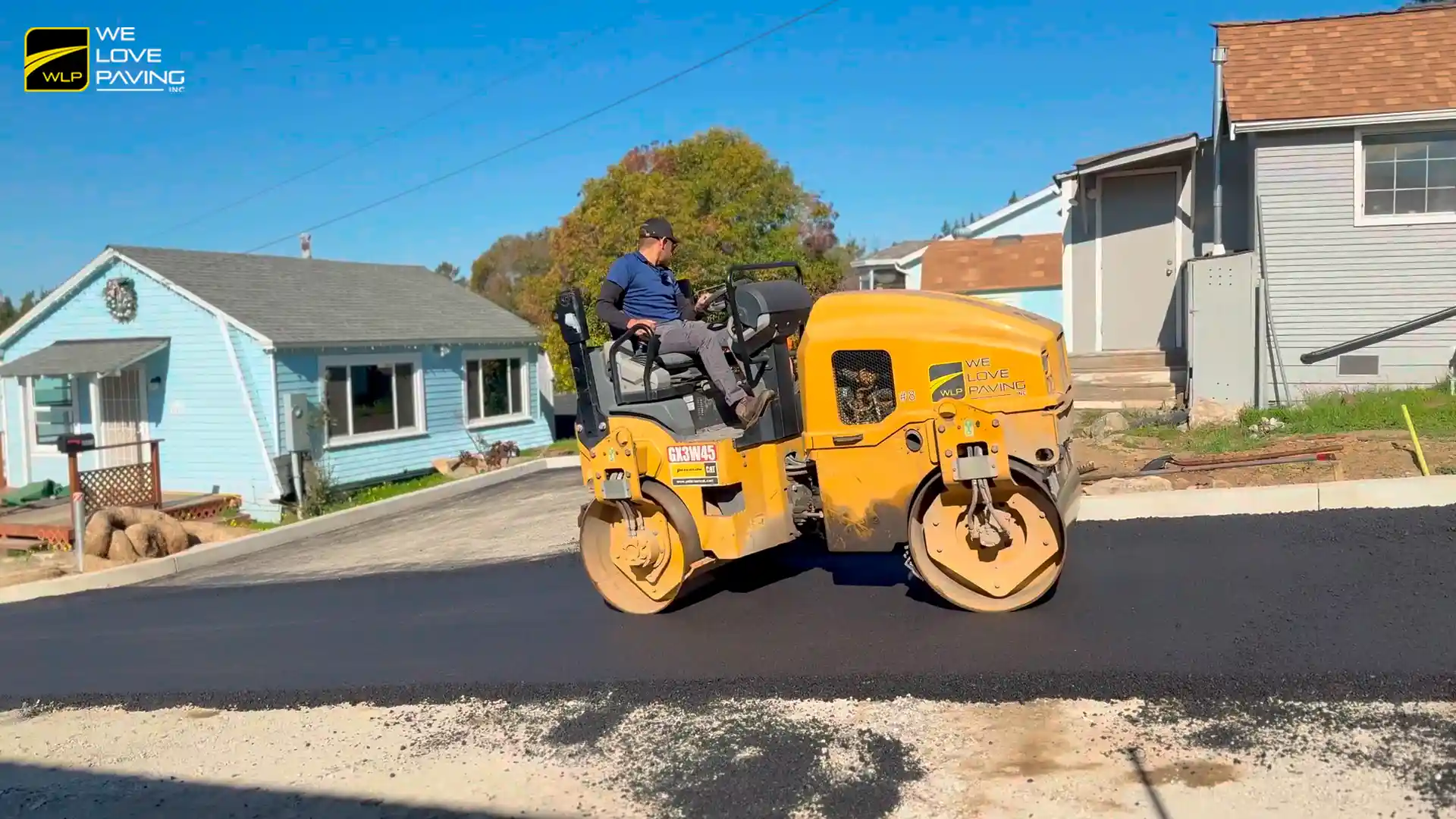
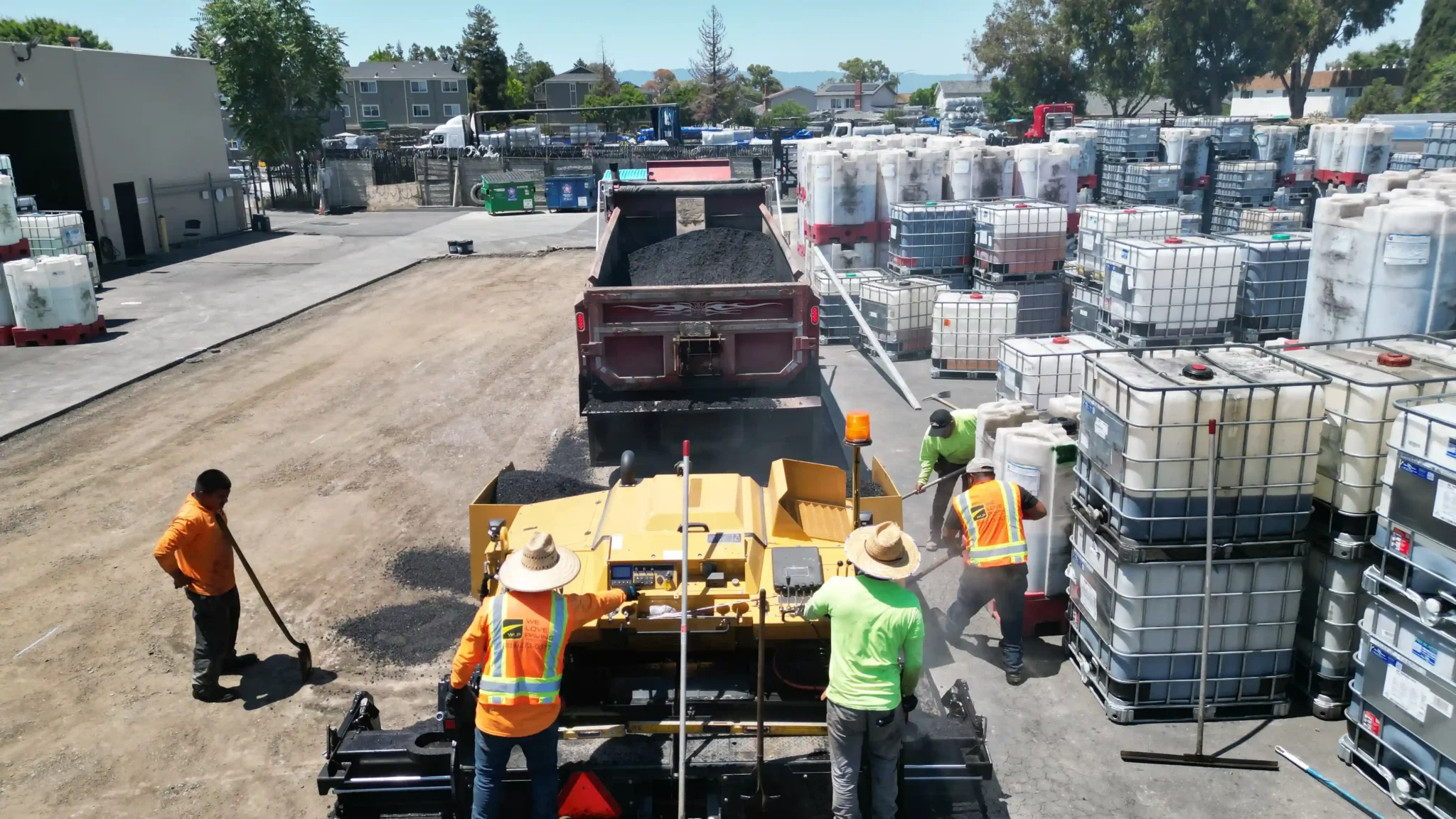
Asphalt Terminal Management and Liquid Storage
Operational efficiency begins at the supply chain. Handling asphalt binders at terminals requires precise thermal logistics to maintain optimal viscosity. The integration of state-of-the-art heating systems and specialized storage tanks ensures that the applied material maintains the rheological properties necessary for maximum adhesion. This phase is critical to ensuring that the meaning of asphalt in your project is not just aesthetic, but purely functional and durable.
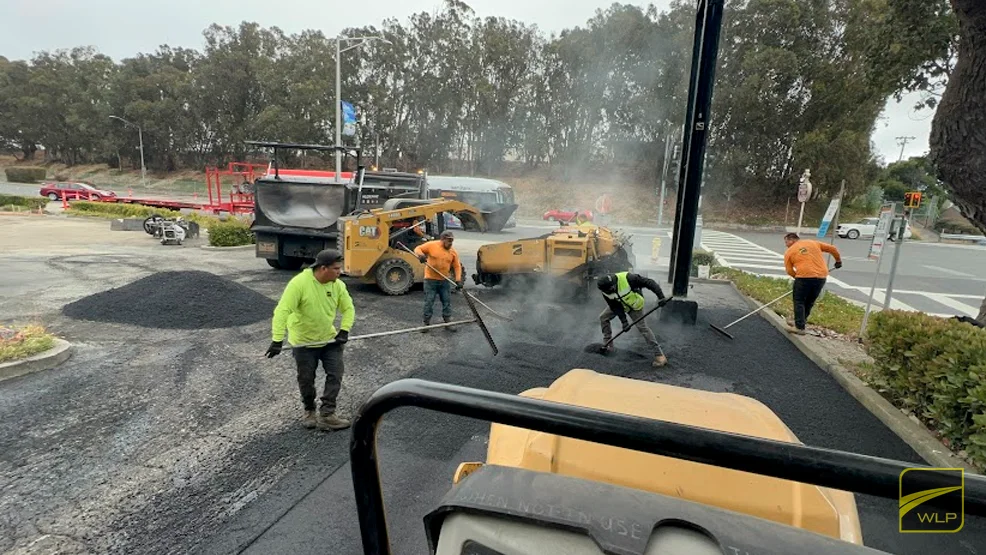
Surface Rehabilitation Without Flow Interruption
Preventative maintenance in logistics hubs is a logistical challenge in itself. We implement milling and overlay techniques that allow for traffic reopening in record time. By utilizing specialized asphalt paving services in California, we apply safety and execution protocols that allow the terminal to maintain its operational pace while restoring the pavement’s load capacity.

Ensuring Operational Reliability for Freight Terminals
At We Love Paving, we understand that a freight terminal is the heart of the supply chain. We don’t just deliver asphalt; we deliver operational reliability. Our work philosophy is backed by The Panda Pledge, our unwavering commitment to transparency, technical quality, and total satisfaction. This seal of guarantee ensures that every paved mile meets superior technical excellence standards, supported by our guarantees and warranty terms.
This Is What Our Clients Say About Our Work
Frequently Asked Questions (FAQ)
Got Questions? Find Your Answers Here!!
Polymer-Modified Asphalt (PMA) mixes are ideal due to their high resistance to rutting and thermal fatigue under heavy axial loads and constant slow movements. This material provides superior elasticity that recovers its shape after the passage of heavy-duty vehicles, extending the pavement’s lifespan compared to conventional mixes in high-stress logistics environments.
The sub-base is the critical foundation that distributes heavy loads; if inadequate, the asphalt will fail regardless of surface quality due to structural soil deflection. Technical design requires stabilized compaction and often the use of geogrids to reinforce bearing capacity, ensuring the pavement can withstand both the static and dynamic weighing of containers and trailers.
Periodic crack sealing and sealcoating are vital to prevent water and chemicals from degrading the pavement’s internal structure. Performing these interventions every 3 to 5 years prevents oxidation of the asphalt binder and maintains the flexibility needed to withstand extreme vibrations and pressures from heavy machinery without generating potholes.
Generally, it is recommended to wait 24 to 48 hours, although this depends on California’s weather conditions and the specific mix type used in the logistics terminal. Allowing heavy traffic too soon can cause permanent deformations; however, the use of warm-mix additives can accelerate reopening to traffic in urgent operational situations.
Rutting is plastic deformation caused by repetitive tire loading in specific channels, exacerbated by high temperatures that soften the asphalt binder during summer. It is prevented by using fractured-face aggregates to improve mechanical interlock and Performance Grade (PG) binders specific to California’s warm climate.
Asphalt offers an initial economic advantage and faster repair, while concrete better handles prolonged static loads without deforming, albeit at higher costs. For many terminals, a hybrid solution or a perpetual asphalt design with deep black base layers offers the optimal balance between operational flexibility, maintenance cost, and structural longevity.
Contact
Start Your Free Proposal
Start your free proposal today. Speak with a paving advisor and find out if your asphalt, concrete, or ADA compliance project qualifies for The Panda Pledge™ long-term protection.
Reply by Next Business Day